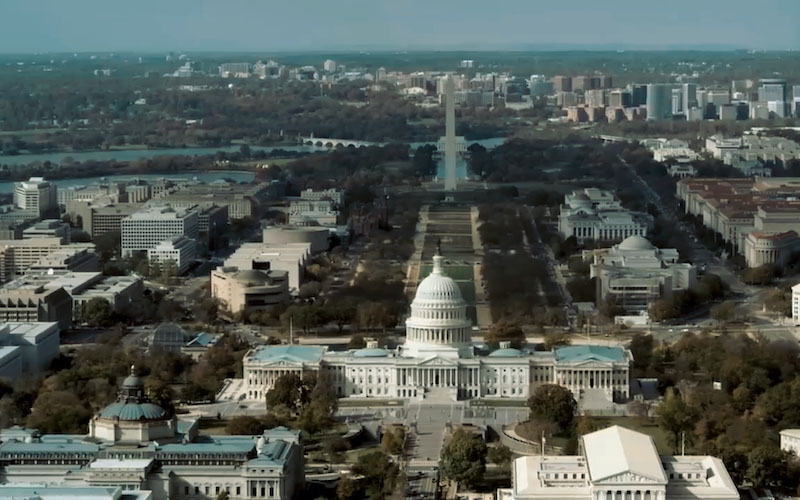
Escalating conflict in the Middle East triggers a global asset price crash.
2026-03-03 16:19:30
The sudden and ongoing conflict between the US and Iran in the Middle East has led to a situation where Israel, the US, and Iran are at war, and global assets are paying the price. As a strategic hub for global energy supply, this geopolitical game full of uncertainty has directly triggered violent fluctuations in energy prices.
Geopolitical risks are being transmitted through the core pathway of soaring oil prices, causing a comprehensive impact on the global energy market, macroeconomy, and financial markets.
London Brent crude oil surged 8.5% in a single day, climbing from over $60 per barrel in early January to $79 per barrel this year; European benchmark natural gas prices saw an even more dramatic surge of 38% in a single day, as Qatar Energy suspended two production facilities due to drone attacks, further amplifying expectations of supply shortages.
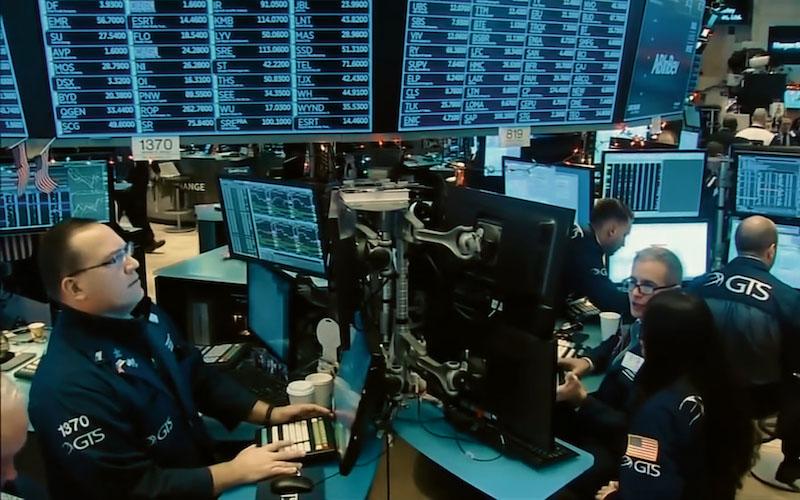
Increased disruption to transport routes has led to a chain reaction of rising shipping costs.
Disruptions to energy transport routes have exacerbated market panic. The Strait of Hormuz, a vital energy choke point that carries 20%-25% of the world's oil shipments, is now being avoided by oil tankers, and insurance institutions are tightening their underwriting policies.
As the conflict expands, some ships have begun to detour around the Suez Canal, which not only drives up the cost of transporting crude oil, but also leads to a simultaneous increase in the shipping costs of non-oil commodities.
Extreme scenario risks remain, and OPEC+'s ability to increase production is limited.
Goldman Sachs estimates that in an extreme scenario where the Strait of Hormuz is closed for a month, oil prices could surge by $15 per barrel in a single month. Although increased production through other channels could partially offset the impact, OPEC+ has only signaled a slight increase in production quotas, which is insufficient to completely offset supply concerns caused by geopolitical risks.
The central bank faces a dilemma as a policy-sensitive window of opportunity is breached.
This round of oil price rebound coincides with a sensitive juncture in global policy – countries have just begun to stabilize post-pandemic supply chain recovery and high inflation triggered by the Russia-Ukraine conflict, and the renewed surge in energy prices has put central banks in a dilemma.
Historical experience has fully demonstrated that a surge in energy prices will quickly penetrate to the consumer end, causing a chain reaction of increased costs across all categories of goods through the industrial chain, ultimately passing the pressure on to end consumers.
Economies' resilience to shocks is diverging, with net importers and hub cities under pressure.
Different economies show significant differences in their ability to withstand this energy shock.
Net energy importers in Asia and Europe, such as the UK, have become the main victims of high oil price shocks due to their heavy reliance on external energy supplies.
Dubai and other Middle Eastern business and leisure hubs have faced significant pressure on their locational attractiveness following the global exposure of the attacks.
The United States has a relatively stronger ability to withstand risks due to its shale oil supply advantage and strategic petroleum reserves. However, if high oil prices continue for a long time, the Federal Reserve may still be forced to postpone the interest rate cut process that Trump is eagerly anticipating.
Sticky inflation expectations raise concerns; the debate over interest rate hikes and cuts intensifies.
At the central bank level, although they usually downplay short-term, impulsive increases in oil prices, institutions such as the Bank of England remain highly vigilant about the stickiness of inflation expectations.
Amid concerns about reflation risks in oil prices, the probability of a Bank of England rate cut on March 19 has fallen from 80% last week to 69% in early Monday trading. Neil Schilling, chief economist at Capital Economics, stated unequivocally: "The duration and magnitude of the shock are equally critical."
If oil prices fall within a few months—due to a de-escalation of the conflict or increased production by oil-producing countries to fill the gap—the impact on inflation in developed markets will be limited and short-lived. However, if oil prices stabilize in the $90-$100/barrel range, inflation in developed markets will rise by 0.8 percentage points more than expected, and central banks may restart interest rate hikes. Pressure on consumption will directly drag down economic growth.
The problem of sticky inflation remains unresolved, with core PCE fluctuating at high levels.
The escalating tensions between the US and Iran, coupled with military strikes, have added significant uncertainty to the already troubled US economy, which is plagued by recurring tariffs, weak employment, and sticky inflation. The problem of sticky inflation in the US remains unresolved; the Federal Reserve's core PCE has been fluctuating around 3% for nearly a year, significantly higher than the policy target of 2%. Even if gasoline prices continue to decline in 2025, inflationary pressures will persist.
Rising energy prices have a multi-dimensional impact, highlighting the cost pressure on people's livelihoods.
Rising energy prices are impacting the US economy from multiple dimensions: US retail fuel prices are likely to rise this week. If the conflict drags on and oil prices stabilize above $100 per barrel, the average gasoline price will rise from the current less than $3 per gallon to $3.50 per gallon. This will not only rapidly push up inflation and slow economic growth, but also exacerbate public dissatisfaction with the cost of living.
According to RSM economist Brusuelas, U.S. residents, already burdened by the cost of living, are highly sensitive to price increases. Although the current increases are not yet significant enough to substantially impact economic growth, the long-term cumulative effect should not be underestimated.
Business confidence contracted, and job growth remained weak.
Business confidence and the job market are both under pressure. Bostianich, chief economist at National Financial, pointed out that if the conflict with Iran continues for several months, business confidence will be significantly hampered, and capital expenditure and hiring plans will contract in tandem. The logic behind this impact is consistent with Trump's tariff policy—while it has a limited direct impact on prices, it continues to suppress job growth.
The US job growth rate in 2025 has reached its lowest level since 2002, outside of a recession.
Political risks are rising simultaneously, dragging down approval ratings.
More seriously, the continuous rise in prices over the past five years has dragged down Trump's approval ratings and become an important support for the recent Democratic election campaign. The rise in oil prices driven by the protracted conflict will further worsen public sentiment. The public generally believes that Trump's policy focus is out of touch with people's livelihood demands, and that he is more concerned about tariffs and foreign policy than core livelihood issues such as food prices.
Optimistic factors coexist with tail risks, leading to divergent market expectations.
However, there are also optimistic factors. Johnston, founder of a commodities analysis firm, pointed out that global crude oil inventories were high before the conflict, which naturally suppressed oil prices, and the current increase in oil prices is a mild pulse compared to the surge after the Russia-Ukraine conflict in 2022.
At the same time, the US economy's dependence on oil has decreased significantly, and the increased share of the service sector has weakened the transmission of energy shocks.
Biden's economic advisor, Hakquez, warned that the market is currently severely underestimating the tail risks of a protracted conflict, namely, the obstruction of navigation in the Strait of Hormuz and the inability of the situation to cool down and return to normalcy quickly.
The dual squeeze of valuation and earnings: the logic behind the pressure on the equity market.
The rise in oil prices has had a particularly direct and severe impact on the equity market. On the one hand, rising oil prices have exacerbated inflation stickiness, shattering market illusions about a rapid interest rate cut by the Federal Reserve. The high volatility of risk-free interest rates has directly suppressed the valuation space of the equity market.
On the other hand, facing consumers who are extremely sensitive to prices, companies find it difficult to fully pass on the increased energy and raw material costs, leading to downward pressure on gross profit margins.
Asian stock markets were the first to react, with the South Korean market triggering a circuit breaker.
The sudden escalation of tensions between the US and Iran, triggered by soaring corporate costs, has detonated a liquidity bomb in Asian equity markets.
South Korea’s pillar industries—semiconductors (Samsung, SK Hynix), chemicals, and shipbuilding—are facing enormous pressure from electricity and raw material costs. Coupled with the possibility that the Federal Reserve may maintain high interest rates due to inflation, this is unfavorable for the long-term South Korean stock market, which is dominated by technology and chip stocks.
Market sentiment eventually collapsed, with the KOSPI index falling by more than 5% in the short term. A surge of stop-loss orders from algorithmic traders triggered the circuit breaker mechanism, and the South Korean stock market ultimately closed down 7.24% for the day.
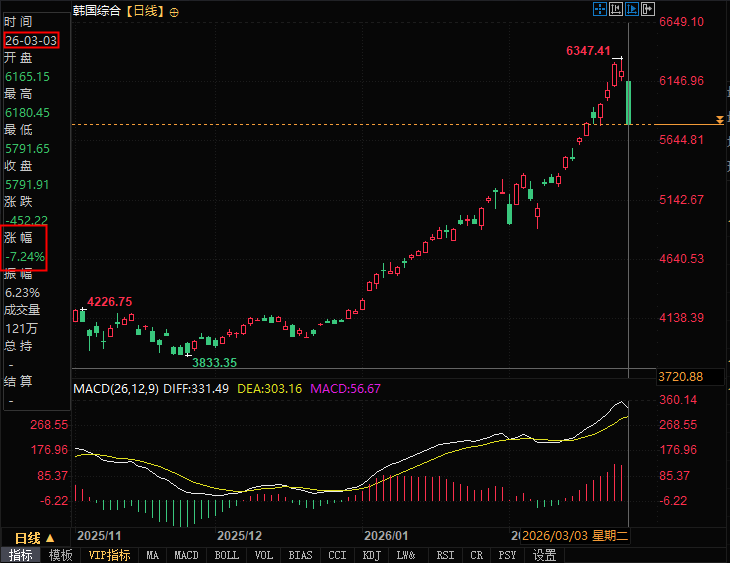
(Daily chart of the Korea Composite Stock Price Index)
Panic spreads globally, risk appetite cools across the board.
Panic quickly spread globally, causing Asian stock markets to fall across the board, and the three major U.S. stock index futures to weaken collectively. This even spread to the gold market, causing it to pull back during the Asian closing session, and global market risk appetite deteriorated across the board.
This energy price shockwave triggered by the Middle East crisis is essentially a multi-faceted resonance of geopolitical risks, inflationary pressures, and monetary policy maneuvering. The duration of the conflict and the sustained high level of oil prices will become the core variables determining the pace of global economic recovery and the direction of financial markets.
(Spot gold price chart overlaid with the South Korean KOSPI intraday chart, source: FX678)
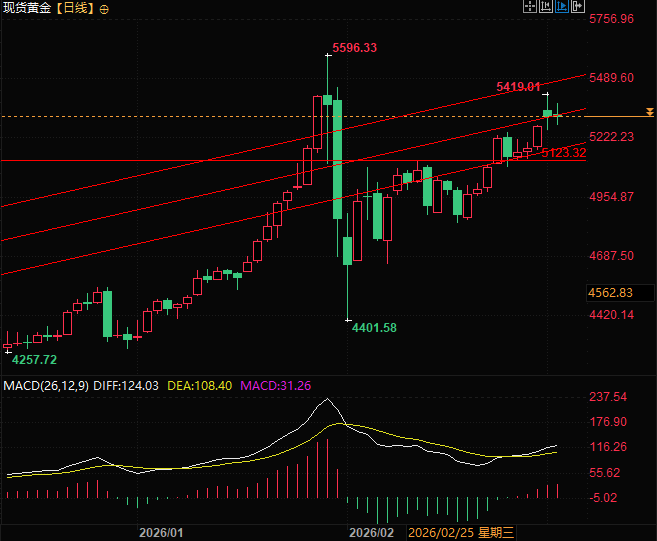
(Spot gold daily chart)
At 16:15 Beijing time, spot gold was trading at $5,318 per ounce.
Geopolitical risks are being transmitted through the core pathway of soaring oil prices, causing a comprehensive impact on the global energy market, macroeconomy, and financial markets.
London Brent crude oil surged 8.5% in a single day, climbing from over $60 per barrel in early January to $79 per barrel this year; European benchmark natural gas prices saw an even more dramatic surge of 38% in a single day, as Qatar Energy suspended two production facilities due to drone attacks, further amplifying expectations of supply shortages.
Main reasons for rising oil prices:
Increased disruption to transport routes has led to a chain reaction of rising shipping costs.
Disruptions to energy transport routes have exacerbated market panic. The Strait of Hormuz, a vital energy choke point that carries 20%-25% of the world's oil shipments, is now being avoided by oil tankers, and insurance institutions are tightening their underwriting policies.
As the conflict expands, some ships have begun to detour around the Suez Canal, which not only drives up the cost of transporting crude oil, but also leads to a simultaneous increase in the shipping costs of non-oil commodities.
Extreme scenario risks remain, and OPEC+'s ability to increase production is limited.
Goldman Sachs estimates that in an extreme scenario where the Strait of Hormuz is closed for a month, oil prices could surge by $15 per barrel in a single month. Although increased production through other channels could partially offset the impact, OPEC+ has only signaled a slight increase in production quotas, which is insufficient to completely offset supply concerns caused by geopolitical risks.
Global economic divergence is putting pressure on the economy, and the policy window is facing severe tests.
The central bank faces a dilemma as a policy-sensitive window of opportunity is breached.
This round of oil price rebound coincides with a sensitive juncture in global policy – countries have just begun to stabilize post-pandemic supply chain recovery and high inflation triggered by the Russia-Ukraine conflict, and the renewed surge in energy prices has put central banks in a dilemma.
Historical experience has fully demonstrated that a surge in energy prices will quickly penetrate to the consumer end, causing a chain reaction of increased costs across all categories of goods through the industrial chain, ultimately passing the pressure on to end consumers.
Economies' resilience to shocks is diverging, with net importers and hub cities under pressure.
Different economies show significant differences in their ability to withstand this energy shock.
Net energy importers in Asia and Europe, such as the UK, have become the main victims of high oil price shocks due to their heavy reliance on external energy supplies.
Dubai and other Middle Eastern business and leisure hubs have faced significant pressure on their locational attractiveness following the global exposure of the attacks.
The United States has a relatively stronger ability to withstand risks due to its shale oil supply advantage and strategic petroleum reserves. However, if high oil prices continue for a long time, the Federal Reserve may still be forced to postpone the interest rate cut process that Trump is eagerly anticipating.
Sticky inflation expectations raise concerns; the debate over interest rate hikes and cuts intensifies.
At the central bank level, although they usually downplay short-term, impulsive increases in oil prices, institutions such as the Bank of England remain highly vigilant about the stickiness of inflation expectations.
Amid concerns about reflation risks in oil prices, the probability of a Bank of England rate cut on March 19 has fallen from 80% last week to 69% in early Monday trading. Neil Schilling, chief economist at Capital Economics, stated unequivocally: "The duration and magnitude of the shock are equally critical."
If oil prices fall within a few months—due to a de-escalation of the conflict or increased production by oil-producing countries to fill the gap—the impact on inflation in developed markets will be limited and short-lived. However, if oil prices stabilize in the $90-$100/barrel range, inflation in developed markets will rise by 0.8 percentage points more than expected, and central banks may restart interest rate hikes. Pressure on consumption will directly drag down economic growth.
The US economy is facing further difficulties, with inflation and political risks compounding their problems.
The problem of sticky inflation remains unresolved, with core PCE fluctuating at high levels.
The escalating tensions between the US and Iran, coupled with military strikes, have added significant uncertainty to the already troubled US economy, which is plagued by recurring tariffs, weak employment, and sticky inflation. The problem of sticky inflation in the US remains unresolved; the Federal Reserve's core PCE has been fluctuating around 3% for nearly a year, significantly higher than the policy target of 2%. Even if gasoline prices continue to decline in 2025, inflationary pressures will persist.
Rising energy prices have a multi-dimensional impact, highlighting the cost pressure on people's livelihoods.
Rising energy prices are impacting the US economy from multiple dimensions: US retail fuel prices are likely to rise this week. If the conflict drags on and oil prices stabilize above $100 per barrel, the average gasoline price will rise from the current less than $3 per gallon to $3.50 per gallon. This will not only rapidly push up inflation and slow economic growth, but also exacerbate public dissatisfaction with the cost of living.
According to RSM economist Brusuelas, U.S. residents, already burdened by the cost of living, are highly sensitive to price increases. Although the current increases are not yet significant enough to substantially impact economic growth, the long-term cumulative effect should not be underestimated.
Business confidence contracted, and job growth remained weak.
Business confidence and the job market are both under pressure. Bostianich, chief economist at National Financial, pointed out that if the conflict with Iran continues for several months, business confidence will be significantly hampered, and capital expenditure and hiring plans will contract in tandem. The logic behind this impact is consistent with Trump's tariff policy—while it has a limited direct impact on prices, it continues to suppress job growth.
The US job growth rate in 2025 has reached its lowest level since 2002, outside of a recession.
Political risks are rising simultaneously, dragging down approval ratings.
More seriously, the continuous rise in prices over the past five years has dragged down Trump's approval ratings and become an important support for the recent Democratic election campaign. The rise in oil prices driven by the protracted conflict will further worsen public sentiment. The public generally believes that Trump's policy focus is out of touch with people's livelihood demands, and that he is more concerned about tariffs and foreign policy than core livelihood issues such as food prices.
Optimistic factors coexist with tail risks, leading to divergent market expectations.
However, there are also optimistic factors. Johnston, founder of a commodities analysis firm, pointed out that global crude oil inventories were high before the conflict, which naturally suppressed oil prices, and the current increase in oil prices is a mild pulse compared to the surge after the Russia-Ukraine conflict in 2022.
At the same time, the US economy's dependence on oil has decreased significantly, and the increased share of the service sector has weakened the transmission of energy shocks.
Biden's economic advisor, Hakquez, warned that the market is currently severely underestimating the tail risks of a protracted conflict, namely, the obstruction of navigation in the Strait of Hormuz and the inability of the situation to cool down and return to normalcy quickly.
Equity markets experienced severe volatility, and a liquidity crisis swept the globe.
The dual squeeze of valuation and earnings: the logic behind the pressure on the equity market.
The rise in oil prices has had a particularly direct and severe impact on the equity market. On the one hand, rising oil prices have exacerbated inflation stickiness, shattering market illusions about a rapid interest rate cut by the Federal Reserve. The high volatility of risk-free interest rates has directly suppressed the valuation space of the equity market.
On the other hand, facing consumers who are extremely sensitive to prices, companies find it difficult to fully pass on the increased energy and raw material costs, leading to downward pressure on gross profit margins.
Asian stock markets were the first to react, with the South Korean market triggering a circuit breaker.
The sudden escalation of tensions between the US and Iran, triggered by soaring corporate costs, has detonated a liquidity bomb in Asian equity markets.
South Korea’s pillar industries—semiconductors (Samsung, SK Hynix), chemicals, and shipbuilding—are facing enormous pressure from electricity and raw material costs. Coupled with the possibility that the Federal Reserve may maintain high interest rates due to inflation, this is unfavorable for the long-term South Korean stock market, which is dominated by technology and chip stocks.
Market sentiment eventually collapsed, with the KOSPI index falling by more than 5% in the short term. A surge of stop-loss orders from algorithmic traders triggered the circuit breaker mechanism, and the South Korean stock market ultimately closed down 7.24% for the day.
(Daily chart of the Korea Composite Stock Price Index)
Panic spreads globally, risk appetite cools across the board.
Panic quickly spread globally, causing Asian stock markets to fall across the board, and the three major U.S. stock index futures to weaken collectively. This even spread to the gold market, causing it to pull back during the Asian closing session, and global market risk appetite deteriorated across the board.
This energy price shockwave triggered by the Middle East crisis is essentially a multi-faceted resonance of geopolitical risks, inflationary pressures, and monetary policy maneuvering. The duration of the conflict and the sustained high level of oil prices will become the core variables determining the pace of global economic recovery and the direction of financial markets.
(Spot gold price chart overlaid with the South Korean KOSPI intraday chart, source: FX678)
(Spot gold daily chart)
At 16:15 Beijing time, spot gold was trading at $5,318 per ounce.
- Risk Warning and Disclaimer
- The market involves risk, and trading may not be suitable for all investors. This article is for reference only and does not constitute personal investment advice, nor does it take into account certain users’ specific investment objectives, financial situation, or other needs. Any investment decisions made based on this information are at your own risk.