Counterintuitive Textbook: Amidst the Blazing Fire, Gold Suffers a Triple Crushing Blow
2026-03-03 20:23:35
On Tuesday (March 3), during the late Asian and European sessions, spot gold traded weakly throughout the day, failing to rise despite positive news. Around 7 p.m., it began to plunge rapidly, ending its previous four-day winning streak. It fell as low as -4.5% at one point and is currently trading around 5150, down 3.2%.
Previous articles have compared the performance of gold when the US-Iran war broke out. On June 13 last year, when Israel and Iran went to war, gold reached a temporary high on that day, which is exactly the same as this time.
The conflict between Israel, the United States, and Iran is escalating. Last weekend, the three sides clashed directly. The United States and Israel launched multiple airstrikes against Iran, resulting in the deaths of several high-ranking officials, including Iran's Supreme Leader Khamenei. In retaliation, Iran announced the closure of the Strait of Hormuz, a vital waterway for 20% of the world's oil transport, the following day and launched a series of military counterattacks.
As a result, international oil prices surged by more than 13%, fully activating gold's safe-haven properties. However, strangely, gold did not rise significantly, especially compared to international oil prices. Meanwhile, geopolitical risks have not eased today, and gold once again failed to rise despite positive news. Funds that bet on going long found that they could not profit after buying, which could lead to a stampede of long positions if negative news emerges.
Recently, both Treasury yields and the US dollar have been rising for several consecutive days, especially the 2-10 year Treasury yields, which have continued to rise. This trend is very deceptive and counterintuitive. Firstly, the strong rebound of the three major US stock indexes last night, coupled with the rise in Treasury yields, could easily lead the market to interpret it as a positive stock market and a recovery in risk appetite, thus prompting the market to sell Treasury bonds.
The actual reason for the recent rise in Treasury yields is something else entirely. The core of recent trading lies in the fact that rising oil prices are pushing up global inflation and threatening global economic growth, which will worsen corporate profits. The overall sharp decline in global equity markets is evidence of this. After oil prices push up inflation, the market needs higher interest rates to compensate for the rise in Treasury yields. Therefore, the rise in US Treasury yields is actually compensating for the increase in domestic inflation.
The rise in US Treasury yields has driven up benchmark interest rates in the market, which is very bearish for long-term assets, with gold and technology stocks being the first to be affected. It is not surprising that gold followed the same downward trend as technology stocks, as the cost of holding them has increased. Technology stocks have also seen their valuations slashed due to higher discount rates. At the same time, market risk appetite has tightened and liquidity has been affected, which is also bearish for gold.
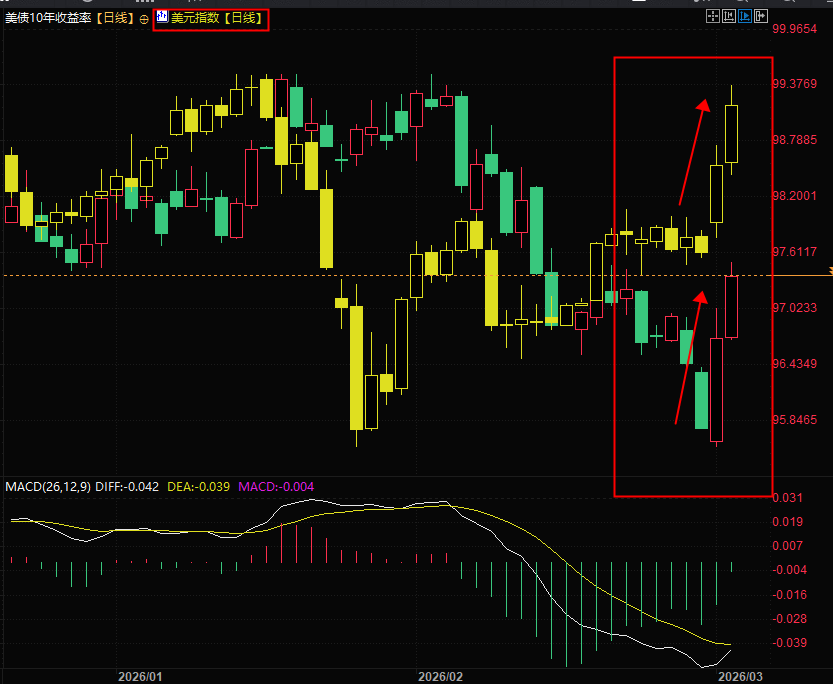
(Daily chart of US 10-year Treasury yield and US dollar index)
Meanwhile, as gold is priced in US dollars, the sharp rebound in the US dollar index has also fundamentally suppressed gold prices.
Another impact of rising global inflation is that it will affect market bets on a shift in expectations regarding the Federal Reserve's policy.
Signs of rising inflation at the U.S. factory level have forced traders to reduce their expectations for further easing by the Federal Reserve.
According to the CME FedWatch Tool, the probability of the Federal Reserve keeping interest rates unchanged at its June meeting has risen from 42.7% on Friday to 53.5%, and the cooling of easing expectations has directly put downward pressure on gold prices.
The trend of US Treasury Inflation-Protected Securities (TIPS) also shows that when the 10-year Treasury yield rises and TIPS falls, inflation expectations rise significantly. This is because inflation expectations equal nominal yield minus real yield, which is the 10-year Treasury yield minus the TIPS yield. Therefore, when inflation expectations rise sharply, the Fed's expectations for interest rate cuts will continue to decline.
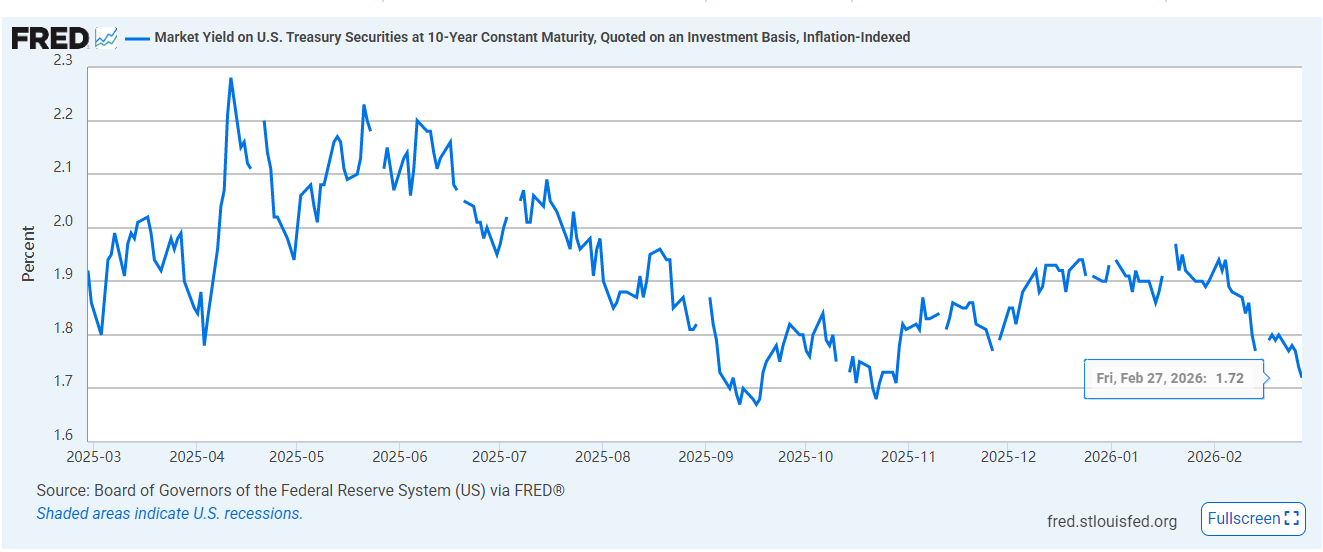
(Chart showing the performance of US Treasury Inflation-Protected Bonds)
After discussing the negative factors, there are actually good entry points for gold during the subsequent correction, with two core factors providing strong support for gold prices.
On the one hand, global debt risks are intensifying, especially in the United States. Excessively high Treasury bond interest rates are not conducive to government debt repayment. Therefore, the fundamentals of the Federal Reserve's tendency to lower interest rates due to government influence have not changed in essence, which will eventually lower the yield on US Treasury bonds. Moreover, if oil prices remain high, US shale oil companies will recover rapidly, and eventually oil prices will return to normal to suppress inflation. The United States also has a relatively strong ability to control its domestic oil prices.
On the other hand, global central banks are accelerating their de-dollarization efforts, with Asian and Middle Eastern central banks diversifying their foreign exchange reserves at the fastest pace in history. Monthly net gold purchases have remained stable at over 70 tons, creating a solid bottom for gold prices that is difficult to break through.
Recently, gold has been pressured by rising crude oil prices, rising interest rates, tightening liquidity, and a rising US dollar index, resulting in a similar trend to technology stocks. There was a correlation between them during the day. However, with the adjustment of domestic inflation in the United States and the decline of the US dollar index, gold still shows extremely high allocation and trading value against the backdrop of long-term geopolitical risks.
Technically, spot gold fell to the lower rail after failing to hold the middle rail of the channel. After finding support at the lower rail and the 5123 support/resistance level, attention should be paid to the rebound of gold. It can be seen that every time the price deviates from the support, the bulls have entered the market and gained considerable returns. Traders are watching to see if the gold price can hold the lower rail of the channel and resume its upward trend.
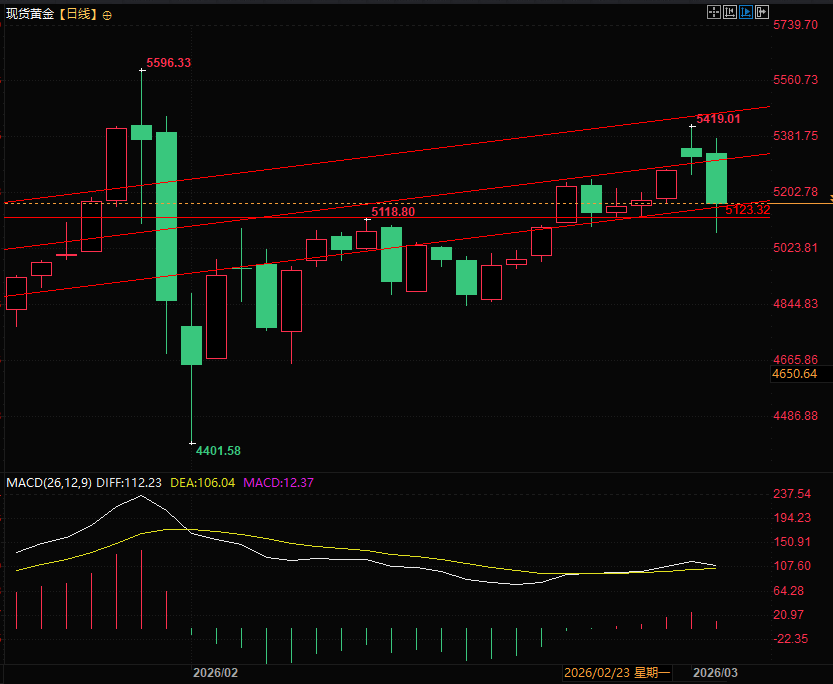
(Spot gold daily chart, source: FX678)
At 20:21 Beijing time, spot gold was trading at $5,187 per ounce.
Previous articles have compared the performance of gold when the US-Iran war broke out. On June 13 last year, when Israel and Iran went to war, gold reached a temporary high on that day, which is exactly the same as this time.
If positive news fails to drive up prices, it's a sign of impending risk.
The conflict between Israel, the United States, and Iran is escalating. Last weekend, the three sides clashed directly. The United States and Israel launched multiple airstrikes against Iran, resulting in the deaths of several high-ranking officials, including Iran's Supreme Leader Khamenei. In retaliation, Iran announced the closure of the Strait of Hormuz, a vital waterway for 20% of the world's oil transport, the following day and launched a series of military counterattacks.
As a result, international oil prices surged by more than 13%, fully activating gold's safe-haven properties. However, strangely, gold did not rise significantly, especially compared to international oil prices. Meanwhile, geopolitical risks have not eased today, and gold once again failed to rise despite positive news. Funds that bet on going long found that they could not profit after buying, which could lead to a stampede of long positions if negative news emerges.
US Treasury yields, along with the dollar, are baring their fangs, severely suppressing gold prices.
Recently, both Treasury yields and the US dollar have been rising for several consecutive days, especially the 2-10 year Treasury yields, which have continued to rise. This trend is very deceptive and counterintuitive. Firstly, the strong rebound of the three major US stock indexes last night, coupled with the rise in Treasury yields, could easily lead the market to interpret it as a positive stock market and a recovery in risk appetite, thus prompting the market to sell Treasury bonds.
The actual reason for the recent rise in Treasury yields is something else entirely. The core of recent trading lies in the fact that rising oil prices are pushing up global inflation and threatening global economic growth, which will worsen corporate profits. The overall sharp decline in global equity markets is evidence of this. After oil prices push up inflation, the market needs higher interest rates to compensate for the rise in Treasury yields. Therefore, the rise in US Treasury yields is actually compensating for the increase in domestic inflation.
The rise in US Treasury yields has driven up benchmark interest rates in the market, which is very bearish for long-term assets, with gold and technology stocks being the first to be affected. It is not surprising that gold followed the same downward trend as technology stocks, as the cost of holding them has increased. Technology stocks have also seen their valuations slashed due to higher discount rates. At the same time, market risk appetite has tightened and liquidity has been affected, which is also bearish for gold.
(Daily chart of US 10-year Treasury yield and US dollar index)
Meanwhile, as gold is priced in US dollars, the sharp rebound in the US dollar index has also fundamentally suppressed gold prices.
Cooling expectations of further easing by the Federal Reserve are putting downward pressure on gold prices in the short term.
Another impact of rising global inflation is that it will affect market bets on a shift in expectations regarding the Federal Reserve's policy.
Signs of rising inflation at the U.S. factory level have forced traders to reduce their expectations for further easing by the Federal Reserve.
According to the CME FedWatch Tool, the probability of the Federal Reserve keeping interest rates unchanged at its June meeting has risen from 42.7% on Friday to 53.5%, and the cooling of easing expectations has directly put downward pressure on gold prices.
The trend of US Treasury Inflation-Protected Securities (TIPS) also shows that when the 10-year Treasury yield rises and TIPS falls, inflation expectations rise significantly. This is because inflation expectations equal nominal yield minus real yield, which is the 10-year Treasury yield minus the TIPS yield. Therefore, when inflation expectations rise sharply, the Fed's expectations for interest rate cuts will continue to decline.
(Chart showing the performance of US Treasury Inflation-Protected Bonds)
Dual fundamental factors support a solid medium- to long-term bottom for gold prices.
After discussing the negative factors, there are actually good entry points for gold during the subsequent correction, with two core factors providing strong support for gold prices.
On the one hand, global debt risks are intensifying, especially in the United States. Excessively high Treasury bond interest rates are not conducive to government debt repayment. Therefore, the fundamentals of the Federal Reserve's tendency to lower interest rates due to government influence have not changed in essence, which will eventually lower the yield on US Treasury bonds. Moreover, if oil prices remain high, US shale oil companies will recover rapidly, and eventually oil prices will return to normal to suppress inflation. The United States also has a relatively strong ability to control its domestic oil prices.
On the other hand, global central banks are accelerating their de-dollarization efforts, with Asian and Middle Eastern central banks diversifying their foreign exchange reserves at the fastest pace in history. Monthly net gold purchases have remained stable at over 70 tons, creating a solid bottom for gold prices that is difficult to break through.
Summary and Technical Analysis:
Recently, gold has been pressured by rising crude oil prices, rising interest rates, tightening liquidity, and a rising US dollar index, resulting in a similar trend to technology stocks. There was a correlation between them during the day. However, with the adjustment of domestic inflation in the United States and the decline of the US dollar index, gold still shows extremely high allocation and trading value against the backdrop of long-term geopolitical risks.
Technically, spot gold fell to the lower rail after failing to hold the middle rail of the channel. After finding support at the lower rail and the 5123 support/resistance level, attention should be paid to the rebound of gold. It can be seen that every time the price deviates from the support, the bulls have entered the market and gained considerable returns. Traders are watching to see if the gold price can hold the lower rail of the channel and resume its upward trend.
(Spot gold daily chart, source: FX678)
At 20:21 Beijing time, spot gold was trading at $5,187 per ounce.
- Risk Warning and Disclaimer
- The market involves risk, and trading may not be suitable for all investors. This article is for reference only and does not constitute personal investment advice, nor does it take into account certain users’ specific investment objectives, financial situation, or other needs. Any investment decisions made based on this information are at your own risk.