One chart: The Baltic Dry Index hits a more than two-month high, with shipping rates rising across the board.
2026-03-03 22:59:02
Latest data shows that the Baltic Dry Index (BDI) reached 2242 points on March 3, 2026, a new high since December 11, 2025, up 2.51% month-on-month, the largest increase since February 23, 2026, and marking the third consecutive day of increase (including zero growth). Looking at the short-term charts, the recent 11 BDI data points show: 6 positive increases, 5 negative increases, and 0 zero increases. Specifically, the Panamax Freight Index (BPI) reached 2002 points, up 1.16% from the previous value; the Capesize Freight Index (BCI) reached 3245 points, up 3.57%; and the Supramax Freight Index (BSI) reached 1383 points, up 1.62%. For detailed 720-day and 10-year trend charts of the Baltic Dry Index and its three main sub-indices, please refer to the specially designed charts.
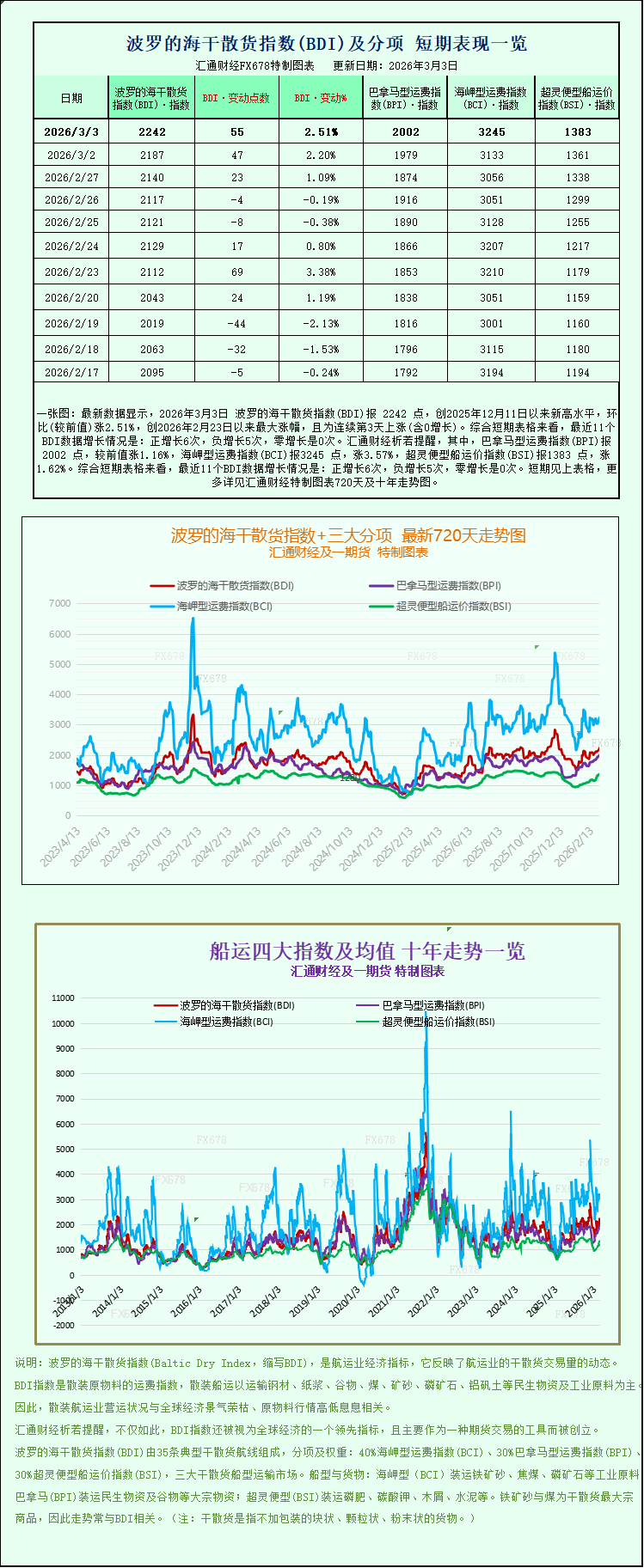
The Baltic Dry Index, which focuses on reflecting global dry bulk shipping prices, continued to rise on Tuesday, reaching a new high in more than two months, supported by generally firm freight rates across various vessel types. This indicates that demand and freight rates in the dry bulk shipping market have strengthened in tandem recently.
The Baltic Dry Index (BADI), which covers freight rates for Capesize, Panamax, and Supramax vessels, rose 55 points, or 2.5%, to close at 2,242 points, its highest level since December 11, 2025, with the current rebound momentum continuing to strengthen.
The Capesize freight index rose 112 points, or 3.6%, to close at 3245 points, a near one-month high. As the largest vessel type in the dry bulk market and most sensitive to demand for iron ore and coal, the significant increase in Capesize freight rates directly reflects the improved demand for long-distance commodity shipping.
Capesize vessels, primarily carrying 150,000-ton bulk cargoes such as iron ore and coal, saw their average daily earnings rise by $1,019 to $25,929. This significant rebound in vessel earnings indicates further expansion of profit margins for shipping companies, providing positive support for the entire dry bulk shipping sector.
Iron ore prices fluctuated on Tuesday. Market investors are weighing multiple conflicting factors: on the one hand, the escalating conflict in Iran has led to rising shipping costs, with shipping through the crucial Strait of Hormuz disrupted, pushing up global logistics and transportation costs; on the other hand, production cuts implemented by Chinese steel mills have weakened end-user demand for iron ore. These intertwined factors have intensified price volatility.
Iranian media reported that a senior official of the Iranian Revolutionary Guard declared on Monday that the Strait of Hormuz had been closed and that Iran would open fire on any ships attempting to pass through the waterway. This sharp escalation of geopolitical risks is directly impacting the security of global energy and dry bulk shipping routes, becoming a key external variable recently disrupting international shipping and commodity markets.
Meanwhile, the Panamax freight index rose 23 points, or 1.2%, to close at 2002 points, its highest level since September 2025. Panamax vessels, which primarily transport medium-sized dry bulk cargoes such as coal and grain, saw their freight rates strengthen, indicating increased activity in global grain and coal trade.
Panamax vessels, which typically carry 60,000 to 70,000 tons of coal and grain, saw their average daily earnings rise by $201 to $18,015, reflecting a continued improvement in shipowner profitability.
In the small and medium-sized vessel sector, the Supramax freight rate index rose 22 points, or 1.6%, to close at 1383 points. The small dry bulk carrier market also followed the trend and steadily increased.
The Baltic Dry Index, which focuses on reflecting global dry bulk shipping prices, continued to rise on Tuesday, reaching a new high in more than two months, supported by generally firm freight rates across various vessel types. This indicates that demand and freight rates in the dry bulk shipping market have strengthened in tandem recently.
The Baltic Dry Index (BADI), which covers freight rates for Capesize, Panamax, and Supramax vessels, rose 55 points, or 2.5%, to close at 2,242 points, its highest level since December 11, 2025, with the current rebound momentum continuing to strengthen.
The Capesize freight index rose 112 points, or 3.6%, to close at 3245 points, a near one-month high. As the largest vessel type in the dry bulk market and most sensitive to demand for iron ore and coal, the significant increase in Capesize freight rates directly reflects the improved demand for long-distance commodity shipping.
Capesize vessels, primarily carrying 150,000-ton bulk cargoes such as iron ore and coal, saw their average daily earnings rise by $1,019 to $25,929. This significant rebound in vessel earnings indicates further expansion of profit margins for shipping companies, providing positive support for the entire dry bulk shipping sector.
Iron ore prices fluctuated on Tuesday. Market investors are weighing multiple conflicting factors: on the one hand, the escalating conflict in Iran has led to rising shipping costs, with shipping through the crucial Strait of Hormuz disrupted, pushing up global logistics and transportation costs; on the other hand, production cuts implemented by Chinese steel mills have weakened end-user demand for iron ore. These intertwined factors have intensified price volatility.
Iranian media reported that a senior official of the Iranian Revolutionary Guard declared on Monday that the Strait of Hormuz had been closed and that Iran would open fire on any ships attempting to pass through the waterway. This sharp escalation of geopolitical risks is directly impacting the security of global energy and dry bulk shipping routes, becoming a key external variable recently disrupting international shipping and commodity markets.
Meanwhile, the Panamax freight index rose 23 points, or 1.2%, to close at 2002 points, its highest level since September 2025. Panamax vessels, which primarily transport medium-sized dry bulk cargoes such as coal and grain, saw their freight rates strengthen, indicating increased activity in global grain and coal trade.
Panamax vessels, which typically carry 60,000 to 70,000 tons of coal and grain, saw their average daily earnings rise by $201 to $18,015, reflecting a continued improvement in shipowner profitability.
In the small and medium-sized vessel sector, the Supramax freight rate index rose 22 points, or 1.6%, to close at 1383 points. The small dry bulk carrier market also followed the trend and steadily increased.
- Risk Warning and Disclaimer
- The market involves risk, and trading may not be suitable for all investors. This article is for reference only and does not constitute personal investment advice, nor does it take into account certain users’ specific investment objectives, financial situation, or other needs. Any investment decisions made based on this information are at your own risk.