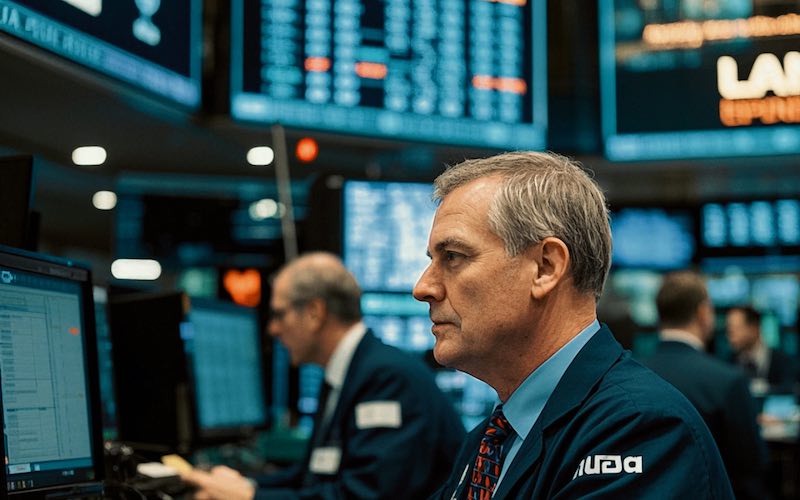
Trump's unexpected insurance policy was ignored, and oil tankers shut down and hid in a safe zone.
2026-03-04 16:39:26
Despite former US President Trump's explicit statement that he would deploy the Navy to escort oil tankers in the Strait of Hormuz and introduce low-cost political risk insurance, along with the US claiming that there were no Iranian vessels operating in the core shipping lanes, these promises failed to alleviate global market panic. On the contrary, global stock markets plummeted, and various risk assets faced immense pressure. Market investors generally believe that geopolitical uncertainties are far from over, and simple military escorts cannot immediately restore confidence in the supply chain. This reflects that the deep-seated root of the oil crisis lies in the risk of long-term supply disruptions, which cannot be resolved by short-term military postures. However, whether any ships will be the first to take the plunge is also a key point of interest for the market.
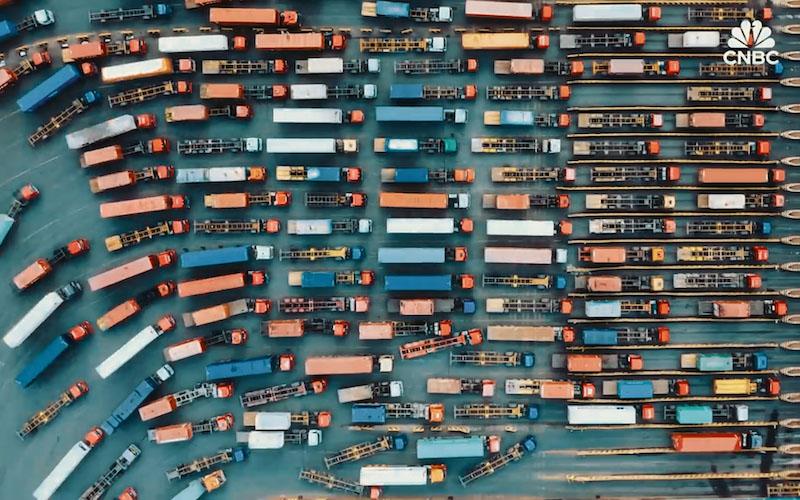
Iran's de facto blockade of the Strait of Hormuz has brought the global energy lifeline to a standstill.
Following the US-Israeli military action, Iran swiftly implemented a substantial blockade, effectively paralyzing the Strait of Hormuz, which carries 20% of global oil shipments and a significant amount of liquefied natural gas trade. The disruption of this vital global energy artery triggered widespread panic in international markets. While the US Central Command claimed to have sunk 17 Iranian ships, frequent incidents of vessels encountering danger off the coasts of the UAE and Oman have dramatically increased shipping safety risks. The regional conflict has directly severed a major global energy artery, and the gap cannot be filled in the short term by alternative shipping routes.
Global stock markets experienced sharp fluctuations: a comparison of significant declines in Asian and Middle Eastern indices.
Panic was palpable in the stock market, with major indices experiencing unprecedented declines in recent years. The table below clearly compares the performance of major market indices:
| index | Decline | Remark |
|---|---|---|
| South Korea Kospi Index | 12% | Trading was temporarily suspended, marking the largest single-day drop since 2008. |
| Japan's Nikkei 225 index | 3.9% | Major Asian markets generally faced pressure. |
| China CSI 300 Index | 1.3% | Relatively mild but still dragged down |
| India's Nifty50 Index | 2% | Emerging markets fell in tandem |
| Dubai Stock Index | 4.7% | The Middle Eastern local market is the first to bear the brunt. |
| Abu Dhabi Stock Index | 3.5% | The Middle Eastern local market is the first to bear the brunt. |
US stocks also opened sharply lower in pre-market trading, with risk aversion rising across the board, indicating that this crisis has transcended regional boundaries and become a global systemic risk.
The paralysis of the Hormuz waterway has driven up international oil prices to continue their surge.
The disruption of shipping lanes directly led to a sharp rise in international oil prices . Brent crude continued to rise this week, climbing another 1.4% to $82.53 per barrel on Wednesday, a new high for the period. Goldman Sachs CEO David Solomon warned that the market will need several weeks to digest the short- to medium-term impact of this military action, and the future trajectory remains highly uncertain. Regional conflict has not only driven up oil prices but also amplified supply chain vulnerabilities; any further escalation could trigger a chain reaction.
OPEC+ production increases are unlikely to offset supply shocks.
To compensate for the disruption to Iranian crude oil exports, the eight OPEC+ countries jointly announced an increase in daily oil production of 206,000 barrels. However, economists at Ernst & Young Parthenon emphasized that this increase is negligible compared to the daily volume of traffic through the Strait of Hormuz and is completely insufficient to effectively offset the supply shock caused by the continued disruption of the shipping route. The market generally believes that the short-term production increase can only alleviate some pressure, and long-term reliance will still depend on the restoration of the shipping route.
US military escorts fail to quell market geopolitical uncertainties
On Tuesday, Trump pledged on social media to provide low-cost political risk insurance for ships in the Gulf and to deploy naval escorts for oil tankers if necessary to ensure the free flow of global energy. However, LPL financial analysts pointed out that the escort news only temporarily eased the decline in oil prices, and market panic has not fundamentally subsided. eToro analyst Kenwell bluntly stated that the huge uncertainties surrounding the duration of the conflict and the vacancy in Iranian leadership have fueled continued market aversion. Currently, no privately owned large oil tankers have officially obtained insurance and ventured into the Strait of Hormuz; most shipowners remain in the "safe zone" of the Gulf of Oman, waiting for the formal formation of the US escort fleet.
Economic risks become apparent: Rising inflation pushes up US Treasury yields
The shipping lane stagnation has triggered heightened vigilance on Wall Street, while soaring oil prices have reignited inflation concerns. The yield on the 10-year US Treasury note has risen to 4.06%, with the market already pricing in an expected inflation rebound. Capital Economics warns that if oil prices stabilize in the $90-$100/barrel range in the medium to long term, US inflation will rise again, further limiting the Federal Reserve's policy easing space. Simultaneously, rising Treasury yields will push up mortgage rates, posing a significant negative impact on the nascent US housing market recovery.
Goldman Sachs analysis: The market remains resilient despite short-term volatility.
Goldman Sachs points out that if the supply disruption in the Strait of Hormuz lasts for about five weeks, Brent crude oil prices could rise further to $100 per barrel; if there is a brief export collapse followed by a gradual recovery, the loss of Middle Eastern crude oil production could reach approximately 200 million barrels, rapidly depleting OECD countries' inventories. However, Goldman Sachs equity strategists believe that while global stock markets are susceptible to corrections due to escalating tensions in the Middle East and the weighing of risks associated with AI capital expenditures, a full-blown bear market is unlikely. Strong economic growth, robust earnings, and healthy private sector balance sheets will provide a buffer. Strategists recommend that investors maintain broad geographical, factor, and sector diversification to enhance risk-adjusted returns. Overall, while the current escalation of conflict in the Middle East has triggered significant volatility, Goldman Sachs maintains a relatively optimistic perspective on the market: short-term volatility is inevitable, but long-term fundamentals remain resilient.
Frequently Asked Questions
Question 1: What was the core background of the Strait of Hormuz crisis?
Answer: This crisis stemmed from Iran's de facto blockade following the US-Israeli military action, which essentially brought the Strait of Hormuz, a vital global energy artery, to a standstill. This strait handles 20% of the world's oil and a significant amount of liquefied natural gas; any disruption would trigger supply panic. Although the US military sank some Iranian ships, the shipping security risks have increased dramatically, with shipowners generally adopting a wait-and-see approach, highlighting the direct impact of geopolitical conflict on global supply chains.
Question 2: Why did Trump's promises of naval escort and insurance fail to effectively reassure the market?
Answer: Although Trump promised to provide low-cost political risk insurance and launch a naval escort, the market believes these measures cannot fundamentally eliminate uncertainty. Currently, no large oil tankers are risking insurance to enter the Strait, and shipowners are still waiting for the formal escort fleet to arrive. Variables such as the duration of the conflict and the vacancy in Iranian leadership continue to fuel panic. The escort news only brought a temporary drop in oil prices and failed to change the overall situation of pressured risk appetite.
Question 3: What are the criteria used by Goldman Sachs to assess the impact of oil prices, the stock market, and the economy? What implications does this have for investors?
Answer: Goldman Sachs' simulations based on the duration of supply disruptions suggest that if supply does not recover within five weeks, Brent crude oil prices could reach $100 per barrel; a short-term export collapse could result in a loss of 200 million barrels, rapidly depleting inventories. However, they also emphasize that strong economic growth and a healthy balance sheet will buffer the risks, making a full-blown bear market unlikely. The implication is that investors should focus on the pressure on the housing market from rebounding inflation and rising US Treasury yields, and manage short-term volatility through regional, factor, and industry diversification, seizing buying opportunities on pullbacks rather than panicking excessively.
- Risk Warning and Disclaimer
- The market involves risk, and trading may not be suitable for all investors. This article is for reference only and does not constitute personal investment advice, nor does it take into account certain users’ specific investment objectives, financial situation, or other needs. Any investment decisions made based on this information are at your own risk.