March 5th Financial Breakfast: Increased concerns about the prolonged Iranian crisis fueled safe-haven buying, supporting a gold price rebound; continued supply disruptions drove oil prices up nearly 2%.
2026-03-05 07:24:06
On Thursday (March 5, Beijing time) in early Asian trading, spot gold was trading around $5,148 per ounce. Gold prices rose on Wednesday as escalating conflict in the Middle East attracted safe-haven buying, while a pause in the dollar's rally provided support. US crude oil was trading around $75.90 per barrel. Oil prices rose nearly 2% on Wednesday as the escalating Iranian crisis paralyzed shipping in the Strait of Hormuz for the fifth day, with the market grappling with expectations of a protracted conflict and continued supply disruptions.

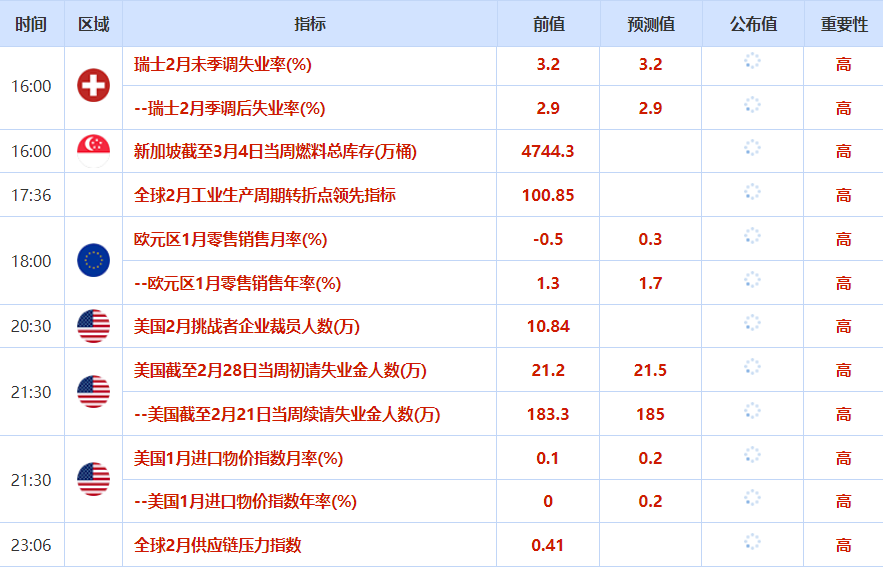
U.S. stocks closed higher on Wednesday, mainly thanks to news that Iran hinted at a willingness to negotiate and President Trump’s promise to stabilize the oil market, which eased investor concerns about a conflict in the Middle East.
Improved market sentiment prompted investors to flock to technology stocks again, pushing the Nasdaq up 1.29%, maintaining its upward trend since the outbreak of the conflict; the S&P 500 rose 0.78%, and the Dow Jones Industrial Average closed up 0.49%.
The New York Times reported that Iranian intelligence personnel indirectly contacted the CIA the day after the attack, although U.S. officials remained skeptical about a short-term de-escalation of the situation. Meanwhile, Trump's announcement of sending U.S. warships to escort oil tankers in the Strait of Hormuz and providing political risk insurance also eased market concerns about oil supply disruptions driving up inflation.
Analysts pointed out that the White House statement injected optimism into the market, but the coming weeks will present a test. Notably, the energy sector, which had previously risen due to higher oil prices, led the decline on Wednesday, with Exxon Mobil and ConocoPhillips both closing lower. On the economic data front, the ADP report showed stronger-than-expected private sector job growth in February, with robust service sector activity also providing support to the market.
Gold prices rose on Wednesday as escalating conflict in the Middle East attracted safe-haven buying, while a pause in the dollar's rally after Tuesday's sharp gains provided support. Spot gold closed at $5,120.71 per ounce, up 0.7%.
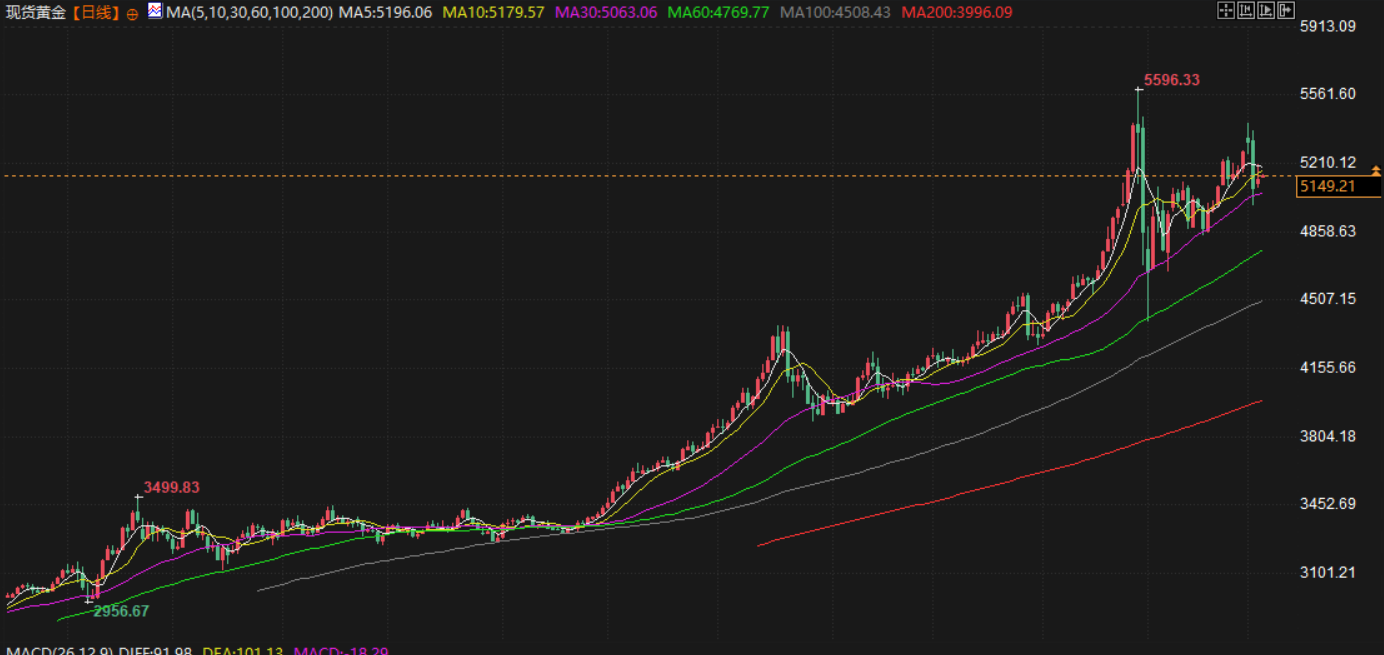
Analysts pointed out that the dollar's pullback provided support for gold prices, while macroeconomic fundamentals and ongoing geopolitical conflicts generally remain favorable for gold. Although market volatility may persist, the overall bullish outlook remains unchanged. The conflict escalated further that day, with a US submarine sinking an Iranian warship near Sri Lanka, killing at least 80 people. NATO air defense systems also intercepted a ballistic missile launched by Iran towards Turkey. On the economic data front, the ADP report showed that US private sector employment increased more than expected in February, but January's data was significantly revised downwards. The market is now focusing on the US February non-farm payroll report to be released on Friday. In other precious metals, spot silver rose 1.3%, spot platinum rose 2.8%, and palladium rose 1.2%.
International oil prices closed flat on Wednesday after significant volatility, but Brent crude and WTI crude finished at their highest levels since January and June of 2025, respectively. Brent crude settled at $81.40 a barrel, its highest level since January 2025. WTI crude rose 1.75% to $76.11 a barrel, marking its second consecutive trading day with its highest closing price since June.
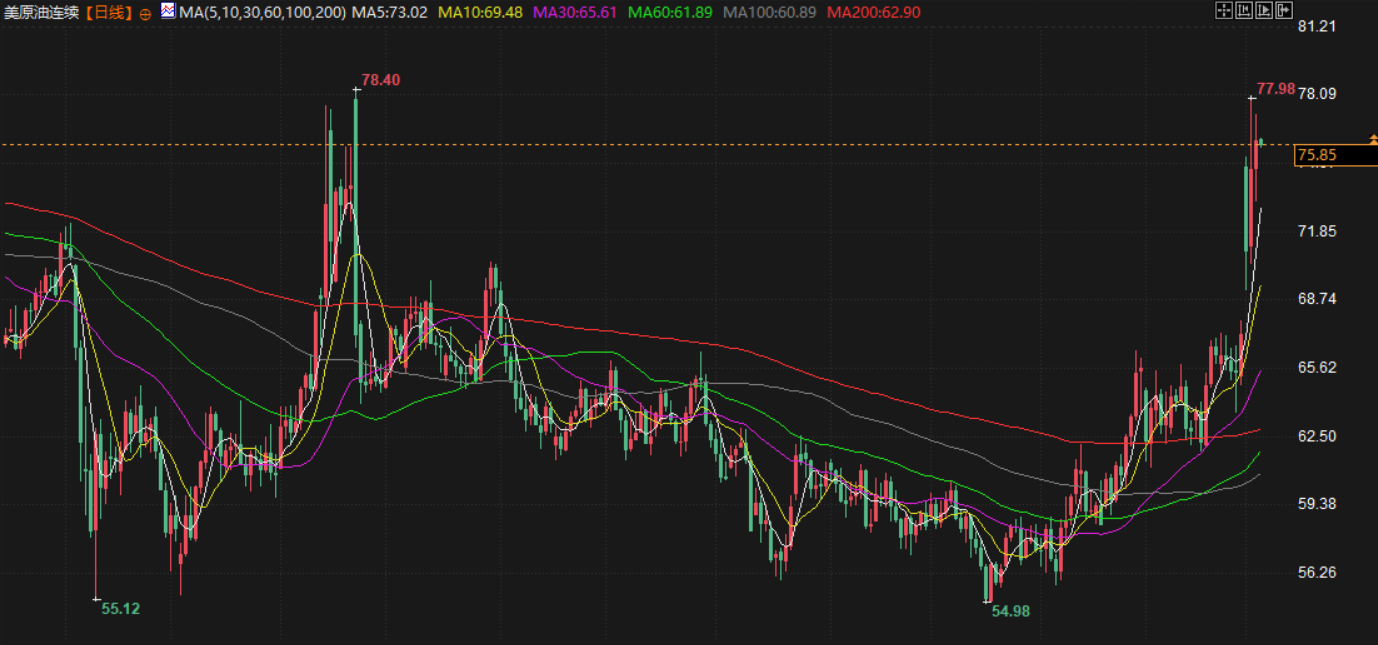
The main reason is that the escalation of the Iranian crisis has paralyzed shipping in the Strait of Hormuz for five days, and the market is dealing with expectations of a protracted war and continued supply disruptions.
Although Brent crude oil prices rose by more than $3 in early trading due to escalating conflict, a New York Times report that Iranian intelligence agents had signaled negotiations to the CIA caused prices to give back their gains.
The U.S. Secretary of Defense stated that the U.S. is winning the war and can continue to fight as needed, while Iraq, the second-largest oil producer in OPEC, has cut production by nearly 1.5 million barrels per day due to storage restrictions and export disruptions, and may be forced to shut down nearly 3 million barrels per day of capacity within days.
In response to the crisis, US President Trump announced that oil tankers could be escorted and political risk insurance provided if necessary, and the White House confirmed that the Pentagon is developing plans to ensure the security of the Strait of Hormuz. On the data front, the US Energy Information Administration showed that crude oil inventories increased by 3.5 million barrels last week, a three-and-a-half-year high, exceeding expectations.
The dollar retreated from multi-month highs on Wednesday, primarily as a New York Times report that Iran's intelligence ministry had conveyed to the CIA its willingness to explore negotiations to end the war triggered investors to sell off safe-haven assets, fueling expectations that the Middle East conflict might be shorter-lived than initially feared. This news boosted overall risk sentiment and pressured the dollar.
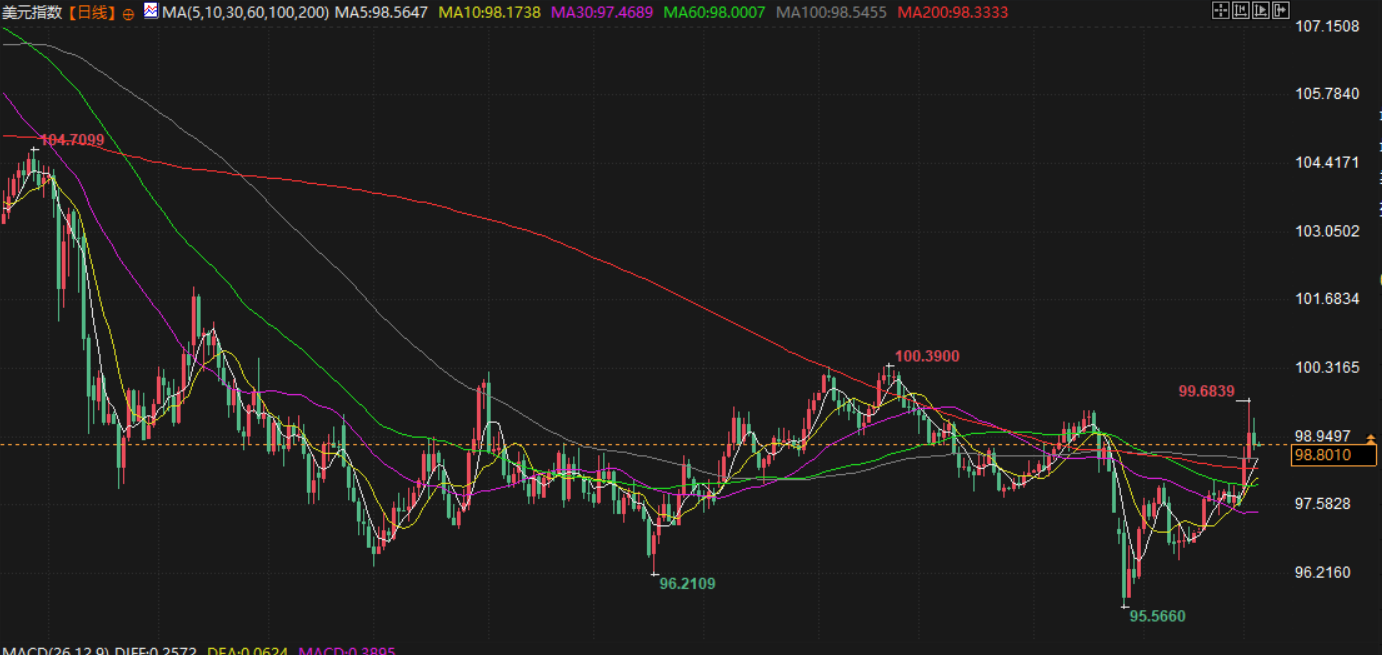
The dollar index fell 0.3% to 98.83, the euro rose slightly by 0.2% against the dollar to $1.1632, and the dollar fell 0.4% against the yen to 157.02 yen. Despite the release of data showing the largest increase in U.S. private sector employment in February in seven months and a surge in service sector activity to a more than three-and-a-half-year high, the economic data had a limited impact on the currency market. Meanwhile, the options market showed traders holding the strongest bearish view on the euro in at least a year, mainly due to concerns about European gas supply and prices. The pound rose 0.1% against the dollar, but was pressured by the prospect of prolonged energy price increases, given that UK inflation remains well above target.
The US Senate failed to prevent further military action against Iran.
On March 4, local time, the U.S. Senate held a procedural vote on a bill limiting the president's war powers. The vote was 52 against and 47 in favor, preventing the bill from advancing. This means the vote blocked a bipartisan resolution aimed at halting airstrikes against Iran and requiring congressional authorization for any hostile action against Iran. Under the U.S. Constitution, only Congress can authorize war. A 1973 law stipulates that only in a national emergency arising from an attack against the United States, its territory or territories, or its armed forces can the president take limited military action without congressional authorization. (CCTV International News)
Putin said he is considering voluntarily cutting off natural gas supplies to Europe.
On March 4th local time, Russian President Vladimir Putin stated in an interview with Russian media that oil and natural gas prices are indeed rising, a consequence of factors including restrictions on Russian energy and the US-Israeli aggression against Iran. The EU is also considering a complete ban on pipeline natural gas and liquefied natural gas imports from Russia. Putin said that since the EU will eventually ban Russian gas imports anyway, Russia might as well proactively "cut off" gas supplies to Europe, ceasing supply to the European market and shifting to emerging markets. Putin reiterated that Russia remains a reliable energy supplier and will continue to cooperate in this manner with reliable European partners, such as Slovakia and Hungary. (CCTV International News)
Iraqi forces attacked the Israeli Ministry of Defense building and Ben Gurion International Airport, destroying seven radar systems.
On May 5th local time, the Iranian Islamic Revolutionary Guard Corps issued a statement saying that in the seventeenth round of Operation True Commitment 4, Iran launched hypersonic missiles and attack drones that penetrated the US THAAD system and attacked the Israeli Ministry of Defense building and Ben Gurion International Airport. With more than seven advanced radar systems successfully destroyed by Iran, the US and Israel have been "blind" in the region. The statement indicated that reconnaissance and strikes against the aggressors are ongoing. The intensity and scope of attacks will further expand in the coming days. (CCTV News)
The White House says sending U.S. ground troops to Iran is currently "not in the plans."
White House Press Secretary Janet Levitt said at a press conference on March 4 that sending U.S. ground troops to Iran is currently "not in the plans," but she would not rule out any military options for the president. When asked whether U.S. ground troops would be sent to Iran, Levitt said, "These measures are not currently in the plans for this operation," but she would not rule out any military options for the U.S. president. The United States and Israel launched a large-scale military operation against Iran on February 28. Currently, the U.S.-Israeli military operation is mainly airstrikes, but whether to send ground troops to Iran has drawn attention as neither U.S. President Trump nor Defense Secretary Hergsays has explicitly ruled out this option. (Xinhua)
The Trump administration is in talks with at least one major insurance brokerage firm about how to allow ships to pass through the Strait of Hormuz again.
Marcus Baker, global head of maritime, cargo, and logistics at insurance brokerage Marsh Risk, said a team from the firm met with U.S. government officials on Tuesday and offered to help the government establish an insurance mechanism to reduce shipping risks and lower ship insurance costs. Energy prices have surged since Iran warned it might begin attacks on ships in strategic waterways, bringing oil shipments to a near standstill.
British media: British officials say they do not rule out future involvement in strikes against Iranian missile facilities.
The Guardian reported on the 4th that British officials stated Britain "has not ruled out the possibility of future involvement in strikes against Iranian ballistic missile launchers." The report did not specify the identities of these British officials. The report stated that in the coming days, US heavy bombers are expected to arrive at the British military bases on Diego Garcia, the main island of the Chagos Islands, and in Fairford, Gloucestershire, England. These bombers are reportedly launching from these bases to attack Iran's underground missile facilities. British media previously reported that Britain had refused to allow the US to use military bases on the Chagos Islands to strike Iran, citing international law. Starmer issued a statement on the evening of the 1st, stating that Britain had agreed to the US use of the military bases for "specific and limited" defensive purposes. (Xinhua)
Iran begins to shift towards governance preparations for a protracted war.
The Iranian government has activated its emergency plan for managing the country in a prolonged state of war, focusing on ensuring the supply of basic necessities, supporting the people, maintaining production resources, and maximizing the effectiveness of the country's infrastructure. Officials stated that the plan, approved by the president and fully implemented across all government departments, aims to ensure economic stability and the supply of goods in the event of a prolonged conflict.
Chartering costs for supertankers on the US-Asia route have risen to a record high of $29 million.
Data from the Baltic Exchange shows that the cost of transporting 2 million barrels of crude oil on the U.S.-China route jumped to $29.09 million. This equates to approximately $14.50 per barrel, nearly 20% of the WTI futures price. This level is a new record, up from $26.91 million on Tuesday.
US Defense Secretary says US-Iran conflict could last eight weeks or longer
On March 4, local time, CCTV reporters learned that US Defense Secretary Peter Hegses stated that the conflict between the US and Iran could last for several weeks, possibly up to eight weeks or even longer. He said the pace of the conflict would be determined by the US, "it could be four weeks, six weeks, or even eight weeks," and the US would control the speed and intensity of the operation. (CCTV)
The Ministry of Finance and two other departments released tax incentives for imported exhibits sold during the China International Fair for Trade in Services.
To support the successful hosting of the China International Fair for Trade in Services (CIFTIS), the Ministry of Finance, the General Administration of Customs, and the State Taxation Administration jointly issued the "Notice on Preferential Tax Policies for Imported Exhibits Sold During the CIFTIS Exhibition Period." The notice clarifies that for CIFTIS held between 2026 and 2027, each exhibitor will continue to be exempt from import duties, import value-added tax, and consumption tax on imported exhibits sold within the tax-free quota during the exhibition period. (Ministry of Finance)
China's commodity price index rose 10.9% year-on-year in February.
The China Federation of Logistics and Purchasing (CFLP) released its February China Bulk Commodity Price Index today. The index shows that although it declined slightly month-on-month due to the Spring Festival holiday, it still maintained a year-on-year increase of 10.9%, indicating that the bulk commodity market is generally stable, and the positive market outlook and inherent driving forces remain solid. With the full resumption of work and production across industries after the holiday, and the release of investment and consumption demand, the market is expected to gradually recover and stabilize. The February China Bulk Commodity Price Index was 124.9 points, down 0.4% month-on-month and up 10.9% year-on-year. Among the 50 key bulk commodities monitored by the CFLP, 24 saw month-on-month price increases in February. Among them, praseodymium oxide, styrene-butadiene rubber, and polyvinyl chloride saw the largest increases, rising by 24.3%, 5.4%, and 3.5% respectively compared to the previous month. By industry, influenced by imported factors such as tense geopolitical tensions in the Middle East and a sharp rise in international crude oil prices, the energy and chemical price indices rose, increasing by 0.5% and 1.2% respectively month-on-month. The non-ferrous and ferrous metal price indices showed clear seasonal characteristics, declining by 0.8% and 0.2% respectively month-on-month, but still remaining at recent high levels. (CCTV News)
Key Focus Today
stock market
U.S. stocks closed higher on Wednesday, mainly thanks to news that Iran hinted at a willingness to negotiate and President Trump’s promise to stabilize the oil market, which eased investor concerns about a conflict in the Middle East.
Improved market sentiment prompted investors to flock to technology stocks again, pushing the Nasdaq up 1.29%, maintaining its upward trend since the outbreak of the conflict; the S&P 500 rose 0.78%, and the Dow Jones Industrial Average closed up 0.49%.
The New York Times reported that Iranian intelligence personnel indirectly contacted the CIA the day after the attack, although U.S. officials remained skeptical about a short-term de-escalation of the situation. Meanwhile, Trump's announcement of sending U.S. warships to escort oil tankers in the Strait of Hormuz and providing political risk insurance also eased market concerns about oil supply disruptions driving up inflation.
Analysts pointed out that the White House statement injected optimism into the market, but the coming weeks will present a test. Notably, the energy sector, which had previously risen due to higher oil prices, led the decline on Wednesday, with Exxon Mobil and ConocoPhillips both closing lower. On the economic data front, the ADP report showed stronger-than-expected private sector job growth in February, with robust service sector activity also providing support to the market.
Gold Market
Gold prices rose on Wednesday as escalating conflict in the Middle East attracted safe-haven buying, while a pause in the dollar's rally after Tuesday's sharp gains provided support. Spot gold closed at $5,120.71 per ounce, up 0.7%.
Analysts pointed out that the dollar's pullback provided support for gold prices, while macroeconomic fundamentals and ongoing geopolitical conflicts generally remain favorable for gold. Although market volatility may persist, the overall bullish outlook remains unchanged. The conflict escalated further that day, with a US submarine sinking an Iranian warship near Sri Lanka, killing at least 80 people. NATO air defense systems also intercepted a ballistic missile launched by Iran towards Turkey. On the economic data front, the ADP report showed that US private sector employment increased more than expected in February, but January's data was significantly revised downwards. The market is now focusing on the US February non-farm payroll report to be released on Friday. In other precious metals, spot silver rose 1.3%, spot platinum rose 2.8%, and palladium rose 1.2%.
oil market
International oil prices closed flat on Wednesday after significant volatility, but Brent crude and WTI crude finished at their highest levels since January and June of 2025, respectively. Brent crude settled at $81.40 a barrel, its highest level since January 2025. WTI crude rose 1.75% to $76.11 a barrel, marking its second consecutive trading day with its highest closing price since June.
The main reason is that the escalation of the Iranian crisis has paralyzed shipping in the Strait of Hormuz for five days, and the market is dealing with expectations of a protracted war and continued supply disruptions.
Although Brent crude oil prices rose by more than $3 in early trading due to escalating conflict, a New York Times report that Iranian intelligence agents had signaled negotiations to the CIA caused prices to give back their gains.
The U.S. Secretary of Defense stated that the U.S. is winning the war and can continue to fight as needed, while Iraq, the second-largest oil producer in OPEC, has cut production by nearly 1.5 million barrels per day due to storage restrictions and export disruptions, and may be forced to shut down nearly 3 million barrels per day of capacity within days.
In response to the crisis, US President Trump announced that oil tankers could be escorted and political risk insurance provided if necessary, and the White House confirmed that the Pentagon is developing plans to ensure the security of the Strait of Hormuz. On the data front, the US Energy Information Administration showed that crude oil inventories increased by 3.5 million barrels last week, a three-and-a-half-year high, exceeding expectations.
Foreign exchange market
The dollar retreated from multi-month highs on Wednesday, primarily as a New York Times report that Iran's intelligence ministry had conveyed to the CIA its willingness to explore negotiations to end the war triggered investors to sell off safe-haven assets, fueling expectations that the Middle East conflict might be shorter-lived than initially feared. This news boosted overall risk sentiment and pressured the dollar.
The dollar index fell 0.3% to 98.83, the euro rose slightly by 0.2% against the dollar to $1.1632, and the dollar fell 0.4% against the yen to 157.02 yen. Despite the release of data showing the largest increase in U.S. private sector employment in February in seven months and a surge in service sector activity to a more than three-and-a-half-year high, the economic data had a limited impact on the currency market. Meanwhile, the options market showed traders holding the strongest bearish view on the euro in at least a year, mainly due to concerns about European gas supply and prices. The pound rose 0.1% against the dollar, but was pressured by the prospect of prolonged energy price increases, given that UK inflation remains well above target.
International News
The US Senate failed to prevent further military action against Iran.
On March 4, local time, the U.S. Senate held a procedural vote on a bill limiting the president's war powers. The vote was 52 against and 47 in favor, preventing the bill from advancing. This means the vote blocked a bipartisan resolution aimed at halting airstrikes against Iran and requiring congressional authorization for any hostile action against Iran. Under the U.S. Constitution, only Congress can authorize war. A 1973 law stipulates that only in a national emergency arising from an attack against the United States, its territory or territories, or its armed forces can the president take limited military action without congressional authorization. (CCTV International News)
Putin said he is considering voluntarily cutting off natural gas supplies to Europe.
On March 4th local time, Russian President Vladimir Putin stated in an interview with Russian media that oil and natural gas prices are indeed rising, a consequence of factors including restrictions on Russian energy and the US-Israeli aggression against Iran. The EU is also considering a complete ban on pipeline natural gas and liquefied natural gas imports from Russia. Putin said that since the EU will eventually ban Russian gas imports anyway, Russia might as well proactively "cut off" gas supplies to Europe, ceasing supply to the European market and shifting to emerging markets. Putin reiterated that Russia remains a reliable energy supplier and will continue to cooperate in this manner with reliable European partners, such as Slovakia and Hungary. (CCTV International News)
Iraqi forces attacked the Israeli Ministry of Defense building and Ben Gurion International Airport, destroying seven radar systems.
On May 5th local time, the Iranian Islamic Revolutionary Guard Corps issued a statement saying that in the seventeenth round of Operation True Commitment 4, Iran launched hypersonic missiles and attack drones that penetrated the US THAAD system and attacked the Israeli Ministry of Defense building and Ben Gurion International Airport. With more than seven advanced radar systems successfully destroyed by Iran, the US and Israel have been "blind" in the region. The statement indicated that reconnaissance and strikes against the aggressors are ongoing. The intensity and scope of attacks will further expand in the coming days. (CCTV News)
The White House says sending U.S. ground troops to Iran is currently "not in the plans."
White House Press Secretary Janet Levitt said at a press conference on March 4 that sending U.S. ground troops to Iran is currently "not in the plans," but she would not rule out any military options for the president. When asked whether U.S. ground troops would be sent to Iran, Levitt said, "These measures are not currently in the plans for this operation," but she would not rule out any military options for the U.S. president. The United States and Israel launched a large-scale military operation against Iran on February 28. Currently, the U.S.-Israeli military operation is mainly airstrikes, but whether to send ground troops to Iran has drawn attention as neither U.S. President Trump nor Defense Secretary Hergsays has explicitly ruled out this option. (Xinhua)
The Trump administration is in talks with at least one major insurance brokerage firm about how to allow ships to pass through the Strait of Hormuz again.
Marcus Baker, global head of maritime, cargo, and logistics at insurance brokerage Marsh Risk, said a team from the firm met with U.S. government officials on Tuesday and offered to help the government establish an insurance mechanism to reduce shipping risks and lower ship insurance costs. Energy prices have surged since Iran warned it might begin attacks on ships in strategic waterways, bringing oil shipments to a near standstill.
British media: British officials say they do not rule out future involvement in strikes against Iranian missile facilities.
The Guardian reported on the 4th that British officials stated Britain "has not ruled out the possibility of future involvement in strikes against Iranian ballistic missile launchers." The report did not specify the identities of these British officials. The report stated that in the coming days, US heavy bombers are expected to arrive at the British military bases on Diego Garcia, the main island of the Chagos Islands, and in Fairford, Gloucestershire, England. These bombers are reportedly launching from these bases to attack Iran's underground missile facilities. British media previously reported that Britain had refused to allow the US to use military bases on the Chagos Islands to strike Iran, citing international law. Starmer issued a statement on the evening of the 1st, stating that Britain had agreed to the US use of the military bases for "specific and limited" defensive purposes. (Xinhua)
Iran begins to shift towards governance preparations for a protracted war.
The Iranian government has activated its emergency plan for managing the country in a prolonged state of war, focusing on ensuring the supply of basic necessities, supporting the people, maintaining production resources, and maximizing the effectiveness of the country's infrastructure. Officials stated that the plan, approved by the president and fully implemented across all government departments, aims to ensure economic stability and the supply of goods in the event of a prolonged conflict.
Chartering costs for supertankers on the US-Asia route have risen to a record high of $29 million.
Data from the Baltic Exchange shows that the cost of transporting 2 million barrels of crude oil on the U.S.-China route jumped to $29.09 million. This equates to approximately $14.50 per barrel, nearly 20% of the WTI futures price. This level is a new record, up from $26.91 million on Tuesday.
US Defense Secretary says US-Iran conflict could last eight weeks or longer
On March 4, local time, CCTV reporters learned that US Defense Secretary Peter Hegses stated that the conflict between the US and Iran could last for several weeks, possibly up to eight weeks or even longer. He said the pace of the conflict would be determined by the US, "it could be four weeks, six weeks, or even eight weeks," and the US would control the speed and intensity of the operation. (CCTV)
Domestic News
The Ministry of Finance and two other departments released tax incentives for imported exhibits sold during the China International Fair for Trade in Services.
To support the successful hosting of the China International Fair for Trade in Services (CIFTIS), the Ministry of Finance, the General Administration of Customs, and the State Taxation Administration jointly issued the "Notice on Preferential Tax Policies for Imported Exhibits Sold During the CIFTIS Exhibition Period." The notice clarifies that for CIFTIS held between 2026 and 2027, each exhibitor will continue to be exempt from import duties, import value-added tax, and consumption tax on imported exhibits sold within the tax-free quota during the exhibition period. (Ministry of Finance)
China's commodity price index rose 10.9% year-on-year in February.
The China Federation of Logistics and Purchasing (CFLP) released its February China Bulk Commodity Price Index today. The index shows that although it declined slightly month-on-month due to the Spring Festival holiday, it still maintained a year-on-year increase of 10.9%, indicating that the bulk commodity market is generally stable, and the positive market outlook and inherent driving forces remain solid. With the full resumption of work and production across industries after the holiday, and the release of investment and consumption demand, the market is expected to gradually recover and stabilize. The February China Bulk Commodity Price Index was 124.9 points, down 0.4% month-on-month and up 10.9% year-on-year. Among the 50 key bulk commodities monitored by the CFLP, 24 saw month-on-month price increases in February. Among them, praseodymium oxide, styrene-butadiene rubber, and polyvinyl chloride saw the largest increases, rising by 24.3%, 5.4%, and 3.5% respectively compared to the previous month. By industry, influenced by imported factors such as tense geopolitical tensions in the Middle East and a sharp rise in international crude oil prices, the energy and chemical price indices rose, increasing by 0.5% and 1.2% respectively month-on-month. The non-ferrous and ferrous metal price indices showed clear seasonal characteristics, declining by 0.8% and 0.2% respectively month-on-month, but still remaining at recent high levels. (CCTV News)
- Risk Warning and Disclaimer
- The market involves risk, and trading may not be suitable for all investors. This article is for reference only and does not constitute personal investment advice, nor does it take into account certain users’ specific investment objectives, financial situation, or other needs. Any investment decisions made based on this information are at your own risk.