Trump said "four weeks is over," but the Pentagon was preparing for 100 days! Has the lie been exposed?
2026-03-06 13:32:36
The U.S. Central Command has reportedly requested additional intelligence officers from the Pentagon to develop a combat plan for at least 100 days in Iraq, potentially extending into September. This prolonged preparation contrasts sharply with President Trump's initial claim of a "4-5 week end," indicating that the scale and duration of the operation far exceed expectations.
With the Strait of Hormuz still disrupted, Brent crude oil prices fluctuated upwards during the Asian session on Friday (March 6), currently trading around $84.50 per barrel, up about 0.7% on the day and nearly 20% for the week, as the market worried that a protracted war would push up energy costs and inflation.

According to reports, U.S. Central Command (CENTCOM) has issued an internal notification to the Pentagon requesting additional military intelligence officers to support operations against Iran for at least 100 days, but "likely to extend into September." This plan indicates that the Pentagon is already allocating funds for a protracted operation, a stark contrast to President Trump's initial claim of a "4-5 week end."
U.S. Defense Secretary Pete Hegseth recently stated, "The war has only just begun," and the Chairman of the Joint Chiefs of Staff emphasized that it is "far from over," indicating that the administration is prepared for a protracted war.
The report states that the Trump administration "did not fully anticipate the widespread spillover effects of the war," with the State Department sending additional personnel to handle the evacuation of American citizens from the Middle East, and the Pentagon urgently adjusting resource allocation, suggesting that the scale and duration of the operation exceeded expectations.
The notification explicitly requests the deployment of additional military intelligence officers to CENTCOM headquarters in Tampa, Florida, to support ongoing intelligence analysis and operational coordination against Iran. This marks the first time the Trump administration has publicly requested additional intelligence personnel to support the war against Iran, indicating that the Pentagon has begun allocating funds and personnel for a long-term operation that extends beyond the "four-week timeline."
If the conflict continues into September, it means the conflict could span the entire summer, impacting global energy, geopolitics, and US domestic politics.
An anonymous U.S. official revealed that the Department of Defense is urgently deploying more air defense systems to military facilities in the Middle East, focusing on procuring lower-cost anti-drone weapons to replace the expensive missiles currently used to intercept Iranian drones (such as the Patriot system).
Analysts believe this move indicates the Pentagon is allocating funds for a sustained defense effort "far beyond four weeks" to address the long-term threat of low-cost saturation attacks from Iranian proxy networks and drones. Air defense pressure continues to rise on Middle Eastern bases (such as Bahrain, Qatar, and the UAE).
NATO Secretary General Mark Rutte stated publicly on March 4-5 that although NATO was not directly involved in the US-Israel strikes against Iran, its allies were providing "massive support" to the US operation, including providing bases, intelligence, and logistics. The UK initially refused to allow US troops to use its bases, but later changed its stance after public criticism from Trump.
Spain announced the deployment of a naval frigate to Cyprus to join Italy, France, the Netherlands, and other countries in protecting the British air base there. Spanish Defense Minister Margarita Robles denied claims of "massive support," but the actions demonstrate that European allies are gradually becoming involved in logistical support under pressure.
Iranian Foreign Minister Abbas Araghchi stated unequivocally on March 5: "We have no reason to negotiate with the United States, nor have we requested a ceasefire." He accused the US and Israel of launching attacks midway through two rounds of negotiations, destroying the foundation of trust.
Araghchi emphasized that Iran is "confident in dealing with any ground invasion," stating that a US invasion would be "a huge disaster for them." Since the massive US-Israeli airstrikes on February 28 that killed Supreme Leader Khamenei and several other high-ranking officials, Iran has continued its missile and drone retaliation, targeting US military bases, Israel, and its Gulf allies.
As of March 6, the standoff between the US and Iran had entered its seventh day. The US and Israel maintained high-intensity airstrikes, severely depleting Iran's conventional forces. However, Iran's proxy network remained active, and attacks extended to Turkey, Cyprus, Azerbaijan, and other locations.
The ongoing disruption in the Strait of Hormuz is blocking 20% of global oil and LNG supplies, causing Brent crude to rise nearly 20% this week, amid market concerns that a protracted conflict will drive up energy costs and inflation. If the US's long-term operational plan is implemented, global geopolitical and economic stability will face even greater challenges.
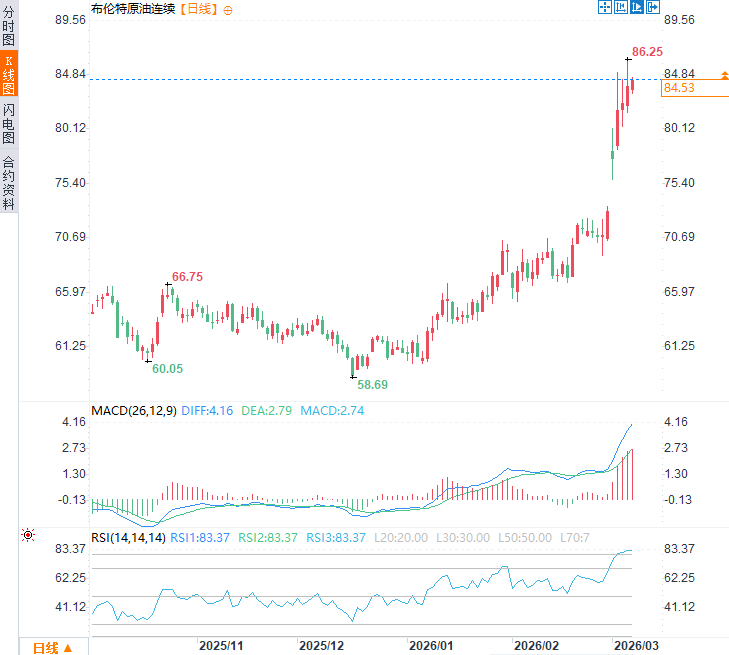
(Brent crude oil daily chart, source: EasyForex)
The contradiction between the U.S. Central Command’s 100-day operational plan and Trump’s promise to “end it in four weeks” highlights that the Pentagon is preparing resources and funding for a protracted summer campaign, and the intelligence and air defense reinforcements indicate a shift towards a long-term defense strategy.
While NATO allies are not directly involved in the fighting, they are gradually providing logistical support under pressure and security needs. The shift in the positions of the UK and Spain reflects the pressure for transatlantic coordination. Iran's foreign minister firmly rejected negotiations and a ceasefire, emphasizing confidence in dealing with any potential invasion, suggesting the conflict could easily escalate from limited strikes into a regional war of attrition.
With energy markets experiencing high volatility and inflation risks rising, the world needs to be wary of the long-term impact of a protracted conflict on economic growth and geopolitical stability.
At 13:31 Beijing time, Brent crude oil futures were trading at $84.46 per barrel.
With the Strait of Hormuz still disrupted, Brent crude oil prices fluctuated upwards during the Asian session on Friday (March 6), currently trading around $84.50 per barrel, up about 0.7% on the day and nearly 20% for the week, as the market worried that a protracted war would push up energy costs and inflation.
The US has been exposed to have a 100-day war plan, which conflicts with Trump's claimed four-week timeline.
According to reports, U.S. Central Command (CENTCOM) has issued an internal notification to the Pentagon requesting additional military intelligence officers to support operations against Iran for at least 100 days, but "likely to extend into September." This plan indicates that the Pentagon is already allocating funds for a protracted operation, a stark contrast to President Trump's initial claim of a "4-5 week end."
U.S. Defense Secretary Pete Hegseth recently stated, "The war has only just begun," and the Chairman of the Joint Chiefs of Staff emphasized that it is "far from over," indicating that the administration is prepared for a protracted war.
The report states that the Trump administration "did not fully anticipate the widespread spillover effects of the war," with the State Department sending additional personnel to handle the evacuation of American citizens from the Middle East, and the Pentagon urgently adjusting resource allocation, suggesting that the scale and duration of the operation exceeded expectations.
Central Command has requested additional intelligence officers; Tampa headquarters will be available for at least 100 days.
The notification explicitly requests the deployment of additional military intelligence officers to CENTCOM headquarters in Tampa, Florida, to support ongoing intelligence analysis and operational coordination against Iran. This marks the first time the Trump administration has publicly requested additional intelligence personnel to support the war against Iran, indicating that the Pentagon has begun allocating funds and personnel for a long-term operation that extends beyond the "four-week timeline."
If the conflict continues into September, it means the conflict could span the entire summer, impacting global energy, geopolitics, and US domestic politics.
The Pentagon urgently procures inexpensive anti-drone weapons and fortifies its Middle East bases.
An anonymous U.S. official revealed that the Department of Defense is urgently deploying more air defense systems to military facilities in the Middle East, focusing on procuring lower-cost anti-drone weapons to replace the expensive missiles currently used to intercept Iranian drones (such as the Patriot system).
Analysts believe this move indicates the Pentagon is allocating funds for a sustained defense effort "far beyond four weeks" to address the long-term threat of low-cost saturation attacks from Iranian proxy networks and drones. Air defense pressure continues to rise on Middle Eastern bases (such as Bahrain, Qatar, and the UAE).
NATO Secretary General cites massive support from allies; UK and Spain shift their stance.
NATO Secretary General Mark Rutte stated publicly on March 4-5 that although NATO was not directly involved in the US-Israel strikes against Iran, its allies were providing "massive support" to the US operation, including providing bases, intelligence, and logistics. The UK initially refused to allow US troops to use its bases, but later changed its stance after public criticism from Trump.
Spain announced the deployment of a naval frigate to Cyprus to join Italy, France, the Netherlands, and other countries in protecting the British air base there. Spanish Defense Minister Margarita Robles denied claims of "massive support," but the actions demonstrate that European allies are gradually becoming involved in logistical support under pressure.
Iranian Foreign Minister makes strong statement: No intention to negotiate, no request for ceasefire.
Iranian Foreign Minister Abbas Araghchi stated unequivocally on March 5: "We have no reason to negotiate with the United States, nor have we requested a ceasefire." He accused the US and Israel of launching attacks midway through two rounds of negotiations, destroying the foundation of trust.
Araghchi emphasized that Iran is "confident in dealing with any ground invasion," stating that a US invasion would be "a huge disaster for them." Since the massive US-Israeli airstrikes on February 28 that killed Supreme Leader Khamenei and several other high-ranking officials, Iran has continued its missile and drone retaliation, targeting US military bases, Israel, and its Gulf allies.
The conflict enters its seventh day, with regional spillovers continuing and energy prices fluctuating at high levels.
As of March 6, the standoff between the US and Iran had entered its seventh day. The US and Israel maintained high-intensity airstrikes, severely depleting Iran's conventional forces. However, Iran's proxy network remained active, and attacks extended to Turkey, Cyprus, Azerbaijan, and other locations.
The ongoing disruption in the Strait of Hormuz is blocking 20% of global oil and LNG supplies, causing Brent crude to rise nearly 20% this week, amid market concerns that a protracted conflict will drive up energy costs and inflation. If the US's long-term operational plan is implemented, global geopolitical and economic stability will face even greater challenges.
(Brent crude oil daily chart, source: EasyForex)
Editor's Summary
The contradiction between the U.S. Central Command’s 100-day operational plan and Trump’s promise to “end it in four weeks” highlights that the Pentagon is preparing resources and funding for a protracted summer campaign, and the intelligence and air defense reinforcements indicate a shift towards a long-term defense strategy.
While NATO allies are not directly involved in the fighting, they are gradually providing logistical support under pressure and security needs. The shift in the positions of the UK and Spain reflects the pressure for transatlantic coordination. Iran's foreign minister firmly rejected negotiations and a ceasefire, emphasizing confidence in dealing with any potential invasion, suggesting the conflict could easily escalate from limited strikes into a regional war of attrition.
With energy markets experiencing high volatility and inflation risks rising, the world needs to be wary of the long-term impact of a protracted conflict on economic growth and geopolitical stability.
At 13:31 Beijing time, Brent crude oil futures were trading at $84.46 per barrel.
- Risk Warning and Disclaimer
- The market involves risk, and trading may not be suitable for all investors. This article is for reference only and does not constitute personal investment advice, nor does it take into account certain users’ specific investment objectives, financial situation, or other needs. Any investment decisions made based on this information are at your own risk.