Gold prices rebound as interest rates ease; Iran's new leader to speak.
2026-03-09 20:51:43
On Monday (March 9), during the Asian and European sessions, spot gold rebounded after hitting a low. This was due to the release of crude oil inventories by major global economies, which is expected to put pressure on inflation. The decline in US Treasury yields also provided some breathing room for gold.
This morning, Larijani, secretary of Iran's Supreme National Security Council, said that despite the threats, the expert council still elected a new leader.
Meanwhile, Iranian media reported on the 9th that Iran's Supreme Leader Mojtaba will address the Iranian people for the first time in a few hours.
On September 9, local time, the Iranian military issued its 19th statement, saying that Iranian forces had used attack drones to attack targets in Israel and US military facilities in Kuwait in the past few hours.
The announcement stated that the operation targeted a combat support unit in Israel and an early warning radar station at the U.S. Army's 512th Base, while also carrying out drone strikes against U.S. military assembly points and equipment depots in Kuwait.
The Israeli military announced a new wave of attacks, including in Isfahan.
Mehr News Agency now reports that three people were injured and two remain trapped under the rubble. The attack targeted a building in Isfahan province, the report added.
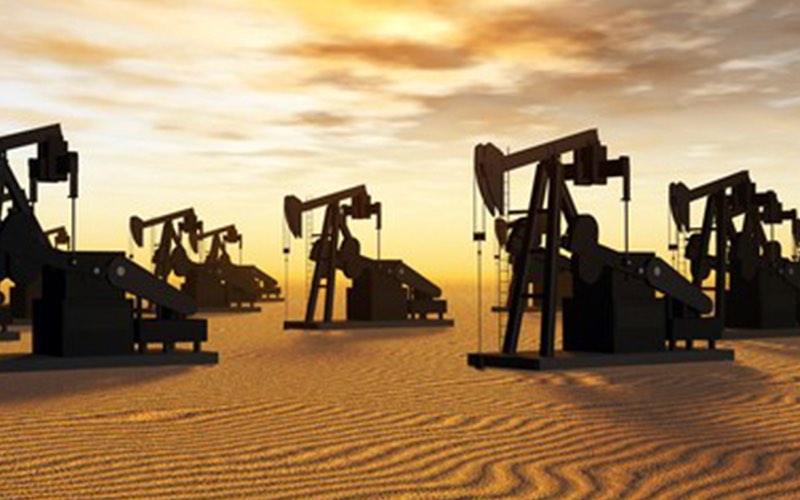
Meanwhile, in order to curb runaway oil prices and alleviate supply gaps, major economies around the world have urgently activated their strategic petroleum reserve release plans.
Currently, three G7 countries, including the United States, have explicitly supported joint release of reserves. US officials have proposed releasing 300 to 400 million barrels of reserves, which would account for 25% to 30% of the total reserves (1.2 billion barrels) of the 32 IEA member countries. The IEA Strategic Reserve System is the core emergency mechanism for dealing with the global oil price crisis.
Iranian citizens detailed the moments when several key oil depots were attacked overnight on the internet, as the military offensive against Iran by the United States and Israel continued.
One resident described it: "When the bright light burst forth, the night seemed to turn into day in an instant."
According to local news agencies citing sources from the Iranian Ministry of Oil, key fuel depots in Tehran and Karaj, west of the capital, were attacked.
Video footage shows streets surrounding an oil depot in Tehran engulfed in flames, with a man audible describing the devastation of shops and houses burning down.
“Karaj was calm for only one day before it descended into chaos again – key energy facilities have been destroyed,” a resident revealed.
Another resident of Karaj, in his 30s, recalled: "Initially, a red light shone across the entire area, followed by a shockwave that shook the doors violently." "Then the sky was once again dyed red by the fire, and a huge column of red smoke rose into the air."
He added that we were completely baffled at the time, and when we climbed to the top of the roof, we found that the local oil depot was engulfed in flames.
According to a report by the US news website Axios on the 8th, the United States is dissatisfied with the Israeli Defense Forces' attack on Iranian fuel storage facilities, believing that the Israeli strike was "far larger than the US expected" and could have the opposite effect, such as pushing up oil prices. The report states that this is "the first major disagreement" between the US and Israel since the start of their military action against Iran.
The report quoted US and Israeli officials as saying that the US was "surprised" by the breadth of the Israeli strikes, "did not think it was a good idea," and even expressed its dissatisfaction to Israel, asking "what the hell they're up to."
The US is concerned that Israeli attacks on Iranian civilian infrastructure "could have a counterproductive effect strategically," "promote unity in Iranian society in support of the government," and that "images of burning fuel storage facilities could disrupt the oil market and further drive up energy prices."
Iranian authorities have initiated real-time air quality monitoring in the capital and have officially issued a notice for residents to stay home and avoid danger.
Iranian Foreign Ministry spokesman Esmail Bagheei stated explicitly that the attack "is releasing large amounts of harmful substances and toxic pollutants into the atmosphere," and "has posed a large-scale threat to public safety."
A Tehran woman said the entire city was covered in thick smoke. "The burning smell was everywhere, the sun was completely blocked, and the pungent smoke lingered for a long time. I am exhausted both physically and mentally."
Another resident of Karaj said the attack on the oil depot caused a "violent explosion, and the fire continued to burn for several hours."
The joint US-Israeli strike against Iran, which began with the assassination of Iran's Supreme Leader Ayatollah Ali Khamenei, has now entered its second week.
Iran has retaliated by precisely targeting US allies and key assets in the region.
Mujtaba Khamenei, son of Ali Khamenei, has been officially elected as the new Supreme Leader.
Iranian security chief Ali Larijani said that Khamenei's election as the next Supreme Leader brought "hope" to Iran, but left the United States and Israel "despair".
Larijani wrote in a statement on his X account: "The Assembly of Experts has elected you as the leader of the Islamic Republic regime, leaving our hostile and belligerent enemies in despair."
US President Donald Trump defended the military strikes on the grounds that the Iranian government posed an "imminent threat" to the United States, with the core argument pointing directly to Iran's nuclear program.
Iran insists its nuclear program serves entirely for peaceful purposes. Data provided by Iran's UN ambassador, Amir Said Iravani, shows that the US-Israeli attacks have killed at least 1,332 Iranian civilians and injured thousands more.
The new Supreme Leader of Iran may trigger a structural shift in policy orientation and leadership logic. In an interview with Al Jazeera, Abdullah Arian, an analyst at Qatar's Sabaka Policy Network, interpreted the governing style of Iran's Supreme Leader Mojtaba Khamenei, clearly pointing out that "there is a potential for a break with past policy paths."
Arian emphasized: "The market generally believes that even if the new leader is the son of the former Supreme Leader, Iran has now formed a new leadership structure and is fully capable of making decisions and implementing differentiated policies and measures."
Arian added, “This power transition could be a key opportunity, creating the possibility for Iran to explore reconciliation with some Gulf states and opening up room for discussion on various political reforms or institutional adjustments in the long term. However, this expectation is clearly contrary to the strategic demands of the US and Israel—both countries have publicly expressed their ultimate goal of destroying the current Iranian regime and even promoting its geopolitical disintegration. Nevertheless, such a policy shift is likely to be more widely accepted by other stakeholders, which may reshape the regional geopolitical landscape.”
Historical data shows that escalating conflicts in the Middle East often affect gold prices by pushing up oil prices and exacerbating inflation expectations and risk aversion. During the Fourth Middle East War, London gold prices surged by 68%.
The recent rise in oil prices has led to increased global inflation expectations, pushing up the global long-term interest rate center and affecting the cost of holding gold, putting downward pressure on gold prices. In the future, we will continue to pay attention to how US Treasury yields price global inflation.
From a technical perspective, spot gold continues to move within an upward channel, with the current resistance level around 5130. Recently, gold prices have been oscillating around this price center.
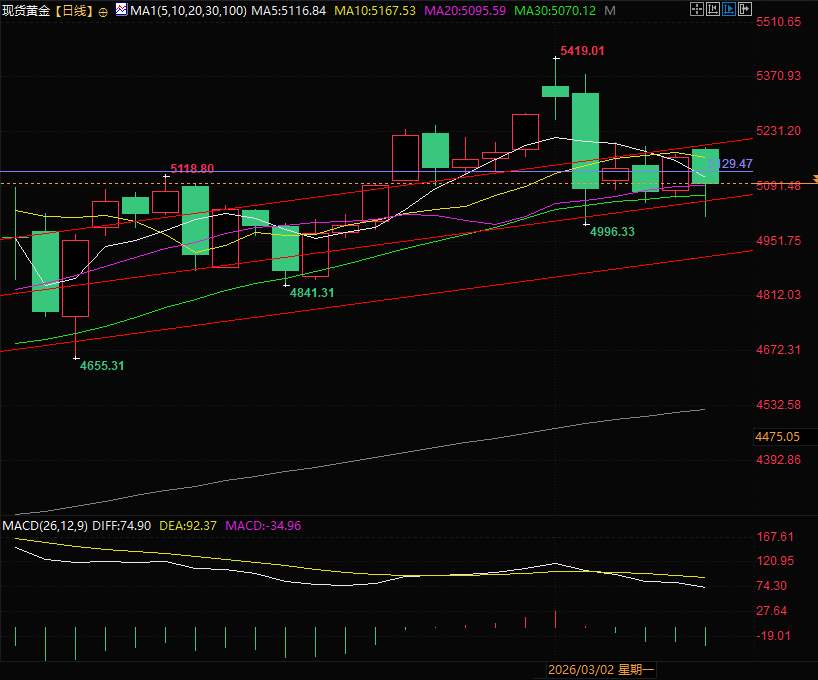
(Spot gold daily chart, source: FX678)
At 20:49 Beijing time, spot gold is currently trading at $5,100 per ounce.
This morning, Larijani, secretary of Iran's Supreme National Security Council, said that despite the threats, the expert council still elected a new leader.
Meanwhile, Iranian media reported on the 9th that Iran's Supreme Leader Mojtaba will address the Iranian people for the first time in a few hours.
On September 9, local time, the Iranian military issued its 19th statement, saying that Iranian forces had used attack drones to attack targets in Israel and US military facilities in Kuwait in the past few hours.
The announcement stated that the operation targeted a combat support unit in Israel and an early warning radar station at the U.S. Army's 512th Base, while also carrying out drone strikes against U.S. military assembly points and equipment depots in Kuwait.
The Israeli military announced a new wave of attacks, including in Isfahan.
Mehr News Agency now reports that three people were injured and two remain trapped under the rubble. The attack targeted a building in Isfahan province, the report added.
Meanwhile, in order to curb runaway oil prices and alleviate supply gaps, major economies around the world have urgently activated their strategic petroleum reserve release plans.
Currently, three G7 countries, including the United States, have explicitly supported joint release of reserves. US officials have proposed releasing 300 to 400 million barrels of reserves, which would account for 25% to 30% of the total reserves (1.2 billion barrels) of the 32 IEA member countries. The IEA Strategic Reserve System is the core emergency mechanism for dealing with the global oil price crisis.
Oil depot attack: A horrific scene where night turned into day
Iranian citizens detailed the moments when several key oil depots were attacked overnight on the internet, as the military offensive against Iran by the United States and Israel continued.
One resident described it: "When the bright light burst forth, the night seemed to turn into day in an instant."
According to local news agencies citing sources from the Iranian Ministry of Oil, key fuel depots in Tehran and Karaj, west of the capital, were attacked.
Video footage shows streets surrounding an oil depot in Tehran engulfed in flames, with a man audible describing the devastation of shops and houses burning down.
“Karaj was calm for only one day before it descended into chaos again – key energy facilities have been destroyed,” a resident revealed.
Another resident of Karaj, in his 30s, recalled: "Initially, a red light shone across the entire area, followed by a shockwave that shook the doors violently." "Then the sky was once again dyed red by the fire, and a huge column of red smoke rose into the air."
He added that we were completely baffled at the time, and when we climbed to the top of the roof, we found that the local oil depot was engulfed in flames.
According to a report by the US news website Axios on the 8th, the United States is dissatisfied with the Israeli Defense Forces' attack on Iranian fuel storage facilities, believing that the Israeli strike was "far larger than the US expected" and could have the opposite effect, such as pushing up oil prices. The report states that this is "the first major disagreement" between the US and Israel since the start of their military action against Iran.
The report quoted US and Israeli officials as saying that the US was "surprised" by the breadth of the Israeli strikes, "did not think it was a good idea," and even expressed its dissatisfaction to Israel, asking "what the hell they're up to."
The US is concerned that Israeli attacks on Iranian civilian infrastructure "could have a counterproductive effect strategically," "promote unity in Iranian society in support of the government," and that "images of burning fuel storage facilities could disrupt the oil market and further drive up energy prices."
Escalating Situation: Pollution Warnings and Continued Military Confrontation
Iranian authorities have initiated real-time air quality monitoring in the capital and have officially issued a notice for residents to stay home and avoid danger.
Iranian Foreign Ministry spokesman Esmail Bagheei stated explicitly that the attack "is releasing large amounts of harmful substances and toxic pollutants into the atmosphere," and "has posed a large-scale threat to public safety."
A Tehran woman said the entire city was covered in thick smoke. "The burning smell was everywhere, the sun was completely blocked, and the pungent smoke lingered for a long time. I am exhausted both physically and mentally."
Another resident of Karaj said the attack on the oil depot caused a "violent explosion, and the fire continued to burn for several hours."
The joint US-Israeli strike against Iran, which began with the assassination of Iran's Supreme Leader Ayatollah Ali Khamenei, has now entered its second week.
Iran has retaliated by precisely targeting US allies and key assets in the region.
Mujtaba Khamenei, son of Ali Khamenei, has been officially elected as the new Supreme Leader.
Iranian security chief Ali Larijani said that Khamenei's election as the next Supreme Leader brought "hope" to Iran, but left the United States and Israel "despair".
Larijani wrote in a statement on his X account: "The Assembly of Experts has elected you as the leader of the Islamic Republic regime, leaving our hostile and belligerent enemies in despair."
Origins of the Conflict: Nuclear Disputes and Humanitarian Costs
US President Donald Trump defended the military strikes on the grounds that the Iranian government posed an "imminent threat" to the United States, with the core argument pointing directly to Iran's nuclear program.
Iran insists its nuclear program serves entirely for peaceful purposes. Data provided by Iran's UN ambassador, Amir Said Iravani, shows that the US-Israeli attacks have killed at least 1,332 Iranian civilians and injured thousands more.
Experts interpret the possibility of a policy shift in the new regime.
The new Supreme Leader of Iran may trigger a structural shift in policy orientation and leadership logic. In an interview with Al Jazeera, Abdullah Arian, an analyst at Qatar's Sabaka Policy Network, interpreted the governing style of Iran's Supreme Leader Mojtaba Khamenei, clearly pointing out that "there is a potential for a break with past policy paths."
Arian emphasized: "The market generally believes that even if the new leader is the son of the former Supreme Leader, Iran has now formed a new leadership structure and is fully capable of making decisions and implementing differentiated policies and measures."
Arian added, “This power transition could be a key opportunity, creating the possibility for Iran to explore reconciliation with some Gulf states and opening up room for discussion on various political reforms or institutional adjustments in the long term. However, this expectation is clearly contrary to the strategic demands of the US and Israel—both countries have publicly expressed their ultimate goal of destroying the current Iranian regime and even promoting its geopolitical disintegration. Nevertheless, such a policy shift is likely to be more widely accepted by other stakeholders, which may reshape the regional geopolitical landscape.”
Summary and Technical Analysis:
Historical data shows that escalating conflicts in the Middle East often affect gold prices by pushing up oil prices and exacerbating inflation expectations and risk aversion. During the Fourth Middle East War, London gold prices surged by 68%.
The recent rise in oil prices has led to increased global inflation expectations, pushing up the global long-term interest rate center and affecting the cost of holding gold, putting downward pressure on gold prices. In the future, we will continue to pay attention to how US Treasury yields price global inflation.
From a technical perspective, spot gold continues to move within an upward channel, with the current resistance level around 5130. Recently, gold prices have been oscillating around this price center.
(Spot gold daily chart, source: FX678)
At 20:49 Beijing time, spot gold is currently trading at $5,100 per ounce.
- Risk Warning and Disclaimer
- The market involves risk, and trading may not be suitable for all investors. This article is for reference only and does not constitute personal investment advice, nor does it take into account certain users’ specific investment objectives, financial situation, or other needs. Any investment decisions made based on this information are at your own risk.