Crude Oil Analysis: Five-Year Low Inventories Collide with Mega-Disruption; Saudi CEO Warns of "Catastrophic Consequences"
2026-03-10 15:42:53
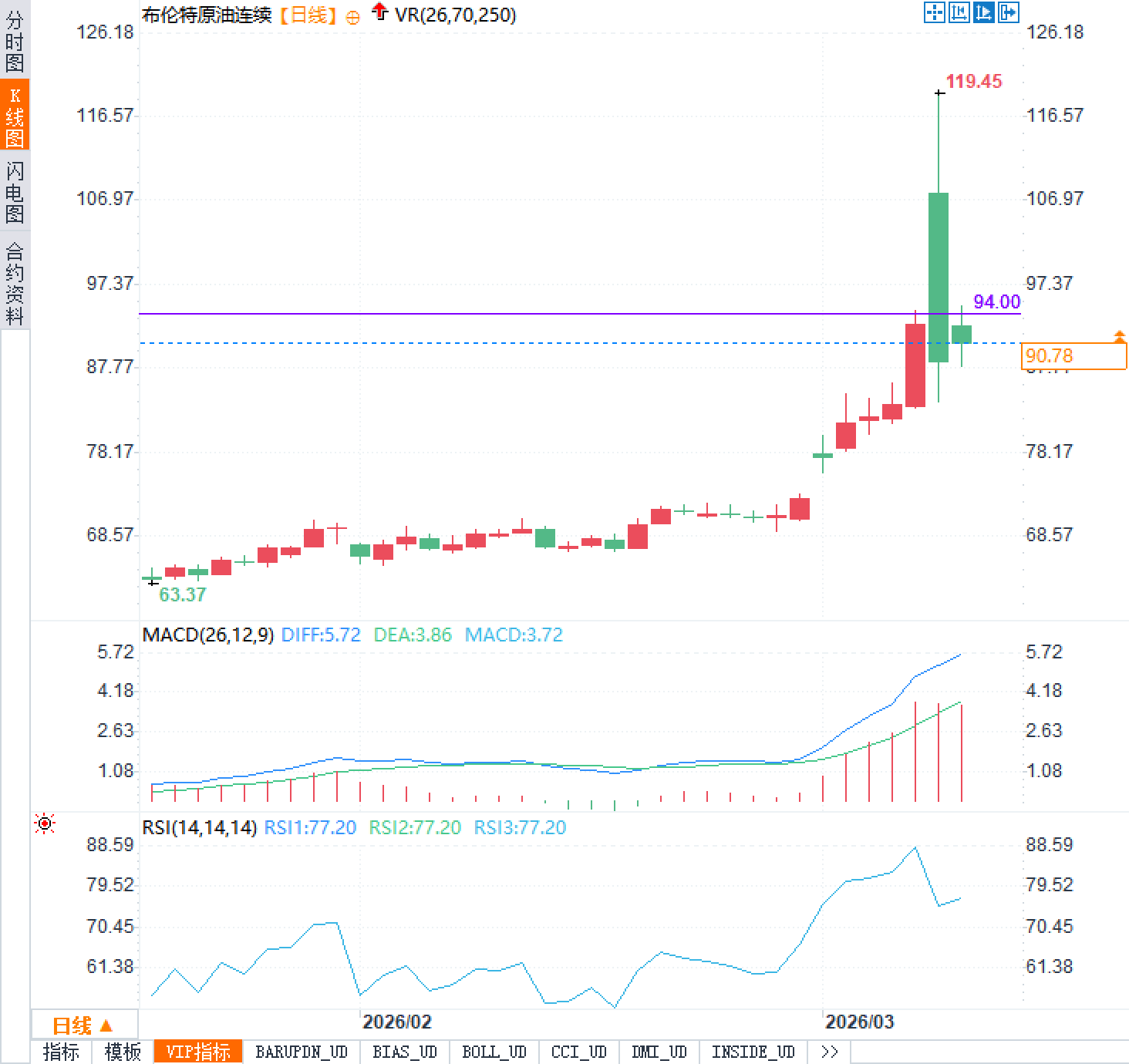
On Tuesday, March 10th, Saudi Aramco CEO Amin Nasser's latest remarks drew widespread attention. He pointed out that the market has experienced a cumulative supply disruption of 180 million barrels, a scale that should not be underestimated. Currently, Brent crude oil prices are hovering around $90 per barrel, a slight decrease from the previous day, but still up more than 33% over the past month. Traders understand that fundamental changes are rapidly reshaping market expectations, and any signal of shipping resumption could be a turning point for prices.
The Strait of Hormuz is undeniably crucial as a core passage for global energy transportation. It handles the vast majority of Middle Eastern oil exports, with approximately 17% of the region's supply relying on this passage. Around 20 million barrels of liquid oil pass through daily; a substantial closure would directly cause a significant gap in the global supply chain. Nasser emphasized that this disruption has already resulted in a cumulative impact of 180 million barrels, and with spare capacity primarily concentrated in the region, the restoration of shipping through the strait is absolutely critical to market stability. Traders recognize that this choke point disruption differs from routine maintenance; it rapidly impacts refinery procurement and product pricing. Historically, similar bottleneck events have often led to widening price premiums, and in the current environment, supply chain adjustments are even more challenging. Traders are closely monitoring vessel flow data and changes in logistics costs, indicators that often reflect the true supply and demand situation before official data.
Faced with disruption pressures, Saudi Arabia is accelerating the full-capacity operation of its East-West pipeline. Nasser stated that the pipeline will reach full capacity within the next few days, following work on rerouting for customers. While this measure will provide approximately 7 million barrels per day of transport capacity, it still falls short of the roughly 20 million barrels affected. The company is striving to meet the needs of most customers, but logistical adjustments will take time. The commissioning of the East-West pipeline demonstrates strategic infrastructure preparedness; however, its capacity limitations mean it cannot completely replace the Straits route. Traders note that while such pipelines enhance flexibility, they also present demand-side matching challenges. The compatibility of different grades of crude oil and terminal receiving capacity will be variables affecting actual delivery efficiency. In the short term, this helps alleviate the urgent needs of some buyers, but long-term reliance still requires cooperation from other producers.
Nasser specifically mentioned that global oil inventories are currently at a five-year low. This situation, coupled with supply disruptions, will lead to a significantly faster pace of inventory reduction. The regional concentration of spare capacity further amplifies risk exposure. If the disruptions persist, the oil market could face catastrophic consequences and have a ripple effect on the global economic growth path. Traders are also considering the sensitivity of inventory reports when assessing their positions. Low inventory environments typically amplify price elasticity to supply news; low inventory levels mean that even a small physical gap can trigger a significant premium. The market is currently at a critical point of transitioning from accumulation to consumption, and any adjustments in operating rates or unexpected changes in demand will exacerbate this dynamic. Analysts point out that continued destocking could manifest in spot price spreads at key hubs within weeks.
Despite the recent pullback in oil prices from their highs, Nasser warned that market targets have shifted. In the short term, prices may be influenced by profit-taking and news of alternative routes, but fundamental tensions remain. Traders need to be wary of the potential for increased volatility, particularly implied volatility in options. Price discovery is being dominated by geopolitical uncertainty, and the forward curve structure may steepen further. Monitoring inventory data and shipping costs will become routine. Overall, the current environment demands a higher level of risk management awareness rather than simple linear forecasting.
The far-reaching impact of the interruption of the Strait of Hormuz
The Strait of Hormuz is undeniably crucial as a core passage for global energy transportation. It handles the vast majority of Middle Eastern oil exports, with approximately 17% of the region's supply relying on this passage. Around 20 million barrels of liquid oil pass through daily; a substantial closure would directly cause a significant gap in the global supply chain. Nasser emphasized that this disruption has already resulted in a cumulative impact of 180 million barrels, and with spare capacity primarily concentrated in the region, the restoration of shipping through the strait is absolutely critical to market stability. Traders recognize that this choke point disruption differs from routine maintenance; it rapidly impacts refinery procurement and product pricing. Historically, similar bottleneck events have often led to widening price premiums, and in the current environment, supply chain adjustments are even more challenging. Traders are closely monitoring vessel flow data and changes in logistics costs, indicators that often reflect the true supply and demand situation before official data.
The emergency role and limitations of the Saudi East-West pipeline
Faced with disruption pressures, Saudi Arabia is accelerating the full-capacity operation of its East-West pipeline. Nasser stated that the pipeline will reach full capacity within the next few days, following work on rerouting for customers. While this measure will provide approximately 7 million barrels per day of transport capacity, it still falls short of the roughly 20 million barrels affected. The company is striving to meet the needs of most customers, but logistical adjustments will take time. The commissioning of the East-West pipeline demonstrates strategic infrastructure preparedness; however, its capacity limitations mean it cannot completely replace the Straits route. Traders note that while such pipelines enhance flexibility, they also present demand-side matching challenges. The compatibility of different grades of crude oil and terminal receiving capacity will be variables affecting actual delivery efficiency. In the short term, this helps alleviate the urgent needs of some buyers, but long-term reliance still requires cooperation from other producers.
| Key Indicators | scale |
|---|---|
| Cumulative supply disruptions | 180 million barrels |
| Typical daily flow in the Strait of Hormuz | Approximately 20 million barrels |
| East-West Pipeline Target Capacity | 7 million barrels per day |
| Approximate daily net gap | Approximately 13 million barrels |
Low global inventory levels and the risk of accelerated depletion
Nasser specifically mentioned that global oil inventories are currently at a five-year low. This situation, coupled with supply disruptions, will lead to a significantly faster pace of inventory reduction. The regional concentration of spare capacity further amplifies risk exposure. If the disruptions persist, the oil market could face catastrophic consequences and have a ripple effect on the global economic growth path. Traders are also considering the sensitivity of inventory reports when assessing their positions. Low inventory environments typically amplify price elasticity to supply news; low inventory levels mean that even a small physical gap can trigger a significant premium. The market is currently at a critical point of transitioning from accumulation to consumption, and any adjustments in operating rates or unexpected changes in demand will exacerbate this dynamic. Analysts point out that continued destocking could manifest in spot price spreads at key hubs within weeks.
Crude oil price trends and traders' focus
Despite the recent pullback in oil prices from their highs, Nasser warned that market targets have shifted. In the short term, prices may be influenced by profit-taking and news of alternative routes, but fundamental tensions remain. Traders need to be wary of the potential for increased volatility, particularly implied volatility in options. Price discovery is being dominated by geopolitical uncertainty, and the forward curve structure may steepen further. Monitoring inventory data and shipping costs will become routine. Overall, the current environment demands a higher level of risk management awareness rather than simple linear forecasting.
Frequently Asked Questions
Question 1: What urgency does a 180 million barrel supply disruption mean for the crude oil market?
A: This figure reflects the cumulative supply losses caused by the situation in the Middle East, directly corresponding to the closure effect of the Straits Exchange Foundation. It has accelerated the depletion of already low global inventories, which traders see as a major driver of supply and demand rebalancing in the short term, potentially pushing up spot premiums and affecting contract rollover costs.
Question 2: Can the East-West pipeline effectively stabilize market supply when it is at full capacity?
A: While a capacity of 7 million barrels per day helps divert some customer demand and bypass blocked routes, it is still insufficient compared to the 20 million barrels affected. It provides some buffer, but cannot fully fill the gap, and the market still needs to rely on the response of other producers and logistical optimization.
Question 3: What potential consequences will the extended disruption have on the global economy?
A: Nasser clearly stated that the consequences will be increasingly disastrous. Faster inventory depletion could lead to higher energy costs, which in turn would affect industrial activity and inflation expectations. Traders need to assess cross-asset correlations, but the focus should be on monitoring actual flow data rather than speculating on long-term scenarios.
- Risk Warning and Disclaimer
- The market involves risk, and trading may not be suitable for all investors. This article is for reference only and does not constitute personal investment advice, nor does it take into account certain users’ specific investment objectives, financial situation, or other needs. Any investment decisions made based on this information are at your own risk.