Historical lessons: Soaring oil prices do not change the long-term trend.
2026-03-10 17:01:25
Financial markets are closely watching potential signs of easing tensions between the US and Iran, while also closely monitoring changes in oil prices.
Despite signals from both sides' top military officials suggesting a possible escalation of short-term military action, keeping market sentiment risky, the following analysis will detail why this conflict is likely a short-term event and the transmission effects of this situation on the global economy, Federal Reserve policy, and financial markets in the coming weeks.
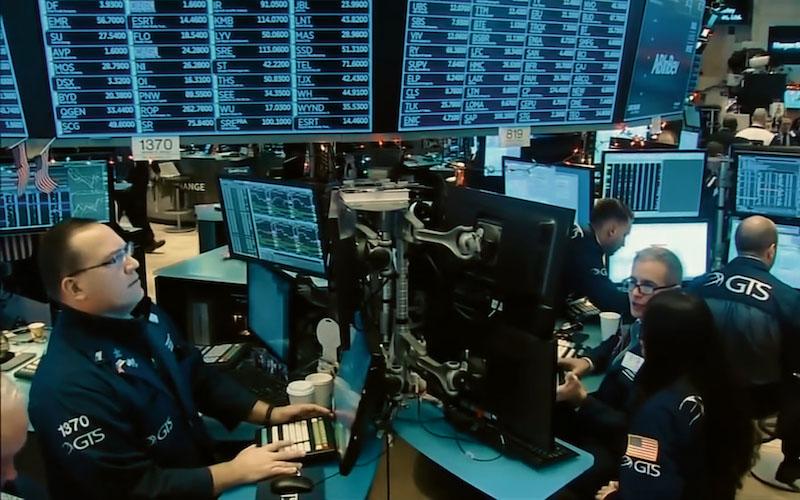
Over the past 30 years, the global market has experienced various geopolitical shocks, including terrorist attacks and local wars, each of which has been accompanied by heartbreaking humanitarian losses.
While such events often make headlines and trigger short-term market panic, their long-term impact on financial markets is usually quite limited.
The market generally defines geopolitical shocks as short-term disturbances—as long as the conflict does not escalate, it is unlikely to cause lasting damage to the global economy. While short-term market pullbacks are unavoidable, historical patterns clearly show that such adjustments are usually relatively short-lived.
In fact, since the 1990s, the S&P 500 index has risen on average in the one month, three months, six months and twelve months following geopolitical events.
The core logic behind this resilience is that, in the long run, the trend of the equity market is ultimately driven by three fundamental factors: earnings performance, economic growth, and interest rate levels. As long as the supporting logic of the fundamentals is not broken, the market has the ability to repric and return to an upward trajectory.
The current conflict between the US and Iran is still in its early stages, and the market is repeatedly pricing in the future of "Operation Epic Fury"—whether it will escalate into a long-term confrontation or remain within a localized and controllable range.
Although the situation is still evolving, the duration of this conflict is likely to be measured in weeks rather than months.
Under the baseline scenario, the assumption that the conflict cycle will last about 3-4 weeks is based on three main logical supports: First, it is currently the year of the US midterm elections, and a prolonged military operation would bring significant political risks to the ruling authorities, which is an important constraint.
Secondly, even if the US military has sufficient resupply capabilities in other regions, its ammunition reserves on the Middle East front are significantly limited, which objectively suppresses the possibility of a protracted war.
Third, the U.S. authorities deliberately obscured the ultimate operational objectives, retaining the flexibility to declare "mission accomplished" once the core objectives were achieved.
In summary, the current US-Iran conflict is more of a "headline risk" at the emotional level. Its core impact is only to trigger short-term market fluctuations, rather than creating a long-term risk that can continuously impact economic fundamentals or investment portfolios.
Before the conflict broke out, US crude oil futures prices were in the mid-range of $55 per barrel, but have now risen rapidly to above $86 per barrel.
The core contradiction in the current market lies in whether this conflict will lead to a long-term disruption of oil and gas supplies in the Persian Gulf region. It should be noted that the region accounts for nearly 20% of the global energy supply, and the stability of its transportation directly affects the global energy market landscape.
Although the scope of the conflict has expanded and more than 10 countries in the Middle East have been affected, from the perspective of the United States, the conflict is still most likely to be short-lived.
Once a clear window of easing tensions emerges between the US and Iran, the geopolitical risk premium implied in oil prices will be quickly cleared out.
At that time, oil prices will return to being driven by fundamentals: the current crude oil market is still in a state of structural surplus, and 2026 is expected to become the sixth consecutive year of global crude oil supply surplus.
If the conflict lasts longer than the expected 3-4 weeks, then the impact of the war on the market will need to be reassessed.
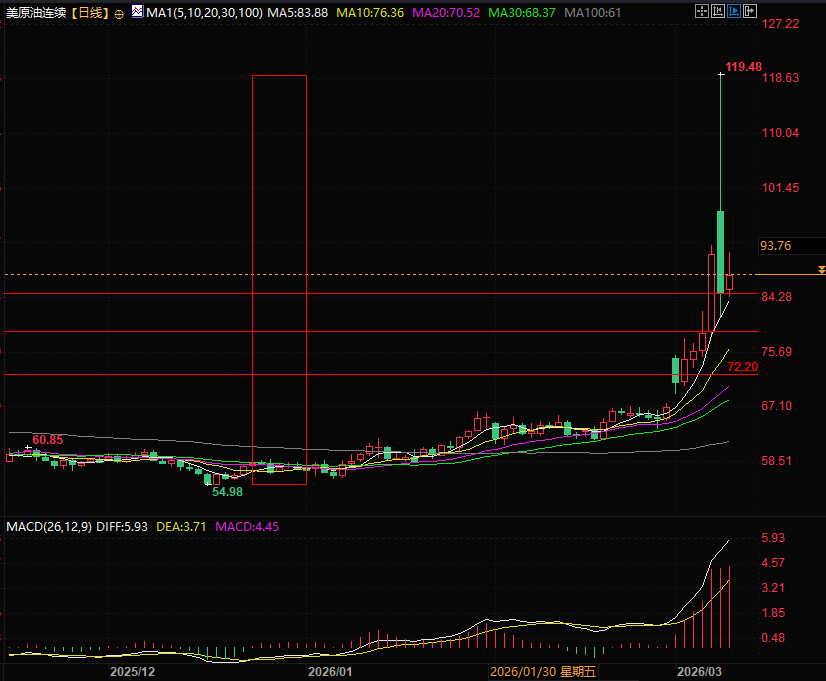
(US crude oil futures futures, source: FX678)
The daily chart for US crude oil shows that crude oil prices have reached a measured move above a descending wedge pattern.
The Fed's usual operating logic is that as long as the Middle East conflict is only a short-term oil price spike, does not trigger long-term inflation, and does not collapse the US economy, the Fed will pretend not to see it and will not arbitrarily change the pace of interest rate hikes and cuts.
Therefore, if the conflict does not escalate in the long term and the United States does not deploy ground troops, the inflationary pressure will be short-term. Coupled with the relative independence of the US economy—the US is a net exporter of crude oil and its dependence on external energy has been declining—it means that the Federal Reserve's pause in interest rate cuts will not change, but may only be prolonged.
The market currently expects fewer than two Fed rate cuts this year, while the US GDP is still projected to maintain a growth rate of 2.4%.
This conflict amplified market volatility, disrupted short-term inflation expectations, and put downward pressure on risk assets. At the same time, the market lowered its expectations for a Fed rate cut, pushing up US Treasury yields.
However, historical patterns show that such stress responses triggered by geopolitical risks are often unsustainable. Once the situation eases, the market will quickly recover and return to the fundamentals.
With corporate profits recovering and the economy continuing to improve, the S&P 500 index is still expected to reach 7250 points by the end of the year.
U.S. Treasury yields rebounded from recent lows due to rising oil prices, but this fluctuation only brought yields back to their established normal operating range.
The yield on 10-year US Treasury bonds is still within the normal range of 4.25%-4.50%.
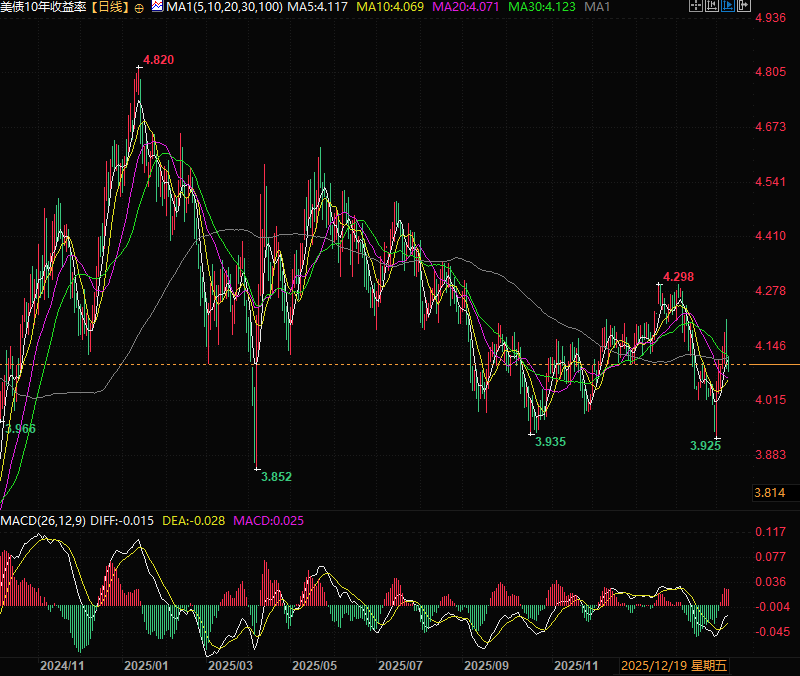
(Daily chart of the US 10-year Treasury yield, source: EasyTrade)
The daily chart shows that the yield on the 10-year US Treasury note remains at a recent low.
Despite signals from both sides' top military officials suggesting a possible escalation of short-term military action, keeping market sentiment risky, the following analysis will detail why this conflict is likely a short-term event and the transmission effects of this situation on the global economy, Federal Reserve policy, and financial markets in the coming weeks.
Historical patterns of geopolitical shocks: Short-term disturbances are unlikely to alter long-term trends.
Over the past 30 years, the global market has experienced various geopolitical shocks, including terrorist attacks and local wars, each of which has been accompanied by heartbreaking humanitarian losses.
While such events often make headlines and trigger short-term market panic, their long-term impact on financial markets is usually quite limited.
The market generally defines geopolitical shocks as short-term disturbances—as long as the conflict does not escalate, it is unlikely to cause lasting damage to the global economy. While short-term market pullbacks are unavoidable, historical patterns clearly show that such adjustments are usually relatively short-lived.
In fact, since the 1990s, the S&P 500 index has risen on average in the one month, three months, six months and twelve months following geopolitical events.
The core logic behind this resilience is that, in the long run, the trend of the equity market is ultimately driven by three fundamental factors: earnings performance, economic growth, and interest rate levels. As long as the supporting logic of the fundamentals is not broken, the market has the ability to repric and return to an upward trajectory.
The US-Iran conflict is clearly short-term in nature and unlikely to become a long-term risk.
The current conflict between the US and Iran is still in its early stages, and the market is repeatedly pricing in the future of "Operation Epic Fury"—whether it will escalate into a long-term confrontation or remain within a localized and controllable range.
Although the situation is still evolving, the duration of this conflict is likely to be measured in weeks rather than months.
Under the baseline scenario, the assumption that the conflict cycle will last about 3-4 weeks is based on three main logical supports: First, it is currently the year of the US midterm elections, and a prolonged military operation would bring significant political risks to the ruling authorities, which is an important constraint.
Secondly, even if the US military has sufficient resupply capabilities in other regions, its ammunition reserves on the Middle East front are significantly limited, which objectively suppresses the possibility of a protracted war.
Third, the U.S. authorities deliberately obscured the ultimate operational objectives, retaining the flexibility to declare "mission accomplished" once the core objectives were achieved.
In summary, the current US-Iran conflict is more of a "headline risk" at the emotional level. Its core impact is only to trigger short-term market fluctuations, rather than creating a long-term risk that can continuously impact economic fundamentals or investment portfolios.
Most important variable to observe: Crude oil price
Before the conflict broke out, US crude oil futures prices were in the mid-range of $55 per barrel, but have now risen rapidly to above $86 per barrel.
The core contradiction in the current market lies in whether this conflict will lead to a long-term disruption of oil and gas supplies in the Persian Gulf region. It should be noted that the region accounts for nearly 20% of the global energy supply, and the stability of its transportation directly affects the global energy market landscape.
Although the scope of the conflict has expanded and more than 10 countries in the Middle East have been affected, from the perspective of the United States, the conflict is still most likely to be short-lived.
Once a clear window of easing tensions emerges between the US and Iran, the geopolitical risk premium implied in oil prices will be quickly cleared out.
At that time, oil prices will return to being driven by fundamentals: the current crude oil market is still in a state of structural surplus, and 2026 is expected to become the sixth consecutive year of global crude oil supply surplus.
If the conflict lasts longer than the expected 3-4 weeks, then the impact of the war on the market will need to be reassessed.
(US crude oil futures futures, source: FX678)
The daily chart for US crude oil shows that crude oil prices have reached a measured move above a descending wedge pattern.
Economy and Fed Policy: Rate Cut Cycle May Be Extended, But Core Forecasts Remain Unchanged
The Fed's usual operating logic is that as long as the Middle East conflict is only a short-term oil price spike, does not trigger long-term inflation, and does not collapse the US economy, the Fed will pretend not to see it and will not arbitrarily change the pace of interest rate hikes and cuts.
Therefore, if the conflict does not escalate in the long term and the United States does not deploy ground troops, the inflationary pressure will be short-term. Coupled with the relative independence of the US economy—the US is a net exporter of crude oil and its dependence on external energy has been declining—it means that the Federal Reserve's pause in interest rate cuts will not change, but may only be prolonged.
The market currently expects fewer than two Fed rate cuts this year, while the US GDP is still projected to maintain a growth rate of 2.4%.
Asset Class Objective: Adhere to long-term goals; short-term fluctuations will not alter the fundamental outlook.
This conflict amplified market volatility, disrupted short-term inflation expectations, and put downward pressure on risk assets. At the same time, the market lowered its expectations for a Fed rate cut, pushing up US Treasury yields.
However, historical patterns show that such stress responses triggered by geopolitical risks are often unsustainable. Once the situation eases, the market will quickly recover and return to the fundamentals.
With corporate profits recovering and the economy continuing to improve, the S&P 500 index is still expected to reach 7250 points by the end of the year.
U.S. Treasury yields rebounded from recent lows due to rising oil prices, but this fluctuation only brought yields back to their established normal operating range.
The yield on 10-year US Treasury bonds is still within the normal range of 4.25%-4.50%.
(Daily chart of the US 10-year Treasury yield, source: EasyTrade)
The daily chart shows that the yield on the 10-year US Treasury note remains at a recent low.
- Risk Warning and Disclaimer
- The market involves risk, and trading may not be suitable for all investors. This article is for reference only and does not constitute personal investment advice, nor does it take into account certain users’ specific investment objectives, financial situation, or other needs. Any investment decisions made based on this information are at your own risk.