Is the Bank of Japan's interest rate hike clock quietly pointing to June? With inflation suddenly cooling and wages soaring, who will ultimately determine the pace?
2026-03-10 16:50:50
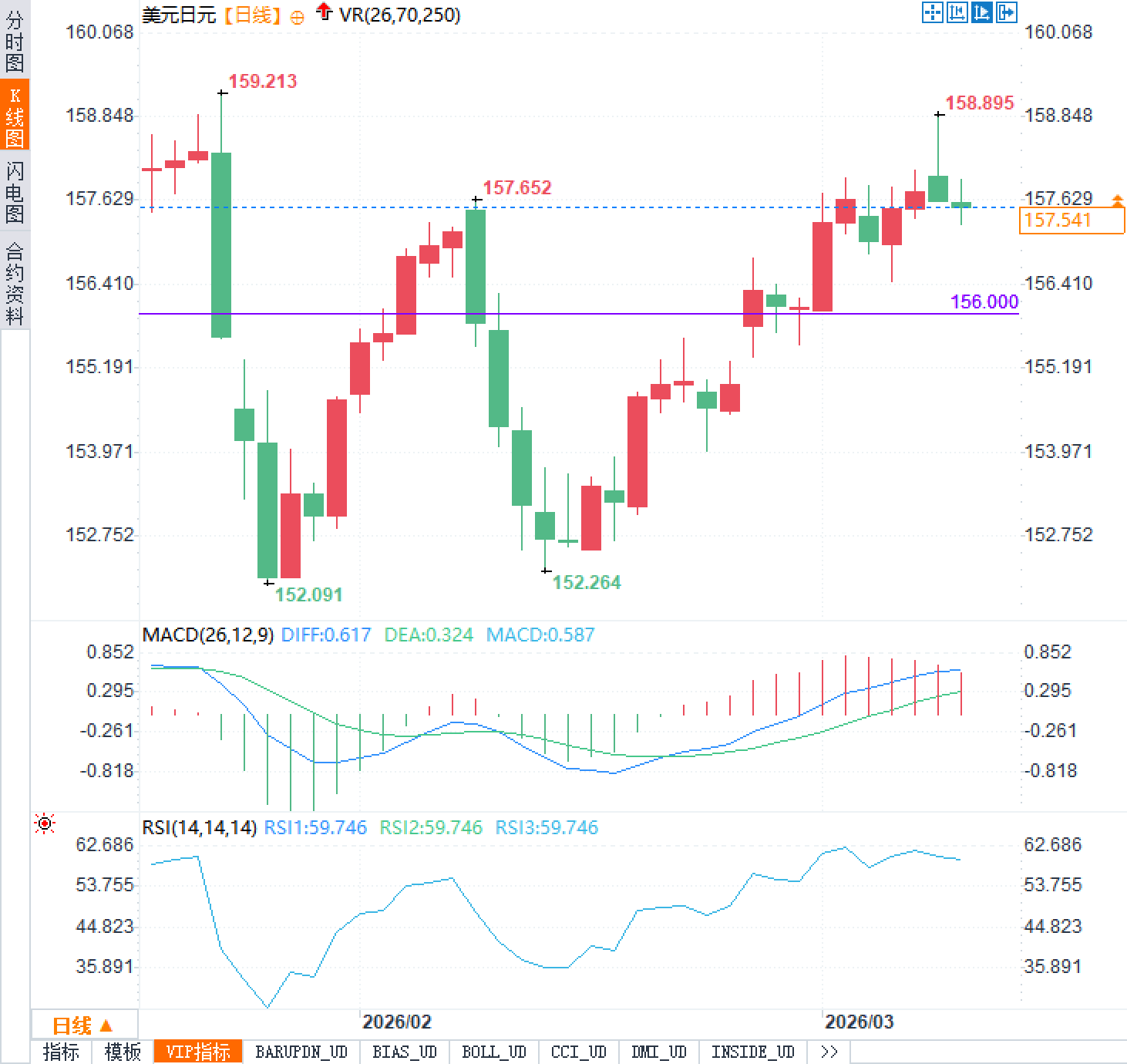
The Bank of Japan's policy meeting is scheduled for March 18-19, with the market widely expecting it to maintain its policy interest rate at 0.75%. On Tuesday, March 10, the USD/JPY exchange rate fluctuated around 157.50, while the Nikkei index has recently been oscillating between 53,000 and 54,000 points. Japan's real GDP is projected to grow by 0.1% quarter-on-quarter in the fourth quarter of 2025, at an annualized rate of approximately 0.2%, lower than earlier market expectations. However, industrial production rebounded by 2.2% month-on-month in January, and retail sales increased by 4.1% month-on-month, indicating a gradual recovery in domestic demand.

Consumer purchasing power improved due to cooling inflation and stable wage growth, coupled with geopolitical uncertainties, leading the Bank of Japan to proceed with a cautious pace of policy normalization. ING, in its latest report, noted that the Bank of Japan continues to advance policy normalization, but the probability of action this month is low, with a June rate hike being more likely, pending confirmation from April inflation data and the outcome of the Shunto wage negotiations.
While Japan's economic growth in the fourth quarter of 2025 was only 0.1% quarter-on-quarter, it needs to be analyzed in conjunction with the structure of domestic demand. Personal consumption increased slightly by 0.1% quarter-on-quarter, business equipment investment increased by 0.2% quarter-on-quarter, while public demand declined slightly by 0.2%. Net exports contributed limited to growth, with exports declining by 0.3% quarter-on-quarter and imports falling in tandem. Full-year real GDP growth was 1.1%, indicating that the economy remained on a moderate recovery track. Entering January 2026, industrial production and retail sales both rebounded strongly, with the automotive sector contributing significantly, indicating that the pressure from previously high borrowing costs was gradually easing. The recovery in consumer spending benefited from stable real wage growth and reduced price pressures, forming a positive feedback loop. Although this data recovery was not dramatic, it provided a buffer for monetary policy, preventing a demand cliff caused by excessively rapid tightening.
The following is a comparison of key recent macroeconomic indicators:
Data indicates that a domestic demand-driven recovery is quietly underway, but the extent of the recovery still needs to be verified in subsequent quarters.
Japan's Consumer Price Index (CPI) rose to 1.5% year-on-year in January 2026, the lowest level since March 2022, while core inflation (excluding fresh food) also fell to 2.0%. In February, Tokyo's core CPI further declined to 1.8%, falling below the Bank of Japan's 2% target for the first time, with energy subsidies and the high base effect of rice prices driving the decline. Service prices remained resilient, rising slightly by 0.2% month-on-month after seasonal adjustment, reflecting the transmission of labor costs. While government utility subsidies temporarily suppressed the reading, they are expected to be gradually phased out in the second half of 2026, potentially triggering short-term volatility. Bank of Japan Governor Kazuo Ueda recently stated in the Diet that if economic and price trends align with quarterly forecasts, the central bank will continue its interest rate hike path, emphasizing that significant wage growth is key to achieving the 2% inflation target. Analysts point out that the April corporate pricing adjustment window is crucial, at which time it will be necessary to observe whether cost pass-throughs push up core service inflation. If April's data falls more than expected, the threshold for interest rate hikes will be further raised.
The spring wage negotiations for 2026 have begun, with labor unions demanding an average increase of 5.94%, and some industries, such as the unions under UA Zensen, proposing 6.46%, higher than the 5.39% actually achieved in 2025. Large corporations continue to lead the way, with starting salaries for new employees in the retail and manufacturing sectors increasing by 10% to 15%. The ability of small and medium-sized enterprises (SMEs) to follow suit remains a focus, but the overall trend shows strong wage growth momentum. Real wages have improved due to cooling inflation, and the rebound in household purchasing power directly supports the recovery in retail sales. The Bank of Japan's internal assessment believes that if this round of wage increases continues to exceed 5%, it will solidify the upward shift in the inflation center, providing core support for policy normalization. Analysts emphasize that after the spring negotiations are confirmed, the window for a June interest rate hike will become clearer, avoiding premature action that could disrupt corporate cost structures.
The current policy rate remains at 0.75%, entering a period of observation after its increase in December 2025. The market's probability of a March rate hike has fallen to extremely low levels, with an April probability of around 50%-65%, but analysts believe a June hike is more likely, pending confirmation from wage data and April inflation figures. Governor Kazuo Ueda reiterated that the probability of the economic outlook being realized has increased, and even with a rate hike, financial conditions will remain accommodative. Former Governor Haruhiko Kuroda recently predicted two rate hikes per year in 2026-2027, with the final rate gradually approaching the neutral range of 1.5%-1.75%. The number of dovish nominees on the Bank of Japan's board has increased, potentially requiring stricter data thresholds, but the direction of normalization remains unchanged. Traders are focused on the possibility that continued weakness in the yen could accelerate policy decisions due to imported pressures, but the central bank emphasizes that it does not use the exchange rate as a direct target.
Consumer purchasing power improved due to cooling inflation and stable wage growth, coupled with geopolitical uncertainties, leading the Bank of Japan to proceed with a cautious pace of policy normalization. ING, in its latest report, noted that the Bank of Japan continues to advance policy normalization, but the probability of action this month is low, with a June rate hike being more likely, pending confirmation from April inflation data and the outcome of the Shunto wage negotiations.
In-depth analysis of Japan's economic growth data
While Japan's economic growth in the fourth quarter of 2025 was only 0.1% quarter-on-quarter, it needs to be analyzed in conjunction with the structure of domestic demand. Personal consumption increased slightly by 0.1% quarter-on-quarter, business equipment investment increased by 0.2% quarter-on-quarter, while public demand declined slightly by 0.2%. Net exports contributed limited to growth, with exports declining by 0.3% quarter-on-quarter and imports falling in tandem. Full-year real GDP growth was 1.1%, indicating that the economy remained on a moderate recovery track. Entering January 2026, industrial production and retail sales both rebounded strongly, with the automotive sector contributing significantly, indicating that the pressure from previously high borrowing costs was gradually easing. The recovery in consumer spending benefited from stable real wage growth and reduced price pressures, forming a positive feedback loop. Although this data recovery was not dramatic, it provided a buffer for monetary policy, preventing a demand cliff caused by excessively rapid tightening.
The following is a comparison of key recent macroeconomic indicators:
| index | Latest value | Previous value | Market expectations |
|---|---|---|---|
| GDP growth in the fourth quarter of 2025 | 0.1% | -0.7% | 0.4% |
| Industrial production month-on-month in January 2026 | 2.2% | -0.1% | 5.5% (adjusted) |
| Retail sales in January 2026 compared to the previous month | 4.1% | -2.0% | 1.5% |
Potential pressures under cooling inflation trends
Japan's Consumer Price Index (CPI) rose to 1.5% year-on-year in January 2026, the lowest level since March 2022, while core inflation (excluding fresh food) also fell to 2.0%. In February, Tokyo's core CPI further declined to 1.8%, falling below the Bank of Japan's 2% target for the first time, with energy subsidies and the high base effect of rice prices driving the decline. Service prices remained resilient, rising slightly by 0.2% month-on-month after seasonal adjustment, reflecting the transmission of labor costs. While government utility subsidies temporarily suppressed the reading, they are expected to be gradually phased out in the second half of 2026, potentially triggering short-term volatility. Bank of Japan Governor Kazuo Ueda recently stated in the Diet that if economic and price trends align with quarterly forecasts, the central bank will continue its interest rate hike path, emphasizing that significant wage growth is key to achieving the 2% inflation target. Analysts point out that the April corporate pricing adjustment window is crucial, at which time it will be necessary to observe whether cost pass-throughs push up core service inflation. If April's data falls more than expected, the threshold for interest rate hikes will be further raised.
Springtime wage negotiations and the recovery of consumer purchasing power
The spring wage negotiations for 2026 have begun, with labor unions demanding an average increase of 5.94%, and some industries, such as the unions under UA Zensen, proposing 6.46%, higher than the 5.39% actually achieved in 2025. Large corporations continue to lead the way, with starting salaries for new employees in the retail and manufacturing sectors increasing by 10% to 15%. The ability of small and medium-sized enterprises (SMEs) to follow suit remains a focus, but the overall trend shows strong wage growth momentum. Real wages have improved due to cooling inflation, and the rebound in household purchasing power directly supports the recovery in retail sales. The Bank of Japan's internal assessment believes that if this round of wage increases continues to exceed 5%, it will solidify the upward shift in the inflation center, providing core support for policy normalization. Analysts emphasize that after the spring negotiations are confirmed, the window for a June interest rate hike will become clearer, avoiding premature action that could disrupt corporate cost structures.
A Look Ahead at the Bank of Japan's Policy Normalization Path
The current policy rate remains at 0.75%, entering a period of observation after its increase in December 2025. The market's probability of a March rate hike has fallen to extremely low levels, with an April probability of around 50%-65%, but analysts believe a June hike is more likely, pending confirmation from wage data and April inflation figures. Governor Kazuo Ueda reiterated that the probability of the economic outlook being realized has increased, and even with a rate hike, financial conditions will remain accommodative. Former Governor Haruhiko Kuroda recently predicted two rate hikes per year in 2026-2027, with the final rate gradually approaching the neutral range of 1.5%-1.75%. The number of dovish nominees on the Bank of Japan's board has increased, potentially requiring stricter data thresholds, but the direction of normalization remains unchanged. Traders are focused on the possibility that continued weakness in the yen could accelerate policy decisions due to imported pressures, but the central bank emphasizes that it does not use the exchange rate as a direct target.
Frequently Asked Questions
Question 1: Why is the Bank of Japan currently more inclined to raise interest rates in June rather than April?
A: This is mainly because inflation data has rapidly fallen back to the 1.5%-1.8% range, the corporate pricing cycle in April has not yet been fully verified, and the results of the spring wage negotiations will not be initially disclosed until mid-to-late March. The analysis report clearly points out that additional evidence is needed to confirm the sustainability of wage transmission to service inflation, and geopolitical uncertainties further raise the threshold for the observation period, making the June meeting the optimal window for confirmation.
Question 2: How does strong wage growth affect consumer purchasing power and the overall economic cycle?
A: It is widely agreed that demand will increase by more than 5% in the spring of 2026. Real wages will turn positive due to the cooling of inflation, directly boosting retail sales and industrial production. The recovery in consumer spending will drive the contribution of domestic demand back up to 0.2-0.4 percentage points. However, if companies pass on costs too quickly, it may backfire on inflation expectations, creating a wage-price spiral risk. The Bank of Japan needs to precisely balance this cycle.
Question 3: Given the current policy interest rate of 0.75%, what are the core implications of the future normalization pace for the market?
A: Normalization will proceed slowly, with only one 25 basis point increase in 2026, eventually bringing the interest rate close to 1.5%, avoiding impact on borrowing cost-sensitive sectors. Kazuo Ueda emphasized observing economic data, which traders can use to assess the potential for a steepening of the yen and bond yield curve, rather than expecting a sharp tightening; the core is a data-driven, gradual path.
- Risk Warning and Disclaimer
- The market involves risk, and trading may not be suitable for all investors. This article is for reference only and does not constitute personal investment advice, nor does it take into account certain users’ specific investment objectives, financial situation, or other needs. Any investment decisions made based on this information are at your own risk.