Easing tensions in the Middle East are expected to support gold's stabilization, with XAU/USD remaining above $5200, but CPI data may cause volatility.
2026-03-11 09:51:31
During Wednesday's Asian trading session, XAU/USD remained range-bound around $5,200 per ounce . The market recently experienced volatility due to tensions in the Middle East, but gold prices stabilized as signs of de-escalation emerged. US President Donald Trump stated on Monday that the US military operation in Iran would soon end, but did not provide a specific timetable. This statement eased investor anxiety to some extent and had a positive impact on global financial markets. The market believes that the expectation of easing tensions in the Middle East supports gold's stabilization, while also reducing upward pressure on oil prices and inflation , providing temporary support for gold prices.
However, uncertainty remains in the Middle East. Iran's Islamic Revolutionary Guard Corps warned that it might block regional oil exports if US-Israeli military action continues. Meanwhile, US President Trump stated that any actions obstructing oil flow through the Strait of Hormuz would be met with US retaliation . Investors are closely monitoring further developments in the Middle East; any escalation of tensions or prolonged conflict could stimulate demand for traditional safe-haven assets like gold, thereby driving up gold prices .
Market focus will now shift to the US February Consumer Price Index (CPI) data. Expected data shows that the overall CPI rose by approximately 2.4% year-on-year in February, while the core CPI rose by approximately 2.5% year- on-year. If the actual data is higher than expected, it could boost the US dollar, thereby putting short-term downward pressure on dollar-denominated gold. Gold prices may fluctuate in the short term, depending on the data's impact on market dollar liquidity and inflation expectations .
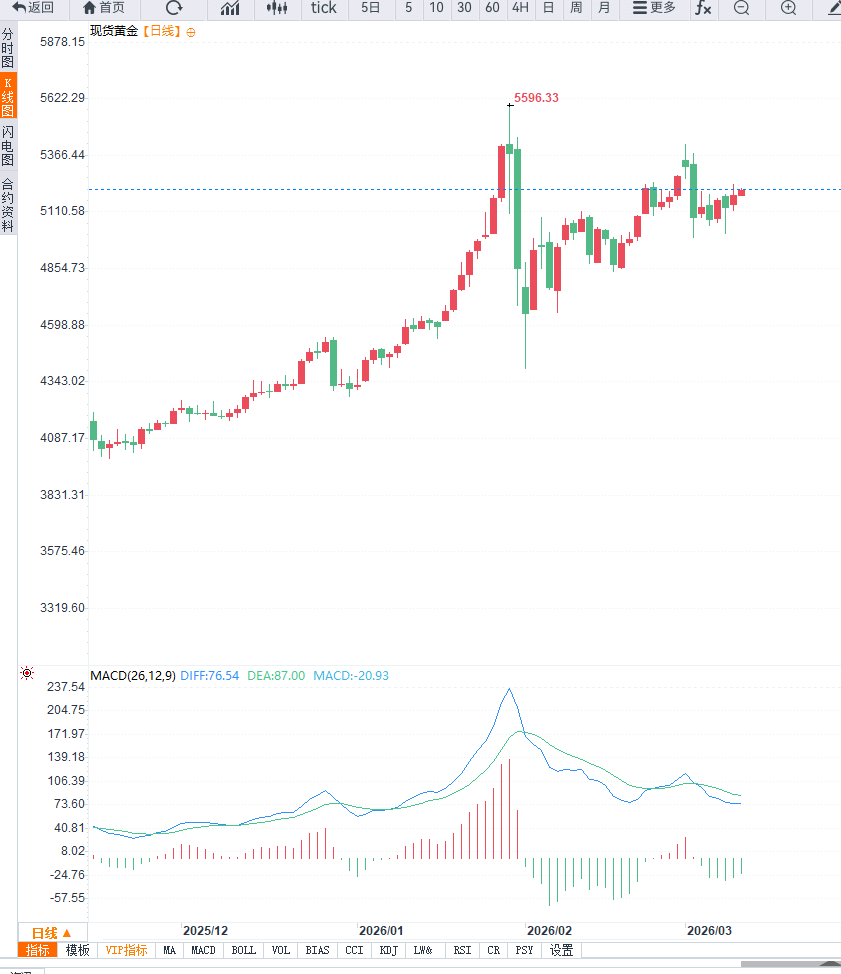
From a technical perspective, the daily chart shows that gold prices have remained above key support levels after previous fluctuations, and the overall bullish trend remains unchanged. Short-term moving averages are in a bullish alignment, indicating that prices still have some upward momentum. The upper resistance level to watch is the $5220 per ounce area; a break above this level could lead to further testing of the $5240-$5260 level . The lower support level to watch is $5180; a break below this level could lead to a short-term pullback to around $5150. The 4-hour chart shows gold consolidating around $5190, with short-term momentum indicators showing a slight pullback, but overall remaining within bullish territory. Short-term price action may remain range-bound. If tensions in the Middle East escalate again or the US dollar weakens, gold prices could potentially retest recent highs .
Editor's Summary : The current gold market is influenced by two main factors: expectations of easing tensions in the Middle East and US inflation data. On the one hand, easing geopolitical risks are supporting stable gold prices ; on the other hand, US CPI data may trigger short-term volatility, increasing market uncertainty. Overall, gold remains an attractive safe-haven asset in the long term, and investors need to pay close attention to the dynamic changes in macroeconomic data and geopolitical risks to judge short-term price fluctuations and medium-term trends.
Frequently Asked Questions <br/>Question 1: Why does the situation in the Middle East have such a significant impact on gold prices?
A: Gold is considered a traditional safe-haven asset. When geopolitical risks rise, investors typically buy gold to mitigate risk. The Middle East is a major global energy exporter, and any conflict could threaten energy supplies, subsequently having a ripple effect on the global economy. Geopolitical tensions increase market uncertainty, thereby driving up gold demand and prices . Conversely, easing tensions reduce safe-haven demand, causing gold prices to stabilize or fall.
Question 2: Why did Trump's announcement that US military operations would end affect the market?
A: The US military action in Iran was a significant factor triggering market panic. The president's statement that the military action would end suggests a potential decrease in conflict risk, thereby reducing oil prices and inflationary pressures, and also decreasing uncertainty in financial markets. Investors typically adjust their holdings when risk decreases, flowing back from safe-haven assets like gold to riskier assets, which puts some pressure on gold prices . However, if the risk is not completely eliminated, gold prices will still have support.
Question 3: Why does the Strait of Hormuz have an indirect impact on gold?
A: The Strait of Hormuz is a crucial global oil shipping route, with approximately 20% of seaborne crude oil passing through it. Blockage of this route could trigger global energy supply shortages, pushing up oil prices and inflation expectations. High oil prices could increase inflationary pressures, thereby encouraging investors to buy gold as a safe haven . Therefore, any risk event related to the Strait of Hormuz will indirectly affect gold prices.
Question 4: What does the US CPI data mean for the short-term trend of gold?
A: US CPI data reflects the inflation level and is an important reference indicator for the US dollar and interest rate policy. If the CPI is higher than expected, it may lead to an appreciation of the US dollar, thereby suppressing the price of gold denominated in US dollars. Conversely, if inflation is lower than expected, it may ease pressure on the US dollar and increase the attractiveness of gold. In the short term, the release of CPI data usually causes gold price fluctuations, and the market will adjust its safe-haven demand and investment strategies based on the interpretation of the data .
Question 5: How should we judge the future trend of gold?
A: Future gold prices will be influenced by two main factors: geopolitics and macroeconomic data. If tensions in the Middle East escalate again or the conflict becomes protracted, safe-haven demand will push up gold prices; conversely, if the situation eases and the US dollar strengthens due to inflation or economic data, gold prices may face short-term pressure. Investors need to combine technical support and resistance levels with dynamics of the Middle East situation and CPI data to judge short-term fluctuations and medium-term trends .
However, uncertainty remains in the Middle East. Iran's Islamic Revolutionary Guard Corps warned that it might block regional oil exports if US-Israeli military action continues. Meanwhile, US President Trump stated that any actions obstructing oil flow through the Strait of Hormuz would be met with US retaliation . Investors are closely monitoring further developments in the Middle East; any escalation of tensions or prolonged conflict could stimulate demand for traditional safe-haven assets like gold, thereby driving up gold prices .
Market focus will now shift to the US February Consumer Price Index (CPI) data. Expected data shows that the overall CPI rose by approximately 2.4% year-on-year in February, while the core CPI rose by approximately 2.5% year- on-year. If the actual data is higher than expected, it could boost the US dollar, thereby putting short-term downward pressure on dollar-denominated gold. Gold prices may fluctuate in the short term, depending on the data's impact on market dollar liquidity and inflation expectations .
From a technical perspective, the daily chart shows that gold prices have remained above key support levels after previous fluctuations, and the overall bullish trend remains unchanged. Short-term moving averages are in a bullish alignment, indicating that prices still have some upward momentum. The upper resistance level to watch is the $5220 per ounce area; a break above this level could lead to further testing of the $5240-$5260 level . The lower support level to watch is $5180; a break below this level could lead to a short-term pullback to around $5150. The 4-hour chart shows gold consolidating around $5190, with short-term momentum indicators showing a slight pullback, but overall remaining within bullish territory. Short-term price action may remain range-bound. If tensions in the Middle East escalate again or the US dollar weakens, gold prices could potentially retest recent highs .
Editor's Summary : The current gold market is influenced by two main factors: expectations of easing tensions in the Middle East and US inflation data. On the one hand, easing geopolitical risks are supporting stable gold prices ; on the other hand, US CPI data may trigger short-term volatility, increasing market uncertainty. Overall, gold remains an attractive safe-haven asset in the long term, and investors need to pay close attention to the dynamic changes in macroeconomic data and geopolitical risks to judge short-term price fluctuations and medium-term trends.
Frequently Asked Questions <br/>Question 1: Why does the situation in the Middle East have such a significant impact on gold prices?
A: Gold is considered a traditional safe-haven asset. When geopolitical risks rise, investors typically buy gold to mitigate risk. The Middle East is a major global energy exporter, and any conflict could threaten energy supplies, subsequently having a ripple effect on the global economy. Geopolitical tensions increase market uncertainty, thereby driving up gold demand and prices . Conversely, easing tensions reduce safe-haven demand, causing gold prices to stabilize or fall.
Question 2: Why did Trump's announcement that US military operations would end affect the market?
A: The US military action in Iran was a significant factor triggering market panic. The president's statement that the military action would end suggests a potential decrease in conflict risk, thereby reducing oil prices and inflationary pressures, and also decreasing uncertainty in financial markets. Investors typically adjust their holdings when risk decreases, flowing back from safe-haven assets like gold to riskier assets, which puts some pressure on gold prices . However, if the risk is not completely eliminated, gold prices will still have support.
Question 3: Why does the Strait of Hormuz have an indirect impact on gold?
A: The Strait of Hormuz is a crucial global oil shipping route, with approximately 20% of seaborne crude oil passing through it. Blockage of this route could trigger global energy supply shortages, pushing up oil prices and inflation expectations. High oil prices could increase inflationary pressures, thereby encouraging investors to buy gold as a safe haven . Therefore, any risk event related to the Strait of Hormuz will indirectly affect gold prices.
Question 4: What does the US CPI data mean for the short-term trend of gold?
A: US CPI data reflects the inflation level and is an important reference indicator for the US dollar and interest rate policy. If the CPI is higher than expected, it may lead to an appreciation of the US dollar, thereby suppressing the price of gold denominated in US dollars. Conversely, if inflation is lower than expected, it may ease pressure on the US dollar and increase the attractiveness of gold. In the short term, the release of CPI data usually causes gold price fluctuations, and the market will adjust its safe-haven demand and investment strategies based on the interpretation of the data .
Question 5: How should we judge the future trend of gold?
A: Future gold prices will be influenced by two main factors: geopolitics and macroeconomic data. If tensions in the Middle East escalate again or the conflict becomes protracted, safe-haven demand will push up gold prices; conversely, if the situation eases and the US dollar strengthens due to inflation or economic data, gold prices may face short-term pressure. Investors need to combine technical support and resistance levels with dynamics of the Middle East situation and CPI data to judge short-term fluctuations and medium-term trends .
- Risk Warning and Disclaimer
- The market involves risk, and trading may not be suitable for all investors. This article is for reference only and does not constitute personal investment advice, nor does it take into account certain users’ specific investment objectives, financial situation, or other needs. Any investment decisions made based on this information are at your own risk.