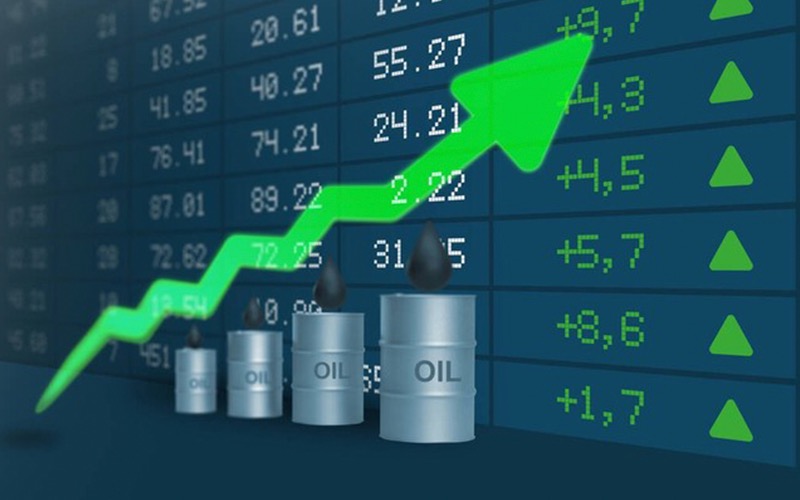
US officials' reassurance turns into alarm, triggering expectations of oil prices reaching $100, with gold also caught in the crossfire.
2026-03-12 21:42:18
On Thursday (European and American trading sessions), WTI crude oil prices returned above $94 per barrel and are currently trading at $94.44, continuing their strong volatility.
The market clearly recognizes that short-term reserve releases are insufficient to offset the long-term impact of shipping disruptions and production cuts. Coupled with frequent tanker attacks, oil prices are exhibiting a typical "negative news but no price drop" trend.
As the US-Iran conflict enters its thirteenth day and the shipping crisis in the Strait of Hormuz continues to escalate, US Energy Secretary Chris Wright has made several statements aimed at easing oil price tensions.
However, these reassuring statements not only failed to quell market panic, but also exacerbated uncertainty due to their ambiguous wording.
In a CNBC interview, Wright revealed that the United States will use the Strategic Petroleum Reserve (SPR) in the form of a "swap transaction," emphasizing that this move has no taxpayer costs and the reserves will be returned in the future.
They also claimed that the oil supply shortage was concentrated in Asia, that the Western Hemisphere market was fine, and that the release of reserves would help them weather the turmoil of the next few weeks.
However, on the crucial issue of military escort, he acknowledged that the U.S. military is currently unable to provide protection for merchant ships in the Strait of Hormuz, only vaguely stating that it is "very likely" to improve by the end of the month, and giving only a vague expectation of "weeks rather than months" for the duration of the military operation.
Wright's statement, lacking a clear timetable and practical details, stands in stark contrast to the grim supply reality revealed by the International Energy Agency (IEA): Gulf countries such as Iraq and Qatar have reduced their daily oil production by at least 10 million barrels due to the conflict, equivalent to nearly 10% of global demand.
However, IEA member states have initiated countermeasures, releasing a record 400 million barrels of emergency reserves, including 172 million barrels from the United States. According to Brown Brothers Harriman (BBH) estimates, the Strait of Hormuz sees a daily throughput of 15 million barrels (alternative routes operate at full capacity at 10 million barrels), meaning this reserve release will only cover supply disruptions for 27 to 40 days.
In response, MSTMarquee energy analyst Saul Kavonic holds a more pessimistic view: "While the release of 400 million barrels will inject much-needed supply into the market, the phased release will only fill about a quarter of the 20 million barrels per day shortfall caused by the Hormuz disruption."
Bob McNally, president of Rapidan Energy Group, pointed out: "The market is still in panic mode, filled with emotions, fear and uncertainty." The IEA's actions have been interpreted as a signal that the supply crisis is extremely serious, suggesting that institutions do not believe the war will end soon.
In reality, it is impossible for 400 million barrels to be dumped into the market in one day. Due to physical limitations such as pipelines, tanker loading, and refinery receiving capacity, the maximum actual flow released by IEA member countries is expected to be only 1.2 million to 4 million barrels per day, while the current shortfall is 8-10 million barrels per day.
Unlike the strong fluctuations in crude oil, spot gold (XAU/USD) is exhibiting a sideways consolidation pattern.
Gold prices recovered earlier losses on Thursday, trading around $5,170, rebounding from an intraday low of $5,125.
Gold is currently trapped in a familiar trading range, lacking clear directional momentum. The core contradiction lies in the interplay of two opposing factors: on the one hand, the ongoing conflict between the US and Iran and the escalating crisis in the Strait of Hormuz are continuously strengthening safe-haven demand, effectively curbing a deep correction in gold prices.
On the other hand, concerns about oil-driven inflation triggered by soaring oil prices continue to reinforce the Federal Reserve's hawkish policy narrative, pushing the dollar to remain at recent high levels and keeping US Treasury yields high, thus posing a hard constraint on the upward movement of gold.
Market expectations for a Federal Reserve rate cut have cooled significantly. According to the CME FedWatch tool, traders are currently pricing in a rate cut of only 25-30 basis points before December, a sharp decline from the more than 50 basis points before the outbreak of the war.
Recent US inflation data also supports the Federal Reserve's cautious stance, and market focus is now shifting to the Personal Consumption Expenditures Price Index (PCE) to be released on Friday. This key data will further clarify the policy path and provide subsequent guidance for gold price movements.
In the short term, institutional liquidity needs have exacerbated gold price volatility, and some investors have sold gold to offset stock market losses, causing the traditional logic of "buying gold during wartime" to become temporarily ineffective.
Against the backdrop of current geopolitical conflicts, the traditional correlation between crude oil and gold has become complex and divergent:
Positive correlation in inflation transmission: As the "lifeblood of industry," the surge in crude oil prices directly pushes up global inflation expectations, while gold, with its natural anti-inflationary properties, should theoretically strengthen in tandem.
The surge in Brent crude oil prices from $72 per barrel before the conflict to once exceeding $110 has reignited concerns about stagflation, providing key support for gold.
The reverse constraint of policy expectations: Inflationary pressures driven by crude oil have become a key basis for the Federal Reserve to maintain a hawkish stance, resulting in a delay in interest rate cut expectations and high levels of the US dollar and US Treasury yields, which in turn puts direct pressure on gold priced in US dollars.
This transmission chain of "rising crude oil prices → rising inflation → hawkish Fed stance → pressure on gold" has caused the correlation between the two to diverge at certain stages.
The differences in safe-haven levels are reflected in the following ways: In the short term, the market regards the US dollar as the primary safe-haven option, crude oil has become a "hard safe-haven asset" due to its rigid supply, while gold is in a wait-and-see state as the "ultimate safe-haven asset".
Gold's traditional safe-haven logic will only fully dominate its price movement when the conflict escalates into systemic risk or a stagflation pattern is clearly established.
The core contradiction in the current global energy and precious metals market is essentially a game between supply shocks caused by geopolitical conflicts and macroeconomic policy regulation.
The U.S. Energy Secretary's ambiguous statements have exacerbated market uncertainty about the supply outlook, allowing crude oil to remain strong despite the "bearish" news of reserve releases. In the short term, the recovery of shipping routes and the scale of production cuts will continue to dominate oil price trends.
Gold is constrained by a balance between safe-haven support and policy suppression, making it difficult to break out of its oscillating pattern. It needs to wait for clear catalysts such as PCE inflation data, Fed policy signals, or escalation of conflict.
In the long run, if the Strait of Hormuz crisis continues to escalate, oil prices may remain above $100, and the risk of global stagflation will further intensify. At that time, gold's anti-inflation and safe-haven attributes will resonate, breaking through the current trading range.
Conversely, if the conflict eases or alternative supply solutions are implemented, the decline in crude oil prices will alleviate inflationary pressures, and expectations of a Fed rate cut may be restarted, which would also open up upward space for gold.
The future performance of both assets will depend heavily on developments in the Middle East and the clarification of the Federal Reserve's policy path.
Technically, spot gold has repeatedly tested the key level of 5130 while holding above the 5-day moving average. Even if it breaks below the 5-day moving average, it is still within the strike zone. Under wartime conditions, any good news regarding oil supply will benefit the upward development of gold.
As for crude oil, prices are unsurprisingly right below the key 0.618 Fibonacci retracement level, almost holding above it, showing signs of an impending breakout.
At 21:32 Beijing time, spot gold was trading at $5,165 per ounce, and WTI crude oil futures were trading at $94.04 per barrel.
The market clearly recognizes that short-term reserve releases are insufficient to offset the long-term impact of shipping disruptions and production cuts. Coupled with frequent tanker attacks, oil prices are exhibiting a typical "negative news but no price drop" trend.
As the US-Iran conflict enters its thirteenth day and the shipping crisis in the Strait of Hormuz continues to escalate, US Energy Secretary Chris Wright has made several statements aimed at easing oil price tensions.
However, these reassuring statements not only failed to quell market panic, but also exacerbated uncertainty due to their ambiguous wording.
Energy Minister's vague statement: Reassurances fail, anxiety intensifies
In a CNBC interview, Wright revealed that the United States will use the Strategic Petroleum Reserve (SPR) in the form of a "swap transaction," emphasizing that this move has no taxpayer costs and the reserves will be returned in the future.
They also claimed that the oil supply shortage was concentrated in Asia, that the Western Hemisphere market was fine, and that the release of reserves would help them weather the turmoil of the next few weeks.
However, on the crucial issue of military escort, he acknowledged that the U.S. military is currently unable to provide protection for merchant ships in the Strait of Hormuz, only vaguely stating that it is "very likely" to improve by the end of the month, and giving only a vague expectation of "weeks rather than months" for the duration of the military operation.
Severe supply gap: The contrast between the scale of production cuts and the release of reserves
Wright's statement, lacking a clear timetable and practical details, stands in stark contrast to the grim supply reality revealed by the International Energy Agency (IEA): Gulf countries such as Iraq and Qatar have reduced their daily oil production by at least 10 million barrels due to the conflict, equivalent to nearly 10% of global demand.
However, IEA member states have initiated countermeasures, releasing a record 400 million barrels of emergency reserves, including 172 million barrels from the United States. According to Brown Brothers Harriman (BBH) estimates, the Strait of Hormuz sees a daily throughput of 15 million barrels (alternative routes operate at full capacity at 10 million barrels), meaning this reserve release will only cover supply disruptions for 27 to 40 days.
In response, MSTMarquee energy analyst Saul Kavonic holds a more pessimistic view: "While the release of 400 million barrels will inject much-needed supply into the market, the phased release will only fill about a quarter of the 20 million barrels per day shortfall caused by the Hormuz disruption."
Bob McNally, president of Rapidan Energy Group, pointed out: "The market is still in panic mode, filled with emotions, fear and uncertainty." The IEA's actions have been interpreted as a signal that the supply crisis is extremely serious, suggesting that institutions do not believe the war will end soon.
In reality, it is impossible for 400 million barrels to be dumped into the market in one day. Due to physical limitations such as pipelines, tanker loading, and refinery receiving capacity, the maximum actual flow released by IEA member countries is expected to be only 1.2 million to 4 million barrels per day, while the current shortfall is 8-10 million barrels per day.
Gold prices fluctuate within a narrow range: a battle between safe-haven support and policy pressure.
Unlike the strong fluctuations in crude oil, spot gold (XAU/USD) is exhibiting a sideways consolidation pattern.
Gold prices recovered earlier losses on Thursday, trading around $5,170, rebounding from an intraday low of $5,125.
Gold is currently trapped in a familiar trading range, lacking clear directional momentum. The core contradiction lies in the interplay of two opposing factors: on the one hand, the ongoing conflict between the US and Iran and the escalating crisis in the Strait of Hormuz are continuously strengthening safe-haven demand, effectively curbing a deep correction in gold prices.
On the other hand, concerns about oil-driven inflation triggered by soaring oil prices continue to reinforce the Federal Reserve's hawkish policy narrative, pushing the dollar to remain at recent high levels and keeping US Treasury yields high, thus posing a hard constraint on the upward movement of gold.
Market expectations for a Federal Reserve rate cut have cooled significantly. According to the CME FedWatch tool, traders are currently pricing in a rate cut of only 25-30 basis points before December, a sharp decline from the more than 50 basis points before the outbreak of the war.
Recent US inflation data also supports the Federal Reserve's cautious stance, and market focus is now shifting to the Personal Consumption Expenditures Price Index (PCE) to be released on Friday. This key data will further clarify the policy path and provide subsequent guidance for gold price movements.
In the short term, institutional liquidity needs have exacerbated gold price volatility, and some investors have sold gold to offset stock market losses, causing the traditional logic of "buying gold during wartime" to become temporarily ineffective.
The divergence in the correlation between crude oil and gold: inflation, policy, and safe-haven demand.
Against the backdrop of current geopolitical conflicts, the traditional correlation between crude oil and gold has become complex and divergent:
Positive correlation in inflation transmission: As the "lifeblood of industry," the surge in crude oil prices directly pushes up global inflation expectations, while gold, with its natural anti-inflationary properties, should theoretically strengthen in tandem.
The surge in Brent crude oil prices from $72 per barrel before the conflict to once exceeding $110 has reignited concerns about stagflation, providing key support for gold.
The reverse constraint of policy expectations: Inflationary pressures driven by crude oil have become a key basis for the Federal Reserve to maintain a hawkish stance, resulting in a delay in interest rate cut expectations and high levels of the US dollar and US Treasury yields, which in turn puts direct pressure on gold priced in US dollars.
This transmission chain of "rising crude oil prices → rising inflation → hawkish Fed stance → pressure on gold" has caused the correlation between the two to diverge at certain stages.
The differences in safe-haven levels are reflected in the following ways: In the short term, the market regards the US dollar as the primary safe-haven option, crude oil has become a "hard safe-haven asset" due to its rigid supply, while gold is in a wait-and-see state as the "ultimate safe-haven asset".
Gold's traditional safe-haven logic will only fully dominate its price movement when the conflict escalates into systemic risk or a stagflation pattern is clearly established.
Summary and Technical Analysis:
The core contradiction in the current global energy and precious metals market is essentially a game between supply shocks caused by geopolitical conflicts and macroeconomic policy regulation.
The U.S. Energy Secretary's ambiguous statements have exacerbated market uncertainty about the supply outlook, allowing crude oil to remain strong despite the "bearish" news of reserve releases. In the short term, the recovery of shipping routes and the scale of production cuts will continue to dominate oil price trends.
Gold is constrained by a balance between safe-haven support and policy suppression, making it difficult to break out of its oscillating pattern. It needs to wait for clear catalysts such as PCE inflation data, Fed policy signals, or escalation of conflict.
In the long run, if the Strait of Hormuz crisis continues to escalate, oil prices may remain above $100, and the risk of global stagflation will further intensify. At that time, gold's anti-inflation and safe-haven attributes will resonate, breaking through the current trading range.
Conversely, if the conflict eases or alternative supply solutions are implemented, the decline in crude oil prices will alleviate inflationary pressures, and expectations of a Fed rate cut may be restarted, which would also open up upward space for gold.
The future performance of both assets will depend heavily on developments in the Middle East and the clarification of the Federal Reserve's policy path.
Technically, spot gold has repeatedly tested the key level of 5130 while holding above the 5-day moving average. Even if it breaks below the 5-day moving average, it is still within the strike zone. Under wartime conditions, any good news regarding oil supply will benefit the upward development of gold.
As for crude oil, prices are unsurprisingly right below the key 0.618 Fibonacci retracement level, almost holding above it, showing signs of an impending breakout.
At 21:32 Beijing time, spot gold was trading at $5,165 per ounce, and WTI crude oil futures were trading at $94.04 per barrel.
- Risk Warning and Disclaimer
- The market involves risk, and trading may not be suitable for all investors. This article is for reference only and does not constitute personal investment advice, nor does it take into account certain users’ specific investment objectives, financial situation, or other needs. Any investment decisions made based on this information are at your own risk.