The Middle East oil price shock forced the "bitter medicine" of austerity measures, shattering Australian households' dreams of interest rate cuts.
2026-03-17 13:49:39
According to APP, eToro analyst Josh Gilbert stated that the Reserve Bank of Australia's (RBA) first consecutive interest rate hikes since 2023 highlights the severity of the Middle East energy shock. The latest policy meeting (March 17-18) decided to raise the benchmark cash rate by 25 basis points to 4.10%, with a near-majority 5-4 vote, indicating the decision-making process was far from easy. Gilbert pointed out that this was clearly not a rate hike the RBA wanted, but heightened inflation risks coupled with rising fuel prices had put the institution in a dilemma. For Australian households already burdened by mortgage repayments and rising fuel and food bills, this tightening is undoubtedly a bitter pill to swallow. The interest rate cuts many had hoped for are now fraught with uncertainty. Gilbert further emphasized that the RBA's decisiveness this time surpassed that during the 2022 Russia-Ukraine conflict, and could be a key turning point. If the Middle East conflict is resolved quickly and oil prices return to normal, the March rate hike may be the last one; however, this is more wishful thinking at present, as the continued energy shock makes the tightening path more complicated.

This rate hike marks the second consecutive move following the increase to 3.85% in February, primarily driven by a potential rebound in inflation in the second half of 2025 and external supply-side pressures. The RBA assessment indicates that underlying inflation is stemming from increased capacity constraints and a resilient labor market, compounded by Middle East geopolitical conflicts pushing up global fuel costs, further amplifying the risk of imported inflation. The Committee believes that inflation will remain above the 2-3% target range for longer than previously anticipated, tilting upside risks. Despite drags on economic growth, prioritizing the prevention of runaway inflation has become a consensus. Gilbert's analysis suggests that the tightening力度 (intensity/strength) exceeded some market expectations, reflecting the RBA's vigilance regarding the potential for energy shocks to translate into persistent inflation.
The close vote highlights deep internal divisions: the majority supports suppressing demand and anchoring expectations through interest rate hikes; the minority may worry about excessive squeeze on households and the economy, especially amid heightened global uncertainty. This division is similar to the dilemma faced by other central banks, highlighting the difficult balance between price stability and growth support.
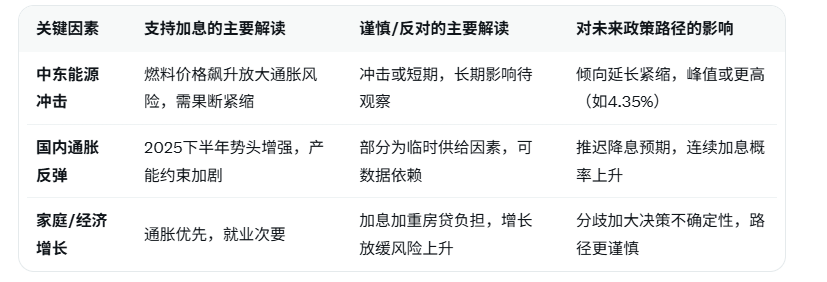
Overall, while the rate hike was limited in magnitude, it sent a strong signal: the RBA's concerns about the persistence of inflation dominated the decision. If energy prices remain high or domestic data strengthens demand resilience, the market may price in a further rate hike to 4.35% in May, continuing the tightening cycle. Conversely, if tensions ease and inflation falls rapidly, the rate hike may be paused. Gilbert's view warns that the current environment has significantly postponed expectations of rate cuts, and Australian households need to prepare for a longer period of high interest rate pressure. Investors should pay attention to subsequent CPI, energy price, and labor market data to assess the timing of a policy shift.
Editor's Summary : The Reserve Bank of Australia's (RBA) consecutive interest rate hikes reflect its heightened vigilance regarding the Middle East energy shock and a rebound in inflation. The 5-4 vote highlights internal tensions, but the overall bias leans towards decisive tightening to maintain price stability. Gilbert's analysis emphasizes that this move far exceeds the scale of the conflict period in 2022, and the prospect of interest rate cuts is dimmed due to uncertainty. The market needs to monitor global geopolitical dynamics and domestic inflation.
Frequently Asked Questions
1. Why did the Reserve Bank of Australia raise interest rates consecutively this time, and why was the vote so close?
The RBA was deeply divided on the inflation outlook: most members believed that the Middle East conflict, coupled with domestic production constraints, was pushing up fuel costs and increasing inflation risks, necessitating continued tightening to suppress demand and prevent expectations from derailing; a minority of members worried about the excessive negative impact of interest rate hikes on economic growth and household spending, especially given rising global uncertainty. The 5-4 result shows that the decision was made after intense debate, highlighting the difficulty of balancing the dual mandates of price stability and full employment.
2. How did the Middle East energy shock become the core driver of this interest rate hike?
Gilbert emphasized that this tightening highlights the severity of the Middle East conflict: the sharp rise in fuel prices creates imported inflationary pressures, which, if they remain high, will amplify global and domestic inflation expectations. The RBA assessment indicates that this could prolong the period when inflation is above the **2-3%** target, tilting upside risks and forcing institutions to take decisive action to maintain policy credibility and avoid repeating the high inflation pattern.
3. What direct impact will this interest rate hike have on Australian households?
For households reliant on mortgages, rising interest rates will increase borrowing costs, further squeezing disposable income, especially given already rising fuel and food bills, creating multiple pressures. Gilbert described this as "a bitter pill," with many anticipated rate cuts now nowhere in sight, potentially exacerbating the cost of living and suppressing consumer spending.
4. Why did Gilbert say that the decisiveness this time exceeded that during the Russia-Ukraine conflict in 2022?
The 2022 Russia-Ukraine conflict triggered a surge in energy prices, but the RBA's response at the time was relatively gradual. Faced with the current Middle East shock, the RBA has opted for consecutive interest rate hikes, demonstrating a stronger willingness to tighten monetary policy. Gilbert sees this as a "critical turning point": if the conflict is resolved quickly and oil prices fall, March may be the last rate hike; however, current energy uncertainties make optimistic assumptions "wishful thinking," and the tightening path is more sustainable.
5. What is the outlook for the Reserve Bank of Australia's future policies?
If energy prices remain high or inflation data persists, the RBA may raise the rate by another 25 basis points to 4.35% in May, extending the tightening cycle. Conversely, if the conflict eases and inflation falls, the RBA may pause or even reconsider rate cuts. However, Gilbert warned that there are many uncertainties at present, and rate cuts are fraught with uncertainty. Investors should monitor the CPI report, oil price trends, and labor market data to determine the pace and magnitude of the shift.
This rate hike marks the second consecutive move following the increase to 3.85% in February, primarily driven by a potential rebound in inflation in the second half of 2025 and external supply-side pressures. The RBA assessment indicates that underlying inflation is stemming from increased capacity constraints and a resilient labor market, compounded by Middle East geopolitical conflicts pushing up global fuel costs, further amplifying the risk of imported inflation. The Committee believes that inflation will remain above the 2-3% target range for longer than previously anticipated, tilting upside risks. Despite drags on economic growth, prioritizing the prevention of runaway inflation has become a consensus. Gilbert's analysis suggests that the tightening力度 (intensity/strength) exceeded some market expectations, reflecting the RBA's vigilance regarding the potential for energy shocks to translate into persistent inflation.
The close vote highlights deep internal divisions: the majority supports suppressing demand and anchoring expectations through interest rate hikes; the minority may worry about excessive squeeze on households and the economy, especially amid heightened global uncertainty. This division is similar to the dilemma faced by other central banks, highlighting the difficult balance between price stability and growth support.
Overall, while the rate hike was limited in magnitude, it sent a strong signal: the RBA's concerns about the persistence of inflation dominated the decision. If energy prices remain high or domestic data strengthens demand resilience, the market may price in a further rate hike to 4.35% in May, continuing the tightening cycle. Conversely, if tensions ease and inflation falls rapidly, the rate hike may be paused. Gilbert's view warns that the current environment has significantly postponed expectations of rate cuts, and Australian households need to prepare for a longer period of high interest rate pressure. Investors should pay attention to subsequent CPI, energy price, and labor market data to assess the timing of a policy shift.
Editor's Summary : The Reserve Bank of Australia's (RBA) consecutive interest rate hikes reflect its heightened vigilance regarding the Middle East energy shock and a rebound in inflation. The 5-4 vote highlights internal tensions, but the overall bias leans towards decisive tightening to maintain price stability. Gilbert's analysis emphasizes that this move far exceeds the scale of the conflict period in 2022, and the prospect of interest rate cuts is dimmed due to uncertainty. The market needs to monitor global geopolitical dynamics and domestic inflation.
Frequently Asked Questions
1. Why did the Reserve Bank of Australia raise interest rates consecutively this time, and why was the vote so close?
The RBA was deeply divided on the inflation outlook: most members believed that the Middle East conflict, coupled with domestic production constraints, was pushing up fuel costs and increasing inflation risks, necessitating continued tightening to suppress demand and prevent expectations from derailing; a minority of members worried about the excessive negative impact of interest rate hikes on economic growth and household spending, especially given rising global uncertainty. The 5-4 result shows that the decision was made after intense debate, highlighting the difficulty of balancing the dual mandates of price stability and full employment.
2. How did the Middle East energy shock become the core driver of this interest rate hike?
Gilbert emphasized that this tightening highlights the severity of the Middle East conflict: the sharp rise in fuel prices creates imported inflationary pressures, which, if they remain high, will amplify global and domestic inflation expectations. The RBA assessment indicates that this could prolong the period when inflation is above the **2-3%** target, tilting upside risks and forcing institutions to take decisive action to maintain policy credibility and avoid repeating the high inflation pattern.
3. What direct impact will this interest rate hike have on Australian households?
For households reliant on mortgages, rising interest rates will increase borrowing costs, further squeezing disposable income, especially given already rising fuel and food bills, creating multiple pressures. Gilbert described this as "a bitter pill," with many anticipated rate cuts now nowhere in sight, potentially exacerbating the cost of living and suppressing consumer spending.
4. Why did Gilbert say that the decisiveness this time exceeded that during the Russia-Ukraine conflict in 2022?
The 2022 Russia-Ukraine conflict triggered a surge in energy prices, but the RBA's response at the time was relatively gradual. Faced with the current Middle East shock, the RBA has opted for consecutive interest rate hikes, demonstrating a stronger willingness to tighten monetary policy. Gilbert sees this as a "critical turning point": if the conflict is resolved quickly and oil prices fall, March may be the last rate hike; however, current energy uncertainties make optimistic assumptions "wishful thinking," and the tightening path is more sustainable.
5. What is the outlook for the Reserve Bank of Australia's future policies?
If energy prices remain high or inflation data persists, the RBA may raise the rate by another 25 basis points to 4.35% in May, extending the tightening cycle. Conversely, if the conflict eases and inflation falls, the RBA may pause or even reconsider rate cuts. However, Gilbert warned that there are many uncertainties at present, and rate cuts are fraught with uncertainty. Investors should monitor the CPI report, oil price trends, and labor market data to determine the pace and magnitude of the shift.
- Risk Warning and Disclaimer
- The market involves risk, and trading may not be suitable for all investors. This article is for reference only and does not constitute personal investment advice, nor does it take into account certain users’ specific investment objectives, financial situation, or other needs. Any investment decisions made based on this information are at your own risk.