Citigroup raised its short-term Brent crude oil forecast to $110-120 per barrel, anticipating a easing of geopolitical tensions in mid-to-late April.
2026-03-18 13:25:27
According to APP, Citigroup has raised its short-term baseline forecast for Brent crude oil prices to $110-120 per barrel. The agency also expects the Middle East conflict to ease by mid-to-late April. This forward adjustment reflects the direct impact of current geopolitical tensions on global oil supply, which has significantly exceeded previous market expectations.

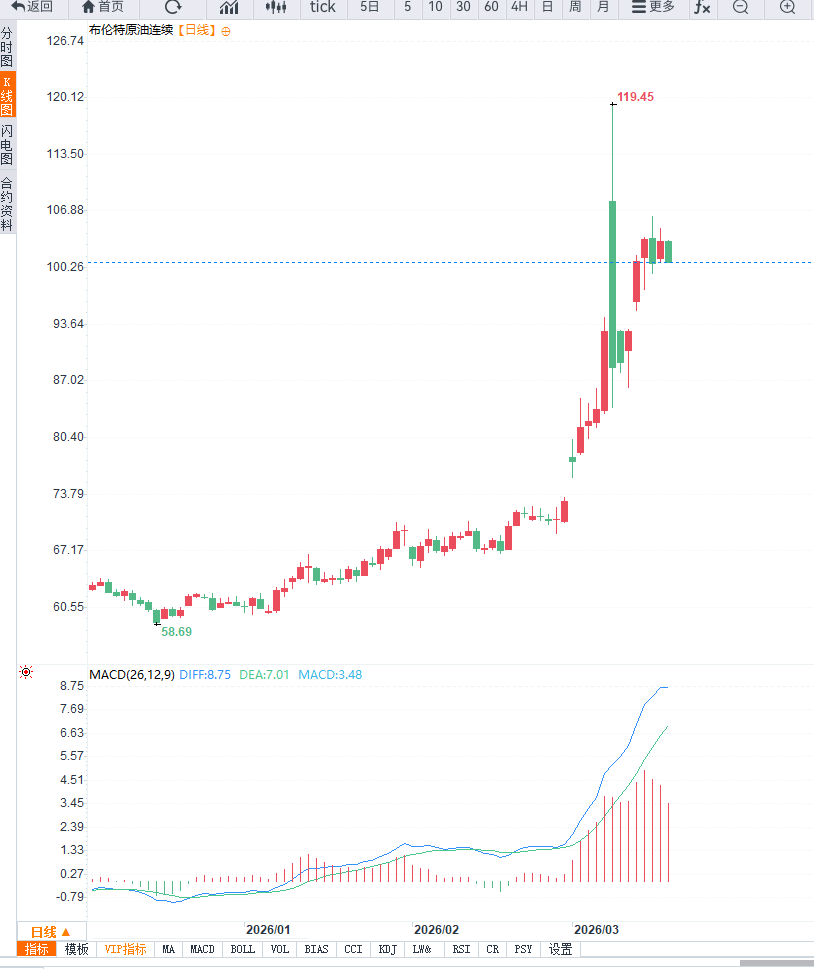
Latest market data shows that as of March 18, Brent crude oil spot prices hovered around $101 per barrel, a significant increase from the beginning of the month, with geopolitical risk premiums pushing prices above the psychological $100 mark. Citigroup's recent upward revision of its short-term forecast by approximately $20-30 further highlights a stronger pricing focus on short-term supply bottlenecks.
In a recent report, Citigroup analyst Eric Lee stated, "We believe that neither the US nor Iran wants the conflict to escalate to the next level, as that could involve regional energy infrastructure and public facilities within Iran. Therefore, our baseline scenario is that the situation will de-escalate shortly after the US and Israel achieve their military objectives." This statement is highly consistent with the institution's assessment of a de-escalation in mid-to-late April. At the same time, he also warned that the risk of attacks on regional energy facilities remains high, potentially triggering an oil shock similar to that of the 1970s.
From an in-depth analysis perspective, the Middle East conflict has led to the practical risk of closing key shipping lanes such as the Strait of Hormuz. It is reasonable to speculate that the daily crude oil supply gap may widen to the millions of barrels, directly pushing global benchmark prices above $110. Citi 's upward revision reflects the market's full pricing of supply tightness before mid-to-late April, while expectations of easing provide a clear downward anchor for the market. If the war de-escalates as expected, oil prices are expected to gradually fall from their highs to the $90-$100 range; conversely, if retaliatory actions exceed expectations, $110-$120 will become a new support level. Coupled with the uncertainty of OPEC+ production policies and fluctuations in US inventory data, Brent crude oil volatility may widen to more than $5 per day in the short term, further transmitting cost pressures on downstream refineries to global inflation and economic growth.
On the other hand, while demand is suppressed by high oil prices, industrial and transportation activities in major economies such as Asia remain resilient, providing some buffer support. Traders generally believe that if Federal Reserve officials release any hawkish signals, high oil prices will exacerbate concerns about a global growth slowdown; however, in the current geopolitically driven environment, Citi's $110-$120 forecast provides a clear risk-reward framework for long positions. Investors should pay attention to the geopolitical event window in April and official inventory reports to determine whether easing signals have truly materialized.
Editor's Summary
Citigroup 's upward revision of its short-term Brent crude oil forecast and its clear assessment of the timing of a potential easing of tensions in the Middle East together outline a path for oil prices to fluctuate at high levels in the short term before a potential correction. Future price movements will depend on the actual pace of the conflict's evolution and the speed of supply recovery; market participants need to continuously monitor geopolitical developments and fundamental confirmation.
Frequently Asked Questions
Q1: Why did Citi significantly raise its short-term baseline forecast for Brent crude oil to $110-120 per barrel?
A: The main driving factor is the significantly increased risk of disruption to key shipping lanes due to the Middle East conflict, and the supply gap is unlikely to be filled quickly in the short term. Current prices have stabilized around $101, and the geopolitical premium has been fully reflected. However, Citi believes that escalating conflict could further increase supply tightness, therefore raising its short-term baseline from the previous $80-$100 range. This adjustment reflects the institution's repricing of short-term risks, rather than a judgment on long-term trends.
Q2: What is the basis for the expectation that the Middle East war will ease in mid-to-late April?
A: Citi analyst Eric Lee clearly stated that neither the US nor Iran wants the conflict to escalate further to the level involving energy infrastructure. Therefore, the baseline scenario is a rapid de-escalation of the situation after military objectives are achieved. This timeframe of mid-to-late April aligns closely with the pace at which the US achieves its phased goals. If no new retaliatory events occur, this window will provide a clear signal for a pullback in oil prices, preventing them from remaining at extremely high levels for an extended period.
Q3: What is the relationship between the current Brent crude oil price of about $101 and Citi's forecast of $110-120?
A: $101 already reflects the initial pricing of geopolitical risks, but Citi believes that if the disruption continues, prices could rise further to the $110-$120 range. This forecast is not an immediate target, but rather a short-term baseline, meaning the market will likely fluctuate around a higher range before easing in mid-to-late April. Current levels have provided support for the bulls, but the risk of a pullback due to sudden easing news should be noted.
Q4: If the conflict eases as expected, what downward pressure will Brent crude oil prices face?
A: Easing tensions will directly alleviate supply disruption concerns. With the reopening of channels like the Strait of Hormuz, the daily supply gap will narrow rapidly. Coupled with the possibility of increased production from OPEC+, prices may fall back to the $90-$100 range. Meanwhile, the high oil price will exert a suppressive effect on demand, accelerating inventory accumulation and further limiting price increases. However, if the easing process is delayed, $110 will remain a strong support level.
Latest market data shows that as of March 18, Brent crude oil spot prices hovered around $101 per barrel, a significant increase from the beginning of the month, with geopolitical risk premiums pushing prices above the psychological $100 mark. Citigroup's recent upward revision of its short-term forecast by approximately $20-30 further highlights a stronger pricing focus on short-term supply bottlenecks.
In a recent report, Citigroup analyst Eric Lee stated, "We believe that neither the US nor Iran wants the conflict to escalate to the next level, as that could involve regional energy infrastructure and public facilities within Iran. Therefore, our baseline scenario is that the situation will de-escalate shortly after the US and Israel achieve their military objectives." This statement is highly consistent with the institution's assessment of a de-escalation in mid-to-late April. At the same time, he also warned that the risk of attacks on regional energy facilities remains high, potentially triggering an oil shock similar to that of the 1970s.
From an in-depth analysis perspective, the Middle East conflict has led to the practical risk of closing key shipping lanes such as the Strait of Hormuz. It is reasonable to speculate that the daily crude oil supply gap may widen to the millions of barrels, directly pushing global benchmark prices above $110. Citi 's upward revision reflects the market's full pricing of supply tightness before mid-to-late April, while expectations of easing provide a clear downward anchor for the market. If the war de-escalates as expected, oil prices are expected to gradually fall from their highs to the $90-$100 range; conversely, if retaliatory actions exceed expectations, $110-$120 will become a new support level. Coupled with the uncertainty of OPEC+ production policies and fluctuations in US inventory data, Brent crude oil volatility may widen to more than $5 per day in the short term, further transmitting cost pressures on downstream refineries to global inflation and economic growth.
On the other hand, while demand is suppressed by high oil prices, industrial and transportation activities in major economies such as Asia remain resilient, providing some buffer support. Traders generally believe that if Federal Reserve officials release any hawkish signals, high oil prices will exacerbate concerns about a global growth slowdown; however, in the current geopolitically driven environment, Citi's $110-$120 forecast provides a clear risk-reward framework for long positions. Investors should pay attention to the geopolitical event window in April and official inventory reports to determine whether easing signals have truly materialized.
Editor's Summary
Citigroup 's upward revision of its short-term Brent crude oil forecast and its clear assessment of the timing of a potential easing of tensions in the Middle East together outline a path for oil prices to fluctuate at high levels in the short term before a potential correction. Future price movements will depend on the actual pace of the conflict's evolution and the speed of supply recovery; market participants need to continuously monitor geopolitical developments and fundamental confirmation.
Frequently Asked Questions
Q1: Why did Citi significantly raise its short-term baseline forecast for Brent crude oil to $110-120 per barrel?
A: The main driving factor is the significantly increased risk of disruption to key shipping lanes due to the Middle East conflict, and the supply gap is unlikely to be filled quickly in the short term. Current prices have stabilized around $101, and the geopolitical premium has been fully reflected. However, Citi believes that escalating conflict could further increase supply tightness, therefore raising its short-term baseline from the previous $80-$100 range. This adjustment reflects the institution's repricing of short-term risks, rather than a judgment on long-term trends.
Q2: What is the basis for the expectation that the Middle East war will ease in mid-to-late April?
A: Citi analyst Eric Lee clearly stated that neither the US nor Iran wants the conflict to escalate further to the level involving energy infrastructure. Therefore, the baseline scenario is a rapid de-escalation of the situation after military objectives are achieved. This timeframe of mid-to-late April aligns closely with the pace at which the US achieves its phased goals. If no new retaliatory events occur, this window will provide a clear signal for a pullback in oil prices, preventing them from remaining at extremely high levels for an extended period.
Q3: What is the relationship between the current Brent crude oil price of about $101 and Citi's forecast of $110-120?
A: $101 already reflects the initial pricing of geopolitical risks, but Citi believes that if the disruption continues, prices could rise further to the $110-$120 range. This forecast is not an immediate target, but rather a short-term baseline, meaning the market will likely fluctuate around a higher range before easing in mid-to-late April. Current levels have provided support for the bulls, but the risk of a pullback due to sudden easing news should be noted.
Q4: If the conflict eases as expected, what downward pressure will Brent crude oil prices face?
A: Easing tensions will directly alleviate supply disruption concerns. With the reopening of channels like the Strait of Hormuz, the daily supply gap will narrow rapidly. Coupled with the possibility of increased production from OPEC+, prices may fall back to the $90-$100 range. Meanwhile, the high oil price will exert a suppressive effect on demand, accelerating inventory accumulation and further limiting price increases. However, if the easing process is delayed, $110 will remain a strong support level.
- Risk Warning and Disclaimer
- The market involves risk, and trading may not be suitable for all investors. This article is for reference only and does not constitute personal investment advice, nor does it take into account certain users’ specific investment objectives, financial situation, or other needs. Any investment decisions made based on this information are at your own risk.