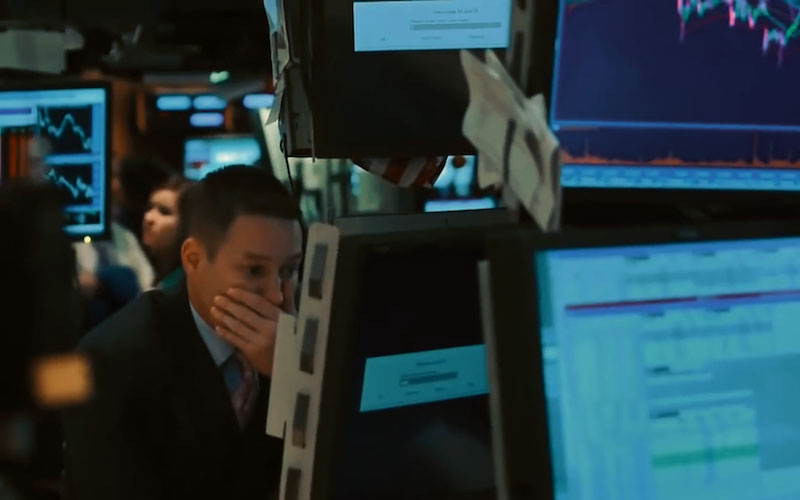
Gold plunges below $5,000! Hawkish Fed stance casts shadow over Middle East powder keg.
2026-03-18 20:58:12
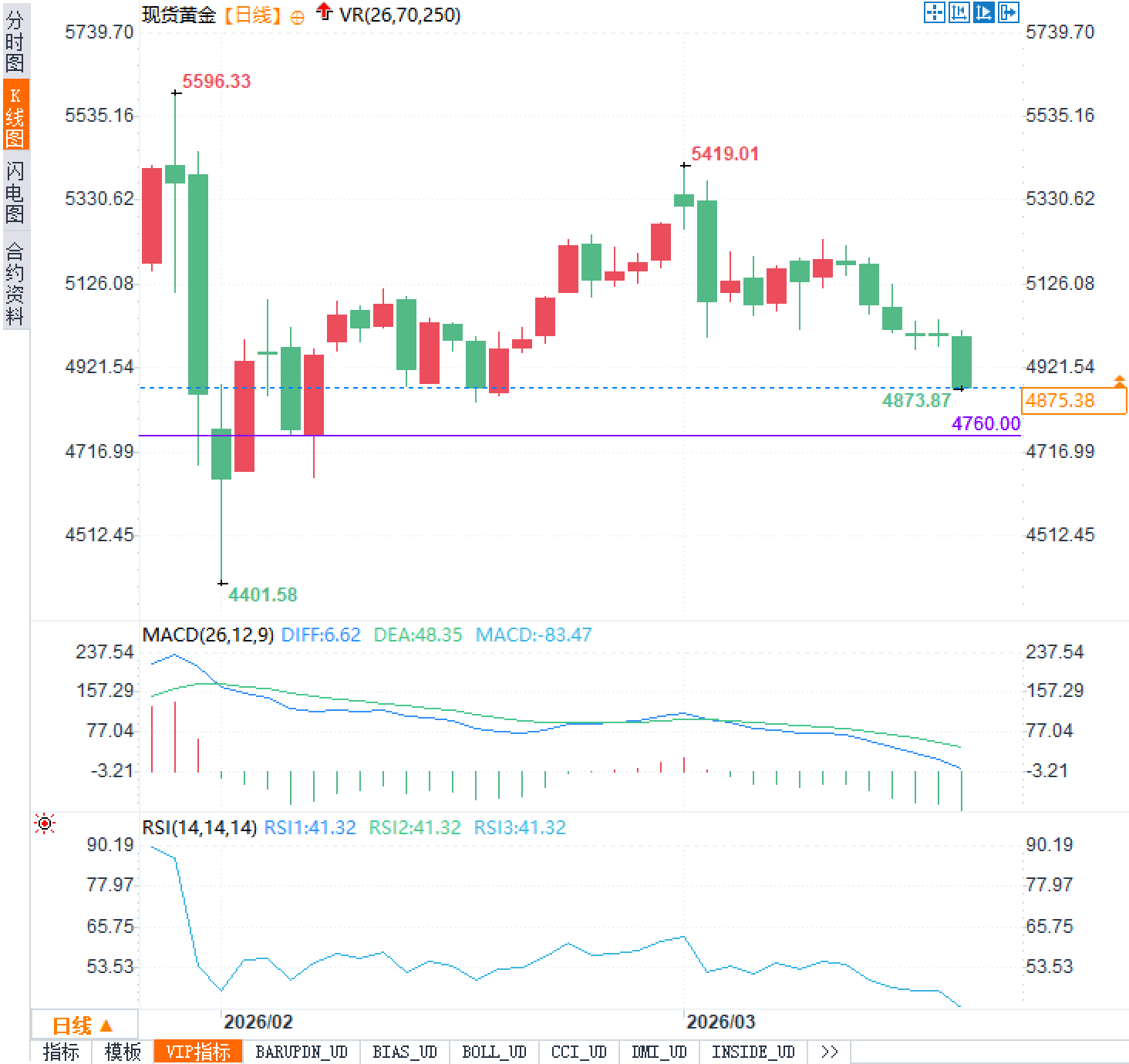
Gold prices saw a significant pullback on Wednesday (March 18th), with spot gold (XAU/USD) currently trading around $4880, down more than 2% on the day, hitting a new low since mid-February. This move occurred on the eve of the Federal Reserve's interest rate meeting, with strong market expectations that the Fed would maintain the benchmark interest rate in the 3.50%-3.75% range. Meanwhile, continued geopolitical tensions in the Middle East pushed up oil prices, with Brent crude breaking through $105 per barrel and WTI crude approaching $97 per barrel. Rising energy prices exacerbated inflation expectations, leading the market to significantly reduce bets on rate cuts in 2026. Fed Chair Powell's upcoming post-meeting remarks and the updated Summary of Economic Projections (SEP) will be the focus. A hawkish signal would further strengthen expectations of "higher interest rates being more persistent," putting downward pressure on gold, a non-interest-bearing asset.
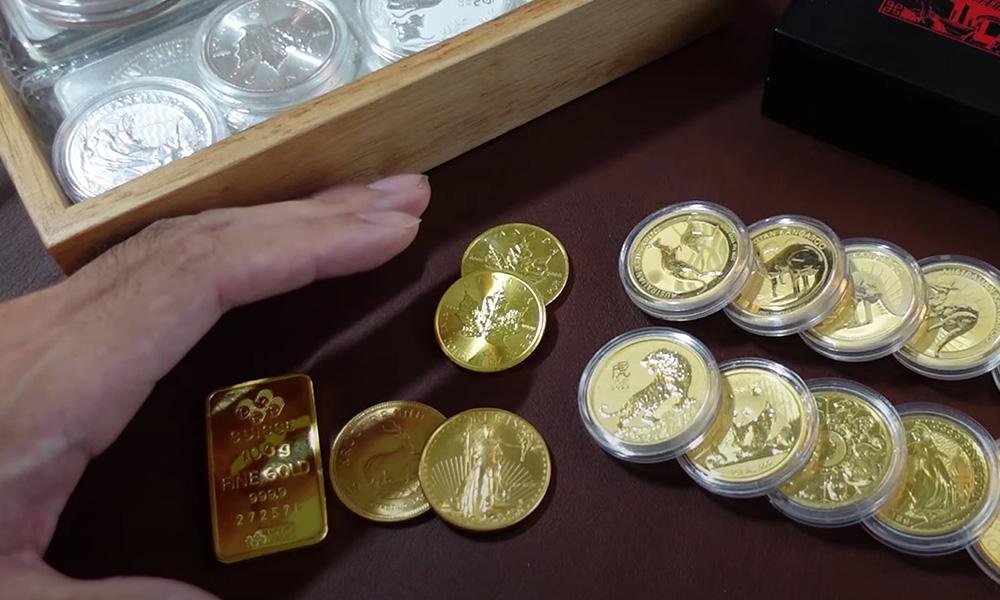
Gold prices have fallen below the $5,000 mark and breached the 50-day moving average, indicating strengthening bearish momentum from a technical perspective. In the short term, prices are expected to fluctuate between $4,870 and $5,000. After breaking through key support, the potential downside target is the lows around $4,800. Increased trading volume accompanying the price decline suggests that selling pressure is dominant. While geopolitical risks provide safe-haven support, the overall macroeconomic environment, including a stronger dollar and high bond yields, limits the upside potential for gold prices.
The Federal Reserve is expected to keep interest rates unchanged for the second consecutive time at its meeting this week, shifting its focus to forward guidance. Recent data shows that the Consumer Price Index (CPI) rose 2.4% year-on-year in February, while core CPI rose 2.5% year-on-year, with inflation stickiness exceeding some expectations. Meanwhile, non-farm payrolls fell by 92,000 in February, and the unemployment rate rose to 4.4%, indicating signs of easing in the labor market. Faced with this dual mandate, the Fed faces a dilemma: the risk of upward inflation from soaring energy prices due to the Middle East conflict coexists with growth pressures from weak employment. Current market implications suggest that expectations for a rate cut in 2026 have been reduced from multiple times to possibly only one or delayed until the end of the year. Higher interest rate expectations strengthen the dollar's attractiveness and suppress gold prices.
The following is a comparison of key macroeconomic data (latest published values):
These data highlight the complexity of the Federal Reserve's decision-making process, and any hawkish statements could exacerbate the decline in gold prices.
Tensions in the Middle East remain high, disrupting shipping in the Strait of Hormuz and halting most oil tanker traffic, creating a potential global oil supply shortfall of 7-8 million barrels per day. Iran's actions targeting energy infrastructure have exacerbated supply concerns, driving oil prices up rapidly. Although some ships have attempted to pass, the overall disruption persists, with rising energy costs directly impacting inflation expectations and reducing the scope for further monetary easing. Gold, as a traditional safe-haven asset, should benefit from geopolitical uncertainty, but the current narrative of high oil prices and high interest rates has partially offset safe-haven demand against this macroeconomic pressure.
Gold prices are under technical pressure.
Gold prices have fallen below the $5,000 mark and breached the 50-day moving average, indicating strengthening bearish momentum from a technical perspective. In the short term, prices are expected to fluctuate between $4,870 and $5,000. After breaking through key support, the potential downside target is the lows around $4,800. Increased trading volume accompanying the price decline suggests that selling pressure is dominant. While geopolitical risks provide safe-haven support, the overall macroeconomic environment, including a stronger dollar and high bond yields, limits the upside potential for gold prices.
Federal Reserve Policy Path and Inflationary Pressures
The Federal Reserve is expected to keep interest rates unchanged for the second consecutive time at its meeting this week, shifting its focus to forward guidance. Recent data shows that the Consumer Price Index (CPI) rose 2.4% year-on-year in February, while core CPI rose 2.5% year-on-year, with inflation stickiness exceeding some expectations. Meanwhile, non-farm payrolls fell by 92,000 in February, and the unemployment rate rose to 4.4%, indicating signs of easing in the labor market. Faced with this dual mandate, the Fed faces a dilemma: the risk of upward inflation from soaring energy prices due to the Middle East conflict coexists with growth pressures from weak employment. Current market implications suggest that expectations for a rate cut in 2026 have been reduced from multiple times to possibly only one or delayed until the end of the year. Higher interest rate expectations strengthen the dollar's attractiveness and suppress gold prices.
The following is a comparison of key macroeconomic data (latest published values):
| index | Latest value | Previous value / expected value | Direction of influence |
|---|---|---|---|
| February CPI year-on-year | 2.4% | unchanged from the previous value | Inflation stickiness |
| February non-farm payrolls change | -92,000 | Expected +58,000 | Weak employment |
| unemployment rate | 4.4% | Previous value: 4.3% | Labor easing |
| Brent crude oil | Approximately $106 per barrel | Recent increase of over 40% | Upside risks to inflation |
These data highlight the complexity of the Federal Reserve's decision-making process, and any hawkish statements could exacerbate the decline in gold prices.
Geopolitical risks and energy market linkages
Tensions in the Middle East remain high, disrupting shipping in the Strait of Hormuz and halting most oil tanker traffic, creating a potential global oil supply shortfall of 7-8 million barrels per day. Iran's actions targeting energy infrastructure have exacerbated supply concerns, driving oil prices up rapidly. Although some ships have attempted to pass, the overall disruption persists, with rising energy costs directly impacting inflation expectations and reducing the scope for further monetary easing. Gold, as a traditional safe-haven asset, should benefit from geopolitical uncertainty, but the current narrative of high oil prices and high interest rates has partially offset safe-haven demand against this macroeconomic pressure.
Frequently Asked Questions
Question 1: Why did gold prices fall sharply ahead of the Fed meeting, when geopolitical conflicts should have supported safe-haven demand?
A: Despite ongoing tensions in the Middle East and the disruption of the Strait of Hormuz pushing up oil prices, the market is more focused on signals from the Federal Reserve's policy. Inflation faces upside risks due to rising energy costs, leading investors to significantly reduce their expectations for interest rate cuts, resulting in a stronger dollar and a high-yield environment that is suppressing non-interest-bearing gold. Geopolitical safe-haven buying exists, but it is dominated by expectations of macroeconomic tightening; currently, gold prices reflect the interest rate path more than simply safe-haven demand.
Question 2: If the Federal Reserve adopts a hawkish stance at this meeting, how much impact will it have on gold?
A: If Powell's speech reinforces the idea that "higher interest rates are more persistent" or the SEP dot plot shows fewer rate cuts in 2026, gold prices may further test support below $4,800. Expectations of high interest rates increase the opportunity cost of holding gold, and a stronger dollar will amplify the pressure. However, if a dovish signal is unexpectedly released, the probability of a short-term rebound in gold increases, with a target of returning above $5,000. Overall, a hawkish stance will perpetuate the current downward trend.
Question 3: Is the continued high oil price a positive or negative factor for gold, and how does the logic evolve?
A: In the short term, rising oil prices boost inflation expectations and reduce the likelihood of interest rate cuts, which is a bearish factor for gold because rising real interest rates suppress gold prices. However, if geopolitical risks evolve into broader economic uncertainty, safe-haven demand may regain dominance, becoming a bullish factor. At the current stage, inflation and policy path are the dominant factors, and high oil prices are more of a bearish factor; in the long term, if supply disruptions trigger recession fears, it will turn into a bullish factor. We need to observe changes in the Federal Reserve's assessment of inflation.
- Risk Warning and Disclaimer
- The market involves risk, and trading may not be suitable for all investors. This article is for reference only and does not constitute personal investment advice, nor does it take into account certain users’ specific investment objectives, financial situation, or other needs. Any investment decisions made based on this information are at your own risk.