Gold prices fell for the sixth consecutive day due to hawkish signals from the Federal Reserve and rising expectations of energy inflation; a break below key support levels should be anticipated.
2026-03-19 10:07:22
International gold prices continued their weakness during the Asian session, with spot gold trading around $4,830 , marking its sixth consecutive day of decline , the longest losing streak since the end of 2024. The core driver of current gold price movements is gradually shifting from geopolitical safe-haven demand to changes in macroeconomic policies and interest rate expectations.

From a policy perspective, the Federal Reserve kept interest rates unchanged at 3.5%-3.75% in its latest meeting, marking the second consecutive time it has held rates steady. While maintaining a seemingly neutral stance, Chairman Powell explicitly stated that rising energy prices could push up overall inflation in the short term. This statement significantly altered market expectations for the future path of monetary policy, making the logic of "high interest rates for longer" the dominant one again.
Although the dot plot still suggests a possible rate cut this year, market expectations for the pace of future easing have clearly cooled. Analysts generally believe that the Federal Reserve is currently more focused on inflation risks than on slowing economic growth, meaning policy will remain restrictive. Rising real interest rates have become a key factor suppressing gold prices, as gold itself does not generate interest income and its attractiveness decreases in a high-interest-rate environment.
Meanwhile, rising energy prices further reinforced inflation stickiness. The escalating situation in the Middle East, with frequent attacks on key energy facilities, intensified market concerns about disruptions to oil and gas supplies. Rising energy prices not only pushed up inflation expectations but also indirectly supported a stronger dollar, thus exerting double pressure on dollar-denominated gold.
However, from a safe-haven perspective, gold still receives some support. The escalating conflict in the Middle East and the significant increase in geopolitical risks should theoretically drive capital inflows into safe-haven assets. However, the current market structure shows that safe-haven funds are flowing more towards dollar assets than gold, preventing gold prices from effectively benefiting from the rising risk sentiment.
From a market perspective, gold has fallen more than 10% from its previous high, entering a technical correction phase. The continuous decline reflects the market's repricing of the macroeconomic environment, shifting from "easing expectations dominating" to "persistent high interest rates."
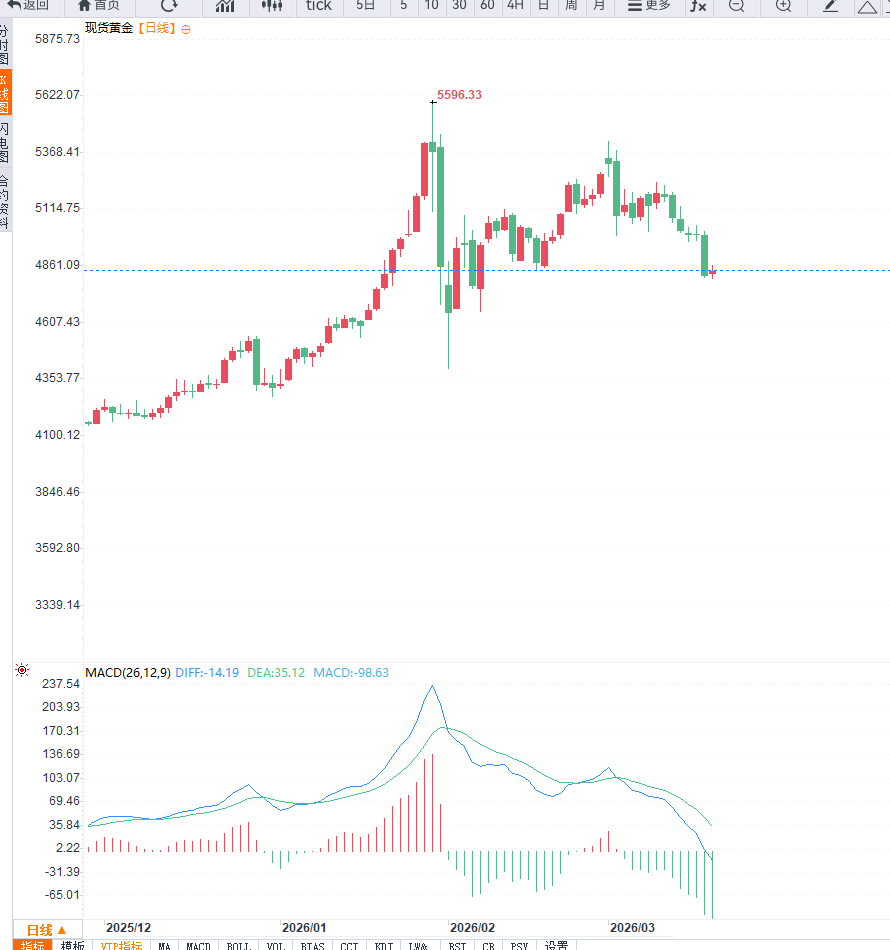
From a technical perspective, analyzing the daily chart, gold has broken below key moving average support, shifting the trend from upward to a weak, range-bound movement. Key support lies around $4800; a break below this level could lead to a further test of the $4700 area. Resistance is located in the $4900-$4950 range, limiting short-term upside potential, with momentum indicators showing increasing bearish pressure. On the 4-hour chart, gold is clearly in a downward channel, with weakening rebounds and short-term moving averages in a bearish alignment, indicating that selling pressure remains dominant. If the price fails to stabilize around $4830, the downward trend may continue; conversely, if a technical rebound occurs, attention should be paid to a potential breakout above $4900.
Overall, gold is currently caught in a struggle between macroeconomic pressures and safe-haven demand, but in the short term, the dominant factors remain interest rate expectations and the dollar's performance.
Editor's Summary : The gold market is currently undergoing a period of adjustment driven by macroeconomic policies. While geopolitical risks provide some support, gold prices still face significant downward pressure given the Federal Reserve's commitment to maintaining high interest rates. Future price movements will depend on changes in inflation data and adjustments in policy expectations. If inflation remains high, gold may continue to be under pressure; however, if the economy weakens significantly and drives a resurgence in expectations of interest rate cuts, gold prices are likely to regain upward momentum.
Frequently Asked Questions (FAQ)
1. Why did gold still fall despite the safe-haven environment?
While gold possesses safe-haven attributes, its price is strongly influenced by both interest rates and the US dollar's performance. In the current environment, the Federal Reserve's maintenance of high interest rates and emphasis on inflation risks have increased real interest rates, raising the opportunity cost of holding gold. Furthermore, safe-haven funds are flowing more into dollar assets, preventing gold from fully benefiting from geopolitical risks. Therefore, the decline in gold prices is the result of a combination of factors, rather than a disappearance of safe-haven demand.
2. What impact does the real interest rate have on the price of gold?
Real interest rates are one of the core variables affecting gold prices. When real interest rates rise, investors tend to hold more yield-generating assets, such as bonds, thus reducing their demand for gold. Conversely, when real interest rates fall, gold becomes more attractive. Therefore, in the current high-interest-rate environment, gold faces significant downward pressure.
3. Why do Federal Reserve policies have such a significant impact on gold?
Gold is priced in US dollars, and its price is closely related to the dollar and interest rates. The Federal Reserve's policies determine market liquidity and interest rate levels, thus affecting the investment value of gold. When the Fed maintains a tight monetary policy, the dollar typically strengthens and interest rates rise, which puts downward pressure on gold. Therefore, changes in market expectations regarding Fed policy are often directly reflected in gold price movements.
4. What are the key factors influencing future gold price movements?
The future trend of gold prices will mainly depend on three factors: first, inflation trends and changes in energy prices; second, the path of the Federal Reserve's monetary policy; and third, changes in global risk sentiment. If inflation remains high and pushes interest rates to remain high, gold may continue to be under pressure; if an economic slowdown leads to a shift in policy towards easing, it will be beneficial for a rebound in gold prices. Meanwhile, geopolitical risks may still have short-term impacts on the market at key moments.
From a policy perspective, the Federal Reserve kept interest rates unchanged at 3.5%-3.75% in its latest meeting, marking the second consecutive time it has held rates steady. While maintaining a seemingly neutral stance, Chairman Powell explicitly stated that rising energy prices could push up overall inflation in the short term. This statement significantly altered market expectations for the future path of monetary policy, making the logic of "high interest rates for longer" the dominant one again.
Although the dot plot still suggests a possible rate cut this year, market expectations for the pace of future easing have clearly cooled. Analysts generally believe that the Federal Reserve is currently more focused on inflation risks than on slowing economic growth, meaning policy will remain restrictive. Rising real interest rates have become a key factor suppressing gold prices, as gold itself does not generate interest income and its attractiveness decreases in a high-interest-rate environment.
Meanwhile, rising energy prices further reinforced inflation stickiness. The escalating situation in the Middle East, with frequent attacks on key energy facilities, intensified market concerns about disruptions to oil and gas supplies. Rising energy prices not only pushed up inflation expectations but also indirectly supported a stronger dollar, thus exerting double pressure on dollar-denominated gold.
However, from a safe-haven perspective, gold still receives some support. The escalating conflict in the Middle East and the significant increase in geopolitical risks should theoretically drive capital inflows into safe-haven assets. However, the current market structure shows that safe-haven funds are flowing more towards dollar assets than gold, preventing gold prices from effectively benefiting from the rising risk sentiment.
From a market perspective, gold has fallen more than 10% from its previous high, entering a technical correction phase. The continuous decline reflects the market's repricing of the macroeconomic environment, shifting from "easing expectations dominating" to "persistent high interest rates."
From a technical perspective, analyzing the daily chart, gold has broken below key moving average support, shifting the trend from upward to a weak, range-bound movement. Key support lies around $4800; a break below this level could lead to a further test of the $4700 area. Resistance is located in the $4900-$4950 range, limiting short-term upside potential, with momentum indicators showing increasing bearish pressure. On the 4-hour chart, gold is clearly in a downward channel, with weakening rebounds and short-term moving averages in a bearish alignment, indicating that selling pressure remains dominant. If the price fails to stabilize around $4830, the downward trend may continue; conversely, if a technical rebound occurs, attention should be paid to a potential breakout above $4900.
Overall, gold is currently caught in a struggle between macroeconomic pressures and safe-haven demand, but in the short term, the dominant factors remain interest rate expectations and the dollar's performance.
Editor's Summary : The gold market is currently undergoing a period of adjustment driven by macroeconomic policies. While geopolitical risks provide some support, gold prices still face significant downward pressure given the Federal Reserve's commitment to maintaining high interest rates. Future price movements will depend on changes in inflation data and adjustments in policy expectations. If inflation remains high, gold may continue to be under pressure; however, if the economy weakens significantly and drives a resurgence in expectations of interest rate cuts, gold prices are likely to regain upward momentum.
Frequently Asked Questions (FAQ)
1. Why did gold still fall despite the safe-haven environment?
While gold possesses safe-haven attributes, its price is strongly influenced by both interest rates and the US dollar's performance. In the current environment, the Federal Reserve's maintenance of high interest rates and emphasis on inflation risks have increased real interest rates, raising the opportunity cost of holding gold. Furthermore, safe-haven funds are flowing more into dollar assets, preventing gold from fully benefiting from geopolitical risks. Therefore, the decline in gold prices is the result of a combination of factors, rather than a disappearance of safe-haven demand.
2. What impact does the real interest rate have on the price of gold?
Real interest rates are one of the core variables affecting gold prices. When real interest rates rise, investors tend to hold more yield-generating assets, such as bonds, thus reducing their demand for gold. Conversely, when real interest rates fall, gold becomes more attractive. Therefore, in the current high-interest-rate environment, gold faces significant downward pressure.
3. Why do Federal Reserve policies have such a significant impact on gold?
Gold is priced in US dollars, and its price is closely related to the dollar and interest rates. The Federal Reserve's policies determine market liquidity and interest rate levels, thus affecting the investment value of gold. When the Fed maintains a tight monetary policy, the dollar typically strengthens and interest rates rise, which puts downward pressure on gold. Therefore, changes in market expectations regarding Fed policy are often directly reflected in gold price movements.
4. What are the key factors influencing future gold price movements?
The future trend of gold prices will mainly depend on three factors: first, inflation trends and changes in energy prices; second, the path of the Federal Reserve's monetary policy; and third, changes in global risk sentiment. If inflation remains high and pushes interest rates to remain high, gold may continue to be under pressure; if an economic slowdown leads to a shift in policy towards easing, it will be beneficial for a rebound in gold prices. Meanwhile, geopolitical risks may still have short-term impacts on the market at key moments.
- Risk Warning and Disclaimer
- The market involves risk, and trading may not be suitable for all investors. This article is for reference only and does not constitute personal investment advice, nor does it take into account certain users’ specific investment objectives, financial situation, or other needs. Any investment decisions made based on this information are at your own risk.