Crude oil trading alert: As geopolitical premiums correct, the probability of oil prices peaking is increasing.
2026-03-20 09:15:57
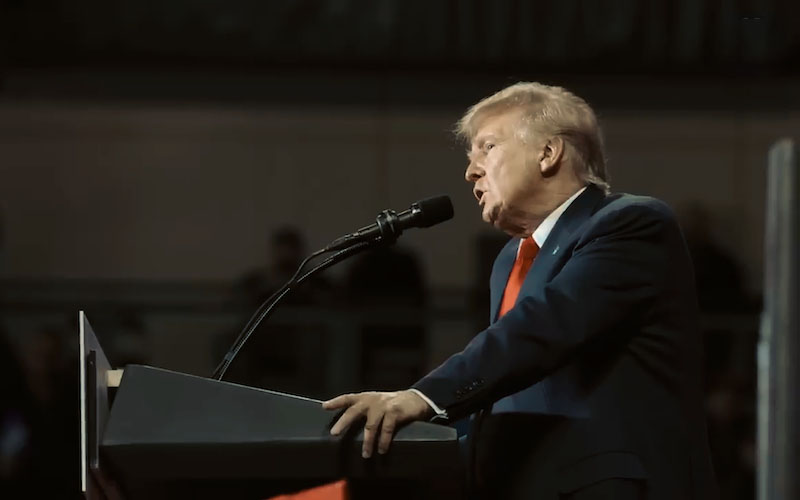
After a rapid rise driven by the Middle East conflict, the international crude oil market has recently experienced a period of correction. The benchmark WTI crude oil price fell to around $93.50 during the Asian session, indicating that market sentiment is gradually returning to rationality from extreme risk aversion. The previously high-profile issue of Middle Eastern energy infrastructure security has seen a significant easing of tensions following de-escalation signals from US President Donald Trump and Israeli Prime Minister Benjamin Netanyahu. Trump stated there are no plans to deploy ground troops, while Netanyahu hinted at avoiding further strikes against key Iranian energy facilities. These statements directly weakened the market's extreme expectations of supply disruptions.

From the perspective of the event context, the core driver of this round of oil price increases stems from the rapid escalation of the situation in the Middle East, especially after the outbreak of conflict in mid-February, when market concerns arose that damage to energy infrastructure in the Persian Gulf region could disrupt the global supply chain. During this period, a large liquefied natural gas facility in Qatar suffered severe damage, raising serious concerns about the stability of the global energy supply system. It is important to emphasize that the Persian Gulf region handles approximately 30% of global seaborne crude oil transportation ; any escalation of conflict could have a systemic impact on global energy flows, which was one of the key reasons for the previous rapid rise in oil prices.
However, as the situation eased somewhat, the market began to reassess the supply and demand fundamentals. According to the latest data released by the EIA, U.S. crude oil inventories increased by 6.156 million barrels in the week ending March 13, far exceeding market expectations of an increase of approximately 400,000 barrels, and also higher than the previous week's increase of 3.824 million barrels. This data significantly exceeded market expectations, directly putting downward pressure on oil prices.
The significant accumulation of inventories sends several signals. First, from the demand side, refinery processing demand and end-user consumption growth are falling short of expectations, resulting in insufficient absorption of crude oil. Second, from the supply side, US shale oil production remains high, and even amid escalating geopolitical risks, global supply has not shown a significant contraction. This combination of weak demand and ample supply is beginning to undermine the foundation for rising oil prices.
Meanwhile, market sentiment is also shifting. The "risk premium" that previously drove up oil prices is gradually fading, and investors are beginning to focus more on actual supply and demand data rather than single geopolitical events. Although Iran still maintains that its response to the attack on the South Pars gas field is "not over," the market generally believes that the probability of a full-scale escalation of the conflict in the short term has decreased, further limiting the upside potential for oil prices.
From a global market perspective, the pullback in oil prices has somewhat eased inflation expectations, helping to reduce policy pressure on central banks of major economies. Meanwhile, energy price fluctuations have also had a ripple effect on the exchange rate market and the commodities sector. The US dollar has received relative support against the backdrop of falling energy prices, while prices of some industrial products have shown divergent trends.
From a technical perspective, the daily chart shows that WTI crude oil remains within an overall upward trend channel, but prices have encountered significant resistance around $95, indicating a weakening of bullish momentum. The key support level is currently at the $90 psychological level ; a break below this level could lead to further testing of the $87 area. Momentum indicators show that the RSI has retreated from overbought territory, suggesting that short-term upward momentum is weakening.
From a 4-hour chart perspective, oil prices have formed a short-term downward channel, with gradually lower highs, indicating that bearish momentum is strengthening. Short-term resistance is concentrated in the $94.5 to $95 range, while support lies around $91. A break below this support could trigger an accelerated short-term pullback; conversely, a retest of $95 could lead to a resumption of the upward trend.
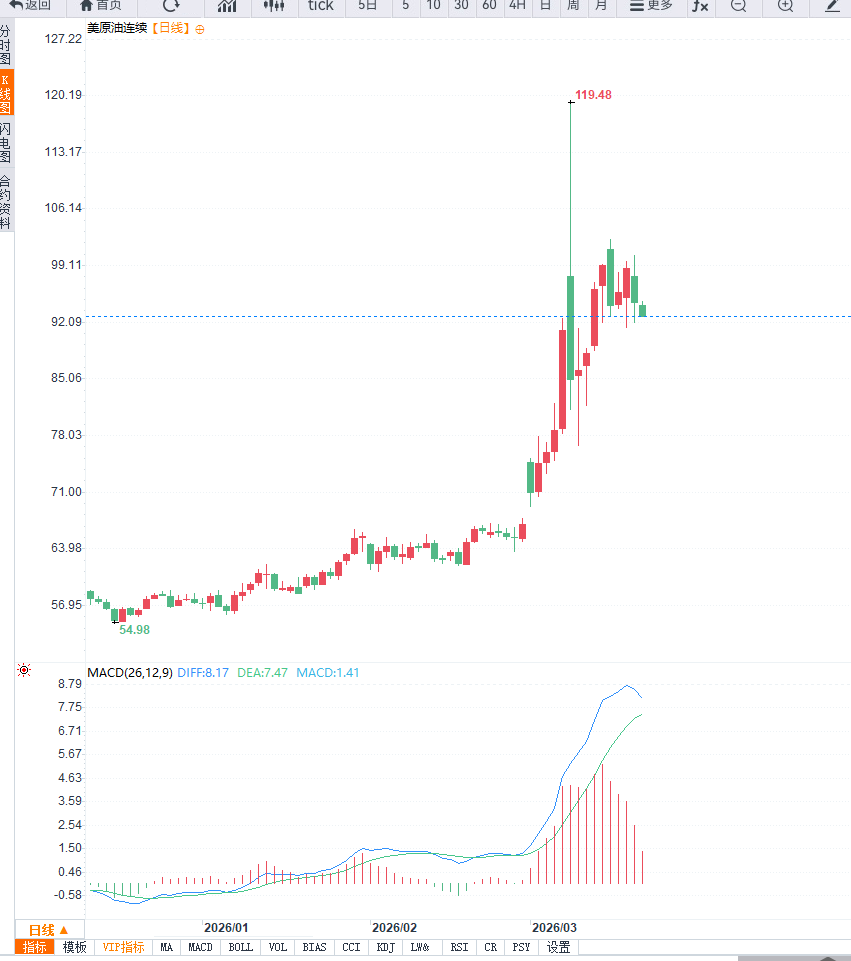
Overall, oil prices are currently at a critical juncture, driven by both geopolitical risks and fundamental pressures. Short-term volatility is expected to remain high, with the market highly sensitive to any new geopolitical events or inventory data.
Editor's Summary:
In summary, the decline in WTI crude oil prices reflects a significant shift in market logic. The marginal impact of geopolitical risks on oil prices is weakening, while supply and demand fundamentals are once again becoming the dominant factor . With continued inventory accumulation and weaker-than-expected demand recovery, the upside potential for oil prices in the short term is limited. However, at the same time, uncertainty surrounding the Middle East situation still provides potential support; if the conflict escalates again, oil prices could rebound rapidly. Future market trends will depend on the rebalancing of inventory changes and geopolitical risks; close attention should be paid to the dynamic interplay between these two factors.
From the perspective of the event context, the core driver of this round of oil price increases stems from the rapid escalation of the situation in the Middle East, especially after the outbreak of conflict in mid-February, when market concerns arose that damage to energy infrastructure in the Persian Gulf region could disrupt the global supply chain. During this period, a large liquefied natural gas facility in Qatar suffered severe damage, raising serious concerns about the stability of the global energy supply system. It is important to emphasize that the Persian Gulf region handles approximately 30% of global seaborne crude oil transportation ; any escalation of conflict could have a systemic impact on global energy flows, which was one of the key reasons for the previous rapid rise in oil prices.
However, as the situation eased somewhat, the market began to reassess the supply and demand fundamentals. According to the latest data released by the EIA, U.S. crude oil inventories increased by 6.156 million barrels in the week ending March 13, far exceeding market expectations of an increase of approximately 400,000 barrels, and also higher than the previous week's increase of 3.824 million barrels. This data significantly exceeded market expectations, directly putting downward pressure on oil prices.
The significant accumulation of inventories sends several signals. First, from the demand side, refinery processing demand and end-user consumption growth are falling short of expectations, resulting in insufficient absorption of crude oil. Second, from the supply side, US shale oil production remains high, and even amid escalating geopolitical risks, global supply has not shown a significant contraction. This combination of weak demand and ample supply is beginning to undermine the foundation for rising oil prices.
Meanwhile, market sentiment is also shifting. The "risk premium" that previously drove up oil prices is gradually fading, and investors are beginning to focus more on actual supply and demand data rather than single geopolitical events. Although Iran still maintains that its response to the attack on the South Pars gas field is "not over," the market generally believes that the probability of a full-scale escalation of the conflict in the short term has decreased, further limiting the upside potential for oil prices.
From a global market perspective, the pullback in oil prices has somewhat eased inflation expectations, helping to reduce policy pressure on central banks of major economies. Meanwhile, energy price fluctuations have also had a ripple effect on the exchange rate market and the commodities sector. The US dollar has received relative support against the backdrop of falling energy prices, while prices of some industrial products have shown divergent trends.
From a technical perspective, the daily chart shows that WTI crude oil remains within an overall upward trend channel, but prices have encountered significant resistance around $95, indicating a weakening of bullish momentum. The key support level is currently at the $90 psychological level ; a break below this level could lead to further testing of the $87 area. Momentum indicators show that the RSI has retreated from overbought territory, suggesting that short-term upward momentum is weakening.
From a 4-hour chart perspective, oil prices have formed a short-term downward channel, with gradually lower highs, indicating that bearish momentum is strengthening. Short-term resistance is concentrated in the $94.5 to $95 range, while support lies around $91. A break below this support could trigger an accelerated short-term pullback; conversely, a retest of $95 could lead to a resumption of the upward trend.
Overall, oil prices are currently at a critical juncture, driven by both geopolitical risks and fundamental pressures. Short-term volatility is expected to remain high, with the market highly sensitive to any new geopolitical events or inventory data.
Editor's Summary:
In summary, the decline in WTI crude oil prices reflects a significant shift in market logic. The marginal impact of geopolitical risks on oil prices is weakening, while supply and demand fundamentals are once again becoming the dominant factor . With continued inventory accumulation and weaker-than-expected demand recovery, the upside potential for oil prices in the short term is limited. However, at the same time, uncertainty surrounding the Middle East situation still provides potential support; if the conflict escalates again, oil prices could rebound rapidly. Future market trends will depend on the rebalancing of inventory changes and geopolitical risks; close attention should be paid to the dynamic interplay between these two factors.
- Risk Warning and Disclaimer
- The market involves risk, and trading may not be suitable for all investors. This article is for reference only and does not constitute personal investment advice, nor does it take into account certain users’ specific investment objectives, financial situation, or other needs. Any investment decisions made based on this information are at your own risk.