Five-day dialogue window between the US and Iran: Crude oil prices plummeted by $18 before staging a dramatic rebound!
2026-03-23 19:29:52
On Monday, March 23, during the European session, sentiment in the oil market underwent a major reversal after US President Trump announced positive talks with Iran on resolving hostilities in the Middle East and postponed military strikes against Iranian energy infrastructure by five days. Following the announcement, risk pricing adjusted rapidly, with Brent crude initially plunging $18 per barrel before rebounding above $100 per barrel on buying support. This dramatic fluctuation highlighted the immediate impact of geopolitical news on the futures market, as traders shifted from a defensive stance to a dynamic game of assessing the sustainability of the diplomatic window.
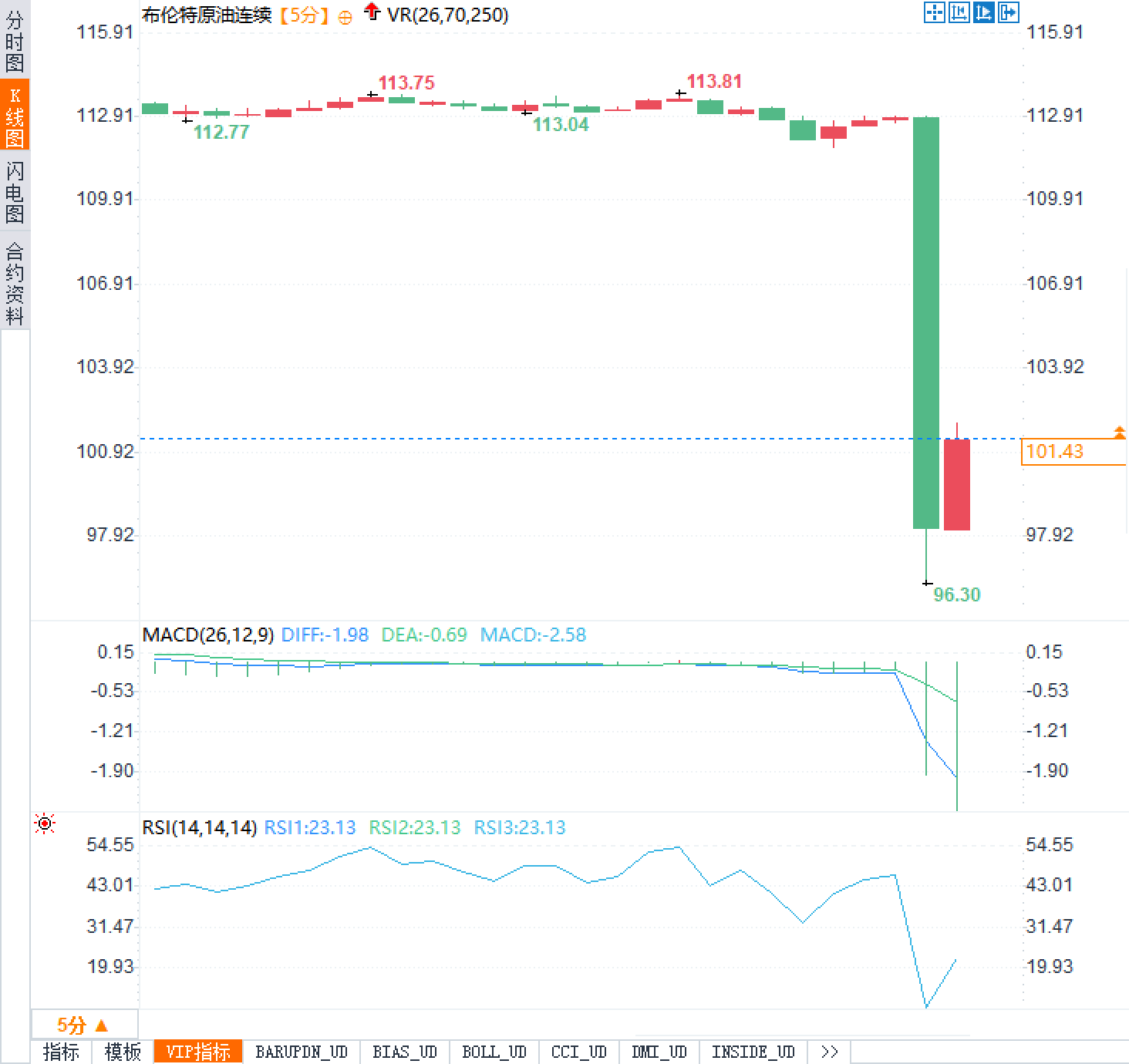
Following Trump's statement, Brent crude oil prices immediately fell sharply, dropping as much as $18 per barrel to $96.3 per barrel during the session. This was mainly due to a sharp downward revision of the market's assessment of the risk of an attack on Iranian energy facilities, with easing concerns about short-term supply disruptions releasing selling pressure. Subsequently, prices rebounded to above $100 per barrel on buying support, and are currently fluctuating between $101 and $102 per barrel.
This price path highlights the high sensitivity of geopolitical events to the futures market. The initial decline reflected a rapid stripping away of risk premiums, while the rebound indicates that traders have not completely ruled out the possibility of further negotiation failures. The five-day window is a critical juncture, as any positive or negative development could trigger a new round of volatility.
Recent crude oil futures curves show a narrowing premium for near-month contracts, suggesting an easing of short-term supply tightness expectations. However, far-month contracts still maintain a certain premium structure, reflecting the lingering impact of long-term geopolitical uncertainties. In similar historical events, initial easing news often leads to a 10% to 15% price adjustment, and the current decline conforms to this pattern.
The Strait of Hormuz is a crucial choke point for global oil trade, with approximately 20 million barrels passing through daily, accounting for about 20% of world crude oil trade. Previous tensions disrupted shipping, directly driving up oil price risk premiums. Trump's postponement of the strikes provides diplomatic space for a potential resumption of navigation through the strait, but the five-day deadline means the market must assess the effectiveness of subsequent negotiations and the actual speed of traffic recovery.
The security of energy infrastructure is directly related to a region's export capacity. If the delay in combating the outbreak translates into a signal of long-term peace, spare capacity can be gradually brought online to fill the gap. However, some analysts point out that the success rate of negotiations remains uncertain, and any prolonged disruption will amplify price elasticity. Ship insurance costs and the economics of detour routes will be key areas of focus for traders; extended transportation times will push up overall logistics costs, indirectly supporting the floor for oil prices.
From a fundamental perspective, global inventory levels are low after recent depletion. This makes the market highly sensitive to any signs of supply recovery. Traders can verify the sustainability of price movements by tracking inventory reports, and high-frequency data changes often precede futures market reactions. The steepening of the futures curve further confirms the amplifying effect of news events on near-month contracts.
Crude oil price fluctuations are transmitted to a wider range of sectors through energy cost channels. A short-term pullback could help alleviate global inflationary pressures, potentially softening the policy paths of major central banks and consequently affecting the shape of the yield curve and bond yield pricing. Lower costs in energy-intensive industries will support corporate profit expectations, but changes in refined product crack spreads need to be assessed separately to capture cross-commodity arbitrage signals.
The moderate decline in the US dollar index is consistent with a typical risk-taking pattern. In the long term, if Middle Eastern supplies remain stable, global economic growth will benefit from a lower energy price environment; however, the current short five-day window requires traders to maintain flexible position management. Furthermore, the cross-influence between the natural gas market and crude oil warrants attention, as disruptions to transportation routes could exacerbate price linkages.
Analysis of Crude Oil Price Volatility and Immediate Response
Following Trump's statement, Brent crude oil prices immediately fell sharply, dropping as much as $18 per barrel to $96.3 per barrel during the session. This was mainly due to a sharp downward revision of the market's assessment of the risk of an attack on Iranian energy facilities, with easing concerns about short-term supply disruptions releasing selling pressure. Subsequently, prices rebounded to above $100 per barrel on buying support, and are currently fluctuating between $101 and $102 per barrel.
This price path highlights the high sensitivity of geopolitical events to the futures market. The initial decline reflected a rapid stripping away of risk premiums, while the rebound indicates that traders have not completely ruled out the possibility of further negotiation failures. The five-day window is a critical juncture, as any positive or negative development could trigger a new round of volatility.
Recent crude oil futures curves show a narrowing premium for near-month contracts, suggesting an easing of short-term supply tightness expectations. However, far-month contracts still maintain a certain premium structure, reflecting the lingering impact of long-term geopolitical uncertainties. In similar historical events, initial easing news often leads to a 10% to 15% price adjustment, and the current decline conforms to this pattern.
Strait of Hormuz Supply Risk and Energy Facility Assessment
The Strait of Hormuz is a crucial choke point for global oil trade, with approximately 20 million barrels passing through daily, accounting for about 20% of world crude oil trade. Previous tensions disrupted shipping, directly driving up oil price risk premiums. Trump's postponement of the strikes provides diplomatic space for a potential resumption of navigation through the strait, but the five-day deadline means the market must assess the effectiveness of subsequent negotiations and the actual speed of traffic recovery.
The security of energy infrastructure is directly related to a region's export capacity. If the delay in combating the outbreak translates into a signal of long-term peace, spare capacity can be gradually brought online to fill the gap. However, some analysts point out that the success rate of negotiations remains uncertain, and any prolonged disruption will amplify price elasticity. Ship insurance costs and the economics of detour routes will be key areas of focus for traders; extended transportation times will push up overall logistics costs, indirectly supporting the floor for oil prices.
From a fundamental perspective, global inventory levels are low after recent depletion. This makes the market highly sensitive to any signs of supply recovery. Traders can verify the sustainability of price movements by tracking inventory reports, and high-frequency data changes often precede futures market reactions. The steepening of the futures curve further confirms the amplifying effect of news events on near-month contracts.
The profound impact of crude oil price fluctuations on the macroeconomy and asset linkages
Crude oil price fluctuations are transmitted to a wider range of sectors through energy cost channels. A short-term pullback could help alleviate global inflationary pressures, potentially softening the policy paths of major central banks and consequently affecting the shape of the yield curve and bond yield pricing. Lower costs in energy-intensive industries will support corporate profit expectations, but changes in refined product crack spreads need to be assessed separately to capture cross-commodity arbitrage signals.
The moderate decline in the US dollar index is consistent with a typical risk-taking pattern. In the long term, if Middle Eastern supplies remain stable, global economic growth will benefit from a lower energy price environment; however, the current short five-day window requires traders to maintain flexible position management. Furthermore, the cross-influence between the natural gas market and crude oil warrants attention, as disruptions to transportation routes could exacerbate price linkages.
Frequently Asked Questions
Question 1: Why did crude oil prices initially drop by $18 after Trump announced a delay in the strikes, and then rebound?
A: The initial decline was an immediate market reaction to a sharp drop in geopolitical risk, with the easing of supply threats leading to the stripping away of risk premiums. However, the rebound stemmed from a reassessment of the uncertainty surrounding the five-day negotiation window, with traders believing that successful talks were not guaranteed. Buying at the lows reflected a balanced approach of optimism and caution.
Question 2: How does the Strait of Hormuz's role in current events affect crude oil pricing?
A: The disruption of the strait previously blocked 20% of global supply, driving up oil prices significantly. While the delay in the strike provides some relief, the resumption of navigation requires concrete progress, and transportation bottlenecks and insurance costs will continue to support prices, amplifying any news shocks.
Question 3: How will this crude oil price fluctuation affect macroeconomic policies and asset markets?
A: Lower prices could reduce inflation expectations and influence the central bank's interest rate path; energy stocks will benefit in the short term, and bond yields may adjust. Traders should pay attention to the correlation between crack spreads and the US dollar to capitalize on cross-asset opportunities.
- Risk Warning and Disclaimer
- The market involves risk, and trading may not be suitable for all investors. This article is for reference only and does not constitute personal investment advice, nor does it take into account certain users’ specific investment objectives, financial situation, or other needs. Any investment decisions made based on this information are at your own risk.