Gold surged $200 and then refused to pull back?
2026-03-23 20:45:29
On Monday, March 23, spot gold prices rebounded significantly during the European trading session, briefly touching nearly $4,465 per ounce. Previously, influenced by high oil prices, gold prices had fallen from their highs to below $4,100 per ounce. However, US President Trump announced via social media that he had instructed relevant departments to suspend military strikes against Iranian power plants and energy infrastructure for five days. This news quickly changed market sentiment, boosted risk appetite, weakened demand for the safe-haven dollar, and led to a sharp decline in oil prices. Traders adjusted their expectations for global central bank monetary policy accordingly, and the tightening bets previously triggered by soaring oil prices eased, allowing spot gold to recover from previous pressures and reverse its trend.
Following Trump's announcement of a pause in military operations, market risk appetite quickly improved, temporarily easing investor concerns about disruptions to Middle Eastern energy supplies. This shift directly led to a 6.11% drop in WTI crude oil prices, from an intraday high of $101.66 per barrel to $92 per barrel. Earlier, when Iran indicated it would retaliate against related threats, spot gold initially surged due to heightened safe-haven demand, but subsequently retreated amid rising inflation expectations driven by high oil prices, as traders worried that central banks like the Federal Reserve might extend their tightening cycle or pause interest rate cuts. Now, the easing of geopolitical tensions coupled with falling oil prices has alleviated this chain of macroeconomic pressures. As an inflation hedge, gold's pricing logic has shifted from pure safe-haven demand to being driven by policy expectations: a drop of approximately $10 per barrel in oil prices can significantly reduce global energy costs, thereby mitigating the risk of rising core inflation. Major institutions such as the Federal Reserve, the European Central Bank, and the Bank of Japan had previously maintained high interest rate expectations due to the energy shock; now, with traders increasing their bets on an easing cycle, spot gold is supported by pressure on real yields. This reversal is not simply a result of safe-haven demand, but rather a combination of fundamental factors and sentiment, highlighting the sensitivity of precious metals to multiple intertwined factors.
The US dollar index is currently hovering around 99.50, fluctuating slightly by 0.12% intraday. Earlier, it briefly tested above the 100 mark due to safe-haven demand. As the currency for pricing spot gold, the US dollar's movements show a significant negative correlation with gold prices. Following Trump's announcement, the dollar's safe-haven premium declined, traders lowered their expectations for aggressive tightening by the Federal Reserve, and the real interest rate path flattened, directly benefiting gold, a non-interest-bearing asset. Recently, the US dollar index strengthened due to oil price volatility and geopolitical risks, which had previously suppressed gold prices, but the current stable and slightly declining pattern provides upward momentum for gold.
The sharp drop in WTI crude oil prices has directly alleviated energy inflation pressures. Earlier, oil prices approaching $100 per barrel had sparked discussions among global central banks about extending the pause in interest rate cuts; now, the situation has reversed. Traders have consequently lowered their hawkish expectations for institutions such as the Federal Reserve, the European Central Bank, and the Bank of Japan. If oil prices remain low, the number of interest rate cuts in 2026 may increase, reducing the opportunity cost of holding gold. The decline in oil prices reduces manufacturing and transportation costs through the supply chain, further suppressing the rise in PPI and CPI, and the flattening of the real interest rate curve is beneficial to gold. Previously, under the environment of high oil prices, the collective maintenance of a tightening path by global central banks suppressed the valuation of precious metals; now, the easing signals open up space for policy shifts. In a deeper perspective, every $5 drop in oil prices can lower global inflation expectations by 0.2-0.4 percentage points, directly translating into a discount rate advantage in gold pricing. The market is repricing this transmission mechanism, thus providing sustained support for spot gold.
From a fundamental perspective, if progress is made in the dialogue during Trump's five-day pause, reduced uncertainty in energy supply will continue to suppress oil prices and support gold's inflation hedge properties. The global trend of central bank gold reserve diversification remains unchanged, coupled with potential inflows into ETF holdings, providing medium- to long-term support. Technically, gold prices have rebounded from a low of $4100/oz and are currently facing resistance near $4500/oz; a break above this level would test recent highs. Increased volatility reflects event sensitivity, with traders focusing on synchronized indicators of oil prices and the US dollar to verify the sustainability of the trend. Overall, this rebound highlights the resilience of precious metals amid shifts in macroeconomic expectations, with the market continuously monitoring the marginal impact of Middle East dialogue progress on energy and policy paths.
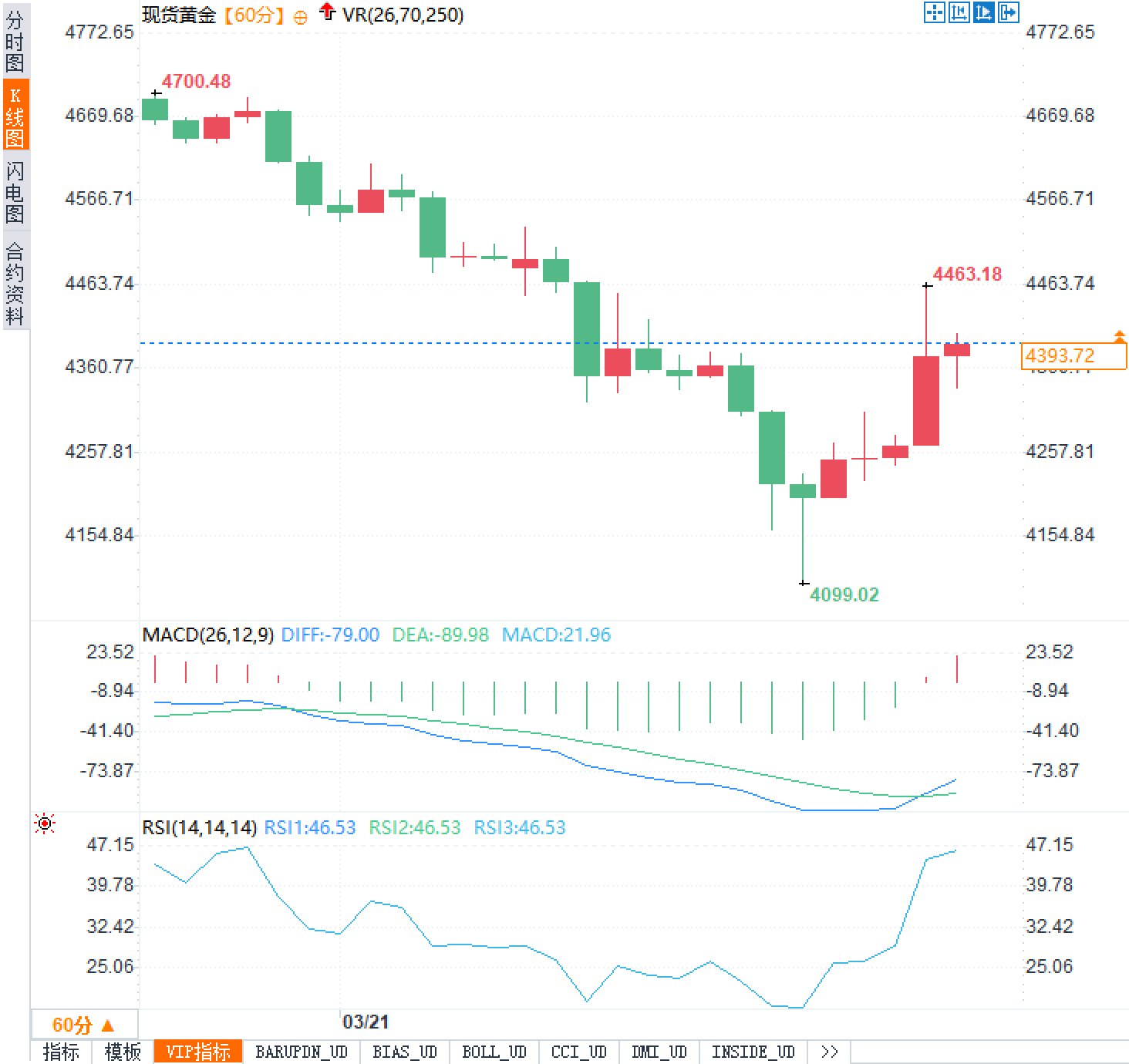
Geopolitical easing drives a reversal in spot gold prices
Following Trump's announcement of a pause in military operations, market risk appetite quickly improved, temporarily easing investor concerns about disruptions to Middle Eastern energy supplies. This shift directly led to a 6.11% drop in WTI crude oil prices, from an intraday high of $101.66 per barrel to $92 per barrel. Earlier, when Iran indicated it would retaliate against related threats, spot gold initially surged due to heightened safe-haven demand, but subsequently retreated amid rising inflation expectations driven by high oil prices, as traders worried that central banks like the Federal Reserve might extend their tightening cycle or pause interest rate cuts. Now, the easing of geopolitical tensions coupled with falling oil prices has alleviated this chain of macroeconomic pressures. As an inflation hedge, gold's pricing logic has shifted from pure safe-haven demand to being driven by policy expectations: a drop of approximately $10 per barrel in oil prices can significantly reduce global energy costs, thereby mitigating the risk of rising core inflation. Major institutions such as the Federal Reserve, the European Central Bank, and the Bank of Japan had previously maintained high interest rate expectations due to the energy shock; now, with traders increasing their bets on an easing cycle, spot gold is supported by pressure on real yields. This reversal is not simply a result of safe-haven demand, but rather a combination of fundamental factors and sentiment, highlighting the sensitivity of precious metals to multiple intertwined factors.
A slight decline in the US dollar index supported a rebound in gold prices.
The US dollar index is currently hovering around 99.50, fluctuating slightly by 0.12% intraday. Earlier, it briefly tested above the 100 mark due to safe-haven demand. As the currency for pricing spot gold, the US dollar's movements show a significant negative correlation with gold prices. Following Trump's announcement, the dollar's safe-haven premium declined, traders lowered their expectations for aggressive tightening by the Federal Reserve, and the real interest rate path flattened, directly benefiting gold, a non-interest-bearing asset. Recently, the US dollar index strengthened due to oil price volatility and geopolitical risks, which had previously suppressed gold prices, but the current stable and slightly declining pattern provides upward momentum for gold.
The decline in crude oil prices is reshaping the path of global central bank monetary policy.
The sharp drop in WTI crude oil prices has directly alleviated energy inflation pressures. Earlier, oil prices approaching $100 per barrel had sparked discussions among global central banks about extending the pause in interest rate cuts; now, the situation has reversed. Traders have consequently lowered their hawkish expectations for institutions such as the Federal Reserve, the European Central Bank, and the Bank of Japan. If oil prices remain low, the number of interest rate cuts in 2026 may increase, reducing the opportunity cost of holding gold. The decline in oil prices reduces manufacturing and transportation costs through the supply chain, further suppressing the rise in PPI and CPI, and the flattening of the real interest rate curve is beneficial to gold. Previously, under the environment of high oil prices, the collective maintenance of a tightening path by global central banks suppressed the valuation of precious metals; now, the easing signals open up space for policy shifts. In a deeper perspective, every $5 drop in oil prices can lower global inflation expectations by 0.2-0.4 percentage points, directly translating into a discount rate advantage in gold pricing. The market is repricing this transmission mechanism, thus providing sustained support for spot gold.
A Comprehensive Outlook on the Fundamentals and Technicals of the Spot Gold Market
From a fundamental perspective, if progress is made in the dialogue during Trump's five-day pause, reduced uncertainty in energy supply will continue to suppress oil prices and support gold's inflation hedge properties. The global trend of central bank gold reserve diversification remains unchanged, coupled with potential inflows into ETF holdings, providing medium- to long-term support. Technically, gold prices have rebounded from a low of $4100/oz and are currently facing resistance near $4500/oz; a break above this level would test recent highs. Increased volatility reflects event sensitivity, with traders focusing on synchronized indicators of oil prices and the US dollar to verify the sustainability of the trend. Overall, this rebound highlights the resilience of precious metals amid shifts in macroeconomic expectations, with the market continuously monitoring the marginal impact of Middle East dialogue progress on energy and policy paths.
Frequently Asked Questions
Question 1: How will Trump's decision to suspend strikes on Iranian energy facilities affect spot gold prices?
A: This pause directly lowered oil prices, easing earlier tightening expectations driven by high oil prices, allowing spot gold to rebound from its pressure. Although geopolitical easing could theoretically weaken pure safe-haven demand, the decline in oil prices dominated the macroeconomic logic, with traders increasing their bets on easing, and lower real yields supporting gold prices as they rose from their lows to around $4465/ounce.
Question 2: How has the plunge in crude oil prices changed global central bank monetary policy expectations?
A: WTI crude oil fell from $101.66/barrel to $92/barrel, significantly reducing global inflationary pressures and decreasing the probability of the Federal Reserve, the European Central Bank, and the Bank of Japan extending their tightening cycles. Traders adjusted their interest rate path expectations accordingly. If oil prices remain low, the scope for interest rate cuts will expand, lowering the cost of holding gold and driving a recovery in the valuation of spot gold.
Question 3: What role did the US dollar index play in this event?
A: The US dollar index is currently holding steady with a slight decline around 99.50. The weakening of the dollar as safe-haven demand directly benefits gold. As the pricing currency, the negative correlation between the US dollar and gold prices is becoming increasingly apparent. The shift in policy expectations towards easing further amplifies this effect, supporting a rebound in spot gold rather than solely relying on geopolitical safe-haven demand.
- Risk Warning and Disclaimer
- The market involves risk, and trading may not be suitable for all investors. This article is for reference only and does not constitute personal investment advice, nor does it take into account certain users’ specific investment objectives, financial situation, or other needs. Any investment decisions made based on this information are at your own risk.