The Five-Day Ceasefire Mystery: US and Iran Give Their Own Accounts
2026-03-23 21:52:19
Trump stated that the US and Iran had engaged in very good and productive dialogue over the past two days on a complete resolution of hostilities in the Middle East. He has instructed the US Army to postpone all military strikes against Iranian power plants and energy infrastructure for five days, provided that the current talks and discussions are successful.
He also stated that the suspension of the attack plan was due to progress in negotiations to reopen the Strait of Hormuz, a statement made after he issued a 48-hour ultimatum to Iran on Saturday.
However, according to sources cited by Iran's Fars News Agency, there was no direct communication or contact between Iran and the United States, and Trump backed down after learning that Iran would strike all power plants in West Asia.
Tehran also pointed out that Trump's move was intended to prevent energy prices from soaring further and to buy time for his military plans.
Iran's "senior leadership" stated that there have been no negotiations between Iran and the United States. Iran claims that Trump withdrew the attack because of a "decisive, powerful, and credible retaliatory deterrence" by the Iranian armed forces. Iran emphasized that its position on the Strait of Hormuz has not changed and will not change.
Another US source revealed that Turkey, Egypt, and Pakistan have been exchanging messages between the US and Iran over the past two days. The foreign ministers of the three countries held separate talks with White House Special Envoy Witkov and Iranian Foreign Minister Araghchi. Mediation efforts are still underway and progress has been made. The parties are discussing ending the war and resolving all outstanding issues, and a response is expected soon.
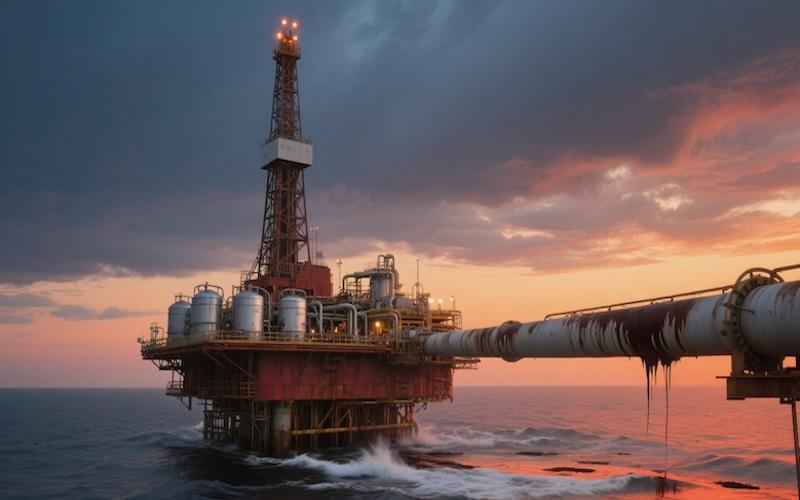
Iran is gradually establishing a dedicated passage mechanism for non-US and Israeli vessels through diplomatic consultations, which has become a key breakthrough in alleviating current energy supply concerns.
Iranian officials have made it clear that the Strait of Hormuz is only closed to vessels associated with "hostile forces in Iran," while allowing merchant ships from other countries to pass safely. They have also stated that they have been in communication with major energy-importing countries such as South Korea and India.
On March 23, two Indian-flagged liquefied petroleum gas (LPG) carriers successfully passed through the Strait of Hormuz, marking the first sign of the mechanism's successful implementation.
The Iranian Embassy in India also refuted the claim of charging a $2 million toll, further stabilizing market expectations.
On the South Korean side, after Foreign Minister Cho Hyun spoke with Iranian Foreign Minister Araqchi, Iran agreed to guarantee the safety of South Korean vessels stranded in the country. Currently, the passage of more than 20 South Korean vessels and over 100 crew members is being gradually resolved.
This differentiated strategy not only prevented Iran from becoming internationally isolated due to a complete blockade of the Strait, but also preserved a key channel for global energy transportation, directly alleviating extreme market concerns about a complete supply disruption. This became a significant supporting factor for Monday's oil price plunge after Trump postponed the strike.
With the Strait of Hormuz blocked, alternative oil transport routes in the Middle East have been fully activated, becoming a "second lifeline" to alleviate supply pressure, with the Saudi East-West oil pipeline playing the most crucial role.
Saudi Arabia's East-West Pipeline: A "Security Trump Card" in the Global Energy Market
The 1,200-kilometer-long East-West oil pipeline, a project Saudi Arabia spent 45 years developing, runs from its eastern oil fields across the Arabian Peninsula to the port of Yanbu on the Red Sea. It has now increased its daily throughput to 7 million barrels, with approximately 5 million barrels exported, becoming a core shipping capacity bypassing the Strait of Hormuz. Bloomberg data shows that Yanbu port's five-day rolling crude oil exports reached 3.66 million barrels per day, roughly half of Saudi Arabia's total exports before the conflict, effectively filling some of the supply gap.
Other alternative routes: Limited capacity makes it difficult to fill the overall gap.
The Fujairah pipeline in the UAE has a daily capacity of 1.5 million barrels and can bypass the Strait of Hormuz, but it has been attacked repeatedly recently. After a brief suspension this week, it resumed operation on Friday, indicating a lack of stability.
Iraq-Turkey Pipeline: Iraq and the Kurdish region have reached an agreement to export goods via the Turkish Mediterranean pipeline, but the daily capacity is far below its normal daily export volume of 3 million barrels from the Persian Gulf, which is a drop in the bucket.
Duqm Port in Oman: It is planning to build a regional alternative hub and oil storage facilities. In the long term, it can build a cross-peninsula pipeline to access Saudi crude oil, but it cannot form an effective transportation capacity in the short term.
Overall, the existing alternative shipping routes have a theoretical total capacity of less than 8 million barrels per day, while the daily transport volume through the Strait of Hormuz exceeds 20 million barrels per day, leaving a supply gap of more than 10 million barrels per day, which is insufficient to fundamentally solve the supply shortage problem.
Short term: Geopolitical premiums recede, oil prices fall sharply.
The implementation of the differentiated air traffic control mechanism with Iran and Trump's postponement of military strikes have created a double boost, directly leading to a rapid clearing of geopolitical risk premiums. On Monday, Brent crude oil prices plummeted by over 14% at one point, currently down 8.5% to $102.64 per barrel, while WTI crude oil prices plunged nearly 13% intraday and are currently down 7.5%, trading at $90.79 per barrel, indicating a significant easing of market panic.
Meanwhile, the efficient operation of Saudi Arabia's East-West pipeline and the IEA's release of 400 million barrels of strategic reserves have jointly formed a "supply buffer" to prevent an uncontrolled surge in oil prices.
Long-term: Three major concerns limit the downside potential of oil prices
The bottleneck of transport capacity is difficult to overcome: the total transport capacity of the alternative channel is only 40% of that of the Strait of Hormuz, and it faces multiple constraints such as port loading efficiency, pipeline maintenance, and security attacks, so the actual incremental capacity that can be released is limited.
Uncertainty remains regarding the navigation mechanism: Iran unilaterally controls the definition of "non-hostile vessels" and the standards for security coordination, and the Bab el-Mandeb Strait is still threatened by the Houthis. If they cooperate with Iran to block the waterway, oil market volatility will intensify again.
Goldman Sachs warns of extreme risks: If the flow in the Strait of Hormuz remains at 5% of the normal level for 10 consecutive weeks, Brent crude oil prices could break through the historical high of $147 per barrel in 2008, and the long-term logic of tight supply remains unchanged.
Iran's approach of combining differentiated air routes with alternative channels can only alleviate the pressure on rising oil prices in the short term, and cannot fundamentally reverse the tight supply situation.
The current trend in oil prices still depends on two major variables: first, whether the navigation mechanism negotiated between Iran and other countries can be fully implemented and when the overall navigation in the Strait of Hormuz will resume; and second, whether Saudi Arabia and other countries can continue to increase the capacity of alternative channels while ensuring the safety of ports and pipelines.
In the short term, with the opening of the five-day diplomatic window, oil prices are likely to remain high and volatile. If the strait's navigation is blocked for a long time, even if alternative channels are operating at full capacity, oil prices still risk rising further, and the fragility of the global energy market will continue to be exposed.
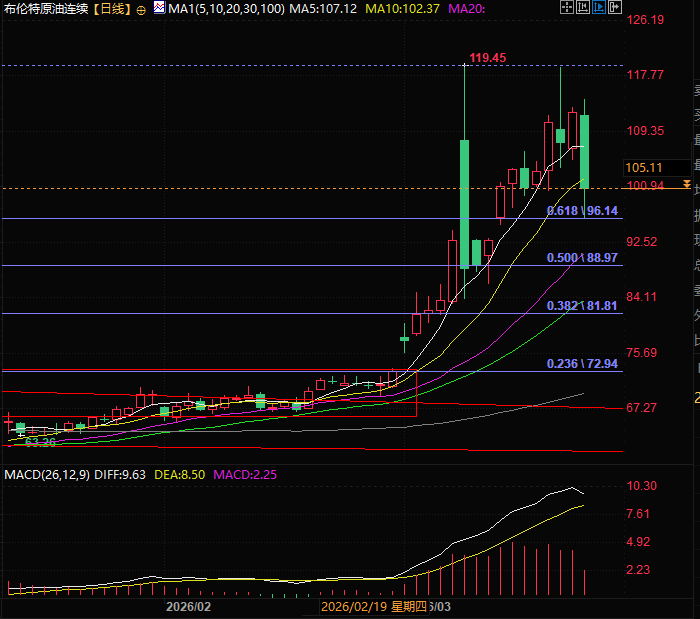
(Brent crude oil futures daily chart, source: EasyForex)
At 21:05 Beijing time, Brent crude oil futures were trading at $100.61 per barrel.
He also stated that the suspension of the attack plan was due to progress in negotiations to reopen the Strait of Hormuz, a statement made after he issued a 48-hour ultimatum to Iran on Saturday.
However, according to sources cited by Iran's Fars News Agency, there was no direct communication or contact between Iran and the United States, and Trump backed down after learning that Iran would strike all power plants in West Asia.
Tehran also pointed out that Trump's move was intended to prevent energy prices from soaring further and to buy time for his military plans.
Iran's "senior leadership" stated that there have been no negotiations between Iran and the United States. Iran claims that Trump withdrew the attack because of a "decisive, powerful, and credible retaliatory deterrence" by the Iranian armed forces. Iran emphasized that its position on the Strait of Hormuz has not changed and will not change.
Another US source revealed that Turkey, Egypt, and Pakistan have been exchanging messages between the US and Iran over the past two days. The foreign ministers of the three countries held separate talks with White House Special Envoy Witkov and Iranian Foreign Minister Araghchi. Mediation efforts are still underway and progress has been made. The parties are discussing ending the war and resolving all outstanding issues, and a response is expected soon.
Iran's differentiated navigation policy: Non-US and Israeli ships given the green light, market panic temporarily subsides.
Iran is gradually establishing a dedicated passage mechanism for non-US and Israeli vessels through diplomatic consultations, which has become a key breakthrough in alleviating current energy supply concerns.
Iranian officials have made it clear that the Strait of Hormuz is only closed to vessels associated with "hostile forces in Iran," while allowing merchant ships from other countries to pass safely. They have also stated that they have been in communication with major energy-importing countries such as South Korea and India.
On March 23, two Indian-flagged liquefied petroleum gas (LPG) carriers successfully passed through the Strait of Hormuz, marking the first sign of the mechanism's successful implementation.
The Iranian Embassy in India also refuted the claim of charging a $2 million toll, further stabilizing market expectations.
On the South Korean side, after Foreign Minister Cho Hyun spoke with Iranian Foreign Minister Araqchi, Iran agreed to guarantee the safety of South Korean vessels stranded in the country. Currently, the passage of more than 20 South Korean vessels and over 100 crew members is being gradually resolved.
This differentiated strategy not only prevented Iran from becoming internationally isolated due to a complete blockade of the Strait, but also preserved a key channel for global energy transportation, directly alleviating extreme market concerns about a complete supply disruption. This became a significant supporting factor for Monday's oil price plunge after Trump postponed the strike.
Alternative routes fully launched: Saudi Arabia's East-West pipeline becomes the core, but capacity bottlenecks remain.
With the Strait of Hormuz blocked, alternative oil transport routes in the Middle East have been fully activated, becoming a "second lifeline" to alleviate supply pressure, with the Saudi East-West oil pipeline playing the most crucial role.
Saudi Arabia's East-West Pipeline: A "Security Trump Card" in the Global Energy Market
The 1,200-kilometer-long East-West oil pipeline, a project Saudi Arabia spent 45 years developing, runs from its eastern oil fields across the Arabian Peninsula to the port of Yanbu on the Red Sea. It has now increased its daily throughput to 7 million barrels, with approximately 5 million barrels exported, becoming a core shipping capacity bypassing the Strait of Hormuz. Bloomberg data shows that Yanbu port's five-day rolling crude oil exports reached 3.66 million barrels per day, roughly half of Saudi Arabia's total exports before the conflict, effectively filling some of the supply gap.
Other alternative routes: Limited capacity makes it difficult to fill the overall gap.
The Fujairah pipeline in the UAE has a daily capacity of 1.5 million barrels and can bypass the Strait of Hormuz, but it has been attacked repeatedly recently. After a brief suspension this week, it resumed operation on Friday, indicating a lack of stability.
Iraq-Turkey Pipeline: Iraq and the Kurdish region have reached an agreement to export goods via the Turkish Mediterranean pipeline, but the daily capacity is far below its normal daily export volume of 3 million barrels from the Persian Gulf, which is a drop in the bucket.
Duqm Port in Oman: It is planning to build a regional alternative hub and oil storage facilities. In the long term, it can build a cross-peninsula pipeline to access Saudi crude oil, but it cannot form an effective transportation capacity in the short term.
Overall, the existing alternative shipping routes have a theoretical total capacity of less than 8 million barrels per day, while the daily transport volume through the Strait of Hormuz exceeds 20 million barrels per day, leaving a supply gap of more than 10 million barrels per day, which is insufficient to fundamentally solve the supply shortage problem.
The actual impact of the dual measures on oil prices: short-term cooling, but long-term concerns remain.
Short term: Geopolitical premiums recede, oil prices fall sharply.
The implementation of the differentiated air traffic control mechanism with Iran and Trump's postponement of military strikes have created a double boost, directly leading to a rapid clearing of geopolitical risk premiums. On Monday, Brent crude oil prices plummeted by over 14% at one point, currently down 8.5% to $102.64 per barrel, while WTI crude oil prices plunged nearly 13% intraday and are currently down 7.5%, trading at $90.79 per barrel, indicating a significant easing of market panic.
Meanwhile, the efficient operation of Saudi Arabia's East-West pipeline and the IEA's release of 400 million barrels of strategic reserves have jointly formed a "supply buffer" to prevent an uncontrolled surge in oil prices.
Long-term: Three major concerns limit the downside potential of oil prices
The bottleneck of transport capacity is difficult to overcome: the total transport capacity of the alternative channel is only 40% of that of the Strait of Hormuz, and it faces multiple constraints such as port loading efficiency, pipeline maintenance, and security attacks, so the actual incremental capacity that can be released is limited.
Uncertainty remains regarding the navigation mechanism: Iran unilaterally controls the definition of "non-hostile vessels" and the standards for security coordination, and the Bab el-Mandeb Strait is still threatened by the Houthis. If they cooperate with Iran to block the waterway, oil market volatility will intensify again.
Goldman Sachs warns of extreme risks: If the flow in the Strait of Hormuz remains at 5% of the normal level for 10 consecutive weeks, Brent crude oil prices could break through the historical high of $147 per barrel in 2008, and the long-term logic of tight supply remains unchanged.
Conclusion: The situation is easing rather than reversing; oil prices remain in a high-level consolidation phase.
Iran's approach of combining differentiated air routes with alternative channels can only alleviate the pressure on rising oil prices in the short term, and cannot fundamentally reverse the tight supply situation.
The current trend in oil prices still depends on two major variables: first, whether the navigation mechanism negotiated between Iran and other countries can be fully implemented and when the overall navigation in the Strait of Hormuz will resume; and second, whether Saudi Arabia and other countries can continue to increase the capacity of alternative channels while ensuring the safety of ports and pipelines.
In the short term, with the opening of the five-day diplomatic window, oil prices are likely to remain high and volatile. If the strait's navigation is blocked for a long time, even if alternative channels are operating at full capacity, oil prices still risk rising further, and the fragility of the global energy market will continue to be exposed.
(Brent crude oil futures daily chart, source: EasyForex)
At 21:05 Beijing time, Brent crude oil futures were trading at $100.61 per barrel.
- Risk Warning and Disclaimer
- The market involves risk, and trading may not be suitable for all investors. This article is for reference only and does not constitute personal investment advice, nor does it take into account certain users’ specific investment objectives, financial situation, or other needs. Any investment decisions made based on this information are at your own risk.