Cut off oil supplies and cause collapse? Trump reportedly studies "taking over" Cuba, a new storm is brewing in the oil market.
2026-03-24 14:01:43
The Trump administration is actively exploring various possibilities for regime change in Cuba, while also seeking ways to open Cuban markets for American businesses. An anonymous US official stated that Cuba has long faced a severe economic crisis, including fuel shortages, prolonged power outages, and deteriorating social conditions, making the Cuban government more vulnerable to external pressures.
Cuba's economy is currently in dire straits, and the US is further pressuring it by cutting off Venezuelan oil supplies. Trump himself has repeatedly stated publicly that he believes he will be "honored to take over Cuba," emphasizing that he can achieve his goals whether by "freeing it" or "taking it over." This strategy is seen as another key focus of Trump's continued pressure campaign in the Middle East and Latin America.
The Trump administration's plans for regime change and business liberalization in Cuba, involving key information such as "cutting off Venezuelan oil supplies," "Cuban fuel shortages," and "energy lifelines," provide significant potential support for the crude oil market. On Tuesday (March 24) during Asian trading hours, US crude oil prices fluctuated upwards, currently trading around $91.70 per barrel, a daily increase of approximately 4%.

Reports indicate that the US has developed several regime change plans, one core of which involves Trump demanding substantial concessions from Cuba, a declaration of "victory," and the gradual opening of its markets. A US official stated explicitly, "The regime change plan is complete" and awaits the president's final signal.
The US strategy draws on its approach to Venezuela, described by insiders as a "rehearsal for Havana." The Trump administration hopes to force change in Cuba's leadership through economic pressure, potentially including pushing for the removal of current President Miguel Díaz-Canel, but not necessarily a complete overthrow of the regime.
U.S. Secretary of State Marco Rubio is engaging with Cuban officials through high-level channels, including informal communications with Raúl Castro's grandson, Raúl Guillermo Rodríguez Castro.
Trump emphasized that he is more focused on tangible results than ideological change. Officials revealed that the final decision depends on Trump's willingness to initiate a new confrontation while military operations in the Middle East are not yet fully concluded. Negotiations between the US and Cuba are ongoing, but the US is also preparing more stringent contingency plans.
The Trump administration's core focus is on business opportunities rather than purely political change. Officials say they hope the agreement will open doors for American companies to key sectors in Cuba, such as ports, energy, tourism, and real estate, unlocking billions of dollars in investment potential.
Trump's style of "regime change" leans more towards a "Chapter 11"-style economic restructuring of Cuba, rather than a complete purge. The Cuban-American community in South Florida is actively promoting related plans, hoping to attract exiled Cubans back to invest on the island through business liberalization.
Trump publicly stated that Cuba was "without oil, without money, without food" and was on the verge of collapse, which provided a window for American capital to enter.
Criminal charges are being prepared in South Florida against members of the Cuban political and military leadership, including members of the Castro family. This multi-agency action, led by the U.S. Attorney's Office for the Southern District of Florida, aims to provide a legal basis for stronger U.S. measures. Potential charges include issues related to violence or human rights.
The Trump administration has declared a national emergency in Cuba through executive order and authorized additional tariffs on goods from countries that supply oil to Cuba, further severing Cuba's energy lifeline. These legal and economic tools are seen as important levers for pushing for regime change.
The US strategy toward Cuba is essentially a hybrid intervention model using energy blockade as a tool and regime change as a goal. While its direct impact on the crude oil market is not as significant as the Middle East conflict, by strengthening the suppression of Venezuelan crude oil supplies, increasing the geopolitical risk premium in Latin America, and increasing uncertainty in the Gulf region, it may provide structural support for oil prices in the short to medium term, and exacerbate market concerns about the fragility of the heavy crude oil supply chain .
If the US actually initiates secondary sanctions against Cuba's oil importers, or escalates its actions simultaneously in the Middle East and Latin America, the geopolitical risk premium in the crude oil market will face a reassessment.
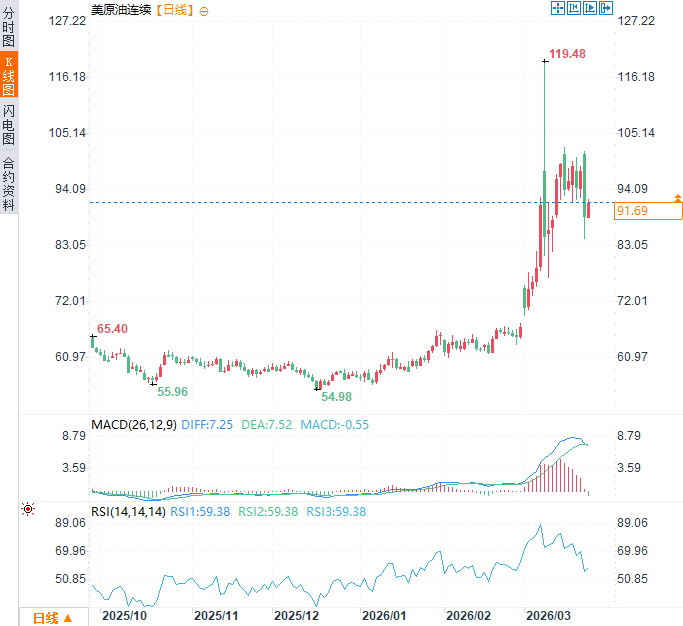
(US crude oil daily chart, source: FX678)
In the short term, US-Cuba negotiations will continue, but if Cuba refuses to make sufficient concessions, the Trump administration may quickly shift to a tougher stance, including options for military or further economic sanctions. Trump has warned that a "friendly takeover" is possible, but it could also take an unfriendly turn, depending on Cuba's response.
In the medium to long term, if an agreement is reached, American companies are expected to enter the Cuban market on a large scale, significantly altering the geopolitical landscape of Latin America. However, risks also exist: strong resistance from the Cuban regime could trigger a humanitarian crisis, a large-scale migration wave, or divert American resources while the Middle East conflict remains unresolved. Any final decision depends heavily on Trump's personal judgment and Secretary of State Rubio's implementation efforts.
The Trump administration simultaneously pushed forward preparations for regime change and explorations for opening up trade in Cuba. Its core objective was to gain market access and leadership adjustment through economic pressure, rather than simply achieving an ideological victory.
Cuba’s current energy crisis and power outages provide leverage for the US, but the situation in the Middle East and potential humanitarian risks pose significant constraints.
Overall, this strategy reflects a close intertwining of commercial interests and geopolitical considerations, and its future direction remains highly uncertain.
At 14:01 Beijing time, US crude oil futures were trading at $91.37 per barrel.
Cuba's economy is currently in dire straits, and the US is further pressuring it by cutting off Venezuelan oil supplies. Trump himself has repeatedly stated publicly that he believes he will be "honored to take over Cuba," emphasizing that he can achieve his goals whether by "freeing it" or "taking it over." This strategy is seen as another key focus of Trump's continued pressure campaign in the Middle East and Latin America.
The Trump administration's plans for regime change and business liberalization in Cuba, involving key information such as "cutting off Venezuelan oil supplies," "Cuban fuel shortages," and "energy lifelines," provide significant potential support for the crude oil market. On Tuesday (March 24) during Asian trading hours, US crude oil prices fluctuated upwards, currently trading around $91.70 per barrel, a daily increase of approximately 4%.
Details of US plans for regime change in Cuba
Reports indicate that the US has developed several regime change plans, one core of which involves Trump demanding substantial concessions from Cuba, a declaration of "victory," and the gradual opening of its markets. A US official stated explicitly, "The regime change plan is complete" and awaits the president's final signal.
The US strategy draws on its approach to Venezuela, described by insiders as a "rehearsal for Havana." The Trump administration hopes to force change in Cuba's leadership through economic pressure, potentially including pushing for the removal of current President Miguel Díaz-Canel, but not necessarily a complete overthrow of the regime.
U.S. Secretary of State Marco Rubio is engaging with Cuban officials through high-level channels, including informal communications with Raúl Castro's grandson, Raúl Guillermo Rodríguez Castro.
Trump emphasized that he is more focused on tangible results than ideological change. Officials revealed that the final decision depends on Trump's willingness to initiate a new confrontation while military operations in the Middle East are not yet fully concluded. Negotiations between the US and Cuba are ongoing, but the US is also preparing more stringent contingency plans.
Business Openings and Investment Opportunities
The Trump administration's core focus is on business opportunities rather than purely political change. Officials say they hope the agreement will open doors for American companies to key sectors in Cuba, such as ports, energy, tourism, and real estate, unlocking billions of dollars in investment potential.
Trump's style of "regime change" leans more towards a "Chapter 11"-style economic restructuring of Cuba, rather than a complete purge. The Cuban-American community in South Florida is actively promoting related plans, hoping to attract exiled Cubans back to invest on the island through business liberalization.
Trump publicly stated that Cuba was "without oil, without money, without food" and was on the verge of collapse, which provided a window for American capital to enter.
Legal Actions and Developments in South Florida
Criminal charges are being prepared in South Florida against members of the Cuban political and military leadership, including members of the Castro family. This multi-agency action, led by the U.S. Attorney's Office for the Southern District of Florida, aims to provide a legal basis for stronger U.S. measures. Potential charges include issues related to violence or human rights.
The Trump administration has declared a national emergency in Cuba through executive order and authorized additional tariffs on goods from countries that supply oil to Cuba, further severing Cuba's energy lifeline. These legal and economic tools are seen as important levers for pushing for regime change.
Impact analysis on the oil market
The US strategy toward Cuba is essentially a hybrid intervention model using energy blockade as a tool and regime change as a goal. While its direct impact on the crude oil market is not as significant as the Middle East conflict, by strengthening the suppression of Venezuelan crude oil supplies, increasing the geopolitical risk premium in Latin America, and increasing uncertainty in the Gulf region, it may provide structural support for oil prices in the short to medium term, and exacerbate market concerns about the fragility of the heavy crude oil supply chain .
If the US actually initiates secondary sanctions against Cuba's oil importers, or escalates its actions simultaneously in the Middle East and Latin America, the geopolitical risk premium in the crude oil market will face a reassessment.
(US crude oil daily chart, source: FX678)
Market Outlook and Risks
In the short term, US-Cuba negotiations will continue, but if Cuba refuses to make sufficient concessions, the Trump administration may quickly shift to a tougher stance, including options for military or further economic sanctions. Trump has warned that a "friendly takeover" is possible, but it could also take an unfriendly turn, depending on Cuba's response.
In the medium to long term, if an agreement is reached, American companies are expected to enter the Cuban market on a large scale, significantly altering the geopolitical landscape of Latin America. However, risks also exist: strong resistance from the Cuban regime could trigger a humanitarian crisis, a large-scale migration wave, or divert American resources while the Middle East conflict remains unresolved. Any final decision depends heavily on Trump's personal judgment and Secretary of State Rubio's implementation efforts.
Editor's Summary
The Trump administration simultaneously pushed forward preparations for regime change and explorations for opening up trade in Cuba. Its core objective was to gain market access and leadership adjustment through economic pressure, rather than simply achieving an ideological victory.
Cuba’s current energy crisis and power outages provide leverage for the US, but the situation in the Middle East and potential humanitarian risks pose significant constraints.
Overall, this strategy reflects a close intertwining of commercial interests and geopolitical considerations, and its future direction remains highly uncertain.
At 14:01 Beijing time, US crude oil futures were trading at $91.37 per barrel.
- Risk Warning and Disclaimer
- The market involves risk, and trading may not be suitable for all investors. This article is for reference only and does not constitute personal investment advice, nor does it take into account certain users’ specific investment objectives, financial situation, or other needs. Any investment decisions made based on this information are at your own risk.