Conflicting data and volatile sentiment! The yen remains range-bound.
2026-03-24 19:59:03
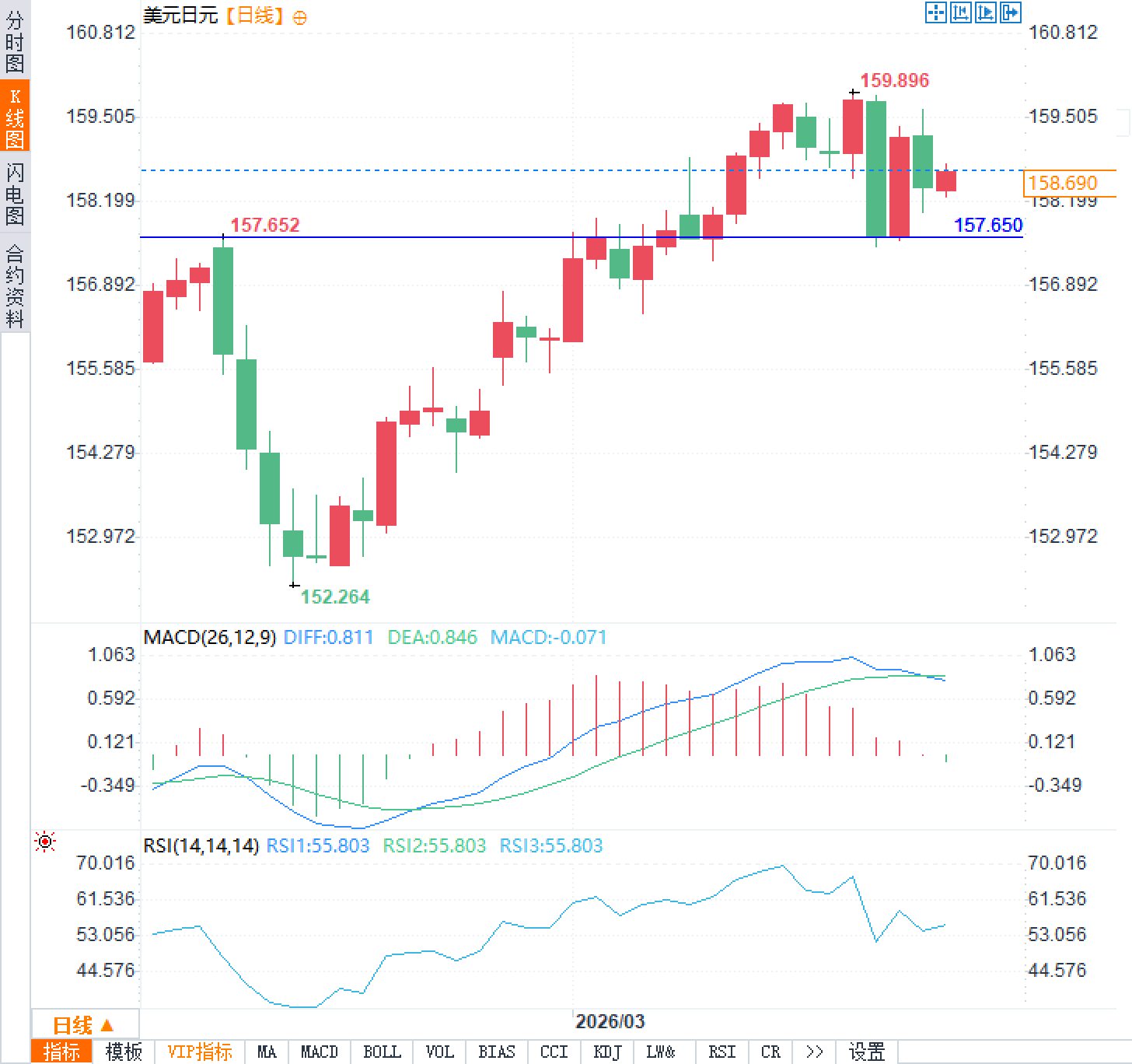
On Tuesday, March 24th, the USD/JPY exchange rate continued to consolidate below the 160 level, currently trading around 158.70. Short-term support remains at 157.65, while resistance is concentrated in the 159.80 area. Market focus quickly shifted to the latest developments in US-Iran negotiations. Trump announced a five-day ceasefire via social media to facilitate a comprehensive resolution of the hostilities, but Iran swiftly denied any substantive dialogue, causing the dollar to weaken briefly before quickly stabilizing, with the exchange rate exhibiting a clear range-bound trading pattern. This geopolitical uncertainty, coupled with weak latest Japanese inflation data, has shaped the current USD/JPY market landscape, and traders are closely assessing the interplay between risk sentiment and divergent central bank policies.
Trump announced on social media that he had had "very good and productive" talks with Iran over the past two days and instructed relevant departments to suspend strikes against Iranian energy infrastructure for five days. This statement initially triggered a broad-based pullback in the US dollar, but Iranian parliamentary speaker Ghalibaf immediately clarified that no negotiations had taken place with Washington. This contradictory signal quickly calmed the initial market volatility, and the dollar stabilized against the yen after falling back to the 158 range.
Traders are currently inclined to wait for official clarification or substantial progress. The recurring reports of the conflict have directly amplified exchange rate volatility, making it difficult for USD/JPY to break through the psychological level of 160 in the short term. However, if positive signals emerge from negotiations, the dollar may face further downward pressure. Conversely, if tensions persist, the dollar will continue to receive support, and the exchange rate may test higher resistance levels.
The latest Consumer Price Index (CPI) data released by Statistics Japan for February shows that the overall annual rate was 1.3%, a further decline from the previous value of 1.5%, marking the lowest level since March 2022. The core CPI (excluding fresh food) fell to 1.6%, also below the Bank of Japan's policy target of 2%. This data confirms that downward pressure on inflation persists, with the effects of energy price subsidies and a slowdown in the price increases of some commodities contributing to the overall decline.
The following is a comparison of key recent Japanese inflation data:
Meanwhile, preliminary results from the spring wage negotiations showed that average wages rose by 5.26%, exceeding 5% for the third consecutive fiscal year, while base pay increased by 3.85%. Despite strong wage growth, inflation failed to keep pace, and real wages remain on a downward trend, posing a potential drag on domestic consumption and economic growth in Japan. Traders need to pay attention to the lagged effect of wage growth on prices. If energy prices fluctuate more due to geopolitical events, this transmission could accelerate. However, current data generally indicates that inflationary pressures have not yet reached a sustainable stable range above 2%, thus the yen continues to be under pressure.
Bank of Japan Governor Kazuo Ueda recently emphasized in public that the spring wage negotiations yielded better-than-expected results, and the central bank will maintain its tightening stance if temporary downward pressure does not harm the underlying inflation trend. However, he also pointed out that current geopolitical risks could amplify growth concerns through energy prices, and the central bank prefers to observe the situation between the US and Iran before making a decision. Currently, the Bank of Japan's policy rate remains at 0.75%, and the market expects one more rate hike this year, but the probability has been revised downwards due to weak inflation.
In contrast, while there were no major positive developments in the fundamentals of the US dollar, geopolitical uncertainties provided additional support. The US dollar index briefly fell after the news of the negotiations, but quickly stabilized. Traders are watching closely as the Bank of Japan may remain on the sidelines in a low-inflation environment, and the relatively strong dollar is unlikely to reverse in the short term unless there is a breakthrough in the negotiations.
Uncertainty surrounding US-Iran negotiations is driving safe-haven demand for the US dollar.
Trump announced on social media that he had had "very good and productive" talks with Iran over the past two days and instructed relevant departments to suspend strikes against Iranian energy infrastructure for five days. This statement initially triggered a broad-based pullback in the US dollar, but Iranian parliamentary speaker Ghalibaf immediately clarified that no negotiations had taken place with Washington. This contradictory signal quickly calmed the initial market volatility, and the dollar stabilized against the yen after falling back to the 158 range.
Traders are currently inclined to wait for official clarification or substantial progress. The recurring reports of the conflict have directly amplified exchange rate volatility, making it difficult for USD/JPY to break through the psychological level of 160 in the short term. However, if positive signals emerge from negotiations, the dollar may face further downward pressure. Conversely, if tensions persist, the dollar will continue to receive support, and the exchange rate may test higher resistance levels.
Weakening Japanese inflation data exacerbates the yen's weakness.
The latest Consumer Price Index (CPI) data released by Statistics Japan for February shows that the overall annual rate was 1.3%, a further decline from the previous value of 1.5%, marking the lowest level since March 2022. The core CPI (excluding fresh food) fell to 1.6%, also below the Bank of Japan's policy target of 2%. This data confirms that downward pressure on inflation persists, with the effects of energy price subsidies and a slowdown in the price increases of some commodities contributing to the overall decline.
The following is a comparison of key recent Japanese inflation data:
| month | Overall CPI annual rate (%) | Core CPI annual rate (%) |
|---|---|---|
| February 2026 | 1.3 | 1.6 |
| January 2026 | 1.5 | 2.0 |
| December 2025 | 1.8 | 2.1 |
A Comparison of the Bank of Japan's Policy Path and the Relatively Strong Dollar
Bank of Japan Governor Kazuo Ueda recently emphasized in public that the spring wage negotiations yielded better-than-expected results, and the central bank will maintain its tightening stance if temporary downward pressure does not harm the underlying inflation trend. However, he also pointed out that current geopolitical risks could amplify growth concerns through energy prices, and the central bank prefers to observe the situation between the US and Iran before making a decision. Currently, the Bank of Japan's policy rate remains at 0.75%, and the market expects one more rate hike this year, but the probability has been revised downwards due to weak inflation.
In contrast, while there were no major positive developments in the fundamentals of the US dollar, geopolitical uncertainties provided additional support. The US dollar index briefly fell after the news of the negotiations, but quickly stabilized. Traders are watching closely as the Bank of Japan may remain on the sidelines in a low-inflation environment, and the relatively strong dollar is unlikely to reverse in the short term unless there is a breakthrough in the negotiations.
Frequently Asked Questions
Question 1: Why did conflicting reports about the US-Iran negotiations lead to a rapid recovery in the USD/JPY exchange rate instead of a sustained sharp decline?
A: Trump's announcement of a five-day ceasefire initially boosted risk appetite and led to selling of the dollar. However, Iranian parliamentary spokesman Ghalibaf quickly denied any substantive dialogue, reigniting market doubts about the authenticity of the negotiations, and the dollar's safe-haven appeal regained dominance. Traders assessed that geopolitical uncertainty had not been substantially eliminated, causing the exchange rate to stabilize. This process highlights the amplifying effect of news events on short-term sentiment, but the lack of official confirmation makes a trend breakout unlikely.
Question 2: With Japan's February CPI data showing a weak trend and wage growth at 5.26%, why is the yen still struggling to find substantial support?
A: Although the initial wage increase in the spring negotiations reached 5.26%, exceeding 5% for the third consecutive year, the annual inflation rate has fallen to 1.3%, with the core indicator at 1.6%, both far below the Bank of Japan's 2% target. Wage growth has failed to effectively translate into price increases, and coupled with the suppressive effect of energy subsidies, inflation expectations have continued to be revised downwards. Therefore, the Bank of Japan tends to adopt a cautious wait-and-see approach to avoid premature interest rate hikes that could exacerbate growth risks. The yen's role as a funding currency has been further weakened, and the USD/JPY exchange rate has maintained a relatively strong position under these fundamental conditions.
- Risk Warning and Disclaimer
- The market involves risk, and trading may not be suitable for all investors. This article is for reference only and does not constitute personal investment advice, nor does it take into account certain users’ specific investment objectives, financial situation, or other needs. Any investment decisions made based on this information are at your own risk.