Will gold prices plummet further? Possibly next week.
2026-03-24 21:49:03
On Tuesday, March 24th, spot gold prices fluctuated narrowly around $4370 per ounce during the North American session, a significant drop from the January high. Although crude oil prices rose to around $92 per barrel, with geopolitical factors generating short-term safe-haven demand, market focus quickly shifted to position adjustment pressures. TD Securities analysis points out that the gold bull market is facing structural constraints. Energy shocks are eroding official sector purchasing demand, while institutional and retail positions are already high. Algorithmic trading model simulations indicate that CTA selling may occur next week, marking the first long position liquidation signal since February 2024.

The current surge in spot gold prices is primarily driven by multiple rounds of capital injections, resembling a reversal following an imbalance in the arbitrage mechanism. Extensive participation from institutional investors, coupled with surging retail demand, has left the market with little room for further consolidation. Analysis emphasizes that, stripped of various narratives, the bullish logic for gold is shifting from "de-dollarization" to real-world constraints: expectations for the Fed's policy path are converging, money supply expansion is slowing, and concerns about independence have eased due to the Supreme Court proceedings. Under the current extreme positioning conditions, any external shock could trigger a chain reaction. Simulation results show that in most scenarios, CTA trend-following models will initiate selling, with the algorithm abandoning previous long positions, leading to short-term price pressure. This mechanism is not an isolated event but a natural balancing process of capital pools shifting from concentrated inflows to orderly exits. Traders should be aware that a wave of liquidations similar to that of early 2024 may recur, but in this context, the weakening marginal demand from official sources further amplifies the downward momentum.
The sharp rise in energy prices has directly constrained official gold purchases. Energy importers, facing escalating costs and shrinking fiscal surpluses, have significantly slowed their pace of diversifying their gold holdings. Middle Eastern producing countries have also experienced economic shocks, reducing their willingness to buy gold. Analysts point out that rumors of some countries, such as Turkey, considering using their gold reserves to stabilize their currencies reflect the most severe demand headwinds faced by official sectors since the Russia-Ukraine conflict. While global gold demand is projected to reach a record high of 5,002 tons in 2025, net central bank gold purchases have decreased by 21% year-on-year to 863 tons, indicating that traditional buying has weakened.
This data comparison highlights that while investment remains strong, official contributions have declined significantly, directly weakening the marginal support for gold as a long-term reserve asset. Traders should note that if official demand remains weak, it will amplify the market's sensitivity to purely speculative capital flows.
Rising energy costs are not only impacting fiscal surpluses but also reshaping asset allocation priorities across countries. Some energy-importing regions, which had planned to hedge against currency devaluation and inflation risks with gold, have seen their short-term liquidity management needs supersede long-term diversification goals after high oil prices worsened their trade balances. Middle Eastern producers have also postponed gold purchases due to fluctuations in export revenue. Some analysts describe this as "the energy shock significantly eroding official gold purchases." Meanwhile, the Federal Reserve's dot plot, which anticipates only one rate cut in 2026, further weakens gold's appeal as a beneficiary of a low-interest-rate environment. Slowing money supply growth coupled with stable real yields has diminished the momentum of the "de-dollarization" narrative. The capital relay chain that previously fueled the gold bull market has shown signs of breaking down, with logic such as margin arbitrage liquidation dominating short-term pricing.
Institutional and retail positions are both at high levels, limiting further upside potential. Analysts believe that "widespread institutional adoption and unprecedented retail demand over the past few months suggest that trading is likely still pointing downwards." CTA models, as trend-following representatives, are nearing their liquidation thresholds in the current price range. Simulations next week show that algorithms will collectively reduce long positions in most scenarios, the first time since February 2024. Traders have observed that similar mechanisms have played a key role at historical bullish turning points: when trend signals reverse, algorithmic selling amplifies volatility. In the current environment, while geopolitical uncertainty has pushed up crude oil prices, the safe-haven premium for gold has been partially offset by position adjustment pressures. Overall, the market is shifting from narrative-driven to mechanism-driven, with short-term risks skewed towards a downward correction, but the medium- to long-term outlook still depends on the actual path of global monetary policy and the recovery of real demand.
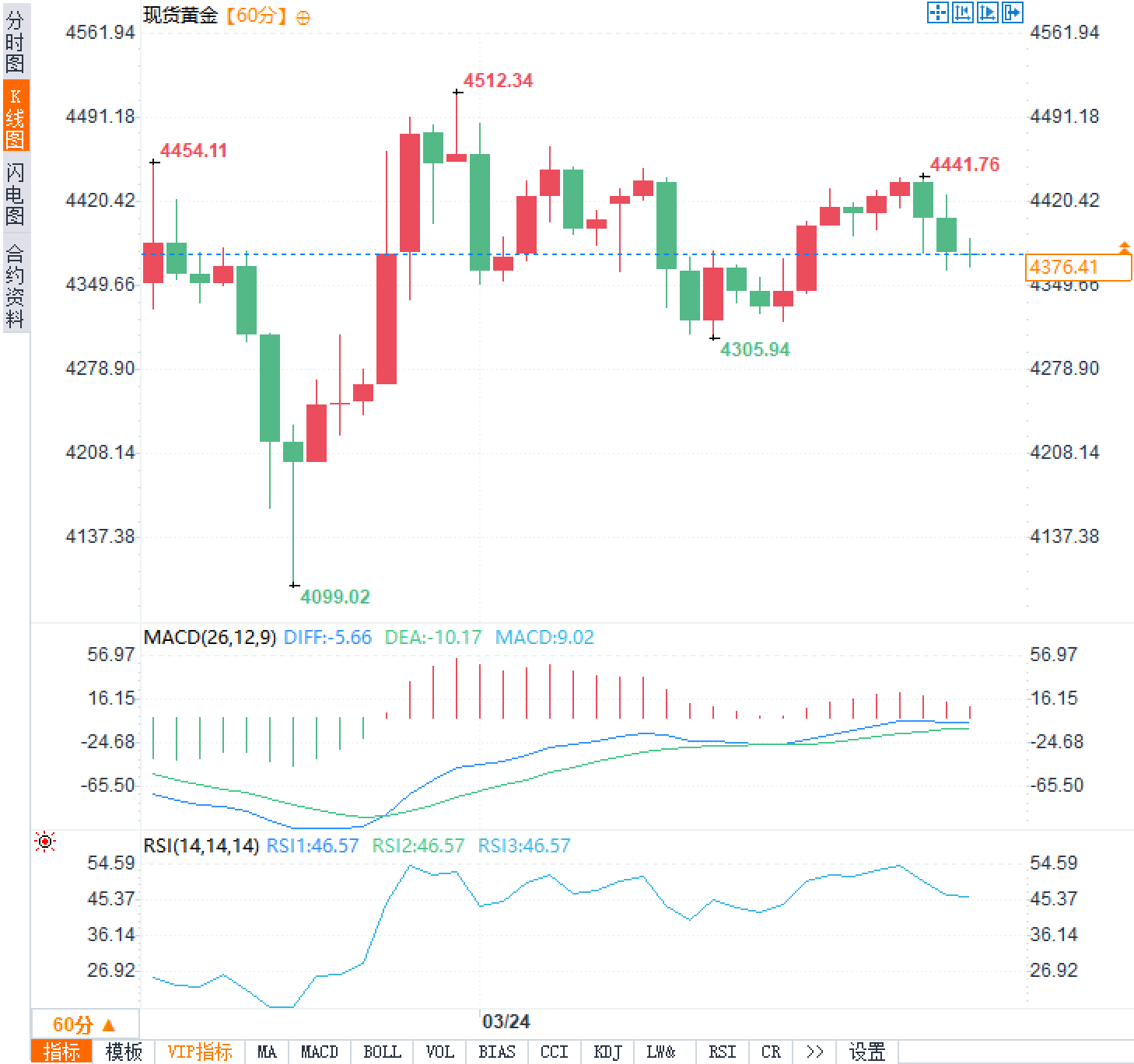
Current Position of the Gold Market and Systemic Risks
The current surge in spot gold prices is primarily driven by multiple rounds of capital injections, resembling a reversal following an imbalance in the arbitrage mechanism. Extensive participation from institutional investors, coupled with surging retail demand, has left the market with little room for further consolidation. Analysis emphasizes that, stripped of various narratives, the bullish logic for gold is shifting from "de-dollarization" to real-world constraints: expectations for the Fed's policy path are converging, money supply expansion is slowing, and concerns about independence have eased due to the Supreme Court proceedings. Under the current extreme positioning conditions, any external shock could trigger a chain reaction. Simulation results show that in most scenarios, CTA trend-following models will initiate selling, with the algorithm abandoning previous long positions, leading to short-term price pressure. This mechanism is not an isolated event but a natural balancing process of capital pools shifting from concentrated inflows to orderly exits. Traders should be aware that a wave of liquidations similar to that of early 2024 may recur, but in this context, the weakening marginal demand from official sources further amplifies the downward momentum.
Pressure on official departments
The sharp rise in energy prices has directly constrained official gold purchases. Energy importers, facing escalating costs and shrinking fiscal surpluses, have significantly slowed their pace of diversifying their gold holdings. Middle Eastern producing countries have also experienced economic shocks, reducing their willingness to buy gold. Analysts point out that rumors of some countries, such as Turkey, considering using their gold reserves to stabilize their currencies reflect the most severe demand headwinds faced by official sectors since the Russia-Ukraine conflict. While global gold demand is projected to reach a record high of 5,002 tons in 2025, net central bank gold purchases have decreased by 21% year-on-year to 863 tons, indicating that traditional buying has weakened.
| category | Demand (tons) in 2025 | Change compared to the previous year (%) |
|---|---|---|
| Central Bank and other institutions | 863 | -twenty one |
| Investment needs (including ETFs) | 2175 | +84 |
| Total demand (including off-site) | 5002 | +1 |
Energy shocks and changes in the logic of diversification
Rising energy costs are not only impacting fiscal surpluses but also reshaping asset allocation priorities across countries. Some energy-importing regions, which had planned to hedge against currency devaluation and inflation risks with gold, have seen their short-term liquidity management needs supersede long-term diversification goals after high oil prices worsened their trade balances. Middle Eastern producers have also postponed gold purchases due to fluctuations in export revenue. Some analysts describe this as "the energy shock significantly eroding official gold purchases." Meanwhile, the Federal Reserve's dot plot, which anticipates only one rate cut in 2026, further weakens gold's appeal as a beneficiary of a low-interest-rate environment. Slowing money supply growth coupled with stable real yields has diminished the momentum of the "de-dollarization" narrative. The capital relay chain that previously fueled the gold bull market has shown signs of breaking down, with logic such as margin arbitrage liquidation dominating short-term pricing.
Algorithmic Trading and Institutional Dynamics
Institutional and retail positions are both at high levels, limiting further upside potential. Analysts believe that "widespread institutional adoption and unprecedented retail demand over the past few months suggest that trading is likely still pointing downwards." CTA models, as trend-following representatives, are nearing their liquidation thresholds in the current price range. Simulations next week show that algorithms will collectively reduce long positions in most scenarios, the first time since February 2024. Traders have observed that similar mechanisms have played a key role at historical bullish turning points: when trend signals reverse, algorithmic selling amplifies volatility. In the current environment, while geopolitical uncertainty has pushed up crude oil prices, the safe-haven premium for gold has been partially offset by position adjustment pressures. Overall, the market is shifting from narrative-driven to mechanism-driven, with short-term risks skewed towards a downward correction, but the medium- to long-term outlook still depends on the actual path of global monetary policy and the recovery of real demand.
Frequently Asked Questions
Question 1: What are the main downside risks currently facing the gold market?
A: The main risk stems from systemic liquidation triggered by extreme positioning. TD Securities analysis shows that institutional and retail positions are already high, and the energy shock is weakening official demand, causing a break in the capital relay chain. CTA model simulations suggest that selling may occur next week, marking the first long position liquidation since February 2024, increasing the probability of short-term price pressure. Traders need to pay attention to how the convergence of Fed rate cut expectations and the slowdown in money supply will further amplify this mechanism.
Question 2: How will energy shocks affect official gold demand?
A: Crude oil prices rising to around $92 per barrel are directly eroding the fiscal surpluses of energy importers and the economic stability of Middle Eastern producing countries, leading to a slowdown in the pace of gold diversification purchases. Central bank net gold purchases in 2025 have already decreased by 21% year-on-year to 863 tons, with some countries even considering using reserves to stabilize their currencies. This change marks the first significant headwind for official buying since 2022, weakening the marginal support for gold as a long-term reserve asset.
Question 3: What does CTA selling mean for short-term gold prices?
A: CTA selling signifies a collective liquidation of long positions by algorithmic trend-following models, amplifying downward volatility and creating a self-reinforcing cycle. The analysis emphasizes that this process is similar to a rebalancing after an imbalance in the margin arbitrage mechanism, with the trading direction pointing downwards. Although geopolitical factors provide some safe-haven support, the combination of high-level holdings and weakening demand suggests that short-term prices may continue to test support levels. In the medium to long term, the actual effectiveness of monetary policy implementation remains to be seen.
- Risk Warning and Disclaimer
- The market involves risk, and trading may not be suitable for all investors. This article is for reference only and does not constitute personal investment advice, nor does it take into account certain users’ specific investment objectives, financial situation, or other needs. Any investment decisions made based on this information are at your own risk.