The US suddenly proposed a 15-point ceasefire plan for Iran, causing oil prices to plummet and US stock futures to surge.
2026-03-25 14:42:12
On Wednesday (March 25) in Asian trading, international oil prices fluctuated and fell, while US stock index futures rebounded sharply. This market movement was mainly driven by a major diplomatic development: the United States, through Pakistan, proposed a 15-point ceasefire plan to Iran in an attempt to end the Middle East conflict, which has now entered its fourth week.
Brent crude oil futures for May delivery fell as much as 7% from Tuesday's settlement price, settling at $97.11 per barrel. This followed a sharp 4.6% rise on Tuesday, with the settlement price holding above $104. At the same time, West Texas Intermediate (WTI) crude oil futures for May delivery fell as much as 6% from Tuesday's close to $86.72 per barrel. This sharp reversal in the oil market fully reflects investors' strong expectations of a possible easing of tensions in the Middle East.

Boosted by the news, risk appetite in the stock market rebounded significantly. On Wednesday in Asian trading, Dow Jones futures rose more than 1% to around 46,892 points; Nasdaq 100 futures and S&P 500 futures both rose nearly 1% at one point. Meanwhile, US Treasury yields fell rapidly by 0.7%, and bond prices rose accordingly, indicating a significant cooling of risk aversion in the market.
According to The New York Times, the United States has delivered a detailed ceasefire plan to Iran through intermediary channels, aiming to end the escalating Middle East war. The report, citing two officials familiar with diplomatic communications, noted that it remains unclear whether Iran will accept the proposal, or whether Israel, acting in concert with the United States, will agree.
Axios also reported that the United States and some regional mediators are awaiting Tehran's response regarding the possibility of high-level talks as early as this Thursday.
This news quickly ignited market enthusiasm, with investors generally welcoming the potential diplomatic developments. However, some analysts remained cautious about the veracity of the news and its ultimate impact.
Stephen Innes, managing partner at SPI Asset Management, said the market reaction was “familiar, almost like it was playing out in a script. We’ve seen this before; it’s typical of reaction window trading.”
He pointed out: "It feels like I'm pricing in two different wars at the same time. One is a war of information, with Israeli television signaling a ceasefire and Washington exerting pressure through secret diplomatic channels, causing traders to immediately sell oil and chase up stock index futures; the other is a real war that is still ongoing."
He added, "The market is using the lure of de-escalation to entice investors to sell oil and increase their risk exposure. But for equity investors, core fundamentals indicate that the outlook is far from smooth."
eToro strategist Bret Kenwell believes that the key to whether the market can maintain its optimistic trend lies in whether investors truly believe that the conflict is nearing its end.
He stated, "Investors not only need to see a de-escalation in the Middle East, but they also need to genuinely believe it. The US stock market showed resilience in the first half of this month, but as tensions persist, risk aversion has gradually gained the upper hand. To completely reverse this situation, investors need to be convinced that lasting stability is forming, and they need to see a substantial decline in oil prices."
Given the market's continued exposure to various recurring news events over the past period, whether the overnight optimism can continue into Thursday's opening remains highly uncertain. While diplomatic developments have injected short-term positives into the market, if Iran fails to respond positively, or if Israel maintains a reserved stance, geopolitical risk premiums could quickly rebound, putting renewed volatility pressure on oil and stock prices.
The news that the US proposed a 15-point ceasefire plan to Iran significantly boosted risk assets in the short term, driving a sharp correction in oil prices and a rebound in US stock futures. However, many analysts cautioned that the current market movement is largely "news-driven," a typical "buy the rumor, sell the fact" pattern. Whether the conflict will truly ease ultimately depends on Iran's official statements, Israel's attitude, and the actual outcomes of subsequent high-level talks.
In today's highly sensitive global financial markets, investors need to remain rational: they should seize potential diplomatic benefits while also being wary of secondary fluctuations if the news fails to materialize.
In the next 48 hours, Middle East diplomatic developments will be the most crucial variable driving global oil and stock market trends. Market participants need to closely monitor Iran's response and the subsequent performance of crude oil prices.
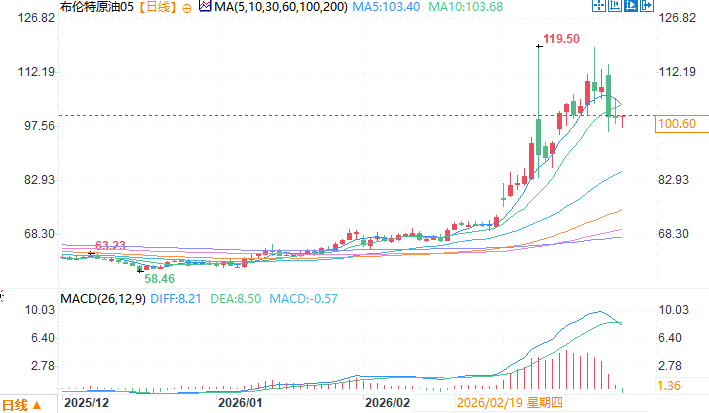
Brent crude oil May 2023 chart source: EasyForex
At 14:41 Beijing time on March 25, Brent crude oil futures for May were trading at $100.32 per barrel.
Oil prices plunged more than 5%, with Brent crude falling below $100.
Brent crude oil futures for May delivery fell as much as 7% from Tuesday's settlement price, settling at $97.11 per barrel. This followed a sharp 4.6% rise on Tuesday, with the settlement price holding above $104. At the same time, West Texas Intermediate (WTI) crude oil futures for May delivery fell as much as 6% from Tuesday's close to $86.72 per barrel. This sharp reversal in the oil market fully reflects investors' strong expectations of a possible easing of tensions in the Middle East.
US stock futures rebounded strongly, with Dow Jones futures rising more than 300 points.
Boosted by the news, risk appetite in the stock market rebounded significantly. On Wednesday in Asian trading, Dow Jones futures rose more than 1% to around 46,892 points; Nasdaq 100 futures and S&P 500 futures both rose nearly 1% at one point. Meanwhile, US Treasury yields fell rapidly by 0.7%, and bond prices rose accordingly, indicating a significant cooling of risk aversion in the market.
The US proposed a 15-point ceasefire plan, a diplomatic breakthrough that triggered a market frenzy.
According to The New York Times, the United States has delivered a detailed ceasefire plan to Iran through intermediary channels, aiming to end the escalating Middle East war. The report, citing two officials familiar with diplomatic communications, noted that it remains unclear whether Iran will accept the proposal, or whether Israel, acting in concert with the United States, will agree.
Axios also reported that the United States and some regional mediators are awaiting Tehran's response regarding the possibility of high-level talks as early as this Thursday.
This news quickly ignited market enthusiasm, with investors generally welcoming the potential diplomatic developments. However, some analysts remained cautious about the veracity of the news and its ultimate impact.
Analysts warn that the market reaction appears "familiar," and caution is needed regarding the discrepancy between news and reality.
Stephen Innes, managing partner at SPI Asset Management, said the market reaction was “familiar, almost like it was playing out in a script. We’ve seen this before; it’s typical of reaction window trading.”
He pointed out: "It feels like I'm pricing in two different wars at the same time. One is a war of information, with Israeli television signaling a ceasefire and Washington exerting pressure through secret diplomatic channels, causing traders to immediately sell oil and chase up stock index futures; the other is a real war that is still ongoing."
He added, "The market is using the lure of de-escalation to entice investors to sell oil and increase their risk exposure. But for equity investors, core fundamentals indicate that the outlook is far from smooth."
Investors still need to see substantial signs of cooling down.
eToro strategist Bret Kenwell believes that the key to whether the market can maintain its optimistic trend lies in whether investors truly believe that the conflict is nearing its end.
He stated, "Investors not only need to see a de-escalation in the Middle East, but they also need to genuinely believe it. The US stock market showed resilience in the first half of this month, but as tensions persist, risk aversion has gradually gained the upper hand. To completely reverse this situation, investors need to be convinced that lasting stability is forming, and they need to see a substantial decline in oil prices."
The future trend of oil prices remains uncertain.
Given the market's continued exposure to various recurring news events over the past period, whether the overnight optimism can continue into Thursday's opening remains highly uncertain. While diplomatic developments have injected short-term positives into the market, if Iran fails to respond positively, or if Israel maintains a reserved stance, geopolitical risk premiums could quickly rebound, putting renewed volatility pressure on oil and stock prices.
Overall Outlook
The news that the US proposed a 15-point ceasefire plan to Iran significantly boosted risk assets in the short term, driving a sharp correction in oil prices and a rebound in US stock futures. However, many analysts cautioned that the current market movement is largely "news-driven," a typical "buy the rumor, sell the fact" pattern. Whether the conflict will truly ease ultimately depends on Iran's official statements, Israel's attitude, and the actual outcomes of subsequent high-level talks.
In today's highly sensitive global financial markets, investors need to remain rational: they should seize potential diplomatic benefits while also being wary of secondary fluctuations if the news fails to materialize.
In the next 48 hours, Middle East diplomatic developments will be the most crucial variable driving global oil and stock market trends. Market participants need to closely monitor Iran's response and the subsequent performance of crude oil prices.
Brent crude oil May 2023 chart source: EasyForex
At 14:41 Beijing time on March 25, Brent crude oil futures for May were trading at $100.32 per barrel.
- Risk Warning and Disclaimer
- The market involves risk, and trading may not be suitable for all investors. This article is for reference only and does not constitute personal investment advice, nor does it take into account certain users’ specific investment objectives, financial situation, or other needs. Any investment decisions made based on this information are at your own risk.