Oil prices are high, yet the Canadian dollar is collapsing? The US dollar's continuous rise is too sharp.
2026-03-27 21:12:46
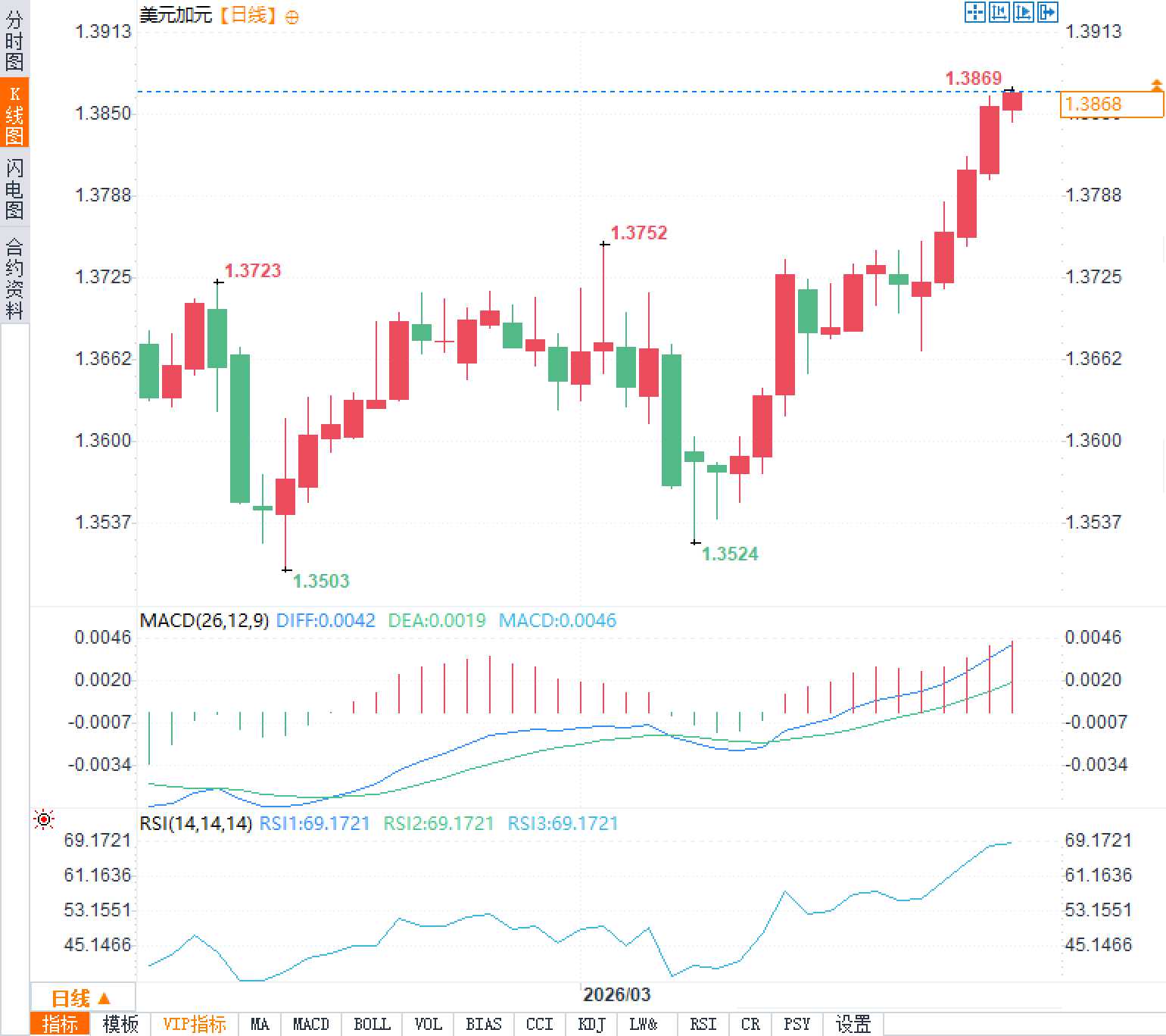
On Friday, March 27, the USD/CAD pair was trading around 1.3865, marking its fifth consecutive day of gains and reaching a two-month high. The Canadian dollar has fallen nearly 1% this week. Despite international oil prices remaining high due to tensions in the Middle East, risk aversion has dominated the market, with continued safe-haven buying of the US dollar offsetting potential support for the Canadian dollar as a commodity currency. Traders are closely watching the latest developments in the Middle East conflict and the latest statements from Federal Reserve officials, as these factors are collectively shaping the current currency market trend.

The USD/CAD pair started the week around 1.3700 and steadily climbed to its current level of 1.3865. The exchange rate has broken out of its recent consolidation range and entered a clear upward trend. The core driver of this move is rising global risk aversion: ongoing conflicts in the Middle East are fueling concerns about supply chain disruptions, leading investors to increase their holdings of US dollar assets to hedge against uncertainty. Meanwhile, while the Canadian dollar has benefited from energy exports, its overall weakness remains unchanged.
Mixed signals from the Middle East situation continue to churn market sentiment. On one hand, there are reports of positive progress in negotiations; on the other hand, reports of military deployments and potential blockades of key straits have raised concerns about a protracted conflict. The Strait of Hormuz, a vital chokepoint for global oil transport, would directly drive up global energy costs if restricted for an extended period. Brent crude oil prices have already risen to around $104 per barrel, an increase of over 40% since the beginning of the month.
This energy price shock is a double-edged sword for the Canadian dollar: as a major oil exporter, Canada should theoretically benefit from an improved trade surplus, but due to risk aversion, commodity currencies have relatively weak safe-haven characteristics, preventing the Canadian dollar from fully benefiting. Traders need to monitor crude oil inventory data and the latest developments in strait shipping, as these variables will determine whether the Canadian dollar can rebound in the coming weeks.
Federal Reserve officials Michael Barr and Philip Jefferson both expressed concern about inflationary pressures stemming from rising oil prices in public speeches on Thursday. Barr emphasized that if the conflict continues, soaring energy and commodity prices could have a broader impact on price levels and economic activity, noting the need to be particularly vigilant about rising long-term inflation expectations. He stated that in the current environment, policymakers need to take time to assess the situation before considering further easing. Jefferson bluntly stated that overall inflation is expected to rise, at least in the short term, primarily reflecting the energy price increases resulting from the Middle East conflict.
These statements were quickly reflected in market pricing: a month ago, the market expected the Federal Reserve to cut interest rates by 50 basis points this year; now, the probability has shifted to at least one rate hike. The US dollar thus received additional support, while the Canadian dollar, as a high-beta currency, faced greater downward pressure.
International oil prices remaining above $100 per barrel provide structural support for the Canadian economy: the energy sector accounts for a significant portion of exports, and rising prices will boost corporate profits and fiscal revenue. However, in the current environment, this positive effect is partially offset by the strength of the US dollar. The Bank of Canada's recent policy stance has been relatively conservative, but if oil prices remain high for an extended period, it may face imported inflationary pressures, thereby limiting its room for interest rate cuts.
Drivers of the US dollar's fifth consecutive rise against the Canadian dollar
The USD/CAD pair started the week around 1.3700 and steadily climbed to its current level of 1.3865. The exchange rate has broken out of its recent consolidation range and entered a clear upward trend. The core driver of this move is rising global risk aversion: ongoing conflicts in the Middle East are fueling concerns about supply chain disruptions, leading investors to increase their holdings of US dollar assets to hedge against uncertainty. Meanwhile, while the Canadian dollar has benefited from energy exports, its overall weakness remains unchanged.
The prolonged conflict in the Middle East is impacting energy supply chains.
Mixed signals from the Middle East situation continue to churn market sentiment. On one hand, there are reports of positive progress in negotiations; on the other hand, reports of military deployments and potential blockades of key straits have raised concerns about a protracted conflict. The Strait of Hormuz, a vital chokepoint for global oil transport, would directly drive up global energy costs if restricted for an extended period. Brent crude oil prices have already risen to around $104 per barrel, an increase of over 40% since the beginning of the month.
This energy price shock is a double-edged sword for the Canadian dollar: as a major oil exporter, Canada should theoretically benefit from an improved trade surplus, but due to risk aversion, commodity currencies have relatively weak safe-haven characteristics, preventing the Canadian dollar from fully benefiting. Traders need to monitor crude oil inventory data and the latest developments in strait shipping, as these variables will determine whether the Canadian dollar can rebound in the coming weeks.
Federal Reserve officials' statements and adjustments to interest rate path expectations
Federal Reserve officials Michael Barr and Philip Jefferson both expressed concern about inflationary pressures stemming from rising oil prices in public speeches on Thursday. Barr emphasized that if the conflict continues, soaring energy and commodity prices could have a broader impact on price levels and economic activity, noting the need to be particularly vigilant about rising long-term inflation expectations. He stated that in the current environment, policymakers need to take time to assess the situation before considering further easing. Jefferson bluntly stated that overall inflation is expected to rise, at least in the short term, primarily reflecting the energy price increases resulting from the Middle East conflict.
These statements were quickly reflected in market pricing: a month ago, the market expected the Federal Reserve to cut interest rates by 50 basis points this year; now, the probability has shifted to at least one rate hike. The US dollar thus received additional support, while the Canadian dollar, as a high-beta currency, faced greater downward pressure.
The spillover effect of high oil prices on the Canadian economy
International oil prices remaining above $100 per barrel provide structural support for the Canadian economy: the energy sector accounts for a significant portion of exports, and rising prices will boost corporate profits and fiscal revenue. However, in the current environment, this positive effect is partially offset by the strength of the US dollar. The Bank of Canada's recent policy stance has been relatively conservative, but if oil prices remain high for an extended period, it may face imported inflationary pressures, thereby limiting its room for interest rate cuts.
Question 1: Why is the protracted conflict in the Middle East driving the US dollar higher against the Canadian dollar?
A: Risk aversion drives capital inflows into the US dollar as a safe-haven currency, while the Canadian dollar, though a currency of oil-exporting countries, has weaker safe-haven characteristics, leading to an appreciation of the exchange rate. Potential disruptions in the Strait of Hormuz further amplify energy price volatility and exacerbate market uncertainty.
Question 2: Why did the rise in oil prices fail to fully support the performance of the Canadian dollar?
A: Although Canadian energy exports benefited, global risk aversion led to capital flows into safe-haven assets such as the US dollar, offsetting the positive impact of oil prices. The Canadian dollar fell by nearly 1% this week, demonstrating the weakness of commodity currencies in a risk-averse environment.
Question 3: What does the latest concern from Federal Reserve officials mean for the foreign exchange market?
A: The statements from Barr and Jefferson highlighted rising inflation risks, causing market expectations for a Fed rate cut to fall sharply, shifting towards pricing in a possible rate hike. This provides additional support for the US dollar while limiting the Canadian dollar's upside potential. Traders need to continue monitoring changes in interest rate futures pricing.
- Risk Warning and Disclaimer
- The market involves risk, and trading may not be suitable for all investors. This article is for reference only and does not constitute personal investment advice, nor does it take into account certain users’ specific investment objectives, financial situation, or other needs. Any investment decisions made based on this information are at your own risk.