Hardline vs. Dovish: Gold and Crude Oil Are Betting on the Deeper Game Behind the Scenes
2026-03-27 22:20:13
The escalating geopolitical tensions in the Middle East have become a key variable affecting the global gold and crude oil markets.
The Iranian Revolutionary Guard announced this afternoon that the Strait of Hormuz has been closed and any navigation through the waterway will face "severe measures," after previous discussions had been underway regarding conditional passage.
Before the negotiations began, both the US and Israel started accumulating leverage for their own negotiations.
On March 27, Iran launched a new round of missile attacks against Israel. The Israel Defense Forces immediately activated its air defense system to intercept the incoming targets and issued a protective alert to the people in the relevant areas. The actual military standoff between the two sides has not eased significantly.
The diplomatic maneuvering is equally complex, with US President Trump delaying military strikes against Iran's energy infrastructure by 10 days while extending the deadline for Iran to reopen the Strait of Hormuz, claiming that negotiations are "going very well."
This is the third time Trump has adjusted the deadline, from 48 hours to 5 days, and now to a 10-day ultimatum.
Following the removal of the speaker of parliament and the president from the assassination list, Iranian President Pezechzian made public appearances and visited shops.
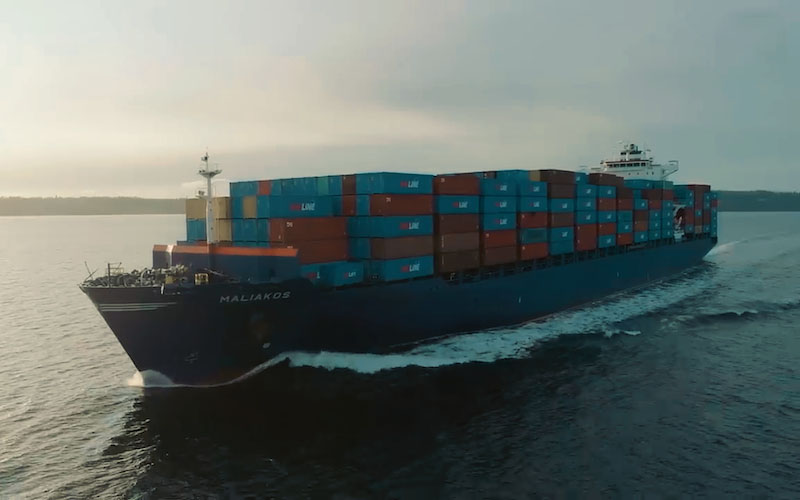
The Strait of Hormuz, a vital global energy artery, is currently in a state of practical disruption due to conflict.
Data shows that the strait carries 15% of the world's oil and 20% of its liquefied natural gas. Recently, the number of ships passing through the strait has plummeted by 95% compared to before the conflict. In the past week, only 5 ships passed through on average per day (compared to about 125 previously). There are about 1,100 ships of various types stranded in the strait, and the risk of energy supply chain disruption continues to escalate.
The current situation is that although the Revolutionary Guard claims it will not allow passage, Iran has been communicating frequently with neighboring countries recently, and the possibility of conditional passage through the US Strait is increasing. Although no one is negotiating with the US, they are sending gifts to Trump through neighboring countries. For us investors, this may create a situation where we cannot see the whole picture on the surface.
For the United States: controlling navigation rights in the Strait of Hormuz, stabilizing oil prices, maintaining the petrodollar, and forcing Iran to compromise at low cost, while avoiding a full-scale ground war, are its primary objectives.
For Israel, its main considerations are to eliminate the Iranian missile and nuclear threat, destroy its proxies, leverage US power for precision strikes, and ensure absolute military superiority in the Middle East.
Regarding Iran: Defend the interests of the Revolutionary Guard (personnel, industry, and military power) to the death, partially block the Strait of Hormuz to delay and wait for a change in circumstances, and avoid a catastrophic war.
This tug-of-war driven by mutual objectives may ultimately lead to limited airstrikes and diplomatic maneuvering, without a full-scale war: Iran maintains a semi-open strait to protect its core powers; the US suspends strikes and eases some sanctions; Israel weakens Iranian proxies, and the situation returns to a stalemate.
While 10,000 US troops cannot sustain a full-scale war, they can serve as a deterrent and create a conducive atmosphere for negotiations, with the ultimate goal of holding talks.
Given the communication disruptions and the inability of high-level officials to communicate effectively, Iran's best course of action would be to stall for time, which would likely lead to higher oil prices. However, if Iran is given a 10-day grace period, the Revolutionary Guard leadership could ultimately opt for dovish negotiations after thorough deliberation. This would not be a case of the US being unable to afford the delays and being forced into negotiations, but rather a situation where the Iranian leadership proactively lowers its demands. This scenario could cause oil prices to fall rapidly.
The market has begun to shift its focus from whether the Strait of Hormuz will eventually open to adding new expectations. The new expectation is that even if the strait opens, oil prices or production costs may continue to remain high. As can be seen from the term structure of crude oil, the typical backwardation structure of high near-term and low far-term will lead to rapid depletion of producers' inventories.
Because they can get cheaper raw materials later, they need to manufacture and sell goods at the highest possible price now. This will lead to manufacturers being forced to replenish their inventories due to depletion of existing stock, which will push up oil prices and the price of basic raw materials if oil prices continue to remain high.
Therefore, even if the strait is opened later, the increased demand for oil during the considerable period of restocking will continue to support oil prices at high levels. This is one of the reasons why oil prices rose instead of falling after Trump delayed the strikes.
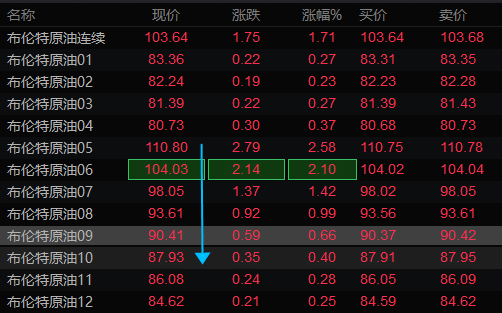
(A summary of the term structure of Brent crude oil)
During Friday's European and American trading sessions, spot gold (XAU/USD) experienced a surge followed by a pullback, rebounding by more than 1% to around $4,450.
Despite persistent concerns about oil prices, recent risk releases in precious metals have weakened the downward momentum.
The medium-term upside potential for gold still exists because every time WTI crude oil reaches around $100, it easily triggers Trump's window guidance. Moreover, with the significant correction in gold, there is a possibility that it has already reached its bottom in one step, meaning the market has already priced in the worst-case scenario. Any positive news will support gold, while negative news may not cause gold to fall much. The recent rebound in gold while US tech stocks continue to bottom out is evidence of this.
However, from a market perspective, the longer the conflict lasts, the stronger the upward momentum in oil prices will be, further accelerating global inflation expectations and prompting central banks around the world to release hawkish policy signals, which is indeed unfavorable for gold.
European Central Bank President Christine Lagarde has explicitly warned that with the previous round of inflationary shocks just passed, market participants are more sensitive to a renewed rise in energy prices. The non-linear nature of energy shocks may force monetary policy to respond more aggressively, and hawkish statements from central banks will directly weaken the attractiveness of non-yielding assets like gold.
As the world's most important energy corridor, the Strait of Hormuz handles 37% of global seaborne crude oil and 19% of refined oil shipments. The obstruction of its navigation directly leads to a widening of the global energy supply gap, becoming a core driver of rising oil prices.
However, it is worth noting that crude oil prices have not broken through previous highs in recent weeks, and there is a clear divergence in the market regarding future trends.
Nordea Bank analyst Jan von Grisch pointed out that despite frequent news from the Middle East and significant market volatility, crude oil prices have failed to reach new highs, reflecting that the market has already partially priced in the impact of the conflict.
From the supply side, the U.S. Treasury Department eased sanctions on large quantities of Iranian oil already shipped to sea, a move aimed at stabilizing supply during periods of energy market volatility and alleviating supply pressures to some extent.
Meanwhile, Nordea Bank had initially predicted that the Middle East conflict would ease and have a limited long-term impact on energy prices, but the probability of this relatively stable scenario materializing has now significantly decreased.
The European Central Bank has warned that the Middle East conflict has significantly increased uncertainty about the economic outlook, both pushing up inflation risks and suppressing economic growth prospects. The medium-term trend of oil prices will depend on the intensity and duration of the conflict and its transmission to the real economy.
The short-term resonance of geopolitical risk aversion means that when conflicts escalate and trigger market panic, the safe-haven properties of gold and concerns about the supply security of crude oil will be activated simultaneously, driving both prices up in tandem.
The surge in gold prices (over 1%) and oil prices (breaking $100) following the announcement of the Iranian missile attack and the closure of the Strait of Hormuz reflects this logic.
Secondly, there is a medium-term divergence between inflation and monetary policy. As a basic energy source for industry, the rise in the price of crude oil will directly push up global inflation expectations, while gold, as a traditional hedging asset, should theoretically benefit in tandem.
In reality, however, high inflation will force central banks to adopt hawkish monetary policies. The European Central Bank has clearly stated that it will "unconditionally guarantee the medium-term inflation target of 2%", and the Federal Reserve may also postpone interest rate cuts due to inflationary pressures.
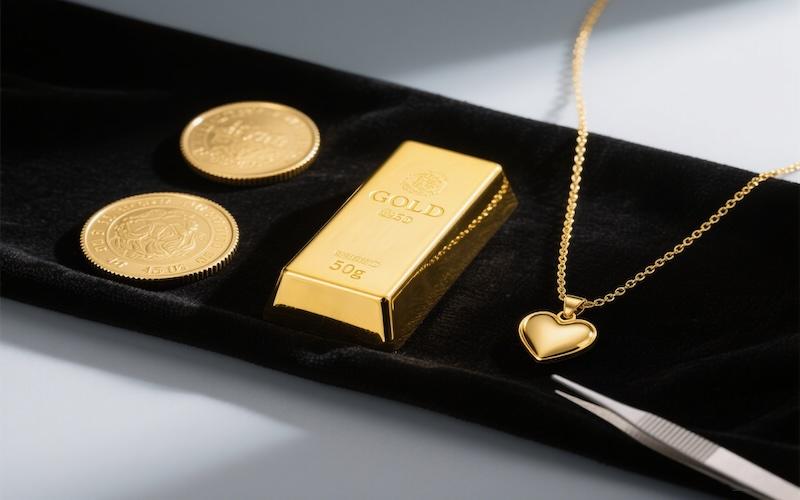
A high-interest-rate environment will significantly increase the opportunity cost of holding gold, a non-interest-bearing asset. At the same time, the petrodollar settlement mechanism will drive the dollar to strengthen, further suppressing the price of gold denominated in dollars, forming a divergence pattern of "strong oil and weak gold." This is the core reason for the rare divergence between gold and crude oil since March.
Third, the interaction between market sentiment and capital rotation. When the conflict focuses on energy supply (such as the blockade of the Strait of Hormuz), funds will prioritize arbitrage in the crude oil market, leading to a decrease in gold ETF holdings. At the same time, the Middle East needs to exchange gold for assets such as the US dollar at a discount to hedge against risks. However, when the conflict spreads and triggers concerns about economic recession, gold's safe-haven priority will surpass that of crude oil, and funds will flow back into precious metal assets.
If Iran continues to maintain a tough negotiating stance, oil prices are likely to remain high and will not be affected by external factors. However, if negotiations involve too many concessions, the central price level of crude oil may continue to decline, and gold and technology stocks will have a significant recovery opportunity.
As long as Iran retains control of the Strait of Hormuz, the one-off downward impact on oil prices from the opening of the strait may actually be a worthwhile investment opportunity, and oil prices are expected to remain high.
From a technical perspective, spot gold barely held onto 4427, which is also the 0.500 Fibonacci retracement level of this upward wave. There is still a possibility of a second bottom test. Only after stabilizing above this level can a reversal be possible.
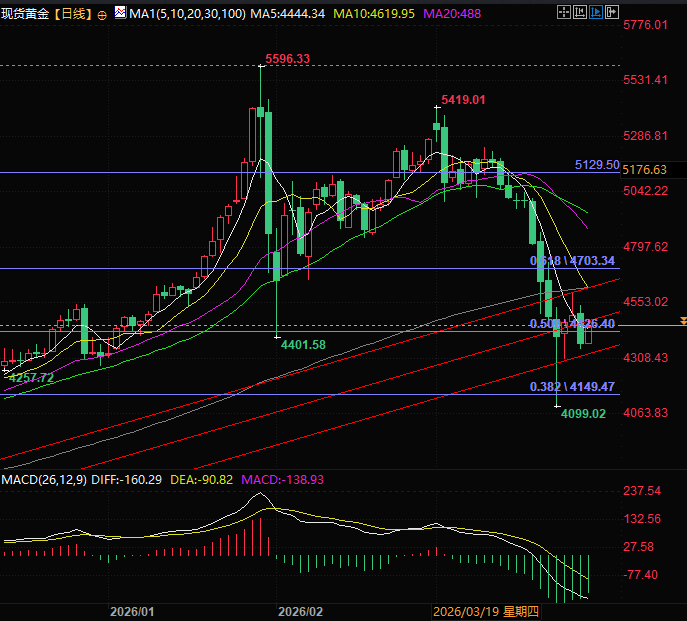
(Spot gold daily chart, source: EasyForex subsidiary)
WTI crude oil futures have broken through the 0.618 Fibonacci retracement level of this upward trend and are expected to continue rising to challenge the price level of 105.89.
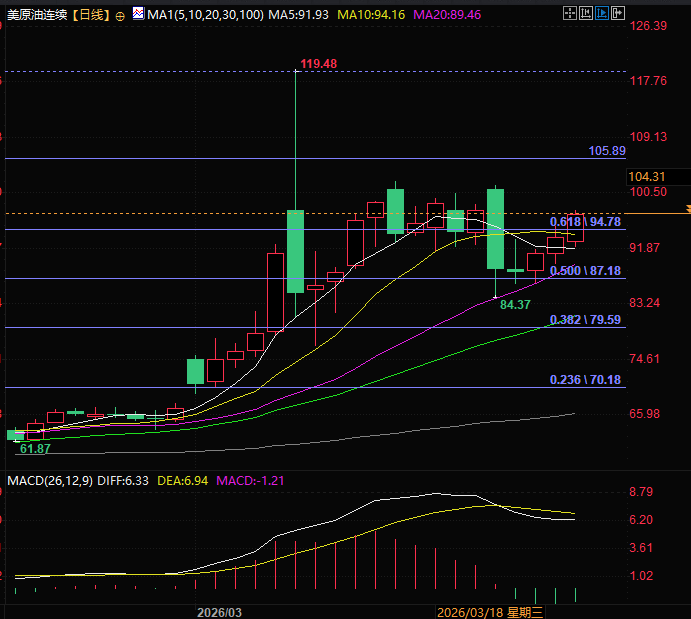
(WTI crude oil futures daily chart, source: FX678's subsidiary, EasyForex)
At 22:13 Beijing time, spot gold was trading at $4,454 per ounce, and WTI crude oil futures were trading at $97.24 per barrel.
The Iranian Revolutionary Guard announced this afternoon that the Strait of Hormuz has been closed and any navigation through the waterway will face "severe measures," after previous discussions had been underway regarding conditional passage.
Before the negotiations began, both the US and Israel started accumulating leverage for their own negotiations.
On March 27, Iran launched a new round of missile attacks against Israel. The Israel Defense Forces immediately activated its air defense system to intercept the incoming targets and issued a protective alert to the people in the relevant areas. The actual military standoff between the two sides has not eased significantly.
The diplomatic maneuvering is equally complex, with US President Trump delaying military strikes against Iran's energy infrastructure by 10 days while extending the deadline for Iran to reopen the Strait of Hormuz, claiming that negotiations are "going very well."
This is the third time Trump has adjusted the deadline, from 48 hours to 5 days, and now to a 10-day ultimatum.
Following the removal of the speaker of parliament and the president from the assassination list, Iranian President Pezechzian made public appearances and visited shops.
The Strait of Hormuz, a vital global energy artery, is currently in a state of practical disruption due to conflict.
Data shows that the strait carries 15% of the world's oil and 20% of its liquefied natural gas. Recently, the number of ships passing through the strait has plummeted by 95% compared to before the conflict. In the past week, only 5 ships passed through on average per day (compared to about 125 previously). There are about 1,100 ships of various types stranded in the strait, and the risk of energy supply chain disruption continues to escalate.
A list of the basic objectives of each faction:
The current situation is that although the Revolutionary Guard claims it will not allow passage, Iran has been communicating frequently with neighboring countries recently, and the possibility of conditional passage through the US Strait is increasing. Although no one is negotiating with the US, they are sending gifts to Trump through neighboring countries. For us investors, this may create a situation where we cannot see the whole picture on the surface.
For the United States: controlling navigation rights in the Strait of Hormuz, stabilizing oil prices, maintaining the petrodollar, and forcing Iran to compromise at low cost, while avoiding a full-scale ground war, are its primary objectives.
For Israel, its main considerations are to eliminate the Iranian missile and nuclear threat, destroy its proxies, leverage US power for precision strikes, and ensure absolute military superiority in the Middle East.
Regarding Iran: Defend the interests of the Revolutionary Guard (personnel, industry, and military power) to the death, partially block the Strait of Hormuz to delay and wait for a change in circumstances, and avoid a catastrophic war.
This tug-of-war driven by mutual objectives may ultimately lead to limited airstrikes and diplomatic maneuvering, without a full-scale war: Iran maintains a semi-open strait to protect its core powers; the US suspends strikes and eases some sanctions; Israel weakens Iranian proxies, and the situation returns to a stalemate.
While 10,000 US troops cannot sustain a full-scale war, they can serve as a deterrent and create a conducive atmosphere for negotiations, with the ultimate goal of holding talks.
Given the communication disruptions and the inability of high-level officials to communicate effectively, Iran's best course of action would be to stall for time, which would likely lead to higher oil prices. However, if Iran is given a 10-day grace period, the Revolutionary Guard leadership could ultimately opt for dovish negotiations after thorough deliberation. This would not be a case of the US being unable to afford the delays and being forced into negotiations, but rather a situation where the Iranian leadership proactively lowers its demands. This scenario could cause oil prices to fall rapidly.
Oil prices rebounded, and new market expectations formed.
The market has begun to shift its focus from whether the Strait of Hormuz will eventually open to adding new expectations. The new expectation is that even if the strait opens, oil prices or production costs may continue to remain high. As can be seen from the term structure of crude oil, the typical backwardation structure of high near-term and low far-term will lead to rapid depletion of producers' inventories.
Because they can get cheaper raw materials later, they need to manufacture and sell goods at the highest possible price now. This will lead to manufacturers being forced to replenish their inventories due to depletion of existing stock, which will push up oil prices and the price of basic raw materials if oil prices continue to remain high.
Therefore, even if the strait is opened later, the increased demand for oil during the considerable period of restocking will continue to support oil prices at high levels. This is one of the reasons why oil prices rose instead of falling after Trump delayed the strikes.
(A summary of the term structure of Brent crude oil)
Gold Market: A Dual Battle Between Safe-Haven Support and Inflation Suppression
During Friday's European and American trading sessions, spot gold (XAU/USD) experienced a surge followed by a pullback, rebounding by more than 1% to around $4,450.
Despite persistent concerns about oil prices, recent risk releases in precious metals have weakened the downward momentum.
The medium-term upside potential for gold still exists because every time WTI crude oil reaches around $100, it easily triggers Trump's window guidance. Moreover, with the significant correction in gold, there is a possibility that it has already reached its bottom in one step, meaning the market has already priced in the worst-case scenario. Any positive news will support gold, while negative news may not cause gold to fall much. The recent rebound in gold while US tech stocks continue to bottom out is evidence of this.
However, from a market perspective, the longer the conflict lasts, the stronger the upward momentum in oil prices will be, further accelerating global inflation expectations and prompting central banks around the world to release hawkish policy signals, which is indeed unfavorable for gold.
European Central Bank President Christine Lagarde has explicitly warned that with the previous round of inflationary shocks just passed, market participants are more sensitive to a renewed rise in energy prices. The non-linear nature of energy shocks may force monetary policy to respond more aggressively, and hawkish statements from central banks will directly weaken the attractiveness of non-yielding assets like gold.
Crude oil market: Supply disruptions push up prices, but the rebound encounters resistance and shows divergence.
As the world's most important energy corridor, the Strait of Hormuz handles 37% of global seaborne crude oil and 19% of refined oil shipments. The obstruction of its navigation directly leads to a widening of the global energy supply gap, becoming a core driver of rising oil prices.
However, it is worth noting that crude oil prices have not broken through previous highs in recent weeks, and there is a clear divergence in the market regarding future trends.
Nordea Bank analyst Jan von Grisch pointed out that despite frequent news from the Middle East and significant market volatility, crude oil prices have failed to reach new highs, reflecting that the market has already partially priced in the impact of the conflict.
From the supply side, the U.S. Treasury Department eased sanctions on large quantities of Iranian oil already shipped to sea, a move aimed at stabilizing supply during periods of energy market volatility and alleviating supply pressures to some extent.
Meanwhile, Nordea Bank had initially predicted that the Middle East conflict would ease and have a limited long-term impact on energy prices, but the probability of this relatively stable scenario materializing has now significantly decreased.
The European Central Bank has warned that the Middle East conflict has significantly increased uncertainty about the economic outlook, both pushing up inflation risks and suppressing economic growth prospects. The medium-term trend of oil prices will depend on the intensity and duration of the conflict and its transmission to the real economy.
The correlation between gold and crude oil: geopolitical resonance and path divergence
The short-term resonance of geopolitical risk aversion means that when conflicts escalate and trigger market panic, the safe-haven properties of gold and concerns about the supply security of crude oil will be activated simultaneously, driving both prices up in tandem.
The surge in gold prices (over 1%) and oil prices (breaking $100) following the announcement of the Iranian missile attack and the closure of the Strait of Hormuz reflects this logic.
Secondly, there is a medium-term divergence between inflation and monetary policy. As a basic energy source for industry, the rise in the price of crude oil will directly push up global inflation expectations, while gold, as a traditional hedging asset, should theoretically benefit in tandem.
In reality, however, high inflation will force central banks to adopt hawkish monetary policies. The European Central Bank has clearly stated that it will "unconditionally guarantee the medium-term inflation target of 2%", and the Federal Reserve may also postpone interest rate cuts due to inflationary pressures.
A high-interest-rate environment will significantly increase the opportunity cost of holding gold, a non-interest-bearing asset. At the same time, the petrodollar settlement mechanism will drive the dollar to strengthen, further suppressing the price of gold denominated in dollars, forming a divergence pattern of "strong oil and weak gold." This is the core reason for the rare divergence between gold and crude oil since March.
Third, the interaction between market sentiment and capital rotation. When the conflict focuses on energy supply (such as the blockade of the Strait of Hormuz), funds will prioritize arbitrage in the crude oil market, leading to a decrease in gold ETF holdings. At the same time, the Middle East needs to exchange gold for assets such as the US dollar at a discount to hedge against risks. However, when the conflict spreads and triggers concerns about economic recession, gold's safe-haven priority will surpass that of crude oil, and funds will flow back into precious metal assets.
Summary and Technical Analysis:
If Iran continues to maintain a tough negotiating stance, oil prices are likely to remain high and will not be affected by external factors. However, if negotiations involve too many concessions, the central price level of crude oil may continue to decline, and gold and technology stocks will have a significant recovery opportunity.
As long as Iran retains control of the Strait of Hormuz, the one-off downward impact on oil prices from the opening of the strait may actually be a worthwhile investment opportunity, and oil prices are expected to remain high.
From a technical perspective, spot gold barely held onto 4427, which is also the 0.500 Fibonacci retracement level of this upward wave. There is still a possibility of a second bottom test. Only after stabilizing above this level can a reversal be possible.
(Spot gold daily chart, source: EasyForex subsidiary)
WTI crude oil futures have broken through the 0.618 Fibonacci retracement level of this upward trend and are expected to continue rising to challenge the price level of 105.89.
(WTI crude oil futures daily chart, source: FX678's subsidiary, EasyForex)
At 22:13 Beijing time, spot gold was trading at $4,454 per ounce, and WTI crude oil futures were trading at $97.24 per barrel.
- Risk Warning and Disclaimer
- The market involves risk, and trading may not be suitable for all investors. This article is for reference only and does not constitute personal investment advice, nor does it take into account certain users’ specific investment objectives, financial situation, or other needs. Any investment decisions made based on this information are at your own risk.