March 30th Financial Breakfast: Houthi rebels join the war with Iran; bargain hunting drives gold prices higher; US may be preparing for ground operations; oil prices open 2% higher.
2026-03-30 07:17:52
On Monday (March 30, Beijing time) in early Asian trading, spot gold was trading around $4,483 per ounce. Although gold prices rose on Friday due to bargain hunting, renewed tensions in the Middle East over the weekend, coupled with the Houthi rebels joining the attack on Israel, increased uncertainty and the market has completely ruled out the possibility of a US interest rate cut in 2026. US crude oil opened more than 2% higher on Monday, trading around $102.23 per barrel. The Israeli military said over the weekend that it had struck a temporary command center in Iran, and the Pentagon may be preparing for weeks of ground operations in Iran.


U.S. stocks plunged on Friday, with all three major indexes falling for the fifth consecutive week, marking the longest losing streak in nearly four years. All three closed at their lowest points in more than seven months. The Dow Jones Industrial Average fell more than 10% from its record closing high on February 10, closing at 45,166.64 points, confirming that it has entered correction territory. The Nasdaq Composite Index had also previously fallen below the correction threshold, closing at 20,948.36 points, while the S&P 500 Index closed at 6,368.85 points.
The ongoing Middle East conflict, which has lasted for more than a month, has dampened market risk appetite. After Iran rejected the US proposal to end the war, Trump announced that he would give Iran another 10 days to reopen the Strait of Hormuz or face the destruction of its energy facilities. US Secretary of State Rubio stated that the objective could be achieved without ground troops and that the operation would be over within weeks, but the market was not reassured.
The VIX fear index closed at 31.05, its highest level since April 21. Large-cap tech stocks dragged down the index: Nvidia fell 2.2%, and Amazon plunged 4%, dragging down the consumer discretionary sector by 3.1%, making it the worst-performing sector; software stocks were also sold off, with the S&P 500 Software & Services index closing at its lowest level since November 6, 2023.
Market expectations for a Fed rate cut have reversed: before the conflict, two rate cuts were anticipated this year, but the FedWatch tool currently shows no signs of easing, and the probability of a rate hike of at least 25 basis points at the October meeting is estimated at around 25%. The US consumer confidence index fell to a three-month low in March. SlateStone Wealth strategists stated that overall market sentiment has turned extremely pessimistic, but believe this could be a significant opportunity, not ruling out a 15%-20% drop before the correction ends.
Gold prices surged nearly 3% on Friday, driven by bargain hunting as investors also focused on tensions in the Middle East.
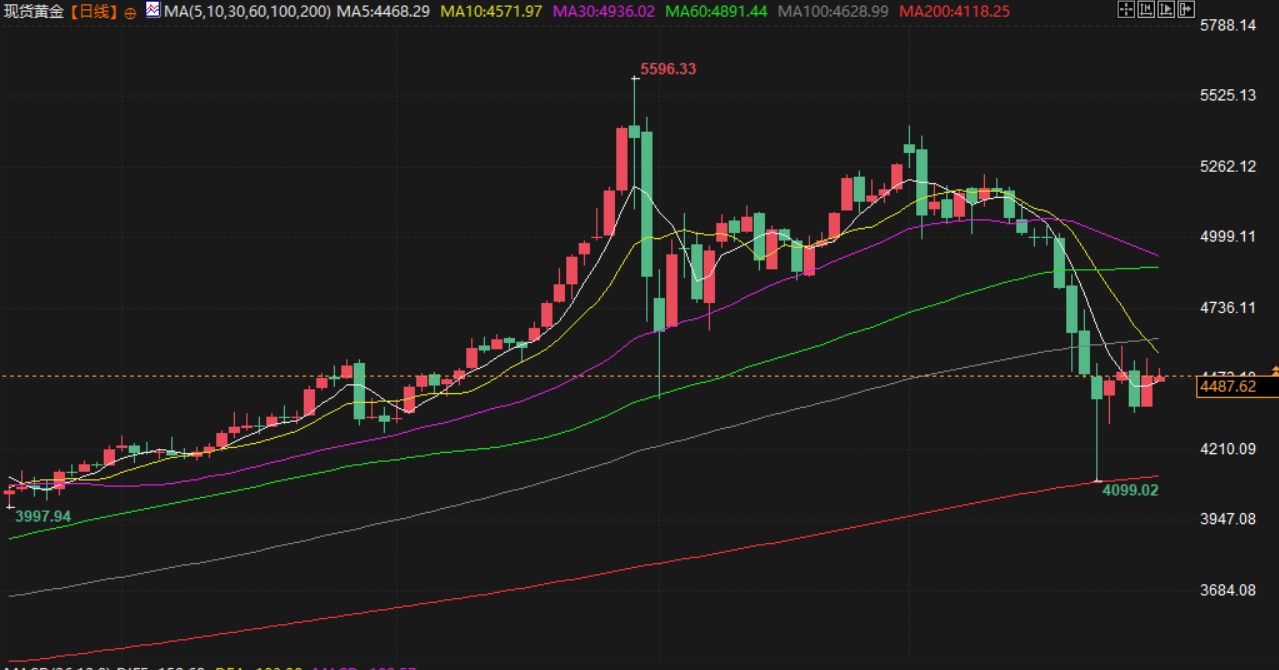
A senior market strategist at RJO Futures said that the price drop below the 200-day moving average presents an excellent buying opportunity for gold, which could slowly climb in the coming weeks, with risk appetite potentially improving if the situation in Iran eases.
Regarding the Middle East conflict, Iran rejected the US-proposed 15-point ceasefire, but US President Trump extended the deadline for striking Iranian energy facilities to April 7, demanding that Iran reopen the Strait of Hormuz; oil prices remain above $110 per barrel, and the four-week-long conflict has spread throughout the Middle East, with soaring energy and fertilizer prices exacerbating inflation concerns.
According to the CME FedWatch tool, traders have completely ruled out the possibility of a U.S. rate cut in 2026, whereas pre-war expectations were for two rate cuts.
However, Commerzbank raised its year-end gold price target to $5,000 per ounce (from $4,900), believing that the recent decline is unlikely to be sustained. The bank expects the war with Iran to end in the spring and the Federal Reserve to resume interest rate cuts later this year, with a cumulative cut of about 75 basis points by the middle of next year.
In other precious metals, spot silver rose 2.2% to $69.54, spot platinum rose 2.3% to $1868.89, and palladium rose 1.8% to $1377.25.
Oil prices rose on Friday, marking a weekly gain, as traders remained skeptical about the prospects of a ceasefire in the Iranian conflict. Brent crude futures closed up 4.2% at $112.57 a barrel, while WTI crude futures closed up 5.5% at $99.64 a barrel.
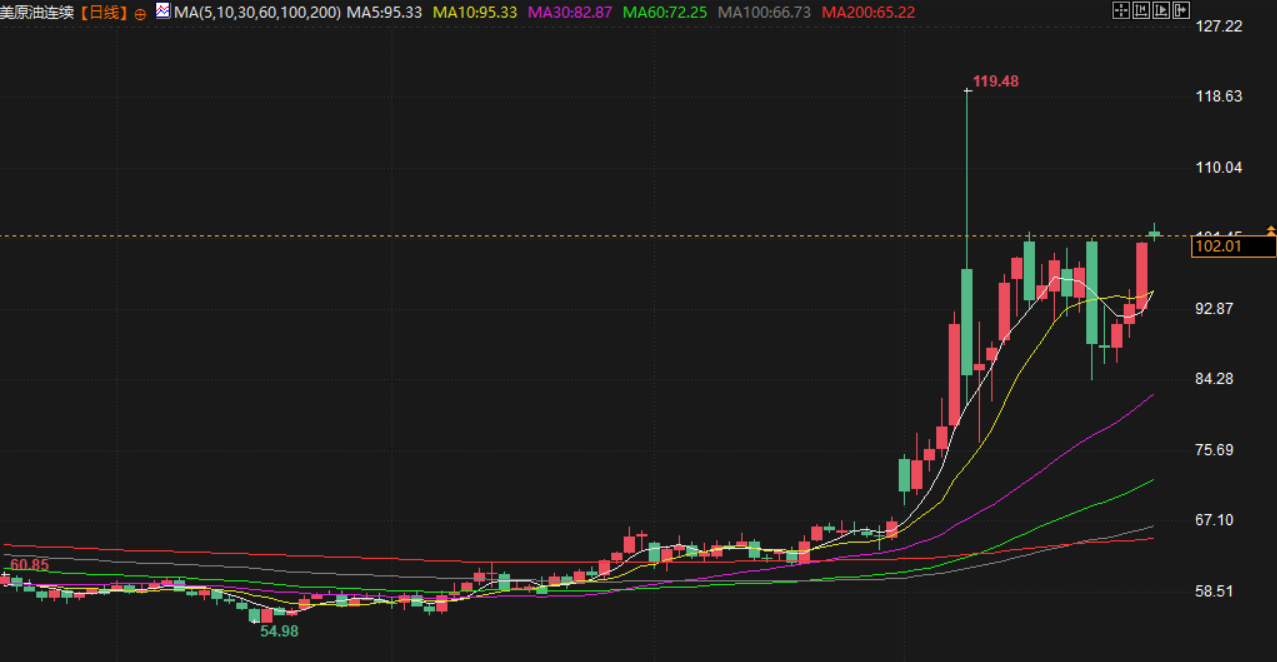
Traders are cautious about Trump’s comments on negotiations with Iran. One Iranian official called the U.S. proposal “unilateral and unfair,” while another senior official said it was “unacceptable” for the U.S. to call for negotiations while attacking Iran. Tehran has not yet decided whether to respond.
StoneX analysts point out that investors are focused on the protracted nature of the war rather than headlines, and a prolonged blockade of the Strait of Hormuz or damage to infrastructure will maintain a significant risk premium in prices. Despite Trump extending the deadline for Iran to reopen the Strait of Hormuz (otherwise energy facilities will be destroyed), the US has deployed thousands more troops to the Middle East and is weighing the possibility of using ground forces to seize Harqa Island, Iran's strategic oil hub.
Ritterbusch & Associates believes the oil market will be immune to Trump's conciliatory rhetoric, especially given his intention to send an additional 10,000 troops. The Iranian crisis has already reduced global oil supply by approximately 11 million barrels per day, and the International Energy Agency says the crisis is more severe than the two oil crises of the 1970s combined.
Macquarie analysts stated that if the war begins to subside quickly, oil prices will fall rapidly but will remain above pre-war levels; if the war continues until the end of June, oil prices could rise to $200. Furthermore, Russian oil producers have warned buyers that they may declare force majeure on supplies from major Baltic ports due to Ukraine's attacks on Russian energy infrastructure.
The dollar index rose on Friday, posting its biggest monthly gain in nearly a year, driven by safe-haven demand; escalating conflict in the Middle East and fading hopes for de-escalation, along with rising market expectations for a US interest rate hike this year, also supported the dollar.
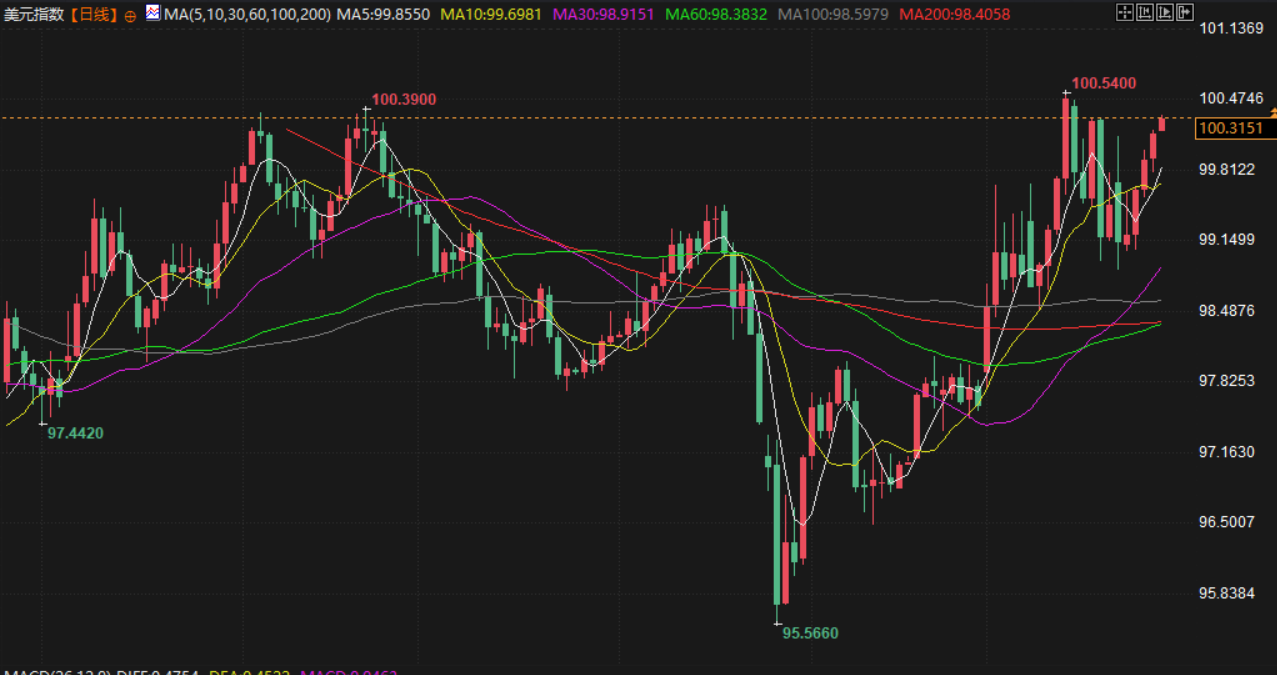
The dollar index rose 0.3% to 100.17, gaining 2.57% so far in March, on track for its best monthly performance since July 2025. The yen came under particularly strong pressure, falling 0.34% against the dollar to 160.35 yen, breaking below the 160 mark for the first time since July 2024, increasing the likelihood of Japanese intervention in the foreign exchange market. The yen has fallen 2.74% this month, and Japan's high dependence on imported energy makes it more vulnerable to price increases than many major economies.
In terms of market sentiment, Iran is expected to counter the US ceasefire proposal last Friday. US Secretary of State Rubio said the war is expected to last for weeks rather than months and will not require ground troops, but the Iranian Revolutionary Guard reiterated that it will ban all ships associated with the US and Israeli allies from passing through the Strait of Hormuz.
The Wall Street Journal reported that the Pentagon is considering sending up to 10,000 additional ground troops to the Middle East, further dashing hopes for a short-term end to the war. The war-driven rise in oil prices has dragged down the economic outlook, causing U.S. consumer confidence to fall to a three-month low in March.
In other currencies, the euro fell 0.17% to US$1.1509, the pound fell for the fourth consecutive day, down 0.48% to US$1.3268, and the risk-sensitive Australian dollar fell 0.2% to US$0.687, hitting a two-month low during the session. It has depreciated by about 3% since the outbreak of the war, and is only better than the Indian rupee (down 5.37%) among major currencies.
Regarding interest rate expectations, federal funds rate futures have completely reversed previous forecasts of another rate cut this year, with market speculation shifting towards rate hikes; the Bank of England and the European Central Bank are also expected to tighten policy, severely impacting the bond market this month and pushing yields to multi-year highs.
Iran says it is monitoring the USS Abraham Lincoln aircraft carrier in real time and will launch missiles if it comes within range.
Iranian Navy Commander Shahram Irani stated on the 29th local time that Iran is monitoring the location and movements of the USS Abraham Lincoln carrier strike group in real time, as well as its requests to countries in the region. Iran will launch missiles if the Abraham Lincoln carrier strike group enters its firing range. (CCTV News)
Israel is caught in a multi-front war of attrition
On March 28, local time, Israel was attacked simultaneously on three fronts: Iran, Lebanon, and Yemen. According to Israeli military monitoring, from the early morning of March 28 to the morning of March 29, at least multiple missile attacks occurred, covering southern and central Israel and the Jerusalem area. An Israeli village was hit by a missile, injuring at least 11 people and causing extensive damage to multiple buildings within a radius of approximately 150 meters. The Israeli military admitted that its air defense system failed to intercept the missile and is currently investigating the cause of the failure. This comes a week after a similar interception failure in southern Israel, marking another lapse in its air defense system. In Lebanon, Israel claimed to have killed at least 800 Hezbollah militants in southern Lebanon. On the same day, the Israeli military confirmed that Hezbollah in Lebanon fired approximately 250 rockets at Israeli targets, causing frequent sirens to sound in northern Israeli towns. Furthermore, during operations in southern Lebanon, Israeli soldiers were attacked, resulting in one death and several injuries. In Yemen, the Houthi rebels again launched ballistic missiles and drones at southern Israel on March 28. Although the Israeli military claimed a successful interception, there is no doubt that Israel is facing a broader and more protracted war of attrition. (CCTV International News)
The Israeli military claims it is targeting the temporary command center for the strike against Iran.
The Israel Defense Forces (IDF) issued a statement on March 29, stating that the Israeli Air Force completed a large-scale airstrike on March 28 targeting infrastructure in the heart of Tehran. In this operation, the IDF further weakened Iran's weapons production infrastructure, striking dozens of weapons storage and production sites. As Iran has begun relocating its command centers to mobile units, the IDF destroyed several temporary Iranian command centers, including the commanders operating within them. The IDF stated that this operation further weakened Iran's core systems and combat capabilities. (CCTV International News)
Attacks on two major aluminum plants in the Middle East could disrupt global supply chains.
Two major aluminum plants in Bahrain and the United Arab Emirates recently confirmed attacks by Iran. The attacks resulted in injuries and property damage. Middle Eastern aluminum exports account for about 10% of global supply, and this could have a significant impact on the market. Bahrain Aluminum said on the 29th that its plant was attacked by Iran on the 28th, resulting in two minor injuries, and the company is assessing the property damage. This company and its parent company had previously declared force majeure due to shipping disruptions in the Strait of Hormuz, reducing production by about 20%. Emirates Global Aluminium, one of the world's largest aluminum producers, also confirmed on the 28th that it was attacked by Iran. One of its plants in the Abu Dhabi industrial area suffered significant damage, and several Indian and Pakistani workers were injured. (Xinhua)
The 44-day shutdown of the U.S. Department of Homeland Security has become the longest partial government shutdown in U.S. history.
The ongoing funding gap at the U.S. Department of Homeland Security (DHS) entered a new phase on Sunday, marking the longest partial government shutdown in U.S. history. The shutdown, now in its 44th day, breaks the previous record of no funding for the DHS and other federal agencies from October to mid-November of last year. In contrast, other federal departments and agencies have received funding during this shutdown. Last Friday, House Republicans passed a short-term funding bill, but it has no chance of passing the Senate, representing a major setback in negotiations to restart DHS funding. Just hours earlier, the Senate passed a bipartisan bill providing funding for all DHS departments except Immigration and Customs Enforcement (ICE) and Customs and Border Protection (CBP). House Republicans rejected the bill, with Speaker Mike Johnson calling it "a joke." (Xinhua)
The US Vice President stated that he has no intention of remaining in Iran and will withdraw soon.
On March 27 local time, US Vice President Vance, in an interview regarding the Iran issue, stated that the US has no intention of remaining in Iran and will withdraw soon after resolving current affairs. He added that there is every reason to believe the US has achieved all its military objectives. The military operation is not yet over because President Trump wants to ensure that Iran completely loses its ability to threaten the US. Regarding the current rise in US domestic oil prices, Vance stated that this is a very short-lived market reaction to the US-Israel-Iran conflict, and oil prices will fall after the US withdrawal from Iran. (CCTV International News)
The Strait of Hormuz is blocking more than just oil; it's also hindering one-third of the world's seaborne fertilizer trade.
The obstruction of passage through the Strait of Hormuz, besides impacting energy, continues to disrupt the global fertilizer and food supply chains. Currently, it is the crucial planting season in many African countries. In Kenya, local farmers are already feeling the pressure from fertilizer shortages and rising prices. It is understood that the Strait of Hormuz handles about one-third of the world's seaborne fertilizer trade, and over 30% of fertilizer imports for Kenya and other African countries come from the Middle East. With the planting season approaching, trade disruptions will impact agricultural productivity in Kenya and other fertilizer-dependent countries. Government-subsidized fertilizer is in short supply, while market prices are soaring. A local fertilizer distributor calculated that government-subsidized fertilizer costs about 2,500 Kenyan shillings (approximately 133 yuan) per bag, while a bag of ordinary fertilizer on the market now costs 7,200 Kenyan shillings (approximately 383 yuan), nearly three times the subsidized price. For distributors, the price increase is driven by cost pressures; to make it affordable for farmers, they have begun to switch to selling relatively cheaper organic fertilizers. (CCTV Finance)
Report: Iran has approved the passage of seven Malaysian oil tankers through the Strait of Hormuz.
According to reports citing Malaysian Foreign Minister Mohammed Hassan, Iran has granted passage to seven Malaysian oil tankers through the Strait of Hormuz. The report quoted the minister as saying that the tankers currently stranded in the strait belong to Petronas, Malaysia's national oil company, shipping company Malaysia International Shipping Sdn Bhd, and Sapura Energy. The report also stated that Hassan spoke with the Iranian Foreign Minister, and subsequently, Malaysian Prime Minister Ibrahim also spoke with Iranian President Pezechzian.
Report: The Pentagon is preparing for weeks of ground operations in Iran.
U.S. officials have revealed that the Pentagon is preparing for weeks of ground operations in Iran. Thousands of U.S. troops and Marines are being deployed to the Middle East, potentially escalating the conflict if President Trump chooses to do so. Officials stated that any potential ground action would not be a full-scale invasion, but rather a surprise attack conducted jointly by special operations forces and regular infantry. All officials, speaking on condition of anonymity, revealed that these highly sensitive military plans have been in preparation for weeks. Such missions would expose U.S. personnel to multiple threats, including Iranian drones and missiles, ground fire, and improvised explosive devices. As of Saturday, it was unclear whether Trump would approve all, some, or all of the Pentagon's plans.
Houthi rebels claim to have struck key Israeli military targets.
The Houthi rebels in Yemen issued a statement on March 28, claiming that they had launched their first military operation in response to the escalating regional situation. The statement said the operation used multiple ballistic missiles to strike "key Israeli military targets." The statement indicated that the operation was conducted simultaneously with military operations by Iran and Hezbollah in Lebanon, and claimed that the operation "successfully achieved its stated objectives." The statement also indicated that the military operations would continue for some time until the announced objectives were achieved. (CCTV International News)
The third wave of "No King" anti-Trump protests in the United States is expected to involve millions of people.
On Saturday, large numbers of protesters gathered in cities across the United States for the third round of "No Kings" protests against the Trump administration's policies. The main rally was held in St. Paul, Minnesota—the same city where a federal immigration enforcement operation took place this winter, resulting in the deaths of two Americans. Organizers said they expect millions to participate in rallies across the United States and around the world, calling it "the largest single-day nonviolent action in American history." The protests are planned to take place in more than 3,200 marches across all 50 states and several other continents. Demonstrators expressed strong outrage over Trump's handling of the war with Iran, soaring gasoline prices, and his administration's massive deportation program.
The US has privately stated that reaching an agreement with Iran will take time and could lead to another 2-4 weeks of fighting.
According to CBS News, the White House has privately informed allies that a diplomatic agreement between the United States and Iran will take time. They added that the U.S. estimates the intense fighting itself will continue for another two to four weeks. Two sources close to Iranian officials said Tehran believes diplomatic negotiations will take time. Iran is skeptical of any potential U.S. agreement and sees high energy prices as advantageous. Furthermore, Iran is also skeptical of the shared timetable between the U.S. and Israel for ending the fighting. The Israel Defense Forces previously stated that they expect the fighting to continue until Passover (the first week of early April).
For the first time in China, the overall performance of a megawatt-class liquid hydrogen fuel cell aircraft engine has met the standards.
Recently, the AEP100 liquid hydrogen-fueled turboprop engine, independently developed by the hydrogen energy aviation propulsion team of the China Aero Engine Research Institute, successfully completed ignition and performance debugging tests based on a ground-based test environment. During the tests, all indicators of the engine and liquid hydrogen transport system were normal, and it operated stably under all conditions, achieving the first domestically produced megawatt-class liquid hydrogen-fueled aviation engine to meet overall performance standards. It is reported that liquid hydrogen, with its extremely high energy density and zero carbon emission characteristics, is considered an ideal path to achieve deep decarbonization in the aviation industry. This test verified the technical feasibility of the liquid hydrogen aviation engine, marking a breakthrough in key technologies for liquid hydrogen-fueled aviation turbine propulsion in my country, and laying a solid foundation for the transition of liquid hydrogen turbine propulsion from the experimental stage to the engineering application stage. (CCTV News)
Visa-free benefits fuel inbound tourism.
In 2025, China's inbound tourism market saw a significant recovery, with over 150 million inbound tourists, representing a year-on-year increase of over 17%. Among them, visa-free entry exceeded 30 million. Experts point out that the visa-free policy has greatly unleashed travel demand, while China's improved international image and increased international influence are becoming a deeper driving force attracting overseas tourists. This year, the momentum of inbound tourism remains strong. During the Spring Festival, inbound tourism continued to rise, with 460,000 foreigners entering visa-free, a year-on-year increase of 28.5%. The visa-free policy is reshaping the tourist demographics. Data from online travel platforms shows that South Korea, Singapore, and Malaysia were the top three source countries last year, while the number of tourists from Russia increased by 205% year-on-year. Significant growth has been seen in multi-category tourist groups such as independent travelers, semi-independent travelers, family travelers, and those combining business and tourism. (CCTV News)
Key Focus Today
stock market
U.S. stocks plunged on Friday, with all three major indexes falling for the fifth consecutive week, marking the longest losing streak in nearly four years. All three closed at their lowest points in more than seven months. The Dow Jones Industrial Average fell more than 10% from its record closing high on February 10, closing at 45,166.64 points, confirming that it has entered correction territory. The Nasdaq Composite Index had also previously fallen below the correction threshold, closing at 20,948.36 points, while the S&P 500 Index closed at 6,368.85 points.
The ongoing Middle East conflict, which has lasted for more than a month, has dampened market risk appetite. After Iran rejected the US proposal to end the war, Trump announced that he would give Iran another 10 days to reopen the Strait of Hormuz or face the destruction of its energy facilities. US Secretary of State Rubio stated that the objective could be achieved without ground troops and that the operation would be over within weeks, but the market was not reassured.
The VIX fear index closed at 31.05, its highest level since April 21. Large-cap tech stocks dragged down the index: Nvidia fell 2.2%, and Amazon plunged 4%, dragging down the consumer discretionary sector by 3.1%, making it the worst-performing sector; software stocks were also sold off, with the S&P 500 Software & Services index closing at its lowest level since November 6, 2023.
Market expectations for a Fed rate cut have reversed: before the conflict, two rate cuts were anticipated this year, but the FedWatch tool currently shows no signs of easing, and the probability of a rate hike of at least 25 basis points at the October meeting is estimated at around 25%. The US consumer confidence index fell to a three-month low in March. SlateStone Wealth strategists stated that overall market sentiment has turned extremely pessimistic, but believe this could be a significant opportunity, not ruling out a 15%-20% drop before the correction ends.
Gold Market
Gold prices surged nearly 3% on Friday, driven by bargain hunting as investors also focused on tensions in the Middle East.
A senior market strategist at RJO Futures said that the price drop below the 200-day moving average presents an excellent buying opportunity for gold, which could slowly climb in the coming weeks, with risk appetite potentially improving if the situation in Iran eases.
Regarding the Middle East conflict, Iran rejected the US-proposed 15-point ceasefire, but US President Trump extended the deadline for striking Iranian energy facilities to April 7, demanding that Iran reopen the Strait of Hormuz; oil prices remain above $110 per barrel, and the four-week-long conflict has spread throughout the Middle East, with soaring energy and fertilizer prices exacerbating inflation concerns.
According to the CME FedWatch tool, traders have completely ruled out the possibility of a U.S. rate cut in 2026, whereas pre-war expectations were for two rate cuts.
However, Commerzbank raised its year-end gold price target to $5,000 per ounce (from $4,900), believing that the recent decline is unlikely to be sustained. The bank expects the war with Iran to end in the spring and the Federal Reserve to resume interest rate cuts later this year, with a cumulative cut of about 75 basis points by the middle of next year.
In other precious metals, spot silver rose 2.2% to $69.54, spot platinum rose 2.3% to $1868.89, and palladium rose 1.8% to $1377.25.
oil market
Oil prices rose on Friday, marking a weekly gain, as traders remained skeptical about the prospects of a ceasefire in the Iranian conflict. Brent crude futures closed up 4.2% at $112.57 a barrel, while WTI crude futures closed up 5.5% at $99.64 a barrel.
Traders are cautious about Trump’s comments on negotiations with Iran. One Iranian official called the U.S. proposal “unilateral and unfair,” while another senior official said it was “unacceptable” for the U.S. to call for negotiations while attacking Iran. Tehran has not yet decided whether to respond.
StoneX analysts point out that investors are focused on the protracted nature of the war rather than headlines, and a prolonged blockade of the Strait of Hormuz or damage to infrastructure will maintain a significant risk premium in prices. Despite Trump extending the deadline for Iran to reopen the Strait of Hormuz (otherwise energy facilities will be destroyed), the US has deployed thousands more troops to the Middle East and is weighing the possibility of using ground forces to seize Harqa Island, Iran's strategic oil hub.
Ritterbusch & Associates believes the oil market will be immune to Trump's conciliatory rhetoric, especially given his intention to send an additional 10,000 troops. The Iranian crisis has already reduced global oil supply by approximately 11 million barrels per day, and the International Energy Agency says the crisis is more severe than the two oil crises of the 1970s combined.
Macquarie analysts stated that if the war begins to subside quickly, oil prices will fall rapidly but will remain above pre-war levels; if the war continues until the end of June, oil prices could rise to $200. Furthermore, Russian oil producers have warned buyers that they may declare force majeure on supplies from major Baltic ports due to Ukraine's attacks on Russian energy infrastructure.
Foreign exchange market
The dollar index rose on Friday, posting its biggest monthly gain in nearly a year, driven by safe-haven demand; escalating conflict in the Middle East and fading hopes for de-escalation, along with rising market expectations for a US interest rate hike this year, also supported the dollar.
The dollar index rose 0.3% to 100.17, gaining 2.57% so far in March, on track for its best monthly performance since July 2025. The yen came under particularly strong pressure, falling 0.34% against the dollar to 160.35 yen, breaking below the 160 mark for the first time since July 2024, increasing the likelihood of Japanese intervention in the foreign exchange market. The yen has fallen 2.74% this month, and Japan's high dependence on imported energy makes it more vulnerable to price increases than many major economies.
In terms of market sentiment, Iran is expected to counter the US ceasefire proposal last Friday. US Secretary of State Rubio said the war is expected to last for weeks rather than months and will not require ground troops, but the Iranian Revolutionary Guard reiterated that it will ban all ships associated with the US and Israeli allies from passing through the Strait of Hormuz.
The Wall Street Journal reported that the Pentagon is considering sending up to 10,000 additional ground troops to the Middle East, further dashing hopes for a short-term end to the war. The war-driven rise in oil prices has dragged down the economic outlook, causing U.S. consumer confidence to fall to a three-month low in March.
In other currencies, the euro fell 0.17% to US$1.1509, the pound fell for the fourth consecutive day, down 0.48% to US$1.3268, and the risk-sensitive Australian dollar fell 0.2% to US$0.687, hitting a two-month low during the session. It has depreciated by about 3% since the outbreak of the war, and is only better than the Indian rupee (down 5.37%) among major currencies.
Regarding interest rate expectations, federal funds rate futures have completely reversed previous forecasts of another rate cut this year, with market speculation shifting towards rate hikes; the Bank of England and the European Central Bank are also expected to tighten policy, severely impacting the bond market this month and pushing yields to multi-year highs.
International News
Iran says it is monitoring the USS Abraham Lincoln aircraft carrier in real time and will launch missiles if it comes within range.
Iranian Navy Commander Shahram Irani stated on the 29th local time that Iran is monitoring the location and movements of the USS Abraham Lincoln carrier strike group in real time, as well as its requests to countries in the region. Iran will launch missiles if the Abraham Lincoln carrier strike group enters its firing range. (CCTV News)
Israel is caught in a multi-front war of attrition
On March 28, local time, Israel was attacked simultaneously on three fronts: Iran, Lebanon, and Yemen. According to Israeli military monitoring, from the early morning of March 28 to the morning of March 29, at least multiple missile attacks occurred, covering southern and central Israel and the Jerusalem area. An Israeli village was hit by a missile, injuring at least 11 people and causing extensive damage to multiple buildings within a radius of approximately 150 meters. The Israeli military admitted that its air defense system failed to intercept the missile and is currently investigating the cause of the failure. This comes a week after a similar interception failure in southern Israel, marking another lapse in its air defense system. In Lebanon, Israel claimed to have killed at least 800 Hezbollah militants in southern Lebanon. On the same day, the Israeli military confirmed that Hezbollah in Lebanon fired approximately 250 rockets at Israeli targets, causing frequent sirens to sound in northern Israeli towns. Furthermore, during operations in southern Lebanon, Israeli soldiers were attacked, resulting in one death and several injuries. In Yemen, the Houthi rebels again launched ballistic missiles and drones at southern Israel on March 28. Although the Israeli military claimed a successful interception, there is no doubt that Israel is facing a broader and more protracted war of attrition. (CCTV International News)
The Israeli military claims it is targeting the temporary command center for the strike against Iran.
The Israel Defense Forces (IDF) issued a statement on March 29, stating that the Israeli Air Force completed a large-scale airstrike on March 28 targeting infrastructure in the heart of Tehran. In this operation, the IDF further weakened Iran's weapons production infrastructure, striking dozens of weapons storage and production sites. As Iran has begun relocating its command centers to mobile units, the IDF destroyed several temporary Iranian command centers, including the commanders operating within them. The IDF stated that this operation further weakened Iran's core systems and combat capabilities. (CCTV International News)
Attacks on two major aluminum plants in the Middle East could disrupt global supply chains.
Two major aluminum plants in Bahrain and the United Arab Emirates recently confirmed attacks by Iran. The attacks resulted in injuries and property damage. Middle Eastern aluminum exports account for about 10% of global supply, and this could have a significant impact on the market. Bahrain Aluminum said on the 29th that its plant was attacked by Iran on the 28th, resulting in two minor injuries, and the company is assessing the property damage. This company and its parent company had previously declared force majeure due to shipping disruptions in the Strait of Hormuz, reducing production by about 20%. Emirates Global Aluminium, one of the world's largest aluminum producers, also confirmed on the 28th that it was attacked by Iran. One of its plants in the Abu Dhabi industrial area suffered significant damage, and several Indian and Pakistani workers were injured. (Xinhua)
The 44-day shutdown of the U.S. Department of Homeland Security has become the longest partial government shutdown in U.S. history.
The ongoing funding gap at the U.S. Department of Homeland Security (DHS) entered a new phase on Sunday, marking the longest partial government shutdown in U.S. history. The shutdown, now in its 44th day, breaks the previous record of no funding for the DHS and other federal agencies from October to mid-November of last year. In contrast, other federal departments and agencies have received funding during this shutdown. Last Friday, House Republicans passed a short-term funding bill, but it has no chance of passing the Senate, representing a major setback in negotiations to restart DHS funding. Just hours earlier, the Senate passed a bipartisan bill providing funding for all DHS departments except Immigration and Customs Enforcement (ICE) and Customs and Border Protection (CBP). House Republicans rejected the bill, with Speaker Mike Johnson calling it "a joke." (Xinhua)
The US Vice President stated that he has no intention of remaining in Iran and will withdraw soon.
On March 27 local time, US Vice President Vance, in an interview regarding the Iran issue, stated that the US has no intention of remaining in Iran and will withdraw soon after resolving current affairs. He added that there is every reason to believe the US has achieved all its military objectives. The military operation is not yet over because President Trump wants to ensure that Iran completely loses its ability to threaten the US. Regarding the current rise in US domestic oil prices, Vance stated that this is a very short-lived market reaction to the US-Israel-Iran conflict, and oil prices will fall after the US withdrawal from Iran. (CCTV International News)
The Strait of Hormuz is blocking more than just oil; it's also hindering one-third of the world's seaborne fertilizer trade.
The obstruction of passage through the Strait of Hormuz, besides impacting energy, continues to disrupt the global fertilizer and food supply chains. Currently, it is the crucial planting season in many African countries. In Kenya, local farmers are already feeling the pressure from fertilizer shortages and rising prices. It is understood that the Strait of Hormuz handles about one-third of the world's seaborne fertilizer trade, and over 30% of fertilizer imports for Kenya and other African countries come from the Middle East. With the planting season approaching, trade disruptions will impact agricultural productivity in Kenya and other fertilizer-dependent countries. Government-subsidized fertilizer is in short supply, while market prices are soaring. A local fertilizer distributor calculated that government-subsidized fertilizer costs about 2,500 Kenyan shillings (approximately 133 yuan) per bag, while a bag of ordinary fertilizer on the market now costs 7,200 Kenyan shillings (approximately 383 yuan), nearly three times the subsidized price. For distributors, the price increase is driven by cost pressures; to make it affordable for farmers, they have begun to switch to selling relatively cheaper organic fertilizers. (CCTV Finance)
Report: Iran has approved the passage of seven Malaysian oil tankers through the Strait of Hormuz.
According to reports citing Malaysian Foreign Minister Mohammed Hassan, Iran has granted passage to seven Malaysian oil tankers through the Strait of Hormuz. The report quoted the minister as saying that the tankers currently stranded in the strait belong to Petronas, Malaysia's national oil company, shipping company Malaysia International Shipping Sdn Bhd, and Sapura Energy. The report also stated that Hassan spoke with the Iranian Foreign Minister, and subsequently, Malaysian Prime Minister Ibrahim also spoke with Iranian President Pezechzian.
Report: The Pentagon is preparing for weeks of ground operations in Iran.
U.S. officials have revealed that the Pentagon is preparing for weeks of ground operations in Iran. Thousands of U.S. troops and Marines are being deployed to the Middle East, potentially escalating the conflict if President Trump chooses to do so. Officials stated that any potential ground action would not be a full-scale invasion, but rather a surprise attack conducted jointly by special operations forces and regular infantry. All officials, speaking on condition of anonymity, revealed that these highly sensitive military plans have been in preparation for weeks. Such missions would expose U.S. personnel to multiple threats, including Iranian drones and missiles, ground fire, and improvised explosive devices. As of Saturday, it was unclear whether Trump would approve all, some, or all of the Pentagon's plans.
Houthi rebels claim to have struck key Israeli military targets.
The Houthi rebels in Yemen issued a statement on March 28, claiming that they had launched their first military operation in response to the escalating regional situation. The statement said the operation used multiple ballistic missiles to strike "key Israeli military targets." The statement indicated that the operation was conducted simultaneously with military operations by Iran and Hezbollah in Lebanon, and claimed that the operation "successfully achieved its stated objectives." The statement also indicated that the military operations would continue for some time until the announced objectives were achieved. (CCTV International News)
The third wave of "No King" anti-Trump protests in the United States is expected to involve millions of people.
On Saturday, large numbers of protesters gathered in cities across the United States for the third round of "No Kings" protests against the Trump administration's policies. The main rally was held in St. Paul, Minnesota—the same city where a federal immigration enforcement operation took place this winter, resulting in the deaths of two Americans. Organizers said they expect millions to participate in rallies across the United States and around the world, calling it "the largest single-day nonviolent action in American history." The protests are planned to take place in more than 3,200 marches across all 50 states and several other continents. Demonstrators expressed strong outrage over Trump's handling of the war with Iran, soaring gasoline prices, and his administration's massive deportation program.
The US has privately stated that reaching an agreement with Iran will take time and could lead to another 2-4 weeks of fighting.
According to CBS News, the White House has privately informed allies that a diplomatic agreement between the United States and Iran will take time. They added that the U.S. estimates the intense fighting itself will continue for another two to four weeks. Two sources close to Iranian officials said Tehran believes diplomatic negotiations will take time. Iran is skeptical of any potential U.S. agreement and sees high energy prices as advantageous. Furthermore, Iran is also skeptical of the shared timetable between the U.S. and Israel for ending the fighting. The Israel Defense Forces previously stated that they expect the fighting to continue until Passover (the first week of early April).
Domestic News
For the first time in China, the overall performance of a megawatt-class liquid hydrogen fuel cell aircraft engine has met the standards.
Recently, the AEP100 liquid hydrogen-fueled turboprop engine, independently developed by the hydrogen energy aviation propulsion team of the China Aero Engine Research Institute, successfully completed ignition and performance debugging tests based on a ground-based test environment. During the tests, all indicators of the engine and liquid hydrogen transport system were normal, and it operated stably under all conditions, achieving the first domestically produced megawatt-class liquid hydrogen-fueled aviation engine to meet overall performance standards. It is reported that liquid hydrogen, with its extremely high energy density and zero carbon emission characteristics, is considered an ideal path to achieve deep decarbonization in the aviation industry. This test verified the technical feasibility of the liquid hydrogen aviation engine, marking a breakthrough in key technologies for liquid hydrogen-fueled aviation turbine propulsion in my country, and laying a solid foundation for the transition of liquid hydrogen turbine propulsion from the experimental stage to the engineering application stage. (CCTV News)
Visa-free benefits fuel inbound tourism.
In 2025, China's inbound tourism market saw a significant recovery, with over 150 million inbound tourists, representing a year-on-year increase of over 17%. Among them, visa-free entry exceeded 30 million. Experts point out that the visa-free policy has greatly unleashed travel demand, while China's improved international image and increased international influence are becoming a deeper driving force attracting overseas tourists. This year, the momentum of inbound tourism remains strong. During the Spring Festival, inbound tourism continued to rise, with 460,000 foreigners entering visa-free, a year-on-year increase of 28.5%. The visa-free policy is reshaping the tourist demographics. Data from online travel platforms shows that South Korea, Singapore, and Malaysia were the top three source countries last year, while the number of tourists from Russia increased by 205% year-on-year. Significant growth has been seen in multi-category tourist groups such as independent travelers, semi-independent travelers, family travelers, and those combining business and tourism. (CCTV News)
- Risk Warning and Disclaimer
- The market involves risk, and trading may not be suitable for all investors. This article is for reference only and does not constitute personal investment advice, nor does it take into account certain users’ specific investment objectives, financial situation, or other needs. Any investment decisions made based on this information are at your own risk.