The severe damage to facilities at Global Aluminium and Bahrain Aluminium exacerbated the global supply crisis, causing LME aluminum prices to surge.
2026-03-30 09:52:59
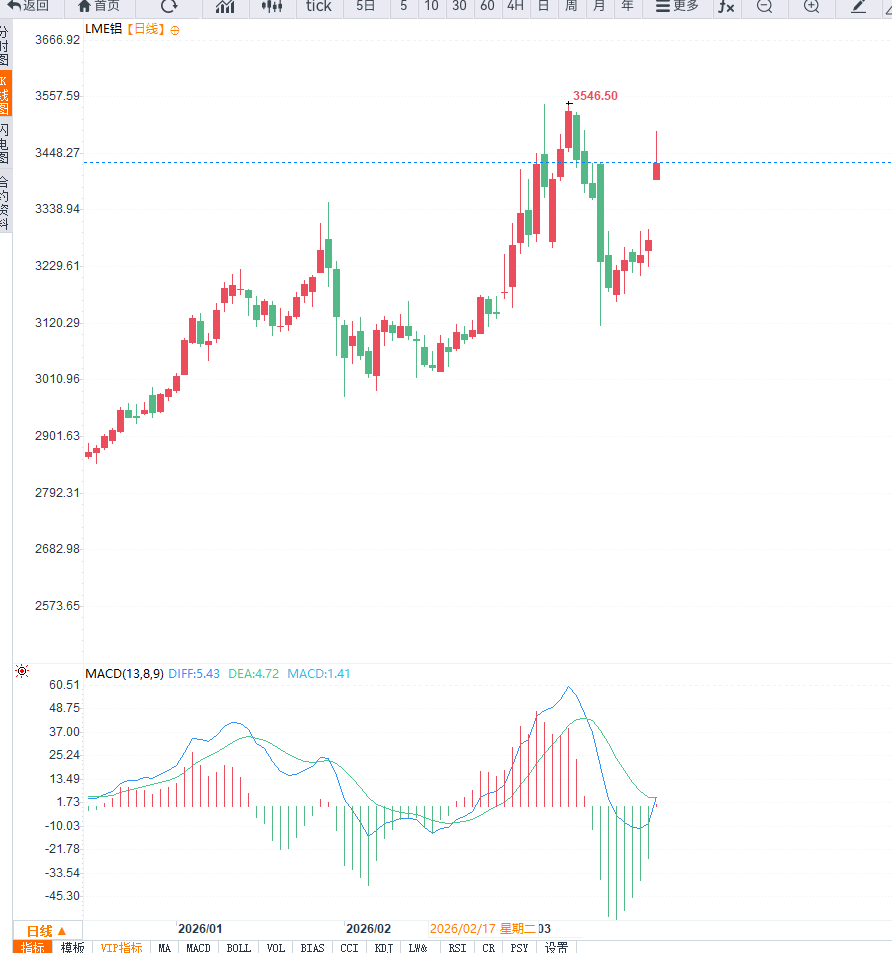
According to APP, Iran's attacks on two key aluminum production facilities in the Middle East have further exacerbated the already tense global aluminum supply situation. The region accounts for approximately 9% of global aluminum production and is a significant source of international trade. In early trading on Monday, aluminum prices on the London Metal Exchange ( LME ) surged by as much as 6%, reaching a high of $3,492 per tonne; simultaneously, the share prices of several Australian aluminum companies also rose, reflecting the market's preference for supplies from non-Middle Eastern sources.
Emirates Global Aluminium, the Middle East's largest aluminum producer, issued a statement on Saturday saying its Altawira plant in Abu Dhabi suffered severe damage, with several employees injured but none in life-threatening condition. Emirates CEO Abdul Nasser bin Karban recently stated, "We always prioritize the safety and well-being of our employees and are deeply saddened by the damage to our facilities. We are currently conducting a comprehensive assessment of the losses." Bahrain's state-owned Bahrain Aluminium confirmed that its plant was also attacked and is currently conducting a detailed assessment of the damage; two employees sustained minor injuries.
This Iranian attack is not an isolated incident. The escalating tensions in the Middle East have already disrupted shipping through the Strait of Hormuz, preventing regional smelters from exporting finished aluminum or importing key raw materials such as alumina, severely limiting supply. Latest data shows that in 2025, the Gulf Cooperation Council (GCC) countries will produce approximately 6.16 million tons of primary aluminum, accounting for about 8-9% of global production, a significant proportion of which relies on exports through the Strait. This attack may cause a long-term disruption to some production capacity. Even if the shipping route reopens, repairing damaged equipment and reorganizing logistics will take several months, potentially further prolonging the global supply gap.
Aluminum, as a basic industrial metal, is widely used in automobile manufacturing, construction engineering, aerospace, and new energy fields. Supply shortages will directly drive up production costs for downstream companies, which will then be transmitted to the global manufacturing chain. Conversely, producers far from conflict zones will benefit from price increases; the rise in the share price of Australian aluminum companies is a positive market reaction to alternative supply. Analysts believe this event highlights the geopolitical fragility of commodity supply chains, and investors need to pay attention to the progress of subsequent capacity recovery, the development of alternative mineral resources, and changes in macroeconomic demand.
Editor's Summary : The recent attacks on Middle Eastern aluminum production facilities have further exposed the direct impact of regional geopolitical risks on global commodity supplies. Short-term price volatility has intensified, while long-term uncertainty surrounding capacity recovery may continue to push up aluminum prices. Market participants need to continuously monitor the evolving situation, the progress of logistical recovery, and the dynamics of alternative supplies to accurately assess potential risks and investment opportunities.
Emirates Global Aluminium, the Middle East's largest aluminum producer, issued a statement on Saturday saying its Altawira plant in Abu Dhabi suffered severe damage, with several employees injured but none in life-threatening condition. Emirates CEO Abdul Nasser bin Karban recently stated, "We always prioritize the safety and well-being of our employees and are deeply saddened by the damage to our facilities. We are currently conducting a comprehensive assessment of the losses." Bahrain's state-owned Bahrain Aluminium confirmed that its plant was also attacked and is currently conducting a detailed assessment of the damage; two employees sustained minor injuries.
This Iranian attack is not an isolated incident. The escalating tensions in the Middle East have already disrupted shipping through the Strait of Hormuz, preventing regional smelters from exporting finished aluminum or importing key raw materials such as alumina, severely limiting supply. Latest data shows that in 2025, the Gulf Cooperation Council (GCC) countries will produce approximately 6.16 million tons of primary aluminum, accounting for about 8-9% of global production, a significant proportion of which relies on exports through the Strait. This attack may cause a long-term disruption to some production capacity. Even if the shipping route reopens, repairing damaged equipment and reorganizing logistics will take several months, potentially further prolonging the global supply gap.
Aluminum, as a basic industrial metal, is widely used in automobile manufacturing, construction engineering, aerospace, and new energy fields. Supply shortages will directly drive up production costs for downstream companies, which will then be transmitted to the global manufacturing chain. Conversely, producers far from conflict zones will benefit from price increases; the rise in the share price of Australian aluminum companies is a positive market reaction to alternative supply. Analysts believe this event highlights the geopolitical fragility of commodity supply chains, and investors need to pay attention to the progress of subsequent capacity recovery, the development of alternative mineral resources, and changes in macroeconomic demand.
Editor's Summary : The recent attacks on Middle Eastern aluminum production facilities have further exposed the direct impact of regional geopolitical risks on global commodity supplies. Short-term price volatility has intensified, while long-term uncertainty surrounding capacity recovery may continue to push up aluminum prices. Market participants need to continuously monitor the evolving situation, the progress of logistical recovery, and the dynamics of alternative supplies to accurately assess potential risks and investment opportunities.
- Risk Warning and Disclaimer
- The market involves risk, and trading may not be suitable for all investors. This article is for reference only and does not constitute personal investment advice, nor does it take into account certain users’ specific investment objectives, financial situation, or other needs. Any investment decisions made based on this information are at your own risk.