Amid the energy crisis, are there hidden concerns about the US dollar exchange rate?
2026-03-31 19:59:30
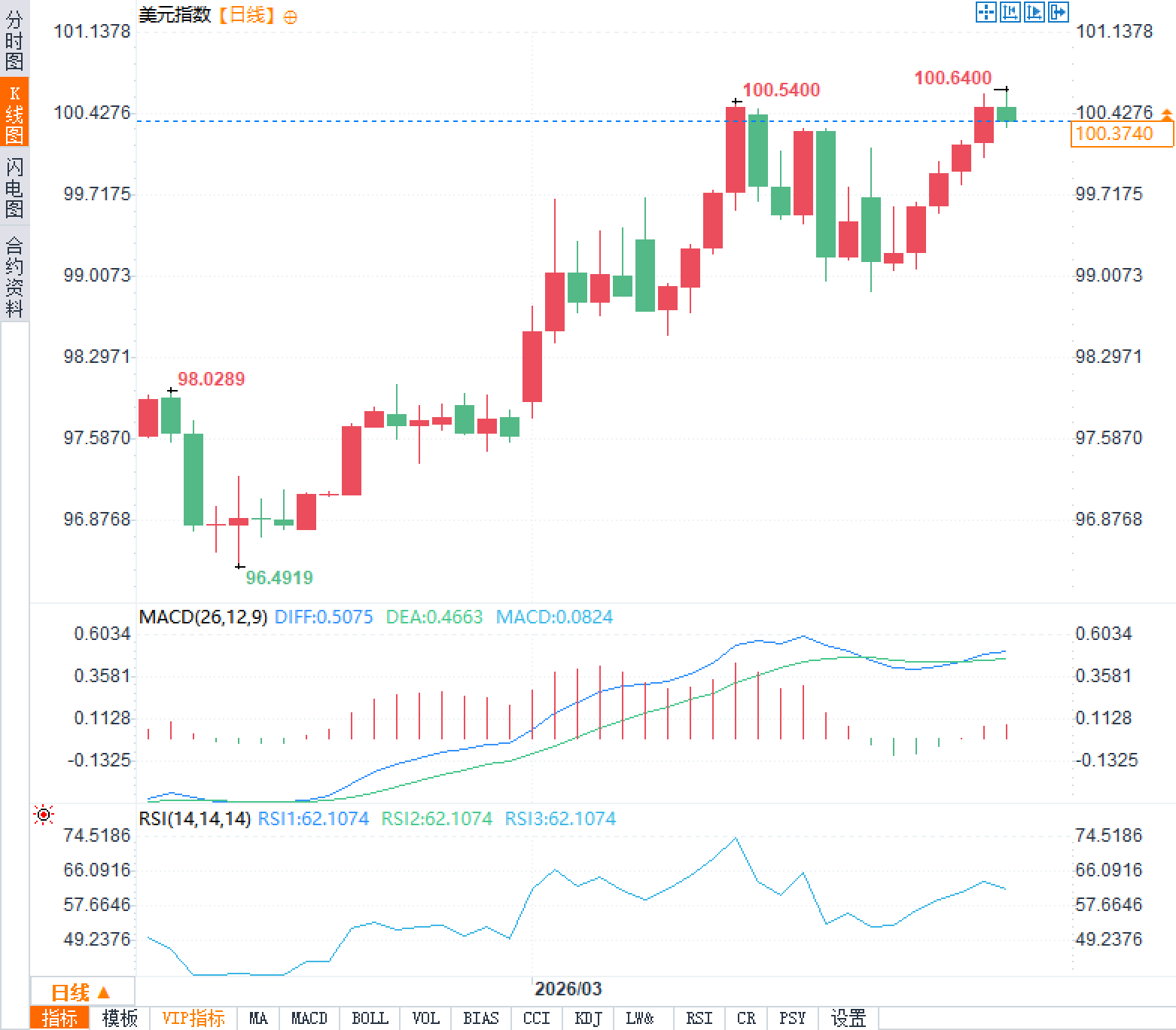
On Tuesday, March 31, the US dollar index traded around 100.40 during the European session, slightly lower than at the beginning of the month but maintaining an overall strong range. Brent crude oil prices traded around $107 per barrel, with energy costs rising sharply due to supply disruptions caused by tensions in the Middle East. Federal Reserve Chairman Powell clearly stated after recent meetings that he prefers to keep interest rates unchanged and observe the impact of energy price shocks, while closely monitoring changes in inflation expectations. Against this backdrop, the dollar exchange rate has shown resilience, and traders are closely watching the ripple effects of global growth divergence, policy response functions, and yield curve adjustments.

The ongoing conflict in the Middle East has driven up energy prices, with both Brent and WTI crude oil prices breaking through the $100 per barrel mark, representing an increase of over 30% compared to levels seen at the end of 2025. This shock has been particularly impactful for economies heavily reliant on energy imports, with parts of Europe and Asia facing higher imported inflationary pressures, rising business costs, declining consumer confidence, and consequently, downward revisions to economic growth forecasts. In contrast, the United States has a relatively diversified energy production structure, and its net export status provides some buffer, making dollar assets relatively more attractive. However, this shock has been accompanied by a relatively restrained policy response from the Federal Reserve, a stark contrast to the situation in 2022.
Federal Reserve Chairman Jerome Powell recently emphasized that the Fed prefers to maintain interest rates in the current range of 3.5% to 3.75% and "observe" the impact of energy price shocks, but will closely monitor whether inflation expectations are at risk of decoupling. This statement was interpreted by the market as relatively dovish, and the 2-year Treasury yield has fallen by about 20 basis points from its recent high, currently stabilizing around 3.82%. In-depth analysis shows that if energy prices remain high, the Fed may face a dilemma in the medium term: it needs to guard against rising inflation expectations while avoiding excessive tightening that could drag down growth. This balancing strategy provides short-term support for the dollar, but its long-term path depends on the speed of supply recovery.
Compared to the Federal Reserve's cautious stance, the European Central Bank (ECB) and the Bank of England (BOE) face greater upward pressure on inflation, potentially leading to a divergence in their policy paths. Soaring energy costs are directly driving up import inflation in these regions, and central bank officials have recently warned that if the supply shock persists, they will have to maintain a tight stance for longer. The Bank of Japan continues to monitor yen exchange rate fluctuations. It's worth noting that this policy divergence is not linear; if the ECB tightens prematurely, it could temporarily weaken the dollar's gains. Traders need to track the quantitative assessments of energy inflation in the ECB and BOE's next meeting minutes to determine if the divergence will widen further.
The decline in US Treasury yields directly impacted the dollar's funding cost advantage; after the 2-year yield fell to 3.82%, the dollar's short-term interest rate premium narrowed. However, the decline in global risk appetite triggered by the energy shock maintained the dollar's resilience. Traders noted that the dollar index fluctuated around 100.40, still with room to fall from its highs of the same period last year, but volatility had increased significantly. Looking deeper, the flattening yield curve signal suggests a repricing of the Fed's path in the market. If energy prices fall, the dollar may face downward pressure; conversely, if the conflict escalates, safe-haven buying will push the dollar's central level higher.
Energy shocks exacerbate global growth divergence
The ongoing conflict in the Middle East has driven up energy prices, with both Brent and WTI crude oil prices breaking through the $100 per barrel mark, representing an increase of over 30% compared to levels seen at the end of 2025. This shock has been particularly impactful for economies heavily reliant on energy imports, with parts of Europe and Asia facing higher imported inflationary pressures, rising business costs, declining consumer confidence, and consequently, downward revisions to economic growth forecasts. In contrast, the United States has a relatively diversified energy production structure, and its net export status provides some buffer, making dollar assets relatively more attractive. However, this shock has been accompanied by a relatively restrained policy response from the Federal Reserve, a stark contrast to the situation in 2022.
Federal Reserve policy signals and falling US Treasury yields
Federal Reserve Chairman Jerome Powell recently emphasized that the Fed prefers to maintain interest rates in the current range of 3.5% to 3.75% and "observe" the impact of energy price shocks, but will closely monitor whether inflation expectations are at risk of decoupling. This statement was interpreted by the market as relatively dovish, and the 2-year Treasury yield has fallen by about 20 basis points from its recent high, currently stabilizing around 3.82%. In-depth analysis shows that if energy prices remain high, the Fed may face a dilemma in the medium term: it needs to guard against rising inflation expectations while avoiding excessive tightening that could drag down growth. This balancing strategy provides short-term support for the dollar, but its long-term path depends on the speed of supply recovery.
Policy divergence among major central banks and the dynamics of the US dollar
Compared to the Federal Reserve's cautious stance, the European Central Bank (ECB) and the Bank of England (BOE) face greater upward pressure on inflation, potentially leading to a divergence in their policy paths. Soaring energy costs are directly driving up import inflation in these regions, and central bank officials have recently warned that if the supply shock persists, they will have to maintain a tight stance for longer. The Bank of Japan continues to monitor yen exchange rate fluctuations. It's worth noting that this policy divergence is not linear; if the ECB tightens prematurely, it could temporarily weaken the dollar's gains. Traders need to track the quantitative assessments of energy inflation in the ECB and BOE's next meeting minutes to determine if the divergence will widen further.
Yield adjustment on exchange rate transmission mechanism
The decline in US Treasury yields directly impacted the dollar's funding cost advantage; after the 2-year yield fell to 3.82%, the dollar's short-term interest rate premium narrowed. However, the decline in global risk appetite triggered by the energy shock maintained the dollar's resilience. Traders noted that the dollar index fluctuated around 100.40, still with room to fall from its highs of the same period last year, but volatility had increased significantly. Looking deeper, the flattening yield curve signal suggests a repricing of the Fed's path in the market. If energy prices fall, the dollar may face downward pressure; conversely, if the conflict escalates, safe-haven buying will push the dollar's central level higher.
Frequently Asked Questions
Question: Why is the energy shock supporting the strength of the US dollar?
A: The Middle East conflict has led to energy supply disruptions and high global oil prices. Regions heavily reliant on energy imports are facing greater economic pressure, while the US economy has a relative buffer, increasing the attractiveness of the US dollar as a safe-haven asset. Meanwhile, the Federal Reserve's relatively dovish response has reinforced this difference, with capital flows supporting the exchange rate.
- Risk Warning and Disclaimer
- The market involves risk, and trading may not be suitable for all investors. This article is for reference only and does not constitute personal investment advice, nor does it take into account certain users’ specific investment objectives, financial situation, or other needs. Any investment decisions made based on this information are at your own risk.