Gold prices are fluctuating below 4600; could geopolitical developments ignite a rebound?
2026-03-31 21:13:10
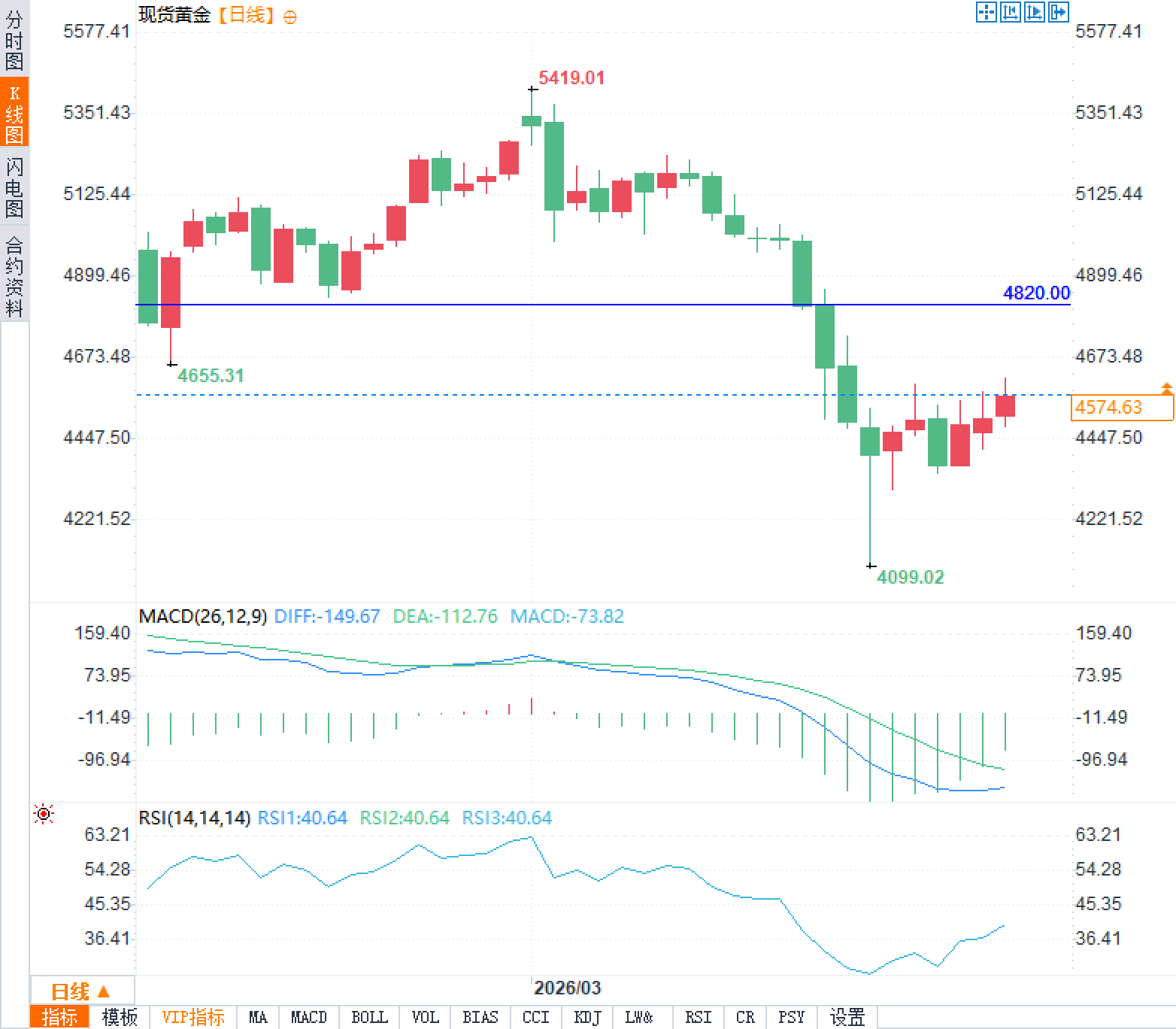
On Tuesday, March 31, spot gold traded around $4,575 per ounce, as traders weighed the potential for a de-escalation of the Middle East conflict against the complex implications of the global interest rate outlook. Although gold prices briefly climbed above $4,600 during the Asian trading session, they subsequently retreated. This movement reflects market hesitation amid mixed signals: geopolitical news provides short-term optimism, but the relative strength of the dollar and continuing expectations for monetary policy exert downward pressure.
Recent developments in the Middle East have become a key catalyst for short-term fluctuations in gold prices. Reports indicate that the United States has shown a willingness to end its military operations against Iran, even though the disruption to shipping in the Strait of Hormuz has not yet been fully resolved. This signal has boosted market hopes for de-escalation. However, the reports also emphasize that the United States remains committed to weakening Iran's naval and missile capabilities and restoring trade flows through diplomatic means, making it difficult for tensions to dissipate quickly.
Trump criticized France on social media for not allowing US military supply flights through its airspace, calling the country "very uncooperative," while urging allies like the UK to secure their own energy supplies. These statements highlight the complexities of diplomacy. The Iranian parliamentary committee's approval of a plan to impose tolls on ships passing through the Strait of Hormuz further exacerbates uncertainty surrounding this crucial energy route. These developments have directly driven up crude oil prices and raised concerns about global supply chains and inflationary pressures. Gold, as a traditional safe-haven asset, should have benefited, but the reality is far more complex. The ongoing risk of conflict is pushing up energy costs and could exacerbate inflation expectations.
High oil prices not only affect production costs but may also dampen economic growth, creating a dilemma for central banks. Traders are assessing whether a clear de-escalation in the conflict could provide a breather for gold, with a drop in oil prices potentially offering some respite. However, currently, expectations of easing tensions are only enough to limit gold prices to fluctuating within a range.
The US dollar index is hovering near a ten-month high, and its strength against a basket of major currencies has directly increased the cost of holding dollar-denominated gold, dampening buying interest from non-US investors. As a non-yielding asset, gold often faces selling pressure during periods of dollar strength.
Meanwhile, the monetary policy paths of major central banks around the world are undergoing a subtle shift. Although the market had initially anticipated a relatively accommodative policy adjustment, inflation concerns triggered by rising oil prices have prompted traders to postpone their expectations of interest rate cuts. Related tools show that the market now expects the Federal Reserve to maintain interest rates in the 3.50% to 3.75% range until the end of 2026. This higher-for-longer-term interest rate environment significantly increases the opportunity cost of holding gold, as investors can obtain more attractive returns from fixed-income products.
Gold prices are therefore facing their worst monthly drop since October 2008. This contrasts sharply with historical patterns, where gold typically surges due to safe-haven demand during geopolitical crises. However, in the current environment, interest rates and exchange rates are dominating price dynamics. While central banks may face pressure to adjust policies if signs of economic slowdown become more pronounced, in the short term, expectations of high interest rates will continue to weigh on gold.
Middle East geopolitical tensions drive market sentiment fluctuations.
Recent developments in the Middle East have become a key catalyst for short-term fluctuations in gold prices. Reports indicate that the United States has shown a willingness to end its military operations against Iran, even though the disruption to shipping in the Strait of Hormuz has not yet been fully resolved. This signal has boosted market hopes for de-escalation. However, the reports also emphasize that the United States remains committed to weakening Iran's naval and missile capabilities and restoring trade flows through diplomatic means, making it difficult for tensions to dissipate quickly.
Trump criticized France on social media for not allowing US military supply flights through its airspace, calling the country "very uncooperative," while urging allies like the UK to secure their own energy supplies. These statements highlight the complexities of diplomacy. The Iranian parliamentary committee's approval of a plan to impose tolls on ships passing through the Strait of Hormuz further exacerbates uncertainty surrounding this crucial energy route. These developments have directly driven up crude oil prices and raised concerns about global supply chains and inflationary pressures. Gold, as a traditional safe-haven asset, should have benefited, but the reality is far more complex. The ongoing risk of conflict is pushing up energy costs and could exacerbate inflation expectations.
High oil prices not only affect production costs but may also dampen economic growth, creating a dilemma for central banks. Traders are assessing whether a clear de-escalation in the conflict could provide a breather for gold, with a drop in oil prices potentially offering some respite. However, currently, expectations of easing tensions are only enough to limit gold prices to fluctuating within a range.
The dual pressures of a strong US dollar and a high-interest-rate environment
The US dollar index is hovering near a ten-month high, and its strength against a basket of major currencies has directly increased the cost of holding dollar-denominated gold, dampening buying interest from non-US investors. As a non-yielding asset, gold often faces selling pressure during periods of dollar strength.
Meanwhile, the monetary policy paths of major central banks around the world are undergoing a subtle shift. Although the market had initially anticipated a relatively accommodative policy adjustment, inflation concerns triggered by rising oil prices have prompted traders to postpone their expectations of interest rate cuts. Related tools show that the market now expects the Federal Reserve to maintain interest rates in the 3.50% to 3.75% range until the end of 2026. This higher-for-longer-term interest rate environment significantly increases the opportunity cost of holding gold, as investors can obtain more attractive returns from fixed-income products.
Gold prices are therefore facing their worst monthly drop since October 2008. This contrasts sharply with historical patterns, where gold typically surges due to safe-haven demand during geopolitical crises. However, in the current environment, interest rates and exchange rates are dominating price dynamics. While central banks may face pressure to adjust policies if signs of economic slowdown become more pronounced, in the short term, expectations of high interest rates will continue to weigh on gold.
Frequently Asked Questions
Question 1: Why did gold fail to play its traditional safe-haven role against the backdrop of the Middle East conflict?
A: While geopolitical tensions typically drive up demand for safe-haven assets, the current relative strength of the US dollar and the high-interest-rate environment have significantly increased the cost of holding gold. Inflation concerns triggered by rising oil prices have also failed to translate into a positive for gold, as expectations of central banks maintaining tight monetary policies dominate the market. Gold prices are driven more by financial factors than purely by geopolitical risks, causing their performance to deviate from historical norms.
Question 2: What are the long-term effects of the Federal Reserve maintaining high interest rates on gold?
A: Interest rates are expected to remain in the 3.50%-3.75% range until the end of 2026, which will continue to suppress the prices of non-yielding assets. Investors are more inclined to choose higher-yielding instruments than gold. In the short term, this expectation limits the upside potential for gold prices.
Question 3: What is the key to breaking out of the gold price range?
A: A breakout depends on clear developments in the Middle East situation, such as a de-escalation leading to a drop in oil prices, or a trend reversal in the US dollar index. Traders are closely monitoring news related to the Strait of Hormuz and signals from the Federal Reserve.
- Risk Warning and Disclaimer
- The market involves risk, and trading may not be suitable for all investors. This article is for reference only and does not constitute personal investment advice, nor does it take into account certain users’ specific investment objectives, financial situation, or other needs. Any investment decisions made based on this information are at your own risk.