The US dollar returned to strong highs, while the British pound accelerated its decline.
2026-04-02 14:13:55
The pound came under significant pressure against the dollar during Asian trading hours, falling from its weekly high of around 1.3345 to mid-1.3200 , interrupting a two-day rally. Changing market sentiment was the dominant factor, with US President Donald Trump's latest remarks reigniting geopolitical tensions and driving funds back into dollar assets.
In his speech, Trump reiterated that he would give Iran a two- to three-week window to reach an agreement, or he might strike its energy infrastructure. Although he stated that negotiations were progressing well, these claims were quickly denied. Furthermore, reports that the UAE was pushing for military action to restart shipping through the Strait of Hormuz further exacerbated market concerns about an escalation of tensions in the Middle East.
As a result, international oil prices surged, and the risk premium in the energy market rapidly increased. The rise in oil prices directly reinforced global inflation expectations, and rising inflation typically means that major central banks need to maintain or even strengthen their tightening policies. The market thus increased its bets on a Federal Reserve interest rate hike, which became a significant factor supporting the US dollar. At the same time, heightened risk aversion also drove capital inflows into the dollar, causing it to strengthen again in the short term.
The current environment is even more unfavorable for the pound. The UK economy is highly sensitive to energy prices, and rising oil prices will put pressure on economic growth through cost transmission. Against this backdrop, even though the Bank of England has signaled a possible interest rate hike in the near term, the market is more concerned about the negative impact of a high-interest-rate environment on the economy. This combination of "dual pressures of inflation and growth" weakens the pound's appeal.
From a macroeconomic perspective, the decline in the pound against the dollar reflects a widening divergence in the fundamentals of the two currencies. On the one hand, the dollar benefits from risk aversion and interest rate expectations; on the other hand, the pound is affected by economic vulnerability and policy constraints, creating a stark contrast.
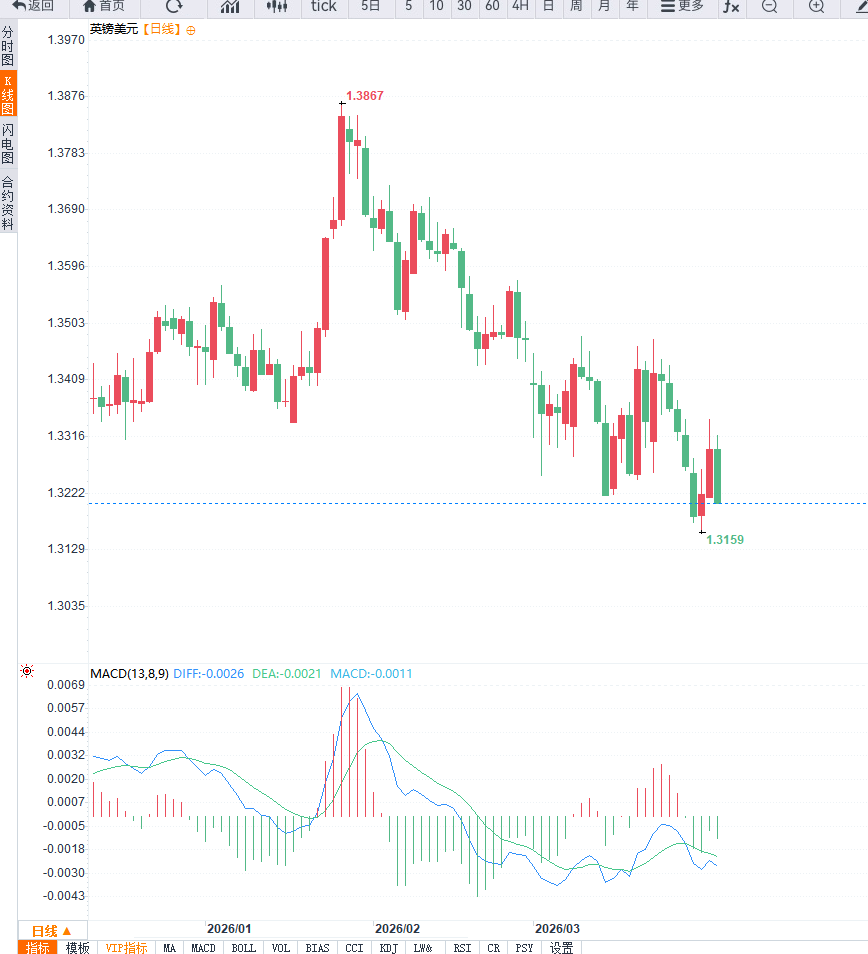
From a technical perspective, the GBP/USD pair continues its downward trend on the daily chart. The previous rebound failed to break through key resistance levels, indicating a continued bearish bias. The price encountered resistance and fell back in the 1.3340-1.3350 range, which represents previous highs and a trendline resistance zone, creating significant selling pressure. Initial support is currently at 1.3200 ; a break below this level could lead to further declines towards 1.3150 and even 1.3100 . Momentum indicators show that the daily MACD has failed to generate sustained upward momentum, and the RSI has fallen back to neutral territory, suggesting limited upside potential.
On the 4-hour chart, the short-term structure has shifted from a rebound to a pullback, with prices breaking below key moving average support and forming a downward channel. The MACD has turned negative, and the histogram is expanding, indicating increasing bearish momentum; the RSI has fallen below 50 , further confirming the short-term bearish bias. Key resistance levels to watch are 1.3280 and 1.3340 . If the rebound fails to break through these levels, the market will likely continue to favor selling on rallies. Overall, the 4-hour chart has entered a trend correction phase.
Editor's Summary : The current GBP/USD exchange rate is influenced by multiple factors, including geopolitical risks, rising oil prices, and shifts in policy expectations. Trump's hawkish rhetoric has boosted risk aversion and inflation expectations, benefiting the dollar and weakening the pound. Meanwhile, the UK economy's high sensitivity to energy prices makes the pound more vulnerable in the current environment. Technical analysis indicates the exchange rate has resumed its downward trend and may continue its correction in the short term. Future focus should be on changes in the geopolitical situation, oil price movements, and the divergence in policy paths between the UK and the US.
In his speech, Trump reiterated that he would give Iran a two- to three-week window to reach an agreement, or he might strike its energy infrastructure. Although he stated that negotiations were progressing well, these claims were quickly denied. Furthermore, reports that the UAE was pushing for military action to restart shipping through the Strait of Hormuz further exacerbated market concerns about an escalation of tensions in the Middle East.
As a result, international oil prices surged, and the risk premium in the energy market rapidly increased. The rise in oil prices directly reinforced global inflation expectations, and rising inflation typically means that major central banks need to maintain or even strengthen their tightening policies. The market thus increased its bets on a Federal Reserve interest rate hike, which became a significant factor supporting the US dollar. At the same time, heightened risk aversion also drove capital inflows into the dollar, causing it to strengthen again in the short term.
The current environment is even more unfavorable for the pound. The UK economy is highly sensitive to energy prices, and rising oil prices will put pressure on economic growth through cost transmission. Against this backdrop, even though the Bank of England has signaled a possible interest rate hike in the near term, the market is more concerned about the negative impact of a high-interest-rate environment on the economy. This combination of "dual pressures of inflation and growth" weakens the pound's appeal.
From a macroeconomic perspective, the decline in the pound against the dollar reflects a widening divergence in the fundamentals of the two currencies. On the one hand, the dollar benefits from risk aversion and interest rate expectations; on the other hand, the pound is affected by economic vulnerability and policy constraints, creating a stark contrast.
From a technical perspective, the GBP/USD pair continues its downward trend on the daily chart. The previous rebound failed to break through key resistance levels, indicating a continued bearish bias. The price encountered resistance and fell back in the 1.3340-1.3350 range, which represents previous highs and a trendline resistance zone, creating significant selling pressure. Initial support is currently at 1.3200 ; a break below this level could lead to further declines towards 1.3150 and even 1.3100 . Momentum indicators show that the daily MACD has failed to generate sustained upward momentum, and the RSI has fallen back to neutral territory, suggesting limited upside potential.
On the 4-hour chart, the short-term structure has shifted from a rebound to a pullback, with prices breaking below key moving average support and forming a downward channel. The MACD has turned negative, and the histogram is expanding, indicating increasing bearish momentum; the RSI has fallen below 50 , further confirming the short-term bearish bias. Key resistance levels to watch are 1.3280 and 1.3340 . If the rebound fails to break through these levels, the market will likely continue to favor selling on rallies. Overall, the 4-hour chart has entered a trend correction phase.
Editor's Summary : The current GBP/USD exchange rate is influenced by multiple factors, including geopolitical risks, rising oil prices, and shifts in policy expectations. Trump's hawkish rhetoric has boosted risk aversion and inflation expectations, benefiting the dollar and weakening the pound. Meanwhile, the UK economy's high sensitivity to energy prices makes the pound more vulnerable in the current environment. Technical analysis indicates the exchange rate has resumed its downward trend and may continue its correction in the short term. Future focus should be on changes in the geopolitical situation, oil price movements, and the divergence in policy paths between the UK and the US.
- Risk Warning and Disclaimer
- The market involves risk, and trading may not be suitable for all investors. This article is for reference only and does not constitute personal investment advice, nor does it take into account certain users’ specific investment objectives, financial situation, or other needs. Any investment decisions made based on this information are at your own risk.