Gold Trading Alert: Bulls Beware! Trump's "Ultimatum" Stirs Up Middle Eastern Oil Markets, Strong Non-Farm Payrolls Support the Dollar, and Gold Prices Face Further Pressure.
2026-04-06 07:47:45
At a critical juncture as the Middle East conflict enters its sixth week, US President Trump once again issued a tough ultimatum, stating that Iran must reopen the Strait of Hormuz or face devastating retaliation. This move instantly ignited market nerves, with international oil prices surging. US crude oil rose more than 3% at one point, reaching a high of around $115 per barrel. Affected by rising oil prices pushing up inflation concerns, coupled with strong US March non-farm payroll data dampening expectations of a Federal Reserve rate cut, and a stronger US dollar index, gold prices fell significantly in early trading on Monday (April 6), dropping as much as 1.5% to around $4605 per ounce.
Trump's remarks on social media on Sunday were, as always, tough and dramatic. He explicitly warned that if Iran did not open the Strait of Hormuz soon, the United States would put Iran "in hell," and designated April 7 as "Iran's Power Plant Day and Bridge Day," hinting at a possible heavy blow to Iran's energy facilities and critical infrastructure. He had previously issued similar ultimatums multiple times, first extending the two-day deadline from March 21 to April 6, and now this new timeframe has been adjusted.
The Strait of Hormuz, a crucial choke point for approximately 20% of global oil supplies, would directly disrupt the global energy supply chain should the blockade continue or conflict escalate. Iran has adopted a hardline stance, not only rejecting US demands but also responding with drone strikes against Israeli petrochemical facilities, US military bases in Kuwait, and energy and power facilities in several Gulf states. These actions have further exacerbated market fears of energy disruptions in the Middle East, driving oil prices higher. Rising energy prices directly translate into inflationary pressures, prompting the market to reassess the Federal Reserve's monetary policy path, which is one of the core reasons for the pressure on gold prices.
The conflict has lasted for over a month, with the joint US-Israeli military operation against Iran entering its 37th day. Both sides have reported downed aircraft and damaged facilities, with search and rescue operations and diplomatic maneuvering proceeding simultaneously. However, Trump's contradictory rhetoric—sometimes suggesting progress in negotiations, sometimes threatening to "bomb Iran back to the Stone Age" or "take over its oil"—has further amplified market uncertainty. Israel has also stated its readiness to strike Iranian energy facilities, awaiting US approval. Overall, there are no clear signs of easing tensions in the short term, and the tense atmosphere in the energy market will continue to dominate commodity pricing.
Besides geopolitical factors, domestic US economic data also significantly pressured gold prices. The March non-farm payroll report released last Friday was strong, with 178,000 new jobs added, far exceeding market expectations, and the unemployment rate slightly decreasing to 4.3%. Although some analysts pointed out weaknesses such as data revisions, slower wage growth, and a decline in the labor force participation rate, the overall report reinforced the impression of a relatively healthy labor market. This directly dampened expectations of a significant interest rate cut by the Federal Reserve this year, pushing the dollar index to continue its upward trend, closing near 100.20.
As a non-interest-bearing asset, gold is naturally under pressure in an environment of a strong dollar and rising real interest rates. Dollar-denominated gold becomes more expensive for holders of other currencies, and coupled with rising expectations of interest rate hikes amid inflation concerns, gold prices are struggling to maintain their strength. Gold prices fell as much as 1.5% to around $4606 per ounce in early trading, after a sharp drop of 1.7% in the previous session. Last Thursday, spot gold even reversed course from a two-week high of around $4800, briefly touching a low of $4554. US gold futures also followed suit.
Market analysts point out that although gold is traditionally seen as an inflation hedge, its opportunity cost rises significantly during periods of high interest rates, often resulting in weak performance. Since the outbreak of the Middle East conflict at the end of February, spot gold prices have fallen by approximately 12%, fully reflecting this dynamic.
Furthermore, news that the Turkish central bank's gold reserves had plummeted by nearly 120 tons in two weeks also dampened market sentiment. This move, aimed at mitigating the impact of the war on the domestic market by selling or swapping gold to stabilize the lira and liquidity, increased supply pressure on gold and further exacerbated short-term selling pressure.
Gold price movements are always the result of a complex interplay of factors. Against the backdrop of geopolitical conflict, gold's safe-haven appeal should provide support—investors typically turn to gold as the "ultimate store of value" when uncertainty rises. However, the current situation in the Middle East is unique in that it has directly driven up oil prices and inflation expectations, thereby reducing the room for central bank interest rate cuts and conversely strengthening the dollar and bond yields.
Analysts point out that the market is paying close attention to every statement Trump makes, but so far, these statements have not shown any signs of a swift resolution to the energy situation. The reduced likelihood of an interest rate cut has become a key variable suppressing gold prices. Although some Wall Street analysts hold a neutral or cautiously bullish view on gold in the short term, Main Street investors are slightly more optimistic after the recent pullback, believing that there may be buying opportunities after excessive selling. However, overall, the duration of the war, the transmission path of oil prices, and the Fed's policy signals will remain the core variables determining the medium-term trend of gold.
Historically, similar geopolitical events often initially drive up gold prices, but if they evolve into a prolonged mix of inflation and growth concerns, gold's performance will diverge.
Currently, market focus this week is gradually shifting to a series of upcoming US economic indicators, including the ISM Services PMI, durable goods orders, Fed meeting minutes, GDP data, core PCE, and CPI . These data will further clarify the true state of economic growth and inflation, thereby influencing interest rate expectations and gold pricing.
The first premium in Indian gold trading prices in two months reflects the resilience of some real demand at low levels, but the global gold market as a whole remains dominated by macroeconomic and financial conditions.
In summary, Trump's ultimatum and the escalating conflict in the Middle East will continue to support high oil prices in the short term, while exerting downward pressure on gold through inflation and interest rates. However, if the conflict drags on further, leading to signs of slowing economic growth, or if there is a substantial breakthrough in diplomatic efforts, gold's safe-haven premium may return. Investors need to closely monitor developments in the Strait of Hormuz, Federal Reserve policy signals, and key economic data.
In the current highly volatile environment, gold, as part of an asset allocation strategy, still possesses long-term strategic value, especially in hedging against currency devaluation and systemic risks. However, short-term traders should be wary of the correlation between the US dollar and oil prices, and avoid blindly chasing highs or buying at the bottom.
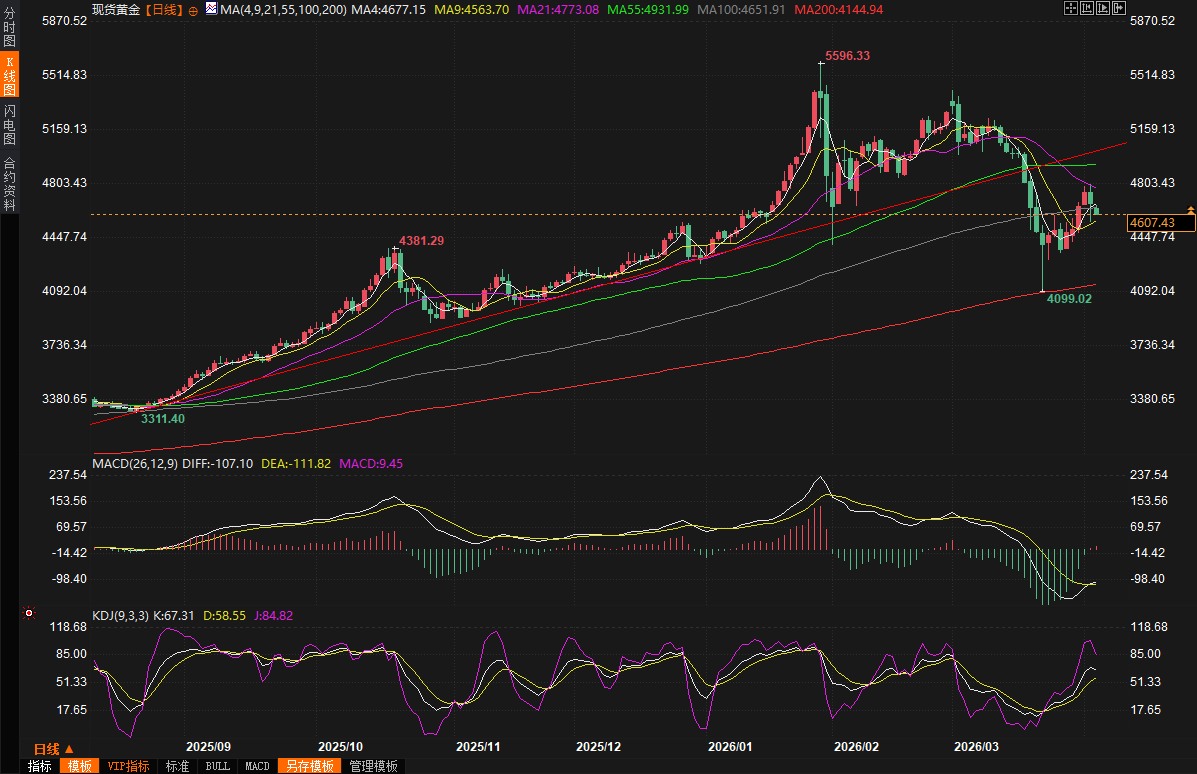
(Spot gold daily chart, source: FX678)
At 07:45 Beijing time, spot gold was trading at $4608.08 per ounce.
Geopolitical conflict escalates: Trump's threats intensify, supply disruption concerns push up oil prices.
Trump's remarks on social media on Sunday were, as always, tough and dramatic. He explicitly warned that if Iran did not open the Strait of Hormuz soon, the United States would put Iran "in hell," and designated April 7 as "Iran's Power Plant Day and Bridge Day," hinting at a possible heavy blow to Iran's energy facilities and critical infrastructure. He had previously issued similar ultimatums multiple times, first extending the two-day deadline from March 21 to April 6, and now this new timeframe has been adjusted.
The Strait of Hormuz, a crucial choke point for approximately 20% of global oil supplies, would directly disrupt the global energy supply chain should the blockade continue or conflict escalate. Iran has adopted a hardline stance, not only rejecting US demands but also responding with drone strikes against Israeli petrochemical facilities, US military bases in Kuwait, and energy and power facilities in several Gulf states. These actions have further exacerbated market fears of energy disruptions in the Middle East, driving oil prices higher. Rising energy prices directly translate into inflationary pressures, prompting the market to reassess the Federal Reserve's monetary policy path, which is one of the core reasons for the pressure on gold prices.
The conflict has lasted for over a month, with the joint US-Israeli military operation against Iran entering its 37th day. Both sides have reported downed aircraft and damaged facilities, with search and rescue operations and diplomatic maneuvering proceeding simultaneously. However, Trump's contradictory rhetoric—sometimes suggesting progress in negotiations, sometimes threatening to "bomb Iran back to the Stone Age" or "take over its oil"—has further amplified market uncertainty. Israel has also stated its readiness to strike Iranian energy facilities, awaiting US approval. Overall, there are no clear signs of easing tensions in the short term, and the tense atmosphere in the energy market will continue to dominate commodity pricing.
Strong non-farm payroll data coupled with a stronger dollar put downward pressure on gold prices in the short term.
Besides geopolitical factors, domestic US economic data also significantly pressured gold prices. The March non-farm payroll report released last Friday was strong, with 178,000 new jobs added, far exceeding market expectations, and the unemployment rate slightly decreasing to 4.3%. Although some analysts pointed out weaknesses such as data revisions, slower wage growth, and a decline in the labor force participation rate, the overall report reinforced the impression of a relatively healthy labor market. This directly dampened expectations of a significant interest rate cut by the Federal Reserve this year, pushing the dollar index to continue its upward trend, closing near 100.20.
As a non-interest-bearing asset, gold is naturally under pressure in an environment of a strong dollar and rising real interest rates. Dollar-denominated gold becomes more expensive for holders of other currencies, and coupled with rising expectations of interest rate hikes amid inflation concerns, gold prices are struggling to maintain their strength. Gold prices fell as much as 1.5% to around $4606 per ounce in early trading, after a sharp drop of 1.7% in the previous session. Last Thursday, spot gold even reversed course from a two-week high of around $4800, briefly touching a low of $4554. US gold futures also followed suit.
Market analysts point out that although gold is traditionally seen as an inflation hedge, its opportunity cost rises significantly during periods of high interest rates, often resulting in weak performance. Since the outbreak of the Middle East conflict at the end of February, spot gold prices have fallen by approximately 12%, fully reflecting this dynamic.
Furthermore, news that the Turkish central bank's gold reserves had plummeted by nearly 120 tons in two weeks also dampened market sentiment. This move, aimed at mitigating the impact of the war on the domestic market by selling or swapping gold to stabilize the lira and liquidity, increased supply pressure on gold and further exacerbated short-term selling pressure.
The Dual Nature of Gold: Safe-Haven Demand vs. Inflation and Interest Rate Pressures
Gold price movements are always the result of a complex interplay of factors. Against the backdrop of geopolitical conflict, gold's safe-haven appeal should provide support—investors typically turn to gold as the "ultimate store of value" when uncertainty rises. However, the current situation in the Middle East is unique in that it has directly driven up oil prices and inflation expectations, thereby reducing the room for central bank interest rate cuts and conversely strengthening the dollar and bond yields.
Analysts point out that the market is paying close attention to every statement Trump makes, but so far, these statements have not shown any signs of a swift resolution to the energy situation. The reduced likelihood of an interest rate cut has become a key variable suppressing gold prices. Although some Wall Street analysts hold a neutral or cautiously bullish view on gold in the short term, Main Street investors are slightly more optimistic after the recent pullback, believing that there may be buying opportunities after excessive selling. However, overall, the duration of the war, the transmission path of oil prices, and the Fed's policy signals will remain the core variables determining the medium-term trend of gold.
Historically, similar geopolitical events often initially drive up gold prices, but if they evolve into a prolonged mix of inflation and growth concerns, gold's performance will diverge.
Currently, market focus this week is gradually shifting to a series of upcoming US economic indicators, including the ISM Services PMI, durable goods orders, Fed meeting minutes, GDP data, core PCE, and CPI . These data will further clarify the true state of economic growth and inflation, thereby influencing interest rate expectations and gold pricing.
The first premium in Indian gold trading prices in two months reflects the resilience of some real demand at low levels, but the global gold market as a whole remains dominated by macroeconomic and financial conditions.
Looking ahead: Gold investment requires balancing risks and opportunities.
In summary, Trump's ultimatum and the escalating conflict in the Middle East will continue to support high oil prices in the short term, while exerting downward pressure on gold through inflation and interest rates. However, if the conflict drags on further, leading to signs of slowing economic growth, or if there is a substantial breakthrough in diplomatic efforts, gold's safe-haven premium may return. Investors need to closely monitor developments in the Strait of Hormuz, Federal Reserve policy signals, and key economic data.
In the current highly volatile environment, gold, as part of an asset allocation strategy, still possesses long-term strategic value, especially in hedging against currency devaluation and systemic risks. However, short-term traders should be wary of the correlation between the US dollar and oil prices, and avoid blindly chasing highs or buying at the bottom.
(Spot gold daily chart, source: FX678)
At 07:45 Beijing time, spot gold was trading at $4608.08 per ounce.
- Risk Warning and Disclaimer
- The market involves risk, and trading may not be suitable for all investors. This article is for reference only and does not constitute personal investment advice, nor does it take into account certain users’ specific investment objectives, financial situation, or other needs. Any investment decisions made based on this information are at your own risk.