Crude oil trading alert: Trump issues another "ultimatum," triggering the biggest oil crisis in history. How high can oil prices go?
2026-04-06 08:18:17
Amid heightened tensions in the global energy market, US President Trump's ultimatum to Iran has entered its critical countdown. Trump demanded that Iran open the Strait of Hormuz by Tuesday (8 PM Eastern Time), or face severe strikes against Iranian power plants and bridges. This strong statement directly drove oil prices sharply higher. On Monday (April 6th) in early Asian trading, US crude oil rose more than 3% to $115.48 per barrel, before retreating to around $113 per barrel due to profit-taking, narrowing the gains to 1.3%. The current combination of geopolitical risks and supply disruptions is reshaping the fundamental landscape of the oil market, and traders need to closely monitor developments to cope with potential sharp fluctuations.
On Sunday (April 5), Trump posted on social media: "Tuesday will be Power Plant Day and Bridge Day in Iran. Get it all done at once. Absolutely unprecedented!!! Open the Strait now." He explicitly threatened action against Iran's power plants and critical infrastructure. Hours later, he appeared to set a new deadline: "Tuesday, 8:00 p.m. ET!"
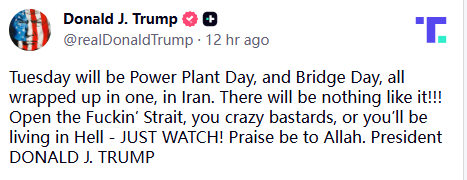
This statement further exacerbated market concerns about an escalation of military conflict. Although Iran has effectively blocked the Strait of Hormuz through attacks on oil tankers, Trump's hardline stance indicates that the United States is unwilling to tolerate the closure of this crucial passage for long.
Latest reports indicate that the conflict has brought shipping in the Strait of Hormuz to a near standstill, a strait that normally handles about 20% of the world's oil supply. The drone attack on Kuwait Oil Company facilities, which caused severe damage, further highlights the vulnerability of the infrastructure. Analysts point out that if the situation does not de-escalate by Tuesday's deadline, the United States may take more direct military action, which would directly impact Middle Eastern energy export capacity and could trigger broader regional instability.
The continued closure of the Strait of Hormuz has triggered the largest oil supply disruption in history. Since the outbreak of the conflict, prices for products such as crude oil, jet fuel, diesel, and gasoline have all risen significantly. By the end of this month, global oil supply is expected to be reduced by nearly 1 billion barrels, including approximately 600 million barrels of crude oil and approximately 350 million barrels of refined products. Some institutions, such as Rapidan Energy, further estimate that by the end of June, even after deducting factors such as pipeline diversions, emergency inventory releases, and inventory depletion, the net loss could still reach 630 million barrels.
Current fundamentals indicate extremely high pressure on the supply side. While the eight OPEC+ members (Saudi Arabia, Russia, Iraq, the UAE, Kuwait, Kazakhstan, Algeria, and Oman) agreed to increase production by 206,000 barrels per day in May, significant uncertainty remains regarding how this increased crude oil will effectively enter the global market due to the closure of the Straits of Hormuz. OPEC+ also warned that repairing the damaged energy infrastructure is both costly and time-consuming, and will constrain overall supply availability in the long term.
On the demand side, the conflict has led to flight cancellations and liquefied natural gas (LNG) supply disruptions in the Middle East, resulting in a downward revision of short-term global oil demand growth expectations. However, in the medium to long term, major importing regions such as Asia and Europe are facing supply shortage risks, pushing up the overall price level. Several institutions have raised their 2026 oil price forecasts, with some believing that Brent crude oil may remain at high levels in the short term.
Oil prices have rebounded significantly recently due to Trump's warnings and supply disruptions. US crude oil futures rose by more than 3% at one point. Currently, WTI crude oil prices have exceeded $110 per barrel, a substantial increase from pre-conflict levels. WTI even briefly saw a premium over Brent crude, a rare occurrence historically, reflecting the reality of relatively stable domestic supply in the US but a sharp rise in global supply risks.
Market sentiment is generally cautiously optimistic yet highly vigilant. On the one hand, geopolitical risk premiums are pushing oil prices higher rather than lower; on the other hand, if a diplomatic breakthrough or partial reopening of the Straits of Hormuz occurs around Tuesday, oil prices may face pressure for a rapid correction. Traders should note that volatility is currently significantly increased, and overnight gaps and large intraday swings will become the norm.
In the current environment, crude oil trading must prioritize strict risk control. We recommend focusing on the following key points: First, closely monitor official statements and actual military developments after Tuesday's deadline; if the conflict escalates, there is still room for oil prices to rise. Second, monitor subsequent OPEC+ meetings and the actual implementation of production increases, as well as global inventory changes. Third, combine technical indicators to set reasonable stop-loss and take-profit levels in high-level areas to avoid excessive exposure in one direction.
Overall, the Strait of Hormuz crisis, coupled with Trump's hardline policies, has pushed the crude oil market into a high-risk, high-reward phase. In the short term, supply shortages will dominate price movements, but any signs of easing tensions could trigger a rapid correction. Traders should maintain position flexibility, combining fundamental and technical analysis, while fully assessing the black swan risks posed by geopolitical events.
In summary, the current situation in the Middle East has not only tested the resilience of the global energy supply chain but also brought unprecedented challenges and opportunities to participants in the crude oil market. Traders are advised to remain highly vigilant, stay informed, and find a trading rhythm that suits them while strictly controlling risk. Oil price movements remain highly uncertain; a rational approach is essential to understanding market dynamics.
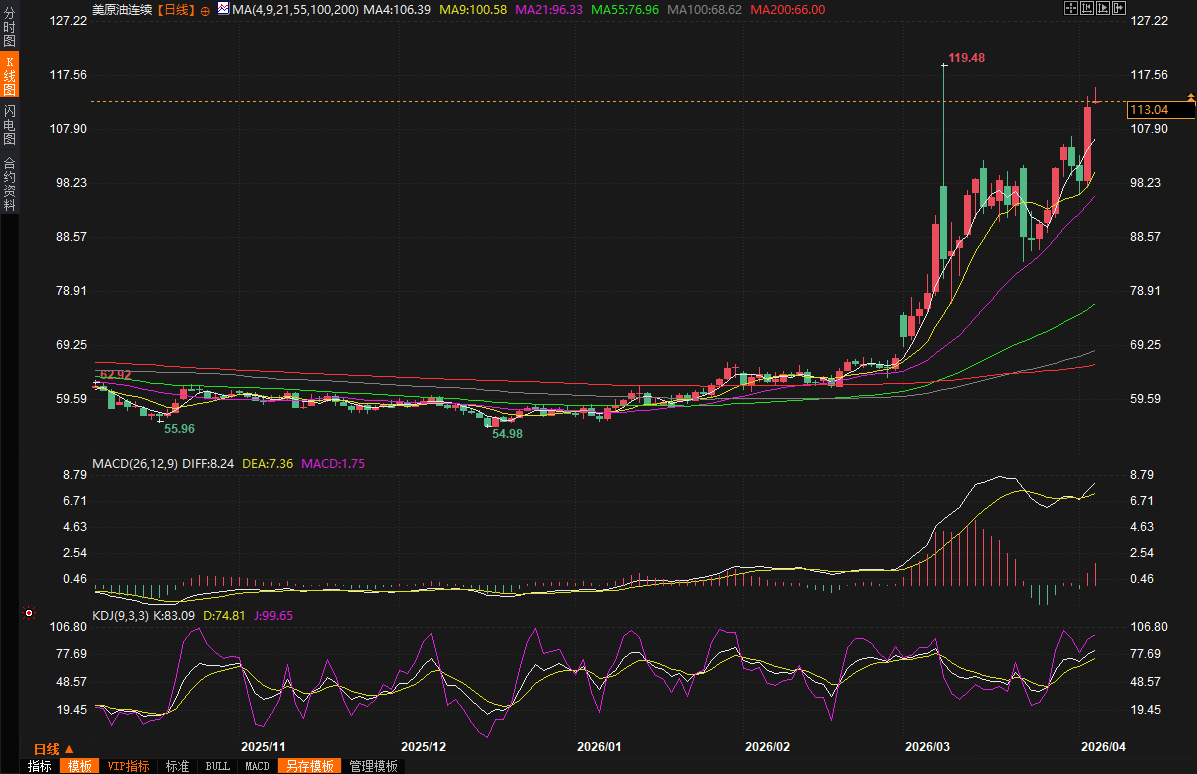
(US crude oil daily chart, source: FX678)
At 08:15 Beijing time, US crude oil is currently trading at $112.95 per barrel.
Geopolitical risks escalate: Trump's ultimatum becomes the focus of the market.
On Sunday (April 5), Trump posted on social media: "Tuesday will be Power Plant Day and Bridge Day in Iran. Get it all done at once. Absolutely unprecedented!!! Open the Strait now." He explicitly threatened action against Iran's power plants and critical infrastructure. Hours later, he appeared to set a new deadline: "Tuesday, 8:00 p.m. ET!"
This statement further exacerbated market concerns about an escalation of military conflict. Although Iran has effectively blocked the Strait of Hormuz through attacks on oil tankers, Trump's hardline stance indicates that the United States is unwilling to tolerate the closure of this crucial passage for long.
Latest reports indicate that the conflict has brought shipping in the Strait of Hormuz to a near standstill, a strait that normally handles about 20% of the world's oil supply. The drone attack on Kuwait Oil Company facilities, which caused severe damage, further highlights the vulnerability of the infrastructure. Analysts point out that if the situation does not de-escalate by Tuesday's deadline, the United States may take more direct military action, which would directly impact Middle Eastern energy export capacity and could trigger broader regional instability.
Unprecedented supply disruptions: Oil price fundamentals under immense pressure
The continued closure of the Strait of Hormuz has triggered the largest oil supply disruption in history. Since the outbreak of the conflict, prices for products such as crude oil, jet fuel, diesel, and gasoline have all risen significantly. By the end of this month, global oil supply is expected to be reduced by nearly 1 billion barrels, including approximately 600 million barrels of crude oil and approximately 350 million barrels of refined products. Some institutions, such as Rapidan Energy, further estimate that by the end of June, even after deducting factors such as pipeline diversions, emergency inventory releases, and inventory depletion, the net loss could still reach 630 million barrels.
Current fundamentals indicate extremely high pressure on the supply side. While the eight OPEC+ members (Saudi Arabia, Russia, Iraq, the UAE, Kuwait, Kazakhstan, Algeria, and Oman) agreed to increase production by 206,000 barrels per day in May, significant uncertainty remains regarding how this increased crude oil will effectively enter the global market due to the closure of the Straits of Hormuz. OPEC+ also warned that repairing the damaged energy infrastructure is both costly and time-consuming, and will constrain overall supply availability in the long term.
On the demand side, the conflict has led to flight cancellations and liquefied natural gas (LNG) supply disruptions in the Middle East, resulting in a downward revision of short-term global oil demand growth expectations. However, in the medium to long term, major importing regions such as Asia and Europe are facing supply shortage risks, pushing up the overall price level. Several institutions have raised their 2026 oil price forecasts, with some believing that Brent crude oil may remain at high levels in the short term.
Price Movements and Market Reactions: Trading Opportunities Amidst High-Level Fluctuations
Oil prices have rebounded significantly recently due to Trump's warnings and supply disruptions. US crude oil futures rose by more than 3% at one point. Currently, WTI crude oil prices have exceeded $110 per barrel, a substantial increase from pre-conflict levels. WTI even briefly saw a premium over Brent crude, a rare occurrence historically, reflecting the reality of relatively stable domestic supply in the US but a sharp rise in global supply risks.
Market sentiment is generally cautiously optimistic yet highly vigilant. On the one hand, geopolitical risk premiums are pushing oil prices higher rather than lower; on the other hand, if a diplomatic breakthrough or partial reopening of the Straits of Hormuz occurs around Tuesday, oil prices may face pressure for a rapid correction. Traders should note that volatility is currently significantly increased, and overnight gaps and large intraday swings will become the norm.
Trading Reminder: Prioritize risk management and seize opportunities amidst uncertainty.
In the current environment, crude oil trading must prioritize strict risk control. We recommend focusing on the following key points: First, closely monitor official statements and actual military developments after Tuesday's deadline; if the conflict escalates, there is still room for oil prices to rise. Second, monitor subsequent OPEC+ meetings and the actual implementation of production increases, as well as global inventory changes. Third, combine technical indicators to set reasonable stop-loss and take-profit levels in high-level areas to avoid excessive exposure in one direction.
Overall, the Strait of Hormuz crisis, coupled with Trump's hardline policies, has pushed the crude oil market into a high-risk, high-reward phase. In the short term, supply shortages will dominate price movements, but any signs of easing tensions could trigger a rapid correction. Traders should maintain position flexibility, combining fundamental and technical analysis, while fully assessing the black swan risks posed by geopolitical events.
In summary, the current situation in the Middle East has not only tested the resilience of the global energy supply chain but also brought unprecedented challenges and opportunities to participants in the crude oil market. Traders are advised to remain highly vigilant, stay informed, and find a trading rhythm that suits them while strictly controlling risk. Oil price movements remain highly uncertain; a rational approach is essential to understanding market dynamics.
(US crude oil daily chart, source: FX678)
At 08:15 Beijing time, US crude oil is currently trading at $112.95 per barrel.
- Risk Warning and Disclaimer
- The market involves risk, and trading may not be suitable for all investors. This article is for reference only and does not constitute personal investment advice, nor does it take into account certain users’ specific investment objectives, financial situation, or other needs. Any investment decisions made based on this information are at your own risk.