Was the non-farm payrolls report a false alarm? The USD/JPY rebound turned out to be a pipe dream.
2026-04-06 17:07:32
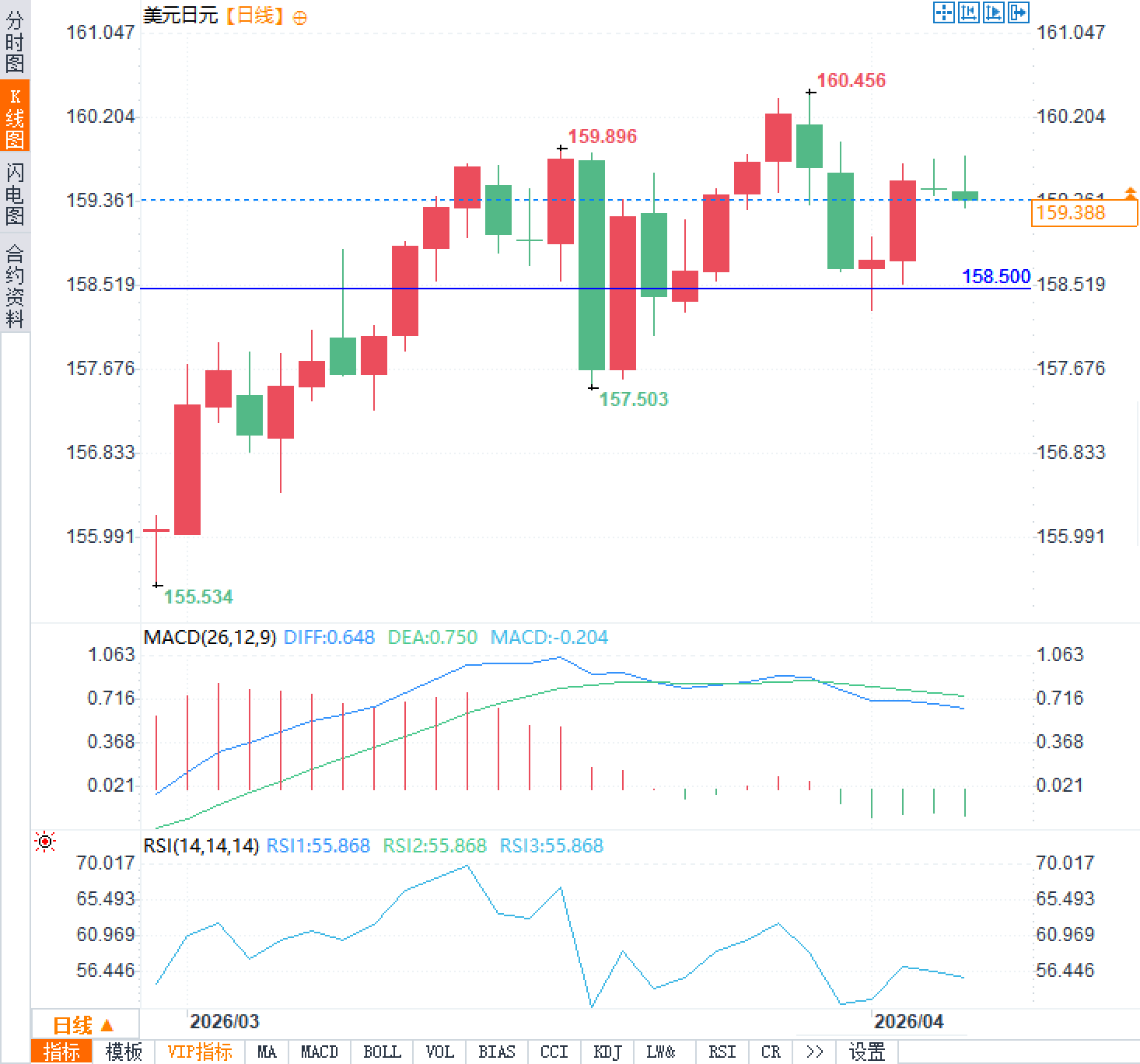
On Monday, April 6th, the first trading day after Easter, trading volumes in major global financial markets were low, with the USD/JPY exchange rate hovering around 159.40. The previous week, the exchange rate had approached the 160 mark, but with news of a ceasefire framework in the Iranian situation, the safe-haven dollar faced selling pressure, while the yen failed to weaken further amid concerns about potential intervention. Crude oil prices remained volatile at high levels. Although there were signs of easing tensions in the Strait of Hormuz, they continued to put pressure on the global energy supply chain, further highlighting the pressure on Japan's economic prospects as a major crude oil importer.

The USD/JPY pair retreated during the trading day, gradually declining from its early morning high to a low of 159.35, with limited overall volatility. The US dollar index also weakened, reflecting a temporary cooling in market demand for safe-haven assets. Over the past week, the exchange rate has fallen by approximately 0.8%, but the 160 level has become a focal point. This level is considered a floor for potential actions by Japanese authorities, and market participants are cautious about selling pressure above it. Currently, the USD/JPY pair remains supported by the policy rate differential between the Federal Reserve and the Bank of Japan, but geopolitical factors are gradually eroding this advantage.
A ceasefire in Iran is expected to be the focus of the market this week. A framework plan proposed by multiple mediators provides an initial path to ending hostilities, with both the US and Iran receiving related proposals. This directly weakened the safe-haven premium of the US dollar. Investors had previously increased their dollar positions due to US President Trump's threat to strike civilian and energy facilities if the Strait of Hormuz is not reopened. Now, with easing tensions, some long-term dollar bulls are taking profits. While crude oil prices remain above $100 per barrel, the gains have narrowed from previous highs. As a major net importer of crude oil, Japan is facing increasing import costs due to high oil prices, exacerbating its trade balance pressures and dragging down overall economic growth. This, in turn, limits the attractiveness of the yen as a traditional safe-haven currency, preventing a significant pullback in the USD/JPY exchange rate. Traders are closely monitoring developments in the Middle East, as any sign of a breakdown in negotiations could quickly reverse the current weakness of the US dollar.
Japanese Finance Minister Katayama stated explicitly last Friday that the foreign exchange market was exhibiting "highly speculative" trends, emphasizing Tokyo's readiness to take all possible measures to curb the yen's weakness. She also mentioned a significant increase in speculative activity in the crude oil futures market, noting that exchange rate fluctuations were impacting people's lives and economic stability. This statement reinforced market expectations of intervention at the 160 level, suppressing further yen selling. The Bank of Japan's policy rate is currently maintained at 0.75%, a significant gap from the Federal Reserve's benchmark rate, but the authorities prefer direct market intervention rather than aggressive interest rate hikes to stabilize the exchange rate. Historical experience shows that when the USD/JPY pair approaches similar psychological levels, official action often quickly reverses short-term trends. The current low trading volume may amplify the impact of intervention signals, and traders should be wary of sudden yen buying that could lead to sharp fluctuations.
The US non-farm payrolls data released last Friday showed an increase of 178,000 jobs in March, exceeding market expectations of 60,000, but investors reacted cautiously. February's data was revised to a decrease of 133,000 jobs, meaning the cumulative net job change in the first quarter was close to zero. The unemployment rate remained stable at 4.3%, and average hourly earnings rose 0.2% month-on-month to $37.38. Despite the seemingly strong data, the risk of a prolonged conflict in the Middle East is considered a significant downward pressure on the employment outlook, and high oil prices may suppress companies' hiring intentions through cost transmission. This limited further upward momentum for the dollar and also weakened market expectations that the Federal Reserve would maintain high interest rates. Overall, the employment data did not change the dollar's temporary weakness, and traders are focusing on subsequent inflation data to determine the policy path.
Short-term dynamics of the USD/JPY exchange rate
The USD/JPY pair retreated during the trading day, gradually declining from its early morning high to a low of 159.35, with limited overall volatility. The US dollar index also weakened, reflecting a temporary cooling in market demand for safe-haven assets. Over the past week, the exchange rate has fallen by approximately 0.8%, but the 160 level has become a focal point. This level is considered a floor for potential actions by Japanese authorities, and market participants are cautious about selling pressure above it. Currently, the USD/JPY pair remains supported by the policy rate differential between the Federal Reserve and the Bank of Japan, but geopolitical factors are gradually eroding this advantage.
The impact of easing tensions in Iran on safe-haven assets
A ceasefire in Iran is expected to be the focus of the market this week. A framework plan proposed by multiple mediators provides an initial path to ending hostilities, with both the US and Iran receiving related proposals. This directly weakened the safe-haven premium of the US dollar. Investors had previously increased their dollar positions due to US President Trump's threat to strike civilian and energy facilities if the Strait of Hormuz is not reopened. Now, with easing tensions, some long-term dollar bulls are taking profits. While crude oil prices remain above $100 per barrel, the gains have narrowed from previous highs. As a major net importer of crude oil, Japan is facing increasing import costs due to high oil prices, exacerbating its trade balance pressures and dragging down overall economic growth. This, in turn, limits the attractiveness of the yen as a traditional safe-haven currency, preventing a significant pullback in the USD/JPY exchange rate. Traders are closely monitoring developments in the Middle East, as any sign of a breakdown in negotiations could quickly reverse the current weakness of the US dollar.
Risk assessment of Japanese authorities' intervention
Japanese Finance Minister Katayama stated explicitly last Friday that the foreign exchange market was exhibiting "highly speculative" trends, emphasizing Tokyo's readiness to take all possible measures to curb the yen's weakness. She also mentioned a significant increase in speculative activity in the crude oil futures market, noting that exchange rate fluctuations were impacting people's lives and economic stability. This statement reinforced market expectations of intervention at the 160 level, suppressing further yen selling. The Bank of Japan's policy rate is currently maintained at 0.75%, a significant gap from the Federal Reserve's benchmark rate, but the authorities prefer direct market intervention rather than aggressive interest rate hikes to stabilize the exchange rate. Historical experience shows that when the USD/JPY pair approaches similar psychological levels, official action often quickly reverses short-term trends. The current low trading volume may amplify the impact of intervention signals, and traders should be wary of sudden yen buying that could lead to sharp fluctuations.
What US employment data tells the story of the US dollar.
The US non-farm payrolls data released last Friday showed an increase of 178,000 jobs in March, exceeding market expectations of 60,000, but investors reacted cautiously. February's data was revised to a decrease of 133,000 jobs, meaning the cumulative net job change in the first quarter was close to zero. The unemployment rate remained stable at 4.3%, and average hourly earnings rose 0.2% month-on-month to $37.38. Despite the seemingly strong data, the risk of a prolonged conflict in the Middle East is considered a significant downward pressure on the employment outlook, and high oil prices may suppress companies' hiring intentions through cost transmission. This limited further upward momentum for the dollar and also weakened market expectations that the Federal Reserve would maintain high interest rates. Overall, the employment data did not change the dollar's temporary weakness, and traders are focusing on subsequent inflation data to determine the policy path.
Frequently Asked Questions
Question 1: Why did the hope for a ceasefire in Iran directly lead to a decline in the USD/JPY exchange rate?
A: The ceasefire framework announcement eased market concerns about an escalation of the Middle East conflict, reducing demand for the US dollar as a safe haven. Investors had previously increased their dollar positions due to tensions in the Strait of Hormuz, but the improved risk appetite prompted some positions to be closed. Meanwhile, while the continued drag of high oil prices on the Japanese economy limited the yen's rebound, expectations of intervention were sufficient to suppress further depreciation, collectively pushing the exchange rate back to around 159.40.
Question 2: What actual impact will Japanese Finance Minister Katayama's remarks have on the market?
A: Katayama's emphasis on the "highly speculative" trend and reiteration of "all possible measures" directly reinforced the perception that the 160 level was the bottom line for intervention. This not only suppressed yen selling but also increased market volatility expectations. Traders should note that such verbal interventions often have a magnified effect during periods of low liquidity, potentially triggering a sharp short-term reversal.
Question 3: Why did the better-than-expected US non-farm payroll data in March fail to effectively support the US dollar?
A: Although the addition of 178,000 jobs exceeded expectations, revised first-quarter net employment was almost flat, and the Middle East conflict is considered a downside risk to employment. Inflationary pressures from high oil prices may also force the Federal Reserve to adopt a more cautious policy path. Overall, the positive impact was offset by geopolitical easing factors, preventing the dollar from rebounding on the back of the data.
- Risk Warning and Disclaimer
- The market involves risk, and trading may not be suitable for all investors. This article is for reference only and does not constitute personal investment advice, nor does it take into account certain users’ specific investment objectives, financial situation, or other needs. Any investment decisions made based on this information are at your own risk.