Seven years after severing diplomatic ties, India "leans towards" Iran! Is it defying US sanctions in a life-or-death situation amid high oil prices?
2026-04-07 14:10:13
India has resumed importing oil and gas from Iran after a seven-year hiatus, a significant move against the backdrop of supply disruptions and high energy prices caused by the US-Israel war against Iran.
India's Ministry of Petroleum and Natural Gas said on Saturday (April 4) that Indian refineries have secured crude oil supplies from more than 40 countries, including Iran. This marks the first time India has imported energy from Iran since 2019. A ship carrying 44,000 tons of Iranian liquefied petroleum gas (LPG) has docked at a port in southern India.
With the Strait of Hormuz remaining blocked and global energy risks high, US crude oil prices fluctuated upwards during Asian trading hours on Tuesday (April 7), currently trading around $115.30 per barrel, up about 2.55% on the day, after previously touching a near one-month high of $116.56.
As the world's third-largest oil importer and second-largest LPG consumer, India relies on the Strait of Hormuz for approximately 50% of its crude oil and most of its LPG. The current de facto disruption of the strait due to conflict has put pressure on India's energy supply.
Currently, 17 Indian-flagged vessels are waiting to pass safely through the Strait, following seven vessels that successfully passed through in recent weeks after diplomatic contacts with Iran.
India's resumption of imports, reportedly granted an exemption by the United States, is unlikely to immediately provoke strong dissatisfaction from Washington. However, analysts point out that this move highlights India's attempt to maintain a balance in its relationship with the US, rather than taking sides completely.
Experts believe that India's move is a "confidence-building mechanism" and an "insurance policy," indicating that India is unwilling to take sides in the conflict, while hoping that Iran will ensure the safe passage of Indian ships through the Strait of Hormuz in the future.
India has chosen to negotiate safe passage with Iran through bilateral channels rather than join a US-proposed naval coalition to protect shipping lanes. This decision is seen as a clear signal of India distancing itself from the US, reflecting its energy pragmatism and reluctance to be drawn into unintended conflicts .
Trump had previously urged countries that rely on the Straits to join a U.S.-led naval coalition to protect shipping, but India did not participate.
Affected by the conflict in the Middle East, the average price of India's crude oil basket surged from $69 per barrel in February 2026 to $113 per barrel in March. India had previously reduced its crude oil imports from Russia and shifted to Middle Eastern supplies in order to secure a trade agreement with the United States, but after the war disrupted Middle Eastern supplies, India has increased its imports of Russian crude oil again.
According to Kpler data, as of March 24, India's crude oil imports from Russia increased to approximately 1.9 million barrels per day, up from approximately 1 million barrels per day in February. Despite this, overall energy procurement costs have risen significantly.
India's resumption of oil and gas imports from Iran after a seven-year hiatus highlights its energy security considerations amid tensions in the Strait of Hormuz and its strategy of "limited reliance" on the US. India relies on the Strait for 50% of its crude oil and most of its LPG, and its commitment to securing safe passage for ships through bilateral negotiations rather than joining a US naval alliance reflects its energy pragmatism. The significant increase in energy procurement costs has forced India to diversify its sources, including increasing imports from Russia. This move has secured a US exemption in the short term, but its long-term future will depend on sanctions policy and the evolution of the regional situation.
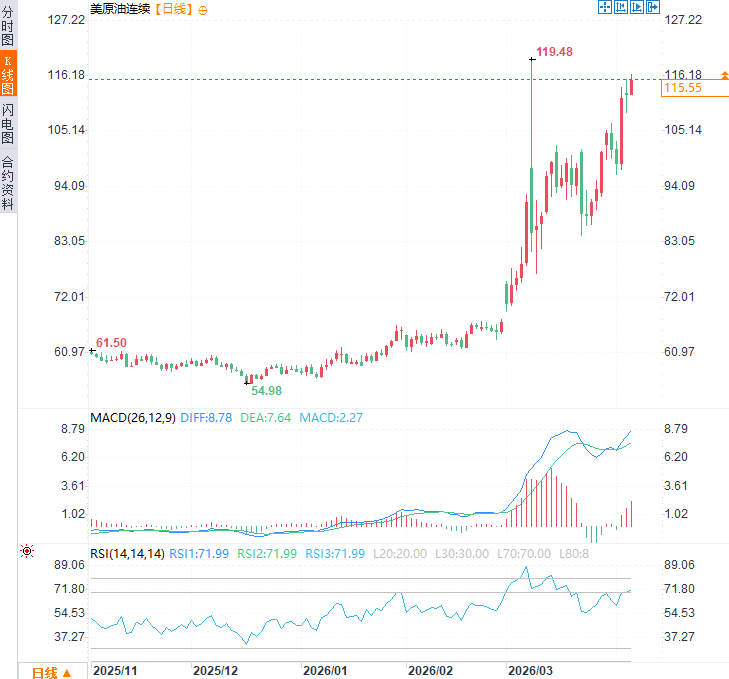
(US crude oil daily chart, source: FX678)
At 13:50 Beijing time, US crude oil futures were trading at $115.20 per barrel.
India's Ministry of Petroleum and Natural Gas said on Saturday (April 4) that Indian refineries have secured crude oil supplies from more than 40 countries, including Iran. This marks the first time India has imported energy from Iran since 2019. A ship carrying 44,000 tons of Iranian liquefied petroleum gas (LPG) has docked at a port in southern India.
With the Strait of Hormuz remaining blocked and global energy risks high, US crude oil prices fluctuated upwards during Asian trading hours on Tuesday (April 7), currently trading around $115.30 per barrel, up about 2.55% on the day, after previously touching a near one-month high of $116.56.
India's high dependence on the Strait of Hormuz
As the world's third-largest oil importer and second-largest LPG consumer, India relies on the Strait of Hormuz for approximately 50% of its crude oil and most of its LPG. The current de facto disruption of the strait due to conflict has put pressure on India's energy supply.
Currently, 17 Indian-flagged vessels are waiting to pass safely through the Strait, following seven vessels that successfully passed through in recent weeks after diplomatic contacts with Iran.
US Exemption and Washington's Response
India's resumption of imports, reportedly granted an exemption by the United States, is unlikely to immediately provoke strong dissatisfaction from Washington. However, analysts point out that this move highlights India's attempt to maintain a balance in its relationship with the US, rather than taking sides completely.
Experts believe that India's move is a "confidence-building mechanism" and an "insurance policy," indicating that India is unwilling to take sides in the conflict, while hoping that Iran will ensure the safe passage of Indian ships through the Strait of Hormuz in the future.
India-Iran bilateral negotiations
India has chosen to negotiate safe passage with Iran through bilateral channels rather than join a US-proposed naval coalition to protect shipping lanes. This decision is seen as a clear signal of India distancing itself from the US, reflecting its energy pragmatism and reluctance to be drawn into unintended conflicts .
Trump had previously urged countries that rely on the Straits to join a U.S.-led naval coalition to protect shipping, but India did not participate.
Energy procurement costs have risen sharply.
Affected by the conflict in the Middle East, the average price of India's crude oil basket surged from $69 per barrel in February 2026 to $113 per barrel in March. India had previously reduced its crude oil imports from Russia and shifted to Middle Eastern supplies in order to secure a trade agreement with the United States, but after the war disrupted Middle Eastern supplies, India has increased its imports of Russian crude oil again.
According to Kpler data, as of March 24, India's crude oil imports from Russia increased to approximately 1.9 million barrels per day, up from approximately 1 million barrels per day in February. Despite this, overall energy procurement costs have risen significantly.
Editor's Summary
India's resumption of oil and gas imports from Iran after a seven-year hiatus highlights its energy security considerations amid tensions in the Strait of Hormuz and its strategy of "limited reliance" on the US. India relies on the Strait for 50% of its crude oil and most of its LPG, and its commitment to securing safe passage for ships through bilateral negotiations rather than joining a US naval alliance reflects its energy pragmatism. The significant increase in energy procurement costs has forced India to diversify its sources, including increasing imports from Russia. This move has secured a US exemption in the short term, but its long-term future will depend on sanctions policy and the evolution of the regional situation.
(US crude oil daily chart, source: FX678)
At 13:50 Beijing time, US crude oil futures were trading at $115.20 per barrel.
- Risk Warning and Disclaimer
- The market involves risk, and trading may not be suitable for all investors. This article is for reference only and does not constitute personal investment advice, nor does it take into account certain users’ specific investment objectives, financial situation, or other needs. Any investment decisions made based on this information are at your own risk.