Oil prices surge to $110, USD/JPY faces a catastrophic drop to 161?
2026-04-07 17:56:29
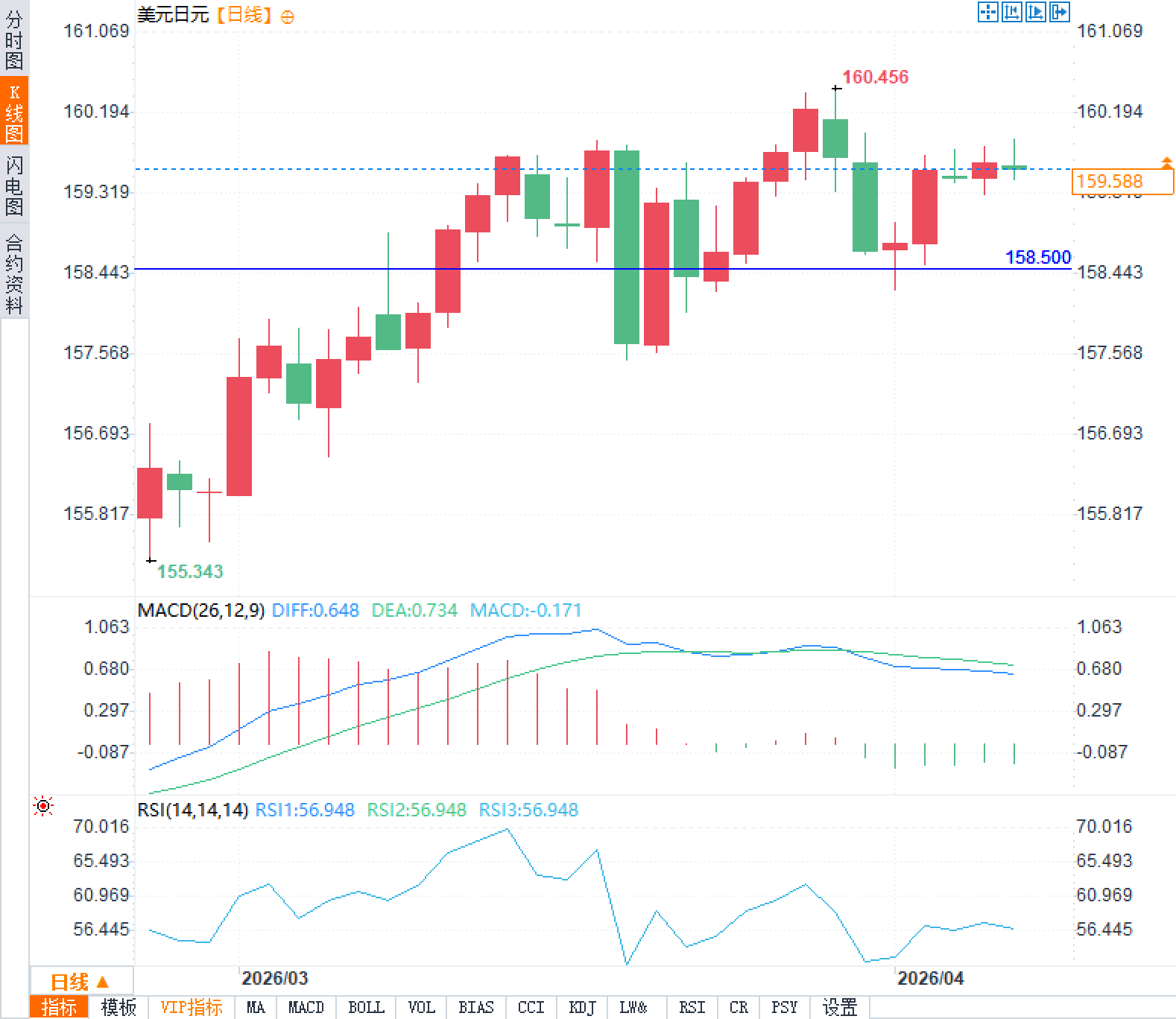
On Tuesday, April 7th, the USD/JPY exchange rate fluctuated around 159.60, a slight change from the previous trading day. Previously, the exchange rate briefly broke through 160 at the end of March, causing market tension. The evolving situation in the Middle East continues to push oil prices above $110 per barrel, putting significant exchange rate pressure on Japan, a major energy importer.

Latest data shows that the Bank of Japan's Tankan survey for large and medium-sized manufacturers reached 17 in March, exceeding expectations and hitting a recent high, providing some fundamental support for the yen. However, driven by oil price factors, the upside risk to the exchange rate remains prominent. Analysts warn that without a substantial correction in oil prices, the USD/JPY exchange rate may continue to face upward pressure, and the risk of actual intervention in the 161-163 range warrants attention.
The USD/JPY exchange rate has recently exhibited significant volatility. After briefly touching above 160 last Friday, Japanese authorities have intensified verbal intervention, dampening market optimism regarding further dollar strength. However, persistent geopolitical risks and high oil prices make it difficult to completely unwind short yen positions. Analysts point out that while the expectation of actual intervention may limit further upside for the exchange rate, upward pressure on the USD/JPY is expected to persist unless there is a clear improvement in the Middle East situation and a substantial correction in oil prices. This assessment is based on the reality that the current market trend is difficult to reverse, while also considering the robustness of the Bank of Japan's fundamentals.
Historically, similar high-level ranges have been tested multiple times. Authorities' intervention strategies typically shift from verbal warnings to concrete actions to minimize reserve depletion and maintain market order. In the 161-163 range, once the exchange rate becomes unstable, upward pressure will rapidly increase. At this point, buying yen has the most significant deterrent effect, effectively interrupting speculative trends and reducing the transmission of exchange rate fluctuations to the real economy. Traders should note that this threshold is not fixed but dynamically adjusted based on multiple factors such as oil price transmission, inflation path, and business confidence. Currently, the exchange rate is hovering around 159.60, but any changes in geopolitical news could trigger rapid position shifting, amplifying intraday volatility. Overall, this range has become the market focus, and the expectation of intervention itself constitutes a short-term upper limit; however, if oil prices remain high, the risk of a breakout remains.
The international crude oil market is currently exhibiting a high-level fluctuation pattern. Brent crude oil is currently quoted at $108.69 per barrel, and WTI crude oil at $111.43 per barrel, representing increases of approximately 9% and 10% respectively compared to the previous month. This price level is primarily influenced by the situation in the Middle East. As an energy-dependent economy, Japan's import costs have increased significantly, leading to a deterioration in its terms of trade and amplifying imported inflationary pressures. Analysis shows that every $10 increase in crude oil prices could negatively drag down Japan's economic growth by approximately 0.4% to 0.6%, while simultaneously pushing up corporate production costs and the consumer price index. Although some companies are mitigating the pressure through price increases, overall, the yen's attractiveness as a safe-haven currency has declined, further strengthening the relative strength of the US dollar against the yen.
If crude oil prices fail to fall from their current highs, the structural downside risks to the exchange rate will be difficult to alleviate. The oil price transmission mechanism operates primarily through two paths: trade balance and inflation expectations. Firstly, it directly worsens the current account; secondly, it indirectly affects wage negotiations and consumer confidence through rising business costs, ultimately reflecting downward pressure on the yen in exchange rate pricing. Current oil prices are already close to their recent highs, and any supply-side disruptions could further push prices up, thus extending the upward window for the USD/JPY exchange rate.
The Bank of Japan's Tankan survey for March, released on April 1, showed that the business sentiment index for large manufacturers rose to 17, an improvement from the revised 16 in the previous quarter, marking the highest level since December 2021; the business sentiment index for large non-manufacturing companies remained stable near a high level of 36. While the outlook index was slightly revised downwards, overall business confidence remained solid. Positive signals from the upcoming meeting of Bank of Japan branch governors this week would further increase the likelihood of an interest rate hike in April.
Current market expectations indicate a near 70% probability of an interest rate hike at the April 28 policy meeting. These factors provide short-term support for the yen exchange rate, helping to alleviate some downward pressure. However, against the backdrop of persistently high oil prices, policy decisions need to balance inflation and economic growth, and the pace of tightening may be cautious, unable to fully offset the exchange rate shocks brought about by geopolitical factors. The robustness of short-term data reflects the optimistic assessment of domestic demand by the business sector, which to some extent offsets external shocks, but the lag effect of oil price transmission may still delay the policy's effectiveness.
Analysts believe that the expectation of an interest rate hike can boost the attractiveness of the yen and suppress short positions by increasing holding costs. However, its effectiveness is limited by oil price variables. If crude oil remains above $110 per barrel, the supporting effect of policy normalization on the exchange rate will be partially diluted. As an important window for policy signals, the tone of the branch meeting will directly influence the market's pricing logic for the April meeting, thereby shaping the short-term exchange rate range.
Latest data shows that the Bank of Japan's Tankan survey for large and medium-sized manufacturers reached 17 in March, exceeding expectations and hitting a recent high, providing some fundamental support for the yen. However, driven by oil price factors, the upside risk to the exchange rate remains prominent. Analysts warn that without a substantial correction in oil prices, the USD/JPY exchange rate may continue to face upward pressure, and the risk of actual intervention in the 161-163 range warrants attention.
Current exchange rate dynamics and potential intervention thresholds
The USD/JPY exchange rate has recently exhibited significant volatility. After briefly touching above 160 last Friday, Japanese authorities have intensified verbal intervention, dampening market optimism regarding further dollar strength. However, persistent geopolitical risks and high oil prices make it difficult to completely unwind short yen positions. Analysts point out that while the expectation of actual intervention may limit further upside for the exchange rate, upward pressure on the USD/JPY is expected to persist unless there is a clear improvement in the Middle East situation and a substantial correction in oil prices. This assessment is based on the reality that the current market trend is difficult to reverse, while also considering the robustness of the Bank of Japan's fundamentals.
Historically, similar high-level ranges have been tested multiple times. Authorities' intervention strategies typically shift from verbal warnings to concrete actions to minimize reserve depletion and maintain market order. In the 161-163 range, once the exchange rate becomes unstable, upward pressure will rapidly increase. At this point, buying yen has the most significant deterrent effect, effectively interrupting speculative trends and reducing the transmission of exchange rate fluctuations to the real economy. Traders should note that this threshold is not fixed but dynamically adjusted based on multiple factors such as oil price transmission, inflation path, and business confidence. Currently, the exchange rate is hovering around 159.60, but any changes in geopolitical news could trigger rapid position shifting, amplifying intraday volatility. Overall, this range has become the market focus, and the expectation of intervention itself constitutes a short-term upper limit; however, if oil prices remain high, the risk of a breakout remains.
The profound impact of crude oil prices on exchange rates
The international crude oil market is currently exhibiting a high-level fluctuation pattern. Brent crude oil is currently quoted at $108.69 per barrel, and WTI crude oil at $111.43 per barrel, representing increases of approximately 9% and 10% respectively compared to the previous month. This price level is primarily influenced by the situation in the Middle East. As an energy-dependent economy, Japan's import costs have increased significantly, leading to a deterioration in its terms of trade and amplifying imported inflationary pressures. Analysis shows that every $10 increase in crude oil prices could negatively drag down Japan's economic growth by approximately 0.4% to 0.6%, while simultaneously pushing up corporate production costs and the consumer price index. Although some companies are mitigating the pressure through price increases, overall, the yen's attractiveness as a safe-haven currency has declined, further strengthening the relative strength of the US dollar against the yen.
If crude oil prices fail to fall from their current highs, the structural downside risks to the exchange rate will be difficult to alleviate. The oil price transmission mechanism operates primarily through two paths: trade balance and inflation expectations. Firstly, it directly worsens the current account; secondly, it indirectly affects wage negotiations and consumer confidence through rising business costs, ultimately reflecting downward pressure on the yen in exchange rate pricing. Current oil prices are already close to their recent highs, and any supply-side disruptions could further push prices up, thus extending the upward window for the USD/JPY exchange rate.
Bank of Japan's fundamentals and policy path
The Bank of Japan's Tankan survey for March, released on April 1, showed that the business sentiment index for large manufacturers rose to 17, an improvement from the revised 16 in the previous quarter, marking the highest level since December 2021; the business sentiment index for large non-manufacturing companies remained stable near a high level of 36. While the outlook index was slightly revised downwards, overall business confidence remained solid. Positive signals from the upcoming meeting of Bank of Japan branch governors this week would further increase the likelihood of an interest rate hike in April.
Current market expectations indicate a near 70% probability of an interest rate hike at the April 28 policy meeting. These factors provide short-term support for the yen exchange rate, helping to alleviate some downward pressure. However, against the backdrop of persistently high oil prices, policy decisions need to balance inflation and economic growth, and the pace of tightening may be cautious, unable to fully offset the exchange rate shocks brought about by geopolitical factors. The robustness of short-term data reflects the optimistic assessment of domestic demand by the business sector, which to some extent offsets external shocks, but the lag effect of oil price transmission may still delay the policy's effectiveness.
Analysts believe that the expectation of an interest rate hike can boost the attractiveness of the yen and suppress short positions by increasing holding costs. However, its effectiveness is limited by oil price variables. If crude oil remains above $110 per barrel, the supporting effect of policy normalization on the exchange rate will be partially diluted. As an important window for policy signals, the tone of the branch meeting will directly influence the market's pricing logic for the April meeting, thereby shaping the short-term exchange rate range.
- Risk Warning and Disclaimer
- The market involves risk, and trading may not be suitable for all investors. This article is for reference only and does not constitute personal investment advice, nor does it take into account certain users’ specific investment objectives, financial situation, or other needs. Any investment decisions made based on this information are at your own risk.