With the wave of attacks now over, when will the window for a gold rebound open?
2026-04-07 19:43:50
On Tuesday, April 7th, the spot gold market continued to fluctuate narrowly within the $4600-$4700/ounce range after opening. Israel's airstrikes on key Iranian infrastructure became the latest market focus, with multiple facilities on Hargh Island and the Kashan railway bridge damaged. Israel confirmed it had completed a wave of attacks on multiple targets in Iran. Iranian media reports indicated the damage was manageable, but local sources indicated damage to loading docks and storage tanks, while the railway bridge explosion killed two people and directly severed the logistical artery between the central and southern ports.
This event occurred hours before Trump's ultimatum expired, demanding Iran accept a ceasefire and reopen the Strait of Hormuz, or face a full-scale attack on its infrastructure. Crude oil prices rose in tandem due to supply chain disruption concerns, but spot gold remained weak, highlighting the market's cautious pricing in the trajectory of the conflict. Traders are closely watching the outcome of the ultimatum later in the evening; any signs of de-escalation or escalation could reshape short-term pricing logic.
The confirmed waves of attacks by Israel directly targeted Iran's economic and transportation hubs. Hargh Island, the core of the country's oil exports, handles approximately 90% of its crude oil shipments annually. Damage to its loading and unloading facilities would directly constrain the country's main source of revenue. The attack on the Kashan railway bridge further impacted its domestic logistics network. Initial assessments by Iranian officials indicated limited damage, but subsequent reports revealed that storage tank areas were affected, raising concerns about potential supply disruptions and increasing sensitivity in global energy markets.
Trump previously publicly stated his continued hardline stance, reiterating his timeline for ending the conflict within two to three weeks, and using the threat of destroying infrastructure on the "last night" as leverage. This statement has led the market to anticipate a lack of comprehensive de-escalation in the short term, coupled with concerns about potential disruptions to shipping in the Strait of Hormuz, putting temporary pressure on the global energy pricing system. In a marginal scenario, if Iran launches a reciprocal attack or effectively blocks the strait, the scale of supply chain disruptions will exceed current expectations; conversely, if diplomatic channels are quickly activated after the ultimatum, the risk premium may rapidly decline.
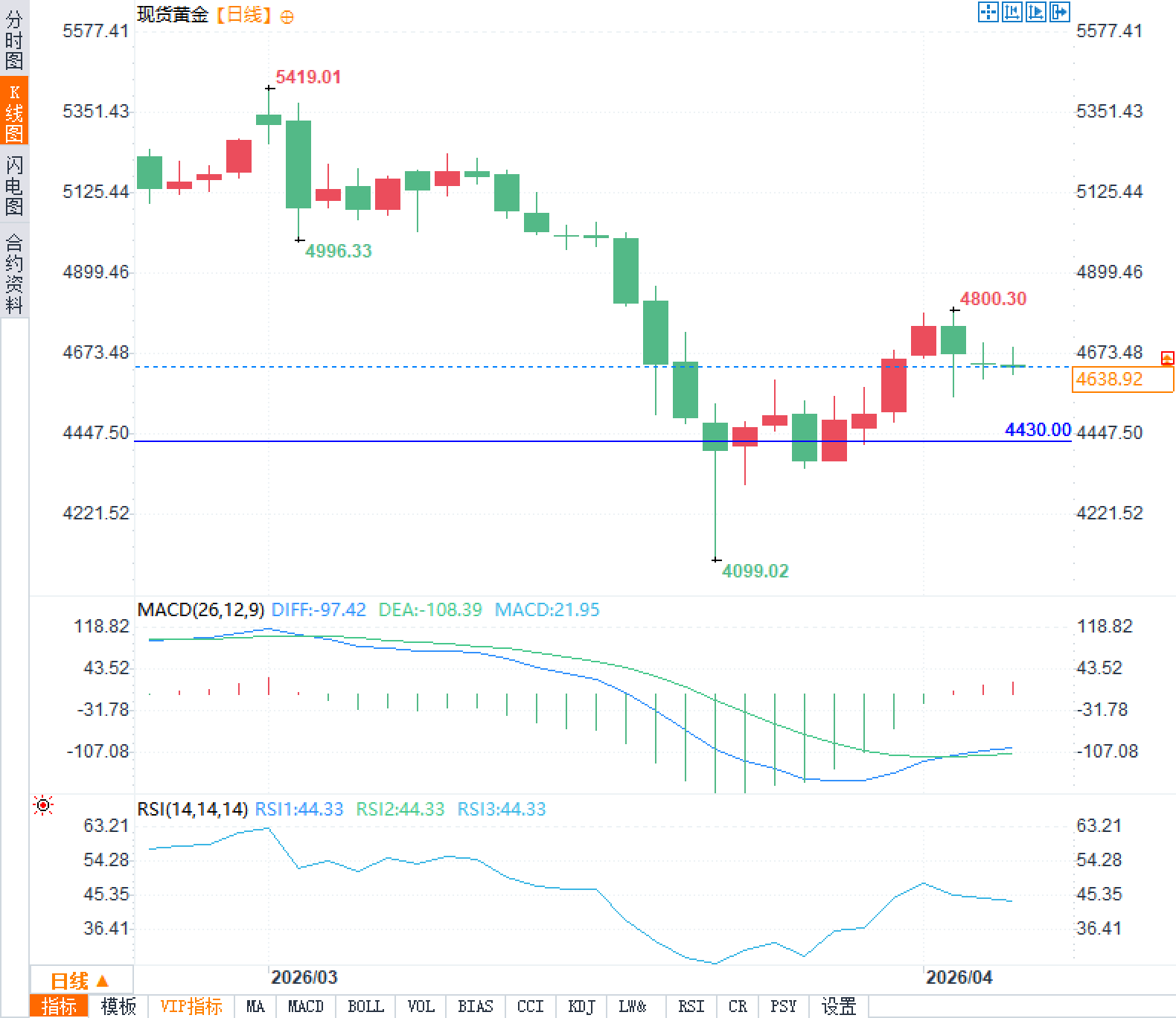
Since reaching a high of $5,596 per ounce on January 29, spot gold has fallen by approximately 12% amid the Middle East conflict, currently consolidating around $4,640 per ounce, showing significant downward pressure from recent highs. The following is a brief comparison of recent price performance:
From a fundamental perspective, gold is closely linked to financial conditions. Following Trump's tough stance, the market did not experience the expected safe-haven surge; instead, it came under pressure due to the relative strength of the US dollar and adjustments in interest rate expectations.
Crude oil prices surged following the latest shock news, with WTI crude futures currently hovering around $114 per barrel, a significant increase from the beginning of the month, while Brent crude remains around $110 per barrel. The Strait of Hormuz, which carries approximately 20% of global oil shipments, will directly amplify supply shortage expectations should shipping be disrupted. Traditionally, rising oil prices typically enhance the attractiveness of gold through inflationary expectations; however, the market is more focused on the short-term controllability of the conflict and the resulting changes in financial conditions. A sharp rise in oil prices could reinforce central bank policy tightening signals, pushing up real interest rates and thus increasing the opportunity cost of holding gold.
Historical comparisons show that, similar to the initial stages of localized conflicts in the Middle East, the correlation between gold and crude oil sometimes decouples after a few days, especially when the US dollar index strengthens in tandem. Marginal scenarios include: if the attacks are limited to military targets rather than comprehensive energy infrastructure, oil price increases may be limited; if the retaliatory chain extends and leads to a global energy crisis, inflation premiums could conversely support a gold rebound. Overall, the transmission path between crude oil and gold is shifting from direct safe-haven demand to indirect macroeconomic pricing, with traders dynamically tracking the cross-validation between energy data and the yield curve.
Gold pricing has always revolved around real interest rates, the strength of the US dollar, and risk appetite. While this event has exacerbated geopolitical uncertainty, the market has also priced in potential tightening signals from the policy front, with expectations of tighter financial conditions suppressing gold's upside potential. In the long run, if the conflict persists, the risk of a global economic slowdown may indirectly benefit gold's role as a reserve asset; in the short term, the outcome of the ultimatum will be the decisive variable.
This event occurred hours before Trump's ultimatum expired, demanding Iran accept a ceasefire and reopen the Strait of Hormuz, or face a full-scale attack on its infrastructure. Crude oil prices rose in tandem due to supply chain disruption concerns, but spot gold remained weak, highlighting the market's cautious pricing in the trajectory of the conflict. Traders are closely watching the outcome of the ultimatum later in the evening; any signs of de-escalation or escalation could reshape short-term pricing logic.
The latest evolution of geopolitical conflicts in the Middle East and its market transmission
The confirmed waves of attacks by Israel directly targeted Iran's economic and transportation hubs. Hargh Island, the core of the country's oil exports, handles approximately 90% of its crude oil shipments annually. Damage to its loading and unloading facilities would directly constrain the country's main source of revenue. The attack on the Kashan railway bridge further impacted its domestic logistics network. Initial assessments by Iranian officials indicated limited damage, but subsequent reports revealed that storage tank areas were affected, raising concerns about potential supply disruptions and increasing sensitivity in global energy markets.
Trump previously publicly stated his continued hardline stance, reiterating his timeline for ending the conflict within two to three weeks, and using the threat of destroying infrastructure on the "last night" as leverage. This statement has led the market to anticipate a lack of comprehensive de-escalation in the short term, coupled with concerns about potential disruptions to shipping in the Strait of Hormuz, putting temporary pressure on the global energy pricing system. In a marginal scenario, if Iran launches a reciprocal attack or effectively blocks the strait, the scale of supply chain disruptions will exceed current expectations; conversely, if diplomatic channels are quickly activated after the ultimatum, the risk premium may rapidly decline.
Spot gold price dynamics and key technical levels
Since reaching a high of $5,596 per ounce on January 29, spot gold has fallen by approximately 12% amid the Middle East conflict, currently consolidating around $4,640 per ounce, showing significant downward pressure from recent highs. The following is a brief comparison of recent price performance:
| period | High point (USD/ounce) | Low point (USD/ounce) | Range fluctuation range (%) |
|---|---|---|---|
| January 29 high | 5596 | — | — |
| Since the outbreak of the conflict | Approximately 5300 | 4600 | 12 |
| Current date: April 7, 2026 | 4694 | 4616 | 1.1 |
The linkage mechanism between crude oil market fluctuations and gold prices
Crude oil prices surged following the latest shock news, with WTI crude futures currently hovering around $114 per barrel, a significant increase from the beginning of the month, while Brent crude remains around $110 per barrel. The Strait of Hormuz, which carries approximately 20% of global oil shipments, will directly amplify supply shortage expectations should shipping be disrupted. Traditionally, rising oil prices typically enhance the attractiveness of gold through inflationary expectations; however, the market is more focused on the short-term controllability of the conflict and the resulting changes in financial conditions. A sharp rise in oil prices could reinforce central bank policy tightening signals, pushing up real interest rates and thus increasing the opportunity cost of holding gold.
Historical comparisons show that, similar to the initial stages of localized conflicts in the Middle East, the correlation between gold and crude oil sometimes decouples after a few days, especially when the US dollar index strengthens in tandem. Marginal scenarios include: if the attacks are limited to military targets rather than comprehensive energy infrastructure, oil price increases may be limited; if the retaliatory chain extends and leads to a global energy crisis, inflation premiums could conversely support a gold rebound. Overall, the transmission path between crude oil and gold is shifting from direct safe-haven demand to indirect macroeconomic pricing, with traders dynamically tracking the cross-validation between energy data and the yield curve.
The profound impact of policy expectations and financial conditions on gold pricing
Gold pricing has always revolved around real interest rates, the strength of the US dollar, and risk appetite. While this event has exacerbated geopolitical uncertainty, the market has also priced in potential tightening signals from the policy front, with expectations of tighter financial conditions suppressing gold's upside potential. In the long run, if the conflict persists, the risk of a global economic slowdown may indirectly benefit gold's role as a reserve asset; in the short term, the outcome of the ultimatum will be the decisive variable.
- Risk Warning and Disclaimer
- The market involves risk, and trading may not be suitable for all investors. This article is for reference only and does not constitute personal investment advice, nor does it take into account certain users’ specific investment objectives, financial situation, or other needs. Any investment decisions made based on this information are at your own risk.