Second Quarter Trader Outlook: The Iran Conflict and Its Risks
2026-04-08 21:28:11
Following the outbreak of hostilities in Iran, market focus remains on the direct risk factor of soaring oil and gas prices, which remains the primary uncertainty casting a shadow over the global economic outlook. More than a month has passed since the initial stages of the conflict, and while market pricing of risks has adjusted somewhat, there is still a tendency to believe that oil and gas supplies will return to normal relatively quickly. This outlook focuses on the direct risks of the Iranian conflict, examining the evolutionary path of energy supply disruptions, analyzing the strategic significance of this conflict in the global energy landscape, and identifying key variables that require close monitoring.
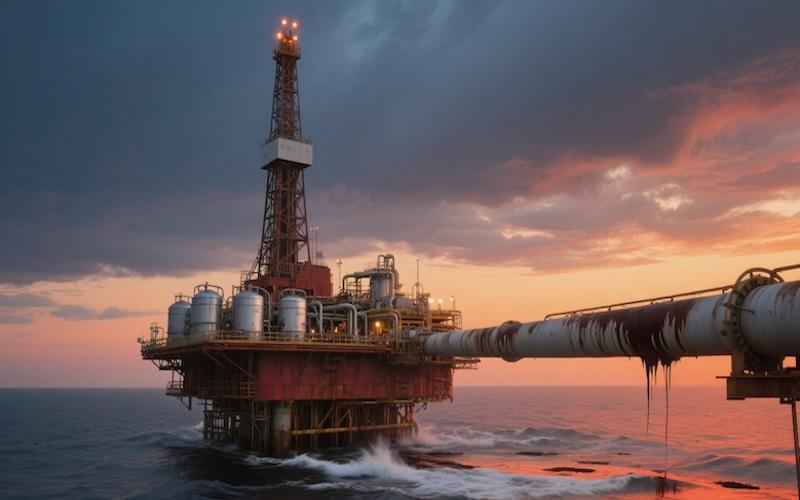
Global oil supplies remain in one of the worst disruptions since the 1970s. The US-Israel military action against Iran has severely impacted shipping through the Strait of Hormuz, the world's most important fossil fuel export route. As of April 8, according to the latest calculations by Javier Blass, a renowned energy analyst at Bloomberg, of the region's approximately 20 million barrels per day of regular exports, whether via the strait itself or alternative routes, shipments have not yet fully recovered to normal levels. He also pointed out that the exported oil is primarily crude oil, which exacerbates the global shortage of key refined petroleum products for Gulf countries.
The impact extends far beyond oil: Following the outbreak of conflict at the end of February, Qatar swiftly suspended all liquefied natural gas (LNG) production, leading to a global LNG export shortfall that reached 20% at one point. Furthermore, Qatar's downstream natural gas processing also produces key products such as sulfur and various fertilizers, with many categories accounting for more than a third of global exports. Qatari officials stated that LNG supply recovery will take several weeks to months, and the availability and pricing of fertilizers pose a potential threat to the upcoming planting season in both the Northern and Southern Hemispheres. Sulfur, processed into sulfuric acid, is a core raw material for some fertilizers, mining, and other industries; helium, a byproduct of Qatar's natural gas processing, has accounted for nearly a third of global supply in recent years and is a crucial material for many industries, including semiconductors.
It's noteworthy that while crude oil prices surged after the outbreak of the conflict in Iran, gold prices did not rise in tandem with inflationary risks; instead, gold prices initially jumped slightly before declining. Does this mean the market believes the economy is no longer so vulnerable to rising energy prices that drive inflation?
Compared to the oil crisis of the 1970s, current GDP has a lower energy intensity, and the direct proportion of crude oil in the energy structure has decreased significantly. However, oil remains a core input for economic activity. The gold market's relatively restrained response to this energy price surge may indicate that the market believes this round of price increases will gradually subside—the market has developed a certain inertia, believing that oil price increases will eventually recede. After all, previous oil price surges have all gradually declined: the sharp increases in 2007-2008 and 2011-2014 (partly driven by a weakening dollar), and the dramatic surge triggered by the Russia-Ukraine conflict in 2022, all eventually returned to normal. We await to see if this expectation will materialize.
Meanwhile, the rise in gold prices over the past two years has been largely driven by global demand for assets to hedge against currency devaluation—in the eyes of many investors, bonds no longer possess the traditional safe-haven attributes.
Key to the second quarter: Oil transport through the Strait of Hormuz must resume, or the consequences will be severe.
The conflict in Iran and its impact are still rapidly evolving, potentially fundamentally altering global market sentiment, economic outlook, and market prospects, with outcomes that could be either positive or negative. Multiple developments are possible. Under the baseline scenario, oil and gas transport through the Strait of Hormuz is expected to recover to approximately 75% by May 1st, followed by a rapid rebound. However, if downside risks emerge, oil and gas transport could remain severely disrupted, production or processing facilities could suffer significant damage, and a rapid return to normalcy could be difficult in the coming months.
Energy prices are the core variable.
As of this writing, Brent crude spot prices remain around $92 per barrel, while six-month forward prices are relatively modest. If uncertainty dissipates further in the short term, current spot prices appear high; however, if supply uncertainty persists, forward prices are significantly low. Supply disruptions have lasted for over a month, and even if the situation stabilizes quickly, the resumption of regular transportation will take at least 1-2 months, and reserves will need to be replenished. Market pricing still contains a certain degree of optimism. We expect the situation to improve significantly around April, at which point this pricing logic will gradually be validated, allowing for an earlier realization of global growth and a positive long-term market outlook.
Policy and Market Impact
In the baseline scenario, uncertainty will persist until the end of the first quarter or even the beginning of the second quarter, and supply chain congestion will keep crude oil and natural gas spot prices at recent high levels for several more weeks. As the market recognizes the scale and duration of the disruptions, Brent crude oil prices may slowly recover to the $80-$100 range in the long term, rather than below $80 as initially expected. The recovery from natural gas disruptions will be even slower, and core market prices reliant on LNG will remain high, thus providing some support for inflation.
Markets expect policymakers to continue their "hot economy" strategy (maintaining nominal economic activity through fiscal and monetary policies, particularly supporting strategically critical supply chains). The sudden outbreak of hostilities in Iran in the first quarter caught markets off guard, causing the US dollar to strengthen. Looking ahead to the second quarter, barring exceptional circumstances, policymakers are highly likely to continue prioritizing support for strategically critical economic sectors, particularly US defense, rare earths, and industry, and possibly even the residential construction supply chain, to ensure essential consumer goods. Japanese Prime Minister Sanae Takaichi, with her high approval ratings, has implemented a fiscal expansion and growth-promoting agenda, providing a model for other countries globally.
Following Federal Reserve Chairman Jerome Powell's departure in May, the US may continue a similar policy path. With Bessant partnering with former Fed Governor Warsh at the helm, the Fed will likely promote credit expansion in key sectors and maintain an overall accommodative stance. In this scenario, the dollar weakened after peaking in early Q2, while most non-US currencies strengthened against it. Japan needs to guide capital inflows to support the yen, which is likely to remain relatively stable. European policy adjustments have historically lagged, but they are likely to eventually align with global trends. Emerging market currencies bottomed out during the quarter and rebounded as the dollar weakened. Gold and silver stabilized at high levels and may consolidate briefly before strengthening again later in the year.
If downside risks materialize, with more than a third of oil and gas transportation disruptions occurring and continuing into the second quarter (including obstruction of alternative routes such as the Saudi East-West Pipeline, attacks on Red Sea tankers by the Houthi rebels in Yemen, and damage to key production facilities), crude oil prices may surge and remain at $150 per barrel. Furthermore, the actual supply shortage will force a large amount of economic activity to a standstill, and even significant use of strategic reserves will be of little use.
The challenges of fiscal and monetary policy responses are far greater than during the COVID-19 pandemic: back then, printing money to rescue the market addressed the collapse in demand, while this time the central bank and the Ministry of Finance will focus more on maintaining solvency rather than stimulating demand, and cannot "print" oil and gas. Policies will still be introduced, but the focus will shift to stabilizing the mortgage and bond markets and protecting people's livelihoods, with only strategically critical industries and supply chains receiving targeted and strong support. The collapse in economic growth will trigger a global recession, severely damaging the highly leveraged and opaque debt market. Long-term expected returns may become attractive as a result, but market confidence will be severely damaged, and the recovery process may last throughout the year and even into the following year. In this scenario, the US dollar will surge, and illiquid assets will fluctuate wildly until energy supplies recover and are expected to stabilize.
Key question: Is the conflict in Iran essentially related to US-China relations?
While hoping for a return to normal supply of crude oil, LNG, and other goods through the Strait of Hormuz, it is necessary to examine the broader significance of this conflict in the global energy strategic landscape. Some argue that the actions of the United States in conjunction with Israel may be a significant step that further impacts the global energy supply chain, following Venezuela's adjustments to its energy exports. As one of the major buyers of sanctioned Iranian crude oil, China's energy import structure is therefore under scrutiny.
From this perspective, the United States' tough stance in the Middle East goes beyond regional crisis management and may involve a long-term strategic balance in global oil and gas flows, aiming to maintain relative stability for major economies in the energy security arena. If this consideration is true, Washington may hope to create a more balanced discussion space for key resource issues such as energy in the agenda of the planned meeting between the leaders of China and the United States on April 1 by rapidly evolving the situation.
Global oil supplies remain in one of the worst disruptions since the 1970s. The US-Israel military action against Iran has severely impacted shipping through the Strait of Hormuz, the world's most important fossil fuel export route. As of April 8, according to the latest calculations by Javier Blass, a renowned energy analyst at Bloomberg, of the region's approximately 20 million barrels per day of regular exports, whether via the strait itself or alternative routes, shipments have not yet fully recovered to normal levels. He also pointed out that the exported oil is primarily crude oil, which exacerbates the global shortage of key refined petroleum products for Gulf countries.
The impact extends far beyond oil: Following the outbreak of conflict at the end of February, Qatar swiftly suspended all liquefied natural gas (LNG) production, leading to a global LNG export shortfall that reached 20% at one point. Furthermore, Qatar's downstream natural gas processing also produces key products such as sulfur and various fertilizers, with many categories accounting for more than a third of global exports. Qatari officials stated that LNG supply recovery will take several weeks to months, and the availability and pricing of fertilizers pose a potential threat to the upcoming planting season in both the Northern and Southern Hemispheres. Sulfur, processed into sulfuric acid, is a core raw material for some fertilizers, mining, and other industries; helium, a byproduct of Qatar's natural gas processing, has accounted for nearly a third of global supply in recent years and is a crucial material for many industries, including semiconductors.
It's noteworthy that while crude oil prices surged after the outbreak of the conflict in Iran, gold prices did not rise in tandem with inflationary risks; instead, gold prices initially jumped slightly before declining. Does this mean the market believes the economy is no longer so vulnerable to rising energy prices that drive inflation?
Compared to the oil crisis of the 1970s, current GDP has a lower energy intensity, and the direct proportion of crude oil in the energy structure has decreased significantly. However, oil remains a core input for economic activity. The gold market's relatively restrained response to this energy price surge may indicate that the market believes this round of price increases will gradually subside—the market has developed a certain inertia, believing that oil price increases will eventually recede. After all, previous oil price surges have all gradually declined: the sharp increases in 2007-2008 and 2011-2014 (partly driven by a weakening dollar), and the dramatic surge triggered by the Russia-Ukraine conflict in 2022, all eventually returned to normal. We await to see if this expectation will materialize.
Meanwhile, the rise in gold prices over the past two years has been largely driven by global demand for assets to hedge against currency devaluation—in the eyes of many investors, bonds no longer possess the traditional safe-haven attributes.
Key to the second quarter: Oil transport through the Strait of Hormuz must resume, or the consequences will be severe.
The conflict in Iran and its impact are still rapidly evolving, potentially fundamentally altering global market sentiment, economic outlook, and market prospects, with outcomes that could be either positive or negative. Multiple developments are possible. Under the baseline scenario, oil and gas transport through the Strait of Hormuz is expected to recover to approximately 75% by May 1st, followed by a rapid rebound. However, if downside risks emerge, oil and gas transport could remain severely disrupted, production or processing facilities could suffer significant damage, and a rapid return to normalcy could be difficult in the coming months.
Energy prices are the core variable.
As of this writing, Brent crude spot prices remain around $92 per barrel, while six-month forward prices are relatively modest. If uncertainty dissipates further in the short term, current spot prices appear high; however, if supply uncertainty persists, forward prices are significantly low. Supply disruptions have lasted for over a month, and even if the situation stabilizes quickly, the resumption of regular transportation will take at least 1-2 months, and reserves will need to be replenished. Market pricing still contains a certain degree of optimism. We expect the situation to improve significantly around April, at which point this pricing logic will gradually be validated, allowing for an earlier realization of global growth and a positive long-term market outlook.
Policy and Market Impact
In the baseline scenario, uncertainty will persist until the end of the first quarter or even the beginning of the second quarter, and supply chain congestion will keep crude oil and natural gas spot prices at recent high levels for several more weeks. As the market recognizes the scale and duration of the disruptions, Brent crude oil prices may slowly recover to the $80-$100 range in the long term, rather than below $80 as initially expected. The recovery from natural gas disruptions will be even slower, and core market prices reliant on LNG will remain high, thus providing some support for inflation.
Markets expect policymakers to continue their "hot economy" strategy (maintaining nominal economic activity through fiscal and monetary policies, particularly supporting strategically critical supply chains). The sudden outbreak of hostilities in Iran in the first quarter caught markets off guard, causing the US dollar to strengthen. Looking ahead to the second quarter, barring exceptional circumstances, policymakers are highly likely to continue prioritizing support for strategically critical economic sectors, particularly US defense, rare earths, and industry, and possibly even the residential construction supply chain, to ensure essential consumer goods. Japanese Prime Minister Sanae Takaichi, with her high approval ratings, has implemented a fiscal expansion and growth-promoting agenda, providing a model for other countries globally.
Following Federal Reserve Chairman Jerome Powell's departure in May, the US may continue a similar policy path. With Bessant partnering with former Fed Governor Warsh at the helm, the Fed will likely promote credit expansion in key sectors and maintain an overall accommodative stance. In this scenario, the dollar weakened after peaking in early Q2, while most non-US currencies strengthened against it. Japan needs to guide capital inflows to support the yen, which is likely to remain relatively stable. European policy adjustments have historically lagged, but they are likely to eventually align with global trends. Emerging market currencies bottomed out during the quarter and rebounded as the dollar weakened. Gold and silver stabilized at high levels and may consolidate briefly before strengthening again later in the year.
If downside risks materialize, with more than a third of oil and gas transportation disruptions occurring and continuing into the second quarter (including obstruction of alternative routes such as the Saudi East-West Pipeline, attacks on Red Sea tankers by the Houthi rebels in Yemen, and damage to key production facilities), crude oil prices may surge and remain at $150 per barrel. Furthermore, the actual supply shortage will force a large amount of economic activity to a standstill, and even significant use of strategic reserves will be of little use.
The challenges of fiscal and monetary policy responses are far greater than during the COVID-19 pandemic: back then, printing money to rescue the market addressed the collapse in demand, while this time the central bank and the Ministry of Finance will focus more on maintaining solvency rather than stimulating demand, and cannot "print" oil and gas. Policies will still be introduced, but the focus will shift to stabilizing the mortgage and bond markets and protecting people's livelihoods, with only strategically critical industries and supply chains receiving targeted and strong support. The collapse in economic growth will trigger a global recession, severely damaging the highly leveraged and opaque debt market. Long-term expected returns may become attractive as a result, but market confidence will be severely damaged, and the recovery process may last throughout the year and even into the following year. In this scenario, the US dollar will surge, and illiquid assets will fluctuate wildly until energy supplies recover and are expected to stabilize.
Key question: Is the conflict in Iran essentially related to US-China relations?
While hoping for a return to normal supply of crude oil, LNG, and other goods through the Strait of Hormuz, it is necessary to examine the broader significance of this conflict in the global energy strategic landscape. Some argue that the actions of the United States in conjunction with Israel may be a significant step that further impacts the global energy supply chain, following Venezuela's adjustments to its energy exports. As one of the major buyers of sanctioned Iranian crude oil, China's energy import structure is therefore under scrutiny.
From this perspective, the United States' tough stance in the Middle East goes beyond regional crisis management and may involve a long-term strategic balance in global oil and gas flows, aiming to maintain relative stability for major economies in the energy security arena. If this consideration is true, Washington may hope to create a more balanced discussion space for key resource issues such as energy in the agenda of the planned meeting between the leaders of China and the United States on April 1 by rapidly evolving the situation.
- Risk Warning and Disclaimer
- The market involves risk, and trading may not be suitable for all investors. This article is for reference only and does not constitute personal investment advice, nor does it take into account certain users’ specific investment objectives, financial situation, or other needs. Any investment decisions made based on this information are at your own risk.