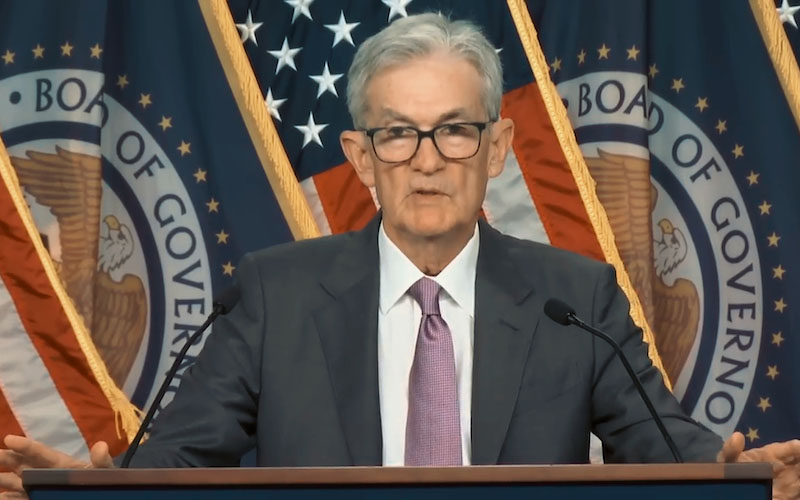
The Federal Reserve minutes show that the Fed is concerned about the impact of the war with Iran and believes that the likelihood of raising and lowering interest rates is roughly equal.
2026-04-09 11:13:17
The minutes of the March 17-18 Federal Open Market Committee (FOMC) meeting revealed that committee members were highly uncertain about the potential impact of a war with Iran on the U.S. economy. Most members currently believe that the upside and downside risks to the economy are roughly balanced, and that the likelihood of raising or lowering interest rates is about equal. Only one member opposed maintaining the current interest rate and advocated for an immediate 25 basis point cut.
This statement highlights the Federal Reserve's cautious approach to decision-making in the current complex geopolitical environment.
The staff assessment in the meeting minutes showed that the market's implied path for the federal funds rate had shifted significantly upward, mainly reflecting investors' belief that the Fed's easing policy would be postponed until the end of this year.
The nominal yield on two-year U.S. Treasury bonds rose overall, primarily due to increased inflation compensation, closely related to short-term inflation concerns triggered by soaring energy prices following developments in the Middle East. In contrast, the nominal yield on ten-year U.S. Treasury bonds remained largely unchanged. Stock market indices declined, and market volatility increased significantly, with developments in the Middle East appearing to have clearly undermined investor confidence.
In other developed economies, soaring energy prices led to short-term inflation compensation and a significant rise in sovereign bond yields. The US dollar index strengthened moderately, benefiting from deteriorating market risk sentiment and the US's status as a net energy exporter.
Foreign stock markets generally declined slightly, but experienced significant volatility. Sovereign credit spreads widened in many emerging market economies, particularly those heavily reliant on energy imports.
Based on the information available at the time, U.S. real GDP continued to expand at a steady pace, especially after excluding the impact of the federal government shutdown in the fourth quarter of last year. The unemployment rate had been relatively stable in recent months, but job growth remained weak, and consumer price inflation remained at a high level.
Overall inflation abroad remains close to central bank targets, although service sector price inflation remains high in some economies. Short-term inflation expectations have risen somewhat due to a sharp increase in energy and other commodity prices caused by the Middle East conflict.
Staff members were less optimistic about economic activity than they were at the January meeting, mainly reflecting the latest data and weaker financial support. They only assessed the impact of the stock market decline and rising oil prices caused by the Middle East situation on economic activity as minor.
Based on comprehensive assessments, actual GDP growth is expected to remain largely in line with potential growth until 2028. Therefore, the unemployment rate is projected to remain near its current level for most of next year, before slightly declining to the long-term natural rate of unemployment.
The Federal Reserve's inflation forecast for 2026 is slightly higher than its January forecast, primarily reflecting the latest data and the impact of recent oil price increases on consumer energy prices. However, inflation is expected to return to its previous slowing trend and approach the 2% target level by the end of next year.
Staff indicated that uncertainty in the forecasts has increased significantly, primarily due to developments in the Middle East, changes in government policy, and the potential economic impact of artificial intelligence applications. Risks to the employment and real GDP growth forecasts are tilted to the downside, while risks to the inflation forecasts are slightly tilted to the upside compared to the January meeting.
Participants emphasized that the policy stance should be flexibly adjusted based on the latest data, the evolving economic outlook, and the balance of risks. Some participants believed there was ample reason to use a two-way description of future interest rate decisions in the post-meeting statement, reflecting that the target range for the federal funds rate may need to be raised if inflation persists above the target level.
Most committee members pointed out that with the development of the situation in the Middle East, both the upside risks to inflation and the downside risks to employment have increased. If the conflict in the Middle East continues for a long time, it may further soften labor market conditions, which may require additional interest rate cuts; at the same time, a sharp rise in oil prices will weaken household purchasing power, tighten financial conditions, and inhibit overseas economic growth.
Many participants also pointed out that continued oil price increases could lead to persistently high inflation, which might necessitate interest rate hikes to help inflation fall back to the 2% target and anchor long-term inflation expectations. However, most participants reiterated that it is too early to judge how the situation in the Middle East will affect the US economy, and a prudent approach is to continue closely monitoring the situation and assessing its implications for the appropriate stance of monetary policy.
Voting results /H2>
This statement highlights the Federal Reserve's cautious approach to decision-making in the current complex geopolitical environment.
Financial markets reacted strongly to the Middle East conflict.
The staff assessment in the meeting minutes showed that the market's implied path for the federal funds rate had shifted significantly upward, mainly reflecting investors' belief that the Fed's easing policy would be postponed until the end of this year.
The nominal yield on two-year U.S. Treasury bonds rose overall, primarily due to increased inflation compensation, closely related to short-term inflation concerns triggered by soaring energy prices following developments in the Middle East. In contrast, the nominal yield on ten-year U.S. Treasury bonds remained largely unchanged. Stock market indices declined, and market volatility increased significantly, with developments in the Middle East appearing to have clearly undermined investor confidence.
In other developed economies, soaring energy prices led to short-term inflation compensation and a significant rise in sovereign bond yields. The US dollar index strengthened moderately, benefiting from deteriorating market risk sentiment and the US's status as a net energy exporter.
Foreign stock markets generally declined slightly, but experienced significant volatility. Sovereign credit spreads widened in many emerging market economies, particularly those heavily reliant on energy imports.
Current state of the US economy: steady growth but persistent inflationary pressures.
Based on the information available at the time, U.S. real GDP continued to expand at a steady pace, especially after excluding the impact of the federal government shutdown in the fourth quarter of last year. The unemployment rate had been relatively stable in recent months, but job growth remained weak, and consumer price inflation remained at a high level.
Overall inflation abroad remains close to central bank targets, although service sector price inflation remains high in some economies. Short-term inflation expectations have risen somewhat due to a sharp increase in energy and other commodity prices caused by the Middle East conflict.
Economic outlook forecasts are becoming more cautious.
Staff members were less optimistic about economic activity than they were at the January meeting, mainly reflecting the latest data and weaker financial support. They only assessed the impact of the stock market decline and rising oil prices caused by the Middle East situation on economic activity as minor.
Based on comprehensive assessments, actual GDP growth is expected to remain largely in line with potential growth until 2028. Therefore, the unemployment rate is projected to remain near its current level for most of next year, before slightly declining to the long-term natural rate of unemployment.
The Federal Reserve's inflation forecast for 2026 is slightly higher than its January forecast, primarily reflecting the latest data and the impact of recent oil price increases on consumer energy prices. However, inflation is expected to return to its previous slowing trend and approach the 2% target level by the end of next year.
Uncertainty has increased significantly and the risk balance has changed.
Staff indicated that uncertainty in the forecasts has increased significantly, primarily due to developments in the Middle East, changes in government policy, and the potential economic impact of artificial intelligence applications. Risks to the employment and real GDP growth forecasts are tilted to the downside, while risks to the inflation forecasts are slightly tilted to the upside compared to the January meeting.
Participants emphasized that the policy stance should be flexibly adjusted based on the latest data, the evolving economic outlook, and the balance of risks. Some participants believed there was ample reason to use a two-way description of future interest rate decisions in the post-meeting statement, reflecting that the target range for the federal funds rate may need to be raised if inflation persists above the target level.
Most committee members pointed out that with the development of the situation in the Middle East, both the upside risks to inflation and the downside risks to employment have increased. If the conflict in the Middle East continues for a long time, it may further soften labor market conditions, which may require additional interest rate cuts; at the same time, a sharp rise in oil prices will weaken household purchasing power, tighten financial conditions, and inhibit overseas economic growth.
Many participants also pointed out that continued oil price increases could lead to persistently high inflation, which might necessitate interest rate hikes to help inflation fall back to the 2% target and anchor long-term inflation expectations. However, most participants reiterated that it is too early to judge how the situation in the Middle East will affect the US economy, and a prudent approach is to continue closely monitoring the situation and assessing its implications for the appropriate stance of monetary policy.
Voting results /H2>
Those who voted to keep interest rates unchanged at this meeting included Chairman Powell, Williams, Barr, Bowman, Cook, Harmack, Jefferson, Kashkari, Logan, Paulson, and Waller. The only dissenting vote was from Stephen Miran, who favored lowering the target range for the federal funds rate by 25 basis points at this meeting.
Overall , the FOMC meeting minutes sent a clear signal: Faced with the uncertainty brought about by the war in Iran, the Federal Reserve is increasingly divided on the future path of monetary policy. While short-term inflationary pressures may rise due to increased energy prices, downside risks to the economy should not be ignored. The Fed will continue to maintain a flexible and cautious approach, closely monitoring the impact of developments in the Middle East on the US economy. This statement also means that in the near future, the Fed's policy adjustments will depend more heavily on the latest data and changes in the risk balance, which the market needs to pay close attention to.
- Risk Warning and Disclaimer
- The market involves risk, and trading may not be suitable for all investors. This article is for reference only and does not constitute personal investment advice, nor does it take into account certain users’ specific investment objectives, financial situation, or other needs. Any investment decisions made based on this information are at your own risk.