Are there hidden tricks in the three versions of the ceasefire agreement? Iran's deletion of posts and closure of the Strait of Hormuz may provide the answer.
2026-04-09 16:06:32
On Thursday (April 9), WTI crude oil futures opened higher and continued to rise during the Asian and European sessions, currently trading around 90.85. The US-Iran negotiations have encountered new uncertainties, with Iran re-blocking the Strait of Hormuz. The Iranian ambassador to Pakistan deleted posts on the evening of the 9th related to the arrival of the Iranian delegation, leaving the question of whether the talks can be held as scheduled unresolved.
On April 8, the first day the ceasefire took effect, the situation deteriorated rapidly, with Israel launching its largest airstrike against Hezbollah in Lebanon since the start of the conflict.
Iran immediately declared Israel's actions a violation of the ceasefire agreement, closed the Strait of Hormuz—a vital global energy chokepoint—again, and threatened to take deterrent action against Israeli military targets, escalating the risk to oil supply.
The core trigger for Iran's reinstatement of the Straits blockade was the violation of three key provisions of the 10 ceasefire terms it proposed, including a ceasefire in Lebanon, a ban on violating Iranian airspace, and acceptance of Iranian uranium enrichment activities. Iran stated that the basis for negotiations had been undermined.
Iranian Islamic Republic officials further clarified the hard preconditions for a lasting ceasefire: US troops must withdraw from the Middle East, Iran must have full control over the existing and future passage rights in the Strait of Hormuz, Western countries must lift major sanctions against Iran, Iran must receive full compensation for related losses, and the final agreement must be formally approved by Iran's Supreme Leader.
The US and Iran have significant differences regarding a ceasefire agreement, and the negotiation process is fraught with uncertainty.
US Vice President Vance revealed that, to his knowledge, there are three versions of the ceasefire agreement: the first version was questioned by the US as being written by ChatGPT and was directly rejected; the second version, mediated by Pakistan, was relatively reasonable and was effective for a time; and the third version, with a more extreme stance, is circulating on social media.
The US only approved the revised version of the plan, while emphasizing that the Lebanese issue was not included in the US-Iran ceasefire agreement, and that the Israeli military's restraint in Lebanon was only to cooperate with the US negotiations.
The White House announced on the 8th that the first round of talks between the United States and Iran was scheduled to be held in Islamabad, Pakistan on the 11th. However, the Iranian ambassador to Pakistan deleted a post on the 9th about the arrival of the Iranian delegation that evening, leaving the question of whether the talks could be held as scheduled unresolved.
Furthermore, Iran criticized the 15-point ceasefire plan proposed by the US as "hypocritical," and the US's attempt to project a "winning" image regardless of the outcome has further increased the uncertainty and flexibility of the final negotiations.
This is the most intriguing part: the United States attempts to gain a de facto controlling role in negotiations by presenting multiple versions of the story that may circulate in the market, since unfavorable terms can be interpreted as untrue versions.
The Strait of Hormuz has been closed again, directly and severely impacting the global energy transportation landscape.
More than 800 ships are stranded in the area, involving approximately 150 million to 200 million barrels of oil equivalent and liquefied natural gas.
Even if a complete ceasefire is eventually achieved, it will still take several years for the petrochemical facilities in Qatar, Kuwait, and Iran, which were damaged by the conflict, to return to full capacity.
Iran also plans to institutionalize the Straits of Hormuz passage fee, proposing to charge each passing vessel $2 million. This fee may become a fixed cost in crude oil pricing, pushing up the central oil price in the long term.
On the fundamental side, U.S. crude oil inventories increased by 3.08 million barrels, marking the seventh consecutive week of accumulation, which would normally be bearish for oil prices. However, geopolitical conflict risks completely dominated market trends.
Meanwhile, distillate fuel inventories decreased significantly by 3.14 million barrels, refining profits remained high, and prices of refined oil products such as diesel were unlikely to fall quickly; crude oil futures contracts remained stable, with November and December contracts trading at slightly below $80 per barrel.
As previously analyzed, the market is currently in a situation where Iran wants to negotiate but Israel continues to bomb Iran's allies. Although the Iranian ambassador to Pakistan deleted posts on the 9th about the arrival of the Iranian delegation that evening, oil prices did not rebound significantly, indicating that the market is still optimistic about the peace talks.
Currently, on the eve of negotiations, both the US and Iran are accumulating leverage. However, based on first principles, the likely outcome remains that Iran will abandon its uranium enrichment program in exchange for partial control of the Strait of Hormuz and a US ceasefire. Since Vance stated that a ceasefire in Lebanon is not included in the agreement, the key point of observation regarding the progress of US-Iran peace talks has shifted to Israel's military actions. If Israel backs down, the negotiations are likely to proceed smoothly.
From a technical perspective, WTI crude oil futures are retesting the support level of 97, with the next key resistance level around 102. Current support levels are around 97 and 94.78.
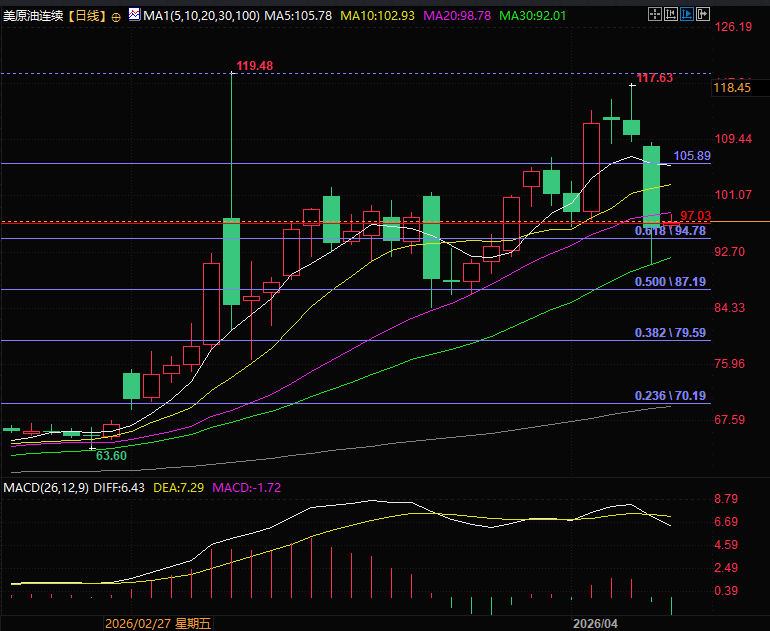
(WTI crude oil futures daily chart, source: EasyForex)
At 16:02 Beijing time, WTI crude oil futures were trading at $97.61 per barrel.
On April 8, the first day the ceasefire took effect, the situation deteriorated rapidly, with Israel launching its largest airstrike against Hezbollah in Lebanon since the start of the conflict.
Iran immediately declared Israel's actions a violation of the ceasefire agreement, closed the Strait of Hormuz—a vital global energy chokepoint—again, and threatened to take deterrent action against Israeli military targets, escalating the risk to oil supply.
Iran reiterates ceasefire conditions after core terms are violated.
The core trigger for Iran's reinstatement of the Straits blockade was the violation of three key provisions of the 10 ceasefire terms it proposed, including a ceasefire in Lebanon, a ban on violating Iranian airspace, and acceptance of Iranian uranium enrichment activities. Iran stated that the basis for negotiations had been undermined.
Iranian Islamic Republic officials further clarified the hard preconditions for a lasting ceasefire: US troops must withdraw from the Middle East, Iran must have full control over the existing and future passage rights in the Strait of Hormuz, Western countries must lift major sanctions against Iran, Iran must receive full compensation for related losses, and the final agreement must be formally approved by Iran's Supreme Leader.
Multiple versions of the proposals raise questions about the prospects of US-Iran talks.
The US and Iran have significant differences regarding a ceasefire agreement, and the negotiation process is fraught with uncertainty.
US Vice President Vance revealed that, to his knowledge, there are three versions of the ceasefire agreement: the first version was questioned by the US as being written by ChatGPT and was directly rejected; the second version, mediated by Pakistan, was relatively reasonable and was effective for a time; and the third version, with a more extreme stance, is circulating on social media.
The US only approved the revised version of the plan, while emphasizing that the Lebanese issue was not included in the US-Iran ceasefire agreement, and that the Israeli military's restraint in Lebanon was only to cooperate with the US negotiations.
The White House announced on the 8th that the first round of talks between the United States and Iran was scheduled to be held in Islamabad, Pakistan on the 11th. However, the Iranian ambassador to Pakistan deleted a post on the 9th about the arrival of the Iranian delegation that evening, leaving the question of whether the talks could be held as scheduled unresolved.
Furthermore, Iran criticized the 15-point ceasefire plan proposed by the US as "hypocritical," and the US's attempt to project a "winning" image regardless of the outcome has further increased the uncertainty and flexibility of the final negotiations.
This is the most intriguing part: the United States attempts to gain a de facto controlling role in negotiations by presenting multiple versions of the story that may circulate in the market, since unfavorable terms can be interpreted as untrue versions.
Energy supply chain disruptions in the Strait of Hormuz become a new variable in oil prices.
The Strait of Hormuz has been closed again, directly and severely impacting the global energy transportation landscape.
More than 800 ships are stranded in the area, involving approximately 150 million to 200 million barrels of oil equivalent and liquefied natural gas.
Even if a complete ceasefire is eventually achieved, it will still take several years for the petrochemical facilities in Qatar, Kuwait, and Iran, which were damaged by the conflict, to return to full capacity.
Iran also plans to institutionalize the Straits of Hormuz passage fee, proposing to charge each passing vessel $2 million. This fee may become a fixed cost in crude oil pricing, pushing up the central oil price in the long term.
On the fundamental side, U.S. crude oil inventories increased by 3.08 million barrels, marking the seventh consecutive week of accumulation, which would normally be bearish for oil prices. However, geopolitical conflict risks completely dominated market trends.
Meanwhile, distillate fuel inventories decreased significantly by 3.14 million barrels, refining profits remained high, and prices of refined oil products such as diesel were unlikely to fall quickly; crude oil futures contracts remained stable, with November and December contracts trading at slightly below $80 per barrel.
Summary and Technical Analysis:
As previously analyzed, the market is currently in a situation where Iran wants to negotiate but Israel continues to bomb Iran's allies. Although the Iranian ambassador to Pakistan deleted posts on the 9th about the arrival of the Iranian delegation that evening, oil prices did not rebound significantly, indicating that the market is still optimistic about the peace talks.
Currently, on the eve of negotiations, both the US and Iran are accumulating leverage. However, based on first principles, the likely outcome remains that Iran will abandon its uranium enrichment program in exchange for partial control of the Strait of Hormuz and a US ceasefire. Since Vance stated that a ceasefire in Lebanon is not included in the agreement, the key point of observation regarding the progress of US-Iran peace talks has shifted to Israel's military actions. If Israel backs down, the negotiations are likely to proceed smoothly.
From a technical perspective, WTI crude oil futures are retesting the support level of 97, with the next key resistance level around 102. Current support levels are around 97 and 94.78.
(WTI crude oil futures daily chart, source: EasyForex)
At 16:02 Beijing time, WTI crude oil futures were trading at $97.61 per barrel.
- Risk Warning and Disclaimer
- The market involves risk, and trading may not be suitable for all investors. This article is for reference only and does not constitute personal investment advice, nor does it take into account certain users’ specific investment objectives, financial situation, or other needs. Any investment decisions made based on this information are at your own risk.