Buy rumors, sell facts? Gold traders keep a close eye on Islamabad.
2026-04-09 16:48:42
On Thursday, April 9th, the spot gold market showed a short-term bullish bias amid the two-week ceasefire agreement between the US and Iran, with prices fluctuating around $4720 per ounce. Gold prices initially rose after the agreement was announced, as traders repriced geopolitical risk premiums, but the Israeli military action in Lebanon triggered Iranian discontent, causing some gains to be given back. The ceasefire is currently set to last until at least the following day's negotiations in Islamabad, and market focus quickly shifted to the outcome of the negotiations. Relatively loose financial conditions provide short-term support for gold, but if negotiations break down and conflict resumes, sentiment could quickly reverse.
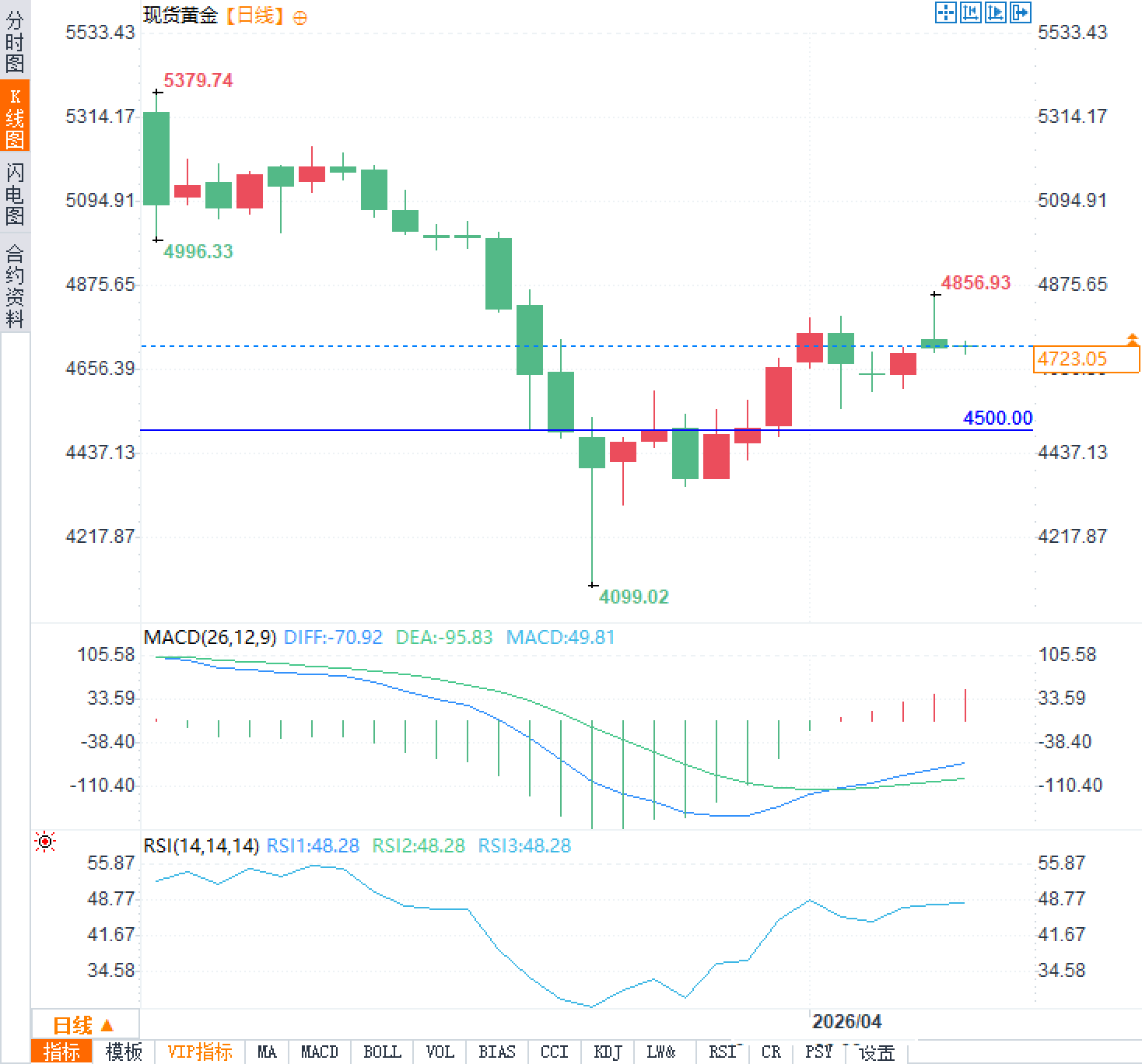
The ceasefire agreement between the US and Iran directly alleviated the potential risk of disruption to key shipping lanes in the Middle East, prompting traders to lower the premium for safe-haven demand. Spot gold initially surged to around $4,855 per ounce yesterday following the news of the agreement, but subsequently retreated due to regional conflicts, and is currently holding steady around $4,720 per ounce. Although the ceasefire has not formally ended the state of hostilities, the two-week window allows room for negotiations, reducing the pressure on global energy and financial markets from the transmission of sudden supply shocks in the short term.
Traders are closely watching whether the ceasefire has truly diminished gold's appeal as a safe-haven asset. If negotiations drag on or become volatile, safe-haven funds will quickly flow back. In the current environment, the risk repricing effect of the ceasefire is dominating short-term price movements, and the market remains cautious about the possibility of lasting peace.
The easing signals from the ceasefire agreement resonate with the current financial environment. The US dollar index has fallen back to around 99.1, and the real yield curve is flattening, providing valuation support for gold, a non-interest-bearing asset. Although the Federal Reserve maintained its benchmark interest rate in the 3.5% to 3.75% range, market expectations for limited easing in 2026 have not changed significantly. However, the easing of geopolitical tensions has reduced upward pressure on inflation, further weakening the inhibitory effect of high interest rates on gold.
Traders are focused on how the ceasefire will reshape commodity pricing logic. The simultaneous decline in crude oil prices and lower energy costs indirectly benefit global economic growth expectations, driving a short-term recovery in risk assets, but also testing gold's relative attractiveness in multi-asset allocation. Compared to purely safe-haven demand, gold currently reflects traders' dynamic hedging needs in the face of uncertainty. If the ceasefire smoothly transitions into a formal agreement, fundamental support may gradually shift to neutral; conversely, any setbacks in negotiations will amplify gold's defensive attributes.
The Islamabad negotiations are scheduled to begin the following day. Both sides have indicated that the ceasefire could be extended if a consensus is reached, but Iran's insistence on Lebanon's inclusion in the agreement shows that differences remain. Traders generally believe that the outcome of the negotiations will be a decisive variable in gold price movements.
Current market sentiment has shifted from extreme risk aversion to conditional optimism, but volatility indicators remain high, suggesting traders haven't completely ruled out a sudden reversal. Similar historical geopolitical events indicate that temporary agreements often lead to a "buy the rumor, sell the fact" phase, and gold prices will likely exhibit high-frequency fluctuations during the negotiation window. Overall, the short-term bias remains bullish, but upside potential is limited by the uncertainty of negotiations, while downside risks depend on the speed at which the conflict reignites.
Short-term gold pricing logic under geopolitical easing
The ceasefire agreement between the US and Iran directly alleviated the potential risk of disruption to key shipping lanes in the Middle East, prompting traders to lower the premium for safe-haven demand. Spot gold initially surged to around $4,855 per ounce yesterday following the news of the agreement, but subsequently retreated due to regional conflicts, and is currently holding steady around $4,720 per ounce. Although the ceasefire has not formally ended the state of hostilities, the two-week window allows room for negotiations, reducing the pressure on global energy and financial markets from the transmission of sudden supply shocks in the short term.
Traders are closely watching whether the ceasefire has truly diminished gold's appeal as a safe-haven asset. If negotiations drag on or become volatile, safe-haven funds will quickly flow back. In the current environment, the risk repricing effect of the ceasefire is dominating short-term price movements, and the market remains cautious about the possibility of lasting peace.
The interaction between fundamental factors and macroeconomic financial conditions
The easing signals from the ceasefire agreement resonate with the current financial environment. The US dollar index has fallen back to around 99.1, and the real yield curve is flattening, providing valuation support for gold, a non-interest-bearing asset. Although the Federal Reserve maintained its benchmark interest rate in the 3.5% to 3.75% range, market expectations for limited easing in 2026 have not changed significantly. However, the easing of geopolitical tensions has reduced upward pressure on inflation, further weakening the inhibitory effect of high interest rates on gold.
Traders are focused on how the ceasefire will reshape commodity pricing logic. The simultaneous decline in crude oil prices and lower energy costs indirectly benefit global economic growth expectations, driving a short-term recovery in risk assets, but also testing gold's relative attractiveness in multi-asset allocation. Compared to purely safe-haven demand, gold currently reflects traders' dynamic hedging needs in the face of uncertainty. If the ceasefire smoothly transitions into a formal agreement, fundamental support may gradually shift to neutral; conversely, any setbacks in negotiations will amplify gold's defensive attributes.
Negotiation Prospects and Market Volatility Path
The Islamabad negotiations are scheduled to begin the following day. Both sides have indicated that the ceasefire could be extended if a consensus is reached, but Iran's insistence on Lebanon's inclusion in the agreement shows that differences remain. Traders generally believe that the outcome of the negotiations will be a decisive variable in gold price movements.
Current market sentiment has shifted from extreme risk aversion to conditional optimism, but volatility indicators remain high, suggesting traders haven't completely ruled out a sudden reversal. Similar historical geopolitical events indicate that temporary agreements often lead to a "buy the rumor, sell the fact" phase, and gold prices will likely exhibit high-frequency fluctuations during the negotiation window. Overall, the short-term bias remains bullish, but upside potential is limited by the uncertainty of negotiations, while downside risks depend on the speed at which the conflict reignites.
Frequently Asked Questions
Question 1: Why did the US-Iran ceasefire agreement provide short-term support for spot gold?
A: The ceasefire directly alleviated market concerns about the disruption of Middle East shipping lanes and a second surge in energy prices. Traders subsequently lowered their risk premiums, allowing gold to maintain support amid a recovery in risk appetite. Although the agreement is temporary, the two-week window provides a buffer for negotiations, and the pricing of uncertainty has temporarily become more moderate. Coupled with a weakening dollar, this creates a short-term positive force.
Question 2: How do current macroeconomic and financial conditions, together with geopolitical factors, shape gold pricing?
A: Loose financial conditions and the Federal Reserve's stable interest rate path have jointly weakened the downward pressure of high interest rates on gold. The ceasefire has further reduced inflation expectations, enhancing gold's hedging value in multi-asset portfolios. However, if the negotiations are successful, the increased attractiveness of risk assets may temporarily divert funds, and traders need to continuously monitor changes in the US dollar and the yield curve.
- Risk Warning and Disclaimer
- The market involves risk, and trading may not be suitable for all investors. This article is for reference only and does not constitute personal investment advice, nor does it take into account certain users’ specific investment objectives, financial situation, or other needs. Any investment decisions made based on this information are at your own risk.