With oil prices still reeling, can the yen escape unscathed?
2026-04-10 17:53:23
On Friday, April 10th, the USD/JPY pair traded around 159.25 during the European session, a slight increase from the previous trading day. The temporary ceasefire agreement reached between the US and Iran led to a pullback in energy prices, which to some extent alleviated the pressure on Japan's imported energy costs and provided limited support for the yen. However, the ongoing sporadic conflicts in the region and the risk of disruption to shipping through the Strait of Hormuz have not been completely eliminated, leaving pressure for a rebound in energy prices and maintaining high market uncertainty.
Traders are closely watching the high-level US-Iran talks scheduled for Saturday in Islamabad, where a US delegation led by the Vice President will engage directly with Iranian officials to clarify the prospects for further de-escalation. Against this backdrop, the USD/JPY exchange rate has stabilized in the short term, but its overall trend remains influenced by energy-driven inflation and growth expectations.

The announcement of the temporary ceasefire agreement between the US and Iran directly pushed energy prices down from recent highs. WTI crude oil prices are currently hovering between $99 and $100 per barrel, down from their pre-ceasefire peak. This pullback has partially alleviated concerns about global supply chain disruptions, but the potential risk of disruptions to shipping in the Strait of Hormuz remains, making oil prices vulnerable to unforeseen events. Market data shows that oil prices initially fell by more than 5% after the ceasefire, but subsequently rebounded due to recurring regional tensions, with the current gains narrowing to around 2%.
This energy dynamic directly impacts the USD/JPY exchange rate. As an economy heavily reliant on Middle Eastern oil imports, Japan's trade balance and business costs are directly affected by energy price fluctuations. However, a sustained rebound in energy prices would further increase Japan's import bills, exacerbating external pressures. The outcome of the Islamabad talks will be a key variable; substantial progress in the negotiations could further reduce uncertainty in the energy market, while failure could trigger a new round of oil price volatility, thereby amplifying the vulnerability of the yen.
Japan's economy relies heavily on energy imports. Disruptions to Middle Eastern oil supplies or high prices would simultaneously push up domestic producer price indices and consumer price levels, while also suppressing manufacturing and consumer spending, creating a typical stagflation scenario. Since the outbreak of the conflict, the yen has depreciated by approximately 2%, primarily due to the drag on growth prospects caused by rising energy costs. High oil prices not only directly increase import expenditures but also amplify cost pressures on businesses through the supply chain, thereby weakening export competitiveness.
While energy prices have seen a correction, they remain relatively high, meaning that core inflationary pressures in Japan are unlikely to ease quickly. Traders have observed that every $10 increase in energy prices per barrel may correspond to an additional 0.5% to 1% depreciation of the yen, a correlation validated by recent data. While the ceasefire provides a short-term buffer, a renewed outbreak of risk in the Strait of Hormuz and a return of energy prices to triple digits would reignite stagflation concerns, putting even greater downward pressure on the yen. The market is weighing the probability of an energy rebound against slower economic growth, the latter's negative impact on the yen is already becoming apparent.
The Bank of Japan will hold a policy meeting on April 28, and market focus is shifting to the latest signals from Governor Kazuo Ueda. On April 9, Ueda stated in the Diet that Japan's short- and medium-term real interest rates remain significantly negative, and financial conditions remain loose, which helps to promote a moderate recovery in private capital spending. He also pointed out that increased fiscal spending could push up market interest rates and crowd out private investment, but the current loose environment still supports moderate economic expansion.
Kazuo Ueda previously emphasized that the impact of yen exchange rate fluctuations on the economy and prices has increased significantly compared to the past. Corporate price increases and wage increases are more sticky, and a weaker exchange rate will further push up import costs and transmit to domestic inflation. This statement suggests that the central bank will closely assess the impact of energy prices on the inflation path at the meeting. If energy-driven inflationary pressures persist, the pace of policy normalization may continue, while short-term economic downturns caused by geopolitical factors are considered temporary and insufficient to change the interest rate hike trajectory. Traders should pay attention to the outlook report released after the meeting, where the weighting of energy risks and exchange rate factors will directly determine the market's judgment on the medium- to long-term support for the yen.
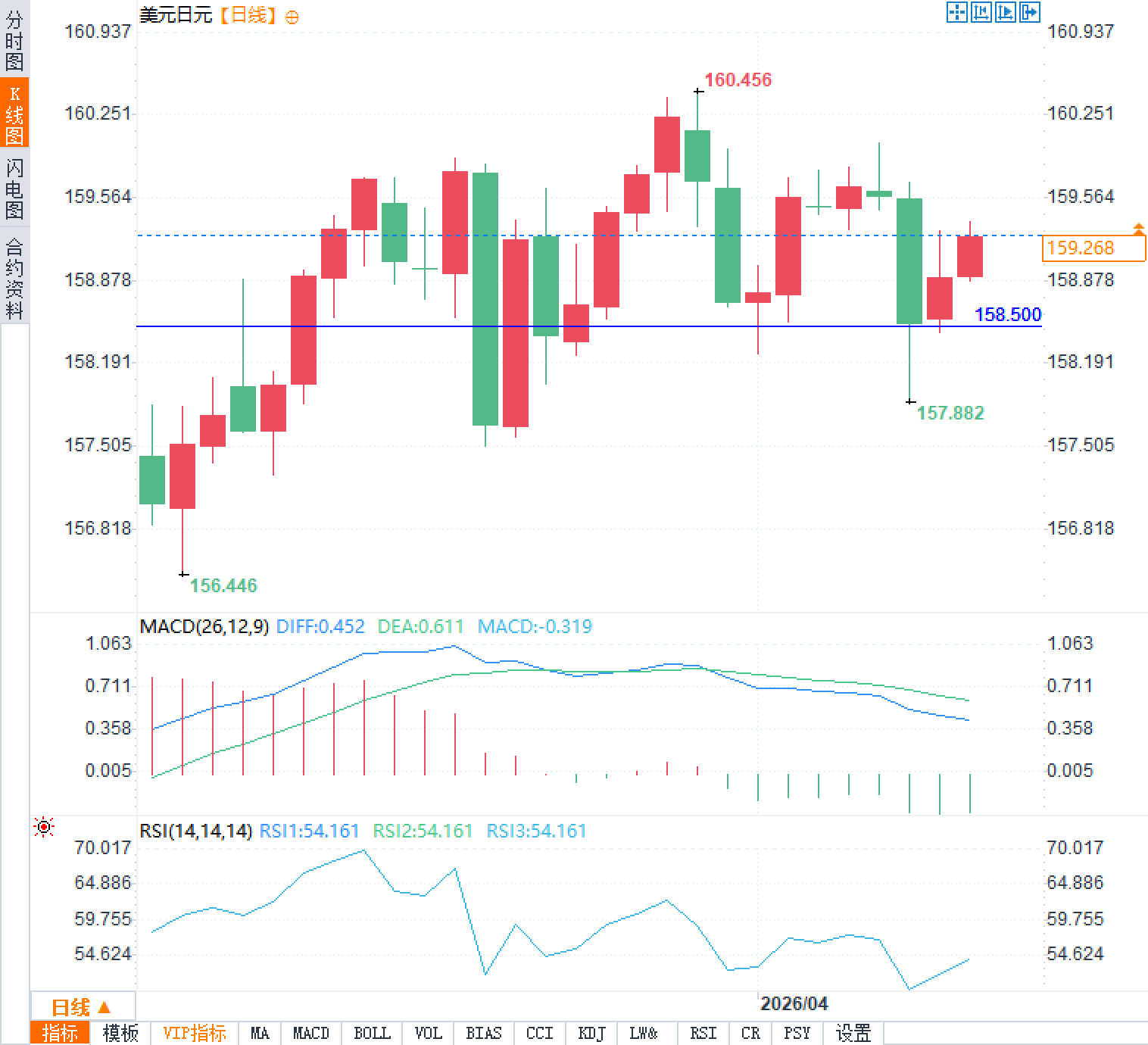
From a technical perspective, the USD/JPY exchange rate is currently stable around 159, showing signs of a mild rebound in the short term. The price has recovered from the support level near 158.20, and the moving average system indicates a bullish signal, but the Relative Strength Index (RSI) is in the neutral range, suggesting that momentum has not yet fully recovered. If energy prices stabilize and decline, the exchange rate may test the support below 158.50; conversely, if oil prices resume their upward trend, the exchange rate will face resistance above 160.
Overall, the ceasefire agreement provides the yen with a brief respite, but its vulnerability is evident. Progress in diplomatic negotiations, unforeseen geopolitical events, and energy price trends will be the dominant variables. In the short term, the exchange rate may remain range-bound, but the long-term direction still depends on whether the ceasefire can translate into a lasting easing of tensions. If risks reignite, the energy-driven weakness of the yen will once again dominate the market.
Traders are closely watching the high-level US-Iran talks scheduled for Saturday in Islamabad, where a US delegation led by the Vice President will engage directly with Iranian officials to clarify the prospects for further de-escalation. Against this backdrop, the USD/JPY exchange rate has stabilized in the short term, but its overall trend remains influenced by energy-driven inflation and growth expectations.
Geopolitical easing and energy market volatility
The announcement of the temporary ceasefire agreement between the US and Iran directly pushed energy prices down from recent highs. WTI crude oil prices are currently hovering between $99 and $100 per barrel, down from their pre-ceasefire peak. This pullback has partially alleviated concerns about global supply chain disruptions, but the potential risk of disruptions to shipping in the Strait of Hormuz remains, making oil prices vulnerable to unforeseen events. Market data shows that oil prices initially fell by more than 5% after the ceasefire, but subsequently rebounded due to recurring regional tensions, with the current gains narrowing to around 2%.
This energy dynamic directly impacts the USD/JPY exchange rate. As an economy heavily reliant on Middle Eastern oil imports, Japan's trade balance and business costs are directly affected by energy price fluctuations. However, a sustained rebound in energy prices would further increase Japan's import bills, exacerbating external pressures. The outcome of the Islamabad talks will be a key variable; substantial progress in the negotiations could further reduce uncertainty in the energy market, while failure could trigger a new round of oil price volatility, thereby amplifying the vulnerability of the yen.
Japan's dependence on energy imports and the risk of stagflation
Japan's economy relies heavily on energy imports. Disruptions to Middle Eastern oil supplies or high prices would simultaneously push up domestic producer price indices and consumer price levels, while also suppressing manufacturing and consumer spending, creating a typical stagflation scenario. Since the outbreak of the conflict, the yen has depreciated by approximately 2%, primarily due to the drag on growth prospects caused by rising energy costs. High oil prices not only directly increase import expenditures but also amplify cost pressures on businesses through the supply chain, thereby weakening export competitiveness.
While energy prices have seen a correction, they remain relatively high, meaning that core inflationary pressures in Japan are unlikely to ease quickly. Traders have observed that every $10 increase in energy prices per barrel may correspond to an additional 0.5% to 1% depreciation of the yen, a correlation validated by recent data. While the ceasefire provides a short-term buffer, a renewed outbreak of risk in the Strait of Hormuz and a return of energy prices to triple digits would reignite stagflation concerns, putting even greater downward pressure on the yen. The market is weighing the probability of an energy rebound against slower economic growth, the latter's negative impact on the yen is already becoming apparent.
Ahead of the Bank of Japan's April Meeting and Kazuo Ueda's Latest Statements
The Bank of Japan will hold a policy meeting on April 28, and market focus is shifting to the latest signals from Governor Kazuo Ueda. On April 9, Ueda stated in the Diet that Japan's short- and medium-term real interest rates remain significantly negative, and financial conditions remain loose, which helps to promote a moderate recovery in private capital spending. He also pointed out that increased fiscal spending could push up market interest rates and crowd out private investment, but the current loose environment still supports moderate economic expansion.
Kazuo Ueda previously emphasized that the impact of yen exchange rate fluctuations on the economy and prices has increased significantly compared to the past. Corporate price increases and wage increases are more sticky, and a weaker exchange rate will further push up import costs and transmit to domestic inflation. This statement suggests that the central bank will closely assess the impact of energy prices on the inflation path at the meeting. If energy-driven inflationary pressures persist, the pace of policy normalization may continue, while short-term economic downturns caused by geopolitical factors are considered temporary and insufficient to change the interest rate hike trajectory. Traders should pay attention to the outlook report released after the meeting, where the weighting of energy risks and exchange rate factors will directly determine the market's judgment on the medium- to long-term support for the yen.
USD/JPY Technical Analysis and Short-Term Outlook
From a technical perspective, the USD/JPY exchange rate is currently stable around 159, showing signs of a mild rebound in the short term. The price has recovered from the support level near 158.20, and the moving average system indicates a bullish signal, but the Relative Strength Index (RSI) is in the neutral range, suggesting that momentum has not yet fully recovered. If energy prices stabilize and decline, the exchange rate may test the support below 158.50; conversely, if oil prices resume their upward trend, the exchange rate will face resistance above 160.
Overall, the ceasefire agreement provides the yen with a brief respite, but its vulnerability is evident. Progress in diplomatic negotiations, unforeseen geopolitical events, and energy price trends will be the dominant variables. In the short term, the exchange rate may remain range-bound, but the long-term direction still depends on whether the ceasefire can translate into a lasting easing of tensions. If risks reignite, the energy-driven weakness of the yen will once again dominate the market.
- Risk Warning and Disclaimer
- The market involves risk, and trading may not be suitable for all investors. This article is for reference only and does not constitute personal investment advice, nor does it take into account certain users’ specific investment objectives, financial situation, or other needs. Any investment decisions made based on this information are at your own risk.