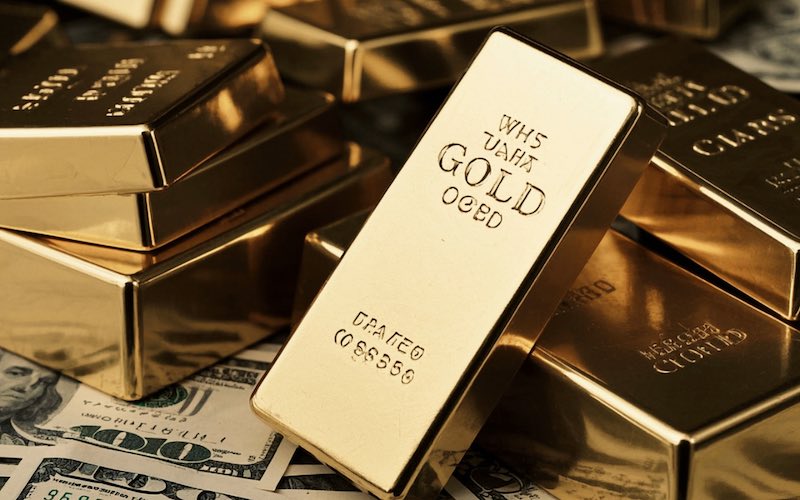
JPMorgan Chase: Gold is not an effective hedging tool and should be considered an investment asset.
2026-04-10 22:48:15
Tai Hui, chief market strategist for Asia Pacific at JPMorgan Asset Management, said that the sharp sell-off of gold during the Iran war has weakened its status as a defensive hedging tool in investors' portfolios, and investors should view gold as an investment asset rather than a hedging asset.
Xu Changtai pointed out: "Gold has not played a role in hedging geopolitical risks. For a long time, we have believed that gold is not an effective hedging tool. Observing its correlation with stocks or risky assets, we find that this correlation is not stable."
Gold prices weakened during the Iran war, plummeting 24% in 20 days.
In the 20 days since the attacks on Iran, gold prices have fallen from a high of $5,415 per ounce to a low of $4,100, a drop of 24%. Although prices have since rebounded significantly from their lows, gold has struggled to build upward momentum as the conflict continues.
Hsu Chang-tai stated that although gold has a poor track record in various geopolitical events over the past 30 years, many investors still regard it as a tool to hedge against geopolitical risks.
“We can’t even say that 70% of geopolitical events will drive up gold prices,” he said. “The reality is more like a 50/50, as uncertain as flipping a coin.”
Gold's multiple disadvantages: high volatility, no returns, and high holding costs.
Hsu Chang-tai pointed out that even setting aside geopolitical shocks such as the Iran war, gold faces many unfavorable factors.
“Its volatility is comparable to that of emerging market stocks,” he emphasized, “and gold does not generate returns. Obviously, investors who held gold over the past two years may not have been concerned about returns, but the cost of holding it is a factor that needs to be considered.”
"If you hold gold to increase returns based on fundamental factors such as central bank gold purchases and so-called currency devaluation transactions, that's reasonable; but if you believe that gold can help you offset the risk of market corrections, then it's not a particularly reliable tool."
There are still valid reasons to hold gold; its core value lies in asset appreciation.
Despite these disadvantages, Hsu Chang-tai stated that there are still ample reasons to hold gold, including long-term demand from central banks seeking to diversify their reserves and reduce their dependence on the US dollar, as well as investors allocating their assets to hedge against government debt and rapid growth in the money supply.
"Gold has investment value because of its limited supply growth, but we must be clear: gold is an investment asset, not a hedge," he said.
"For us, gold remains an asset worth considering in our asset allocation, but we need to be clear about its role—it is more of a return-enhancing tool than a risk management tool."
JPMorgan Chase is generally bullish on gold: the upward trend is not over, and the pullback is only temporary.
JPMorgan Chase has consistently maintained that the gold rally will continue, and that any pullback is only temporary. On February 17th, a senior advisory board member stated that while there are reasonable grounds to question whether gold can continue to appreciate, such doubts are unfounded.
"Gold has seen a strong rally over the past five years, with gains exceeding 170%, wrote Kriti Gupta, managing director of JPMorgan Private Bank, and Justin Biemann, global investment strategist," wrote Kriti Gupta, managing director of JPMorgan Private Bank, and Justin Biemann, global investment strategist. "There are many reasons behind this, but the biggest driver is likely a new era of geopolitical volatility and polarization, which has prompted investors to buy the precious metal."
“Furthermore, market concerns about currency devaluation, economic growth, inflation, and irresponsible fiscal conditions not adequately reflected in sovereign assets have also driven demand for gold. It’s no wonder that this precious metal remains a favorite asset for investors during periods of market stress,” they added.
Two potential risks to gold's rally
Gupta and Beaman point out that the bearish view on gold mainly focuses on two major areas of risk. First, central banks may halt their recent gold-buying spree.
“The biggest driver of gold prices is central banks,” they wrote. “Net gold purchases have doubled since Russia launched its war against Ukraine in 2022. Central banks have significantly increased their demand for gold in order to diversify their reserves and reduce their dependence on the dollar after the U.S. froze Russian assets.”
The author points out that, besides the International Monetary Fund (IMF), the world's five largest gold holders are the United States, Germany, Italy, France, and Russia. "What would happen if this structural demand from global central banks weakened? Worse, what if they chose to sell gold outright?"
They pointed out that this situation was not without precedent. "Between 1999 and 2002, the UK sold over 50% of its gold reserves through a series of public auctions and diversified its reserves into foreign exchange. During the same period, Switzerland voted to remove the Swiss franc from its peg to gold. Three months after the UK announced its gold sale, the price of gold fell by 13%—equivalent to a drop of approximately $650 at current prices. The sell-off only stopped after several central banks signed the Washington Gold Accord, coordinating and limiting large-scale gold sales that could have affected prices. This agreement expired in 2019 because central banks had by then largely become buyers rather than sellers of gold."
The second major risk to the continued rise in gold prices is that retail investors may abandon the precious metal.
“Don’t forget retail investors,” Gupta and Behman warned, “they have also been pouring into the gold market. The main purpose of these new buyers is usually to hedge against rising geopolitical risks and macroeconomic uncertainty.”
The rationale for retail investors holding gold: long-term diversified allocation.
However, retail investors also have ample reason to hold or even increase their gold holdings.
Gupta and Beaman point out: "In addition to hedging short-term geopolitical risks, gold is also a long-term diversification tool. Given its relatively low correlation with other assets, gold can hedge against inflation, outperform other assets during market downturns, and reduce the overall volatility of a portfolio."
2026 Gold Outlook: Multiple Factors Supporting Price Increases
In December of last year, JPMorgan Global Research stated that new demand from Chinese insurance giants and the cryptocurrency community would drive gold prices higher in 2026.
Natasha Kaneva, global head of commodities strategy at JPMorgan Chase, said: "While this gold rally is not and will not be linear, we believe the trend driving gold prices higher is not over. The long-term trend of official reserves and investors diversifying their portfolios toward gold still has room to grow."
The bank noted that a weaker dollar, lower US interest rates, and economic and geopolitical uncertainties are traditionally positive factors driving up gold prices, and these factors have all played a role in the current rally. Furthermore, gold serves as both a hedge against currency devaluation and a non-yielding alternative to US Treasury bonds and money market funds.
JPMorgan Global Research's price forecast is based on continued strong investor demand and central bank gold purchases – they expect central banks to average 585 tons of gold per quarter in 2026.
Xu Changtai pointed out: "Gold has not played a role in hedging geopolitical risks. For a long time, we have believed that gold is not an effective hedging tool. Observing its correlation with stocks or risky assets, we find that this correlation is not stable."
Gold prices weakened during the Iran war, plummeting 24% in 20 days.
In the 20 days since the attacks on Iran, gold prices have fallen from a high of $5,415 per ounce to a low of $4,100, a drop of 24%. Although prices have since rebounded significantly from their lows, gold has struggled to build upward momentum as the conflict continues.
Hsu Chang-tai stated that although gold has a poor track record in various geopolitical events over the past 30 years, many investors still regard it as a tool to hedge against geopolitical risks.
“We can’t even say that 70% of geopolitical events will drive up gold prices,” he said. “The reality is more like a 50/50, as uncertain as flipping a coin.”
Gold's multiple disadvantages: high volatility, no returns, and high holding costs.
Hsu Chang-tai pointed out that even setting aside geopolitical shocks such as the Iran war, gold faces many unfavorable factors.
“Its volatility is comparable to that of emerging market stocks,” he emphasized, “and gold does not generate returns. Obviously, investors who held gold over the past two years may not have been concerned about returns, but the cost of holding it is a factor that needs to be considered.”
"If you hold gold to increase returns based on fundamental factors such as central bank gold purchases and so-called currency devaluation transactions, that's reasonable; but if you believe that gold can help you offset the risk of market corrections, then it's not a particularly reliable tool."
There are still valid reasons to hold gold; its core value lies in asset appreciation.
Despite these disadvantages, Hsu Chang-tai stated that there are still ample reasons to hold gold, including long-term demand from central banks seeking to diversify their reserves and reduce their dependence on the US dollar, as well as investors allocating their assets to hedge against government debt and rapid growth in the money supply.
"Gold has investment value because of its limited supply growth, but we must be clear: gold is an investment asset, not a hedge," he said.
"For us, gold remains an asset worth considering in our asset allocation, but we need to be clear about its role—it is more of a return-enhancing tool than a risk management tool."
JPMorgan Chase is generally bullish on gold: the upward trend is not over, and the pullback is only temporary.
JPMorgan Chase has consistently maintained that the gold rally will continue, and that any pullback is only temporary. On February 17th, a senior advisory board member stated that while there are reasonable grounds to question whether gold can continue to appreciate, such doubts are unfounded.
"Gold has seen a strong rally over the past five years, with gains exceeding 170%, wrote Kriti Gupta, managing director of JPMorgan Private Bank, and Justin Biemann, global investment strategist," wrote Kriti Gupta, managing director of JPMorgan Private Bank, and Justin Biemann, global investment strategist. "There are many reasons behind this, but the biggest driver is likely a new era of geopolitical volatility and polarization, which has prompted investors to buy the precious metal."
“Furthermore, market concerns about currency devaluation, economic growth, inflation, and irresponsible fiscal conditions not adequately reflected in sovereign assets have also driven demand for gold. It’s no wonder that this precious metal remains a favorite asset for investors during periods of market stress,” they added.
Two potential risks to gold's rally
Gupta and Beaman point out that the bearish view on gold mainly focuses on two major areas of risk. First, central banks may halt their recent gold-buying spree.
“The biggest driver of gold prices is central banks,” they wrote. “Net gold purchases have doubled since Russia launched its war against Ukraine in 2022. Central banks have significantly increased their demand for gold in order to diversify their reserves and reduce their dependence on the dollar after the U.S. froze Russian assets.”
The author points out that, besides the International Monetary Fund (IMF), the world's five largest gold holders are the United States, Germany, Italy, France, and Russia. "What would happen if this structural demand from global central banks weakened? Worse, what if they chose to sell gold outright?"
They pointed out that this situation was not without precedent. "Between 1999 and 2002, the UK sold over 50% of its gold reserves through a series of public auctions and diversified its reserves into foreign exchange. During the same period, Switzerland voted to remove the Swiss franc from its peg to gold. Three months after the UK announced its gold sale, the price of gold fell by 13%—equivalent to a drop of approximately $650 at current prices. The sell-off only stopped after several central banks signed the Washington Gold Accord, coordinating and limiting large-scale gold sales that could have affected prices. This agreement expired in 2019 because central banks had by then largely become buyers rather than sellers of gold."
The second major risk to the continued rise in gold prices is that retail investors may abandon the precious metal.
“Don’t forget retail investors,” Gupta and Behman warned, “they have also been pouring into the gold market. The main purpose of these new buyers is usually to hedge against rising geopolitical risks and macroeconomic uncertainty.”
The rationale for retail investors holding gold: long-term diversified allocation.
However, retail investors also have ample reason to hold or even increase their gold holdings.
Gupta and Beaman point out: "In addition to hedging short-term geopolitical risks, gold is also a long-term diversification tool. Given its relatively low correlation with other assets, gold can hedge against inflation, outperform other assets during market downturns, and reduce the overall volatility of a portfolio."
2026 Gold Outlook: Multiple Factors Supporting Price Increases
In December of last year, JPMorgan Global Research stated that new demand from Chinese insurance giants and the cryptocurrency community would drive gold prices higher in 2026.
Natasha Kaneva, global head of commodities strategy at JPMorgan Chase, said: "While this gold rally is not and will not be linear, we believe the trend driving gold prices higher is not over. The long-term trend of official reserves and investors diversifying their portfolios toward gold still has room to grow."
The bank noted that a weaker dollar, lower US interest rates, and economic and geopolitical uncertainties are traditionally positive factors driving up gold prices, and these factors have all played a role in the current rally. Furthermore, gold serves as both a hedge against currency devaluation and a non-yielding alternative to US Treasury bonds and money market funds.
JPMorgan Global Research's price forecast is based on continued strong investor demand and central bank gold purchases – they expect central banks to average 585 tons of gold per quarter in 2026.
- Risk Warning and Disclaimer
- The market involves risk, and trading may not be suitable for all investors. This article is for reference only and does not constitute personal investment advice, nor does it take into account certain users’ specific investment objectives, financial situation, or other needs. Any investment decisions made based on this information are at your own risk.