The easing of tensions between the US and Iran, coupled with a sharp drop in US consumer confidence, has reignited the narrative of a weak dollar.
2026-04-14 15:33:32
On Tuesday (April 14), the US dollar index continued to decline during the Asian and European sessions, after rising sharply on Monday. It is currently trading at 98.21, down 0.2%, further demonstrating the phased weakness of the US dollar index.
The direct trigger for the weakening of the US dollar is the rapid easing of geopolitical risks in the Middle East: four sources revealed that the US and Iranian negotiating teams will return to Islamabad later this week to restart peace talks, bringing a temporary cooling-off opportunity to the escalating geopolitical conflict in Iran.
Despite Iran's continued strong signals—a Ministry of Defense spokesperson refuted the US's attempt to militarily intervene in the Strait of Hormuz and the Gulf of Oman, while warning that an attack on Iranian ports would paralyze navigation throughout the Persian Gulf, and Iranian lawmakers mentioning plans to adjust transit rules in the Persian Gulf—the expectation of restarting negotiations has already dissipated the market's extreme risk aversion, and the previous strong upward logic of the US dollar based on geopolitical conflicts has officially collapsed.
The US dollar strengthened significantly at the peak of this crisis, which is consistent with the operating logic of safe-haven currencies. The current phase of correction after the situation has eased does not overturn its safe-haven attributes, but rather confirms the core principle: the safe-haven effect of the US dollar is only prominent at the peak of market risk, and as the demand for immediate liquidity declines, the safe-haven support quickly weakens.
A review of market shocks over the past fifty years reveals that the safe-haven status of the US dollar is not an inherent attribute. Its appreciation effect relies on a sharp increase in financial pressure (rising VIX index). A single standard deviation shock in the volatility index can push the dollar up by 4 to 5 basis points on the same day. During the global financial crisis and the pandemic, this effect was doubled. The core reason is the liquidity shortage caused by global offshore dollar liabilities. Recently, the VIX has continued to decline, suppressing the safe-haven attribute of the US dollar.
However, when the source of risk is not a global liquidity crisis and the geopolitical situation eases, the demand for the US dollar as a safe haven quickly recedes, and the exchange rate naturally comes under pressure and weakens.
At the same time, the risks of US policy itself will suppress the dollar, and geopolitical risks themselves do not constitute an independent driving factor for the dollar. Its hedging mechanism only works during crisis phases and is not permanent.
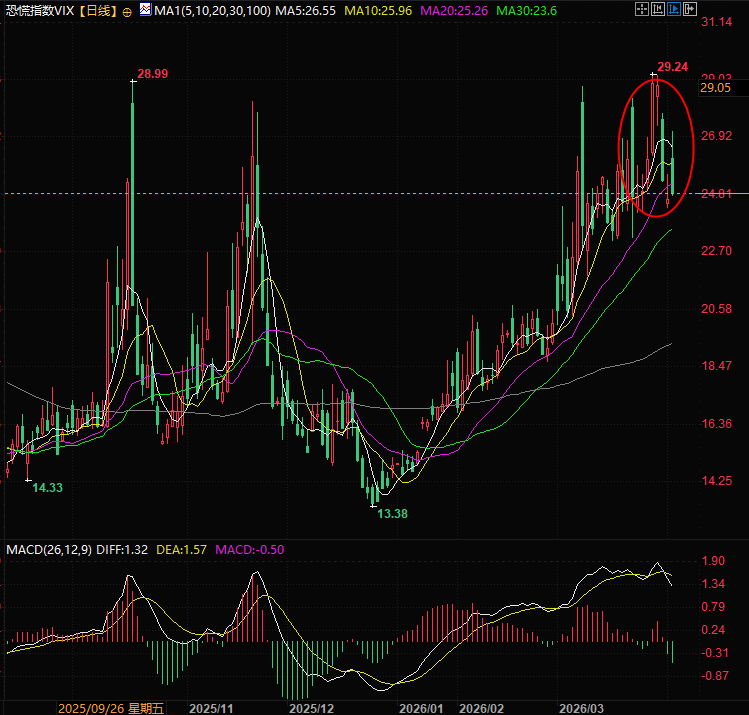
(VIX daily chart, source: subsidiary EasyForex)
The core fundamental support for the weakening dollar comes from the substantial impact of the Iranian conflict on the US economy. The US consumer confidence index fell by 11% month-on-month in April, becoming a key factor suppressing the dollar.
A University of Michigan survey shows that consumer confidence continues the downward trend that began after the outbreak of the war, with confidence declining across all groups, down 9% from the same period last year; expectations for the business environment have fallen by 20%, and the personal finance evaluation index has dropped by 11%, with high prices and asset depreciation being the main pressures.
Geopolitical conflicts coupled with weakening confidence severely impacted the US auto industry, while high prices suppressed durable goods consumption, with the market attributing the negative economic performance to the conflict with Iran.
The turmoil in the Middle East has also exacerbated risks in the global automotive supply chain and increased volatility in energy and raw material prices.
Bank of America data shows that people's reliance on bank card payments has surged since the outbreak of the war in Iran. Total spending in the week ending March 28 increased by 4.7% year-on-year, with gasoline and online shopping spending rising sharply. However, spending on department stores, furniture, and home improvement continued to shrink. People began to reduce spending due to economic uncertainty, and the increased reliance on bank card payments by high-income families further highlighted their financial pressure.
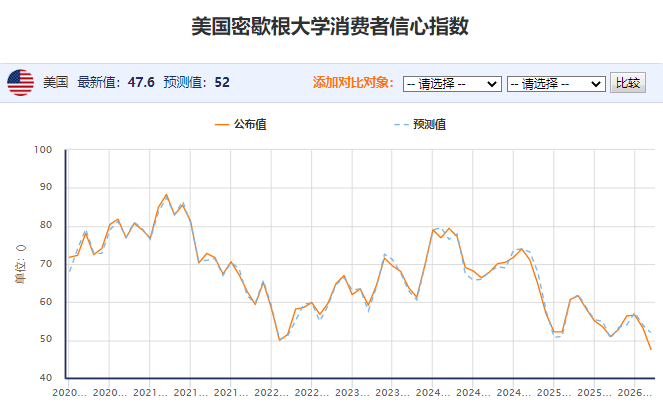
(University of Michigan Consumer Confidence Index trend, source: FX678's subsidiary EasyTrade)
Meanwhile, US inflation expectations surged, with one-year inflation expectations jumping from 3.8% to 4.8% in April. Long-term inflation expectations hit a new high since November 2025. Consumer confidence had fallen to a low point in March, with middle- and high-income groups being particularly affected by oil prices and market volatility.
A sharp drop in US consumer confidence, high inflation, and contracting domestic demand have fueled concerns about a slowdown in the economic recovery, reigniting market expectations for US economic stimulus measures.
Driven by both the retreat of geopolitical risk aversion and the weakening of domestic economic fundamentals, the narrative of a weak dollar has intensified across the board, further solidifying the short-term weakness of the dollar index.
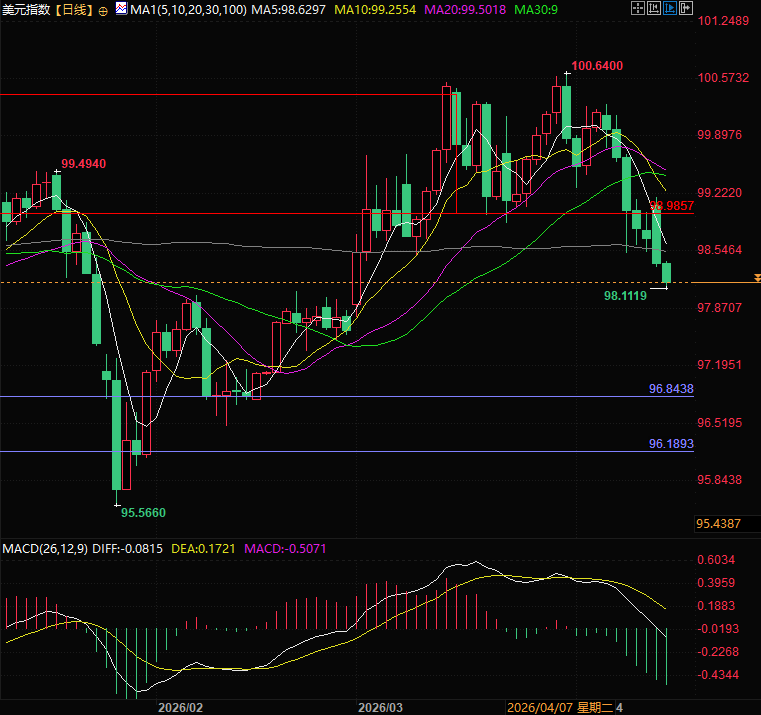
(US Dollar Index Daily Chart, Source: FX678's subsidiary, EasyForex)
Gold prices have significantly underperformed expectations during this round of the Iranian conflict, falling more than 25% from their historical highs. This is primarily due to the fact that during a crisis, investors prioritize liquidating their positions to replenish their dollar liquidity, coupled with inflation pushing up bond yields, increasing the opportunity cost of holding non-interest-bearing gold.
In the long run, gold will still appreciate after extreme risks, but the dollar's core liquidity position is irreplaceable during crisis windows.
It is worth noting that the temporary appreciation of the US dollar may exacerbate the financial tightening of peripheral economies around the world, accelerate the de-dollarization process in various countries, and the safe-haven mechanism of the US dollar may actually harbor the hidden danger of its own weakening. Its long-term status depends on the evolution of the global financial system.
The direct trigger for the weakening of the US dollar is the rapid easing of geopolitical risks in the Middle East: four sources revealed that the US and Iranian negotiating teams will return to Islamabad later this week to restart peace talks, bringing a temporary cooling-off opportunity to the escalating geopolitical conflict in Iran.
Despite Iran's continued strong signals—a Ministry of Defense spokesperson refuted the US's attempt to militarily intervene in the Strait of Hormuz and the Gulf of Oman, while warning that an attack on Iranian ports would paralyze navigation throughout the Persian Gulf, and Iranian lawmakers mentioning plans to adjust transit rules in the Persian Gulf—the expectation of restarting negotiations has already dissipated the market's extreme risk aversion, and the previous strong upward logic of the US dollar based on geopolitical conflicts has officially collapsed.
The US dollar's safe-haven appeal is conditionally validated by a pullback triggered by geopolitical easing.
The US dollar strengthened significantly at the peak of this crisis, which is consistent with the operating logic of safe-haven currencies. The current phase of correction after the situation has eased does not overturn its safe-haven attributes, but rather confirms the core principle: the safe-haven effect of the US dollar is only prominent at the peak of market risk, and as the demand for immediate liquidity declines, the safe-haven support quickly weakens.
A review of market shocks over the past fifty years reveals that the safe-haven status of the US dollar is not an inherent attribute. Its appreciation effect relies on a sharp increase in financial pressure (rising VIX index). A single standard deviation shock in the volatility index can push the dollar up by 4 to 5 basis points on the same day. During the global financial crisis and the pandemic, this effect was doubled. The core reason is the liquidity shortage caused by global offshore dollar liabilities. Recently, the VIX has continued to decline, suppressing the safe-haven attribute of the US dollar.
However, when the source of risk is not a global liquidity crisis and the geopolitical situation eases, the demand for the US dollar as a safe haven quickly recedes, and the exchange rate naturally comes under pressure and weakens.
At the same time, the risks of US policy itself will suppress the dollar, and geopolitical risks themselves do not constitute an independent driving factor for the dollar. Its hedging mechanism only works during crisis phases and is not permanent.
(VIX daily chart, source: subsidiary EasyForex)
The war in Iran has severely damaged the US economy, causing a sharp drop in US consumer confidence and dragging down the dollar.
The core fundamental support for the weakening dollar comes from the substantial impact of the Iranian conflict on the US economy. The US consumer confidence index fell by 11% month-on-month in April, becoming a key factor suppressing the dollar.
A University of Michigan survey shows that consumer confidence continues the downward trend that began after the outbreak of the war, with confidence declining across all groups, down 9% from the same period last year; expectations for the business environment have fallen by 20%, and the personal finance evaluation index has dropped by 11%, with high prices and asset depreciation being the main pressures.
Geopolitical conflicts coupled with weakening confidence severely impacted the US auto industry, while high prices suppressed durable goods consumption, with the market attributing the negative economic performance to the conflict with Iran.
The turmoil in the Middle East has also exacerbated risks in the global automotive supply chain and increased volatility in energy and raw material prices.
Bank of America data shows that people's reliance on bank card payments has surged since the outbreak of the war in Iran. Total spending in the week ending March 28 increased by 4.7% year-on-year, with gasoline and online shopping spending rising sharply. However, spending on department stores, furniture, and home improvement continued to shrink. People began to reduce spending due to economic uncertainty, and the increased reliance on bank card payments by high-income families further highlighted their financial pressure.
(University of Michigan Consumer Confidence Index trend, source: FX678's subsidiary EasyTrade)
Deteriorating household consumption patterns and a weak economy reinforce expectations of a weak dollar.
Meanwhile, US inflation expectations surged, with one-year inflation expectations jumping from 3.8% to 4.8% in April. Long-term inflation expectations hit a new high since November 2025. Consumer confidence had fallen to a low point in March, with middle- and high-income groups being particularly affected by oil prices and market volatility.
A sharp drop in US consumer confidence, high inflation, and contracting domestic demand have fueled concerns about a slowdown in the economic recovery, reigniting market expectations for US economic stimulus measures.
Driven by both the retreat of geopolitical risk aversion and the weakening of domestic economic fundamentals, the narrative of a weak dollar has intensified across the board, further solidifying the short-term weakness of the dollar index.
(US Dollar Index Daily Chart, Source: FX678's subsidiary, EasyForex)
Gold prices suffered a short-term setback, but the US dollar remains the core carrier of crisis liquidity.
Gold prices have significantly underperformed expectations during this round of the Iranian conflict, falling more than 25% from their historical highs. This is primarily due to the fact that during a crisis, investors prioritize liquidating their positions to replenish their dollar liquidity, coupled with inflation pushing up bond yields, increasing the opportunity cost of holding non-interest-bearing gold.
In the long run, gold will still appreciate after extreme risks, but the dollar's core liquidity position is irreplaceable during crisis windows.
It is worth noting that the temporary appreciation of the US dollar may exacerbate the financial tightening of peripheral economies around the world, accelerate the de-dollarization process in various countries, and the safe-haven mechanism of the US dollar may actually harbor the hidden danger of its own weakening. Its long-term status depends on the evolution of the global financial system.
- Risk Warning and Disclaimer
- The market involves risk, and trading may not be suitable for all investors. This article is for reference only and does not constitute personal investment advice, nor does it take into account certain users’ specific investment objectives, financial situation, or other needs. Any investment decisions made based on this information are at your own risk.