Dollar plunges, yen rebounds: Weekend negotiations become the biggest variable.
2026-04-14 15:57:22
On Tuesday, April 14th, the USD/JPY pair saw a significant pullback, trading around 159 in early European trading. The decline was primarily driven by a broad-based weakening of the US dollar. Although the first round of talks between the US and Iran over the weekend failed to reach a final agreement, continued communication through diplomatic channels and the scheduled second round of talks this weekend quickly eased market tensions and boosted risk sentiment. Consequently, safe-haven buying of the US dollar weakened, providing relative support for the yen.

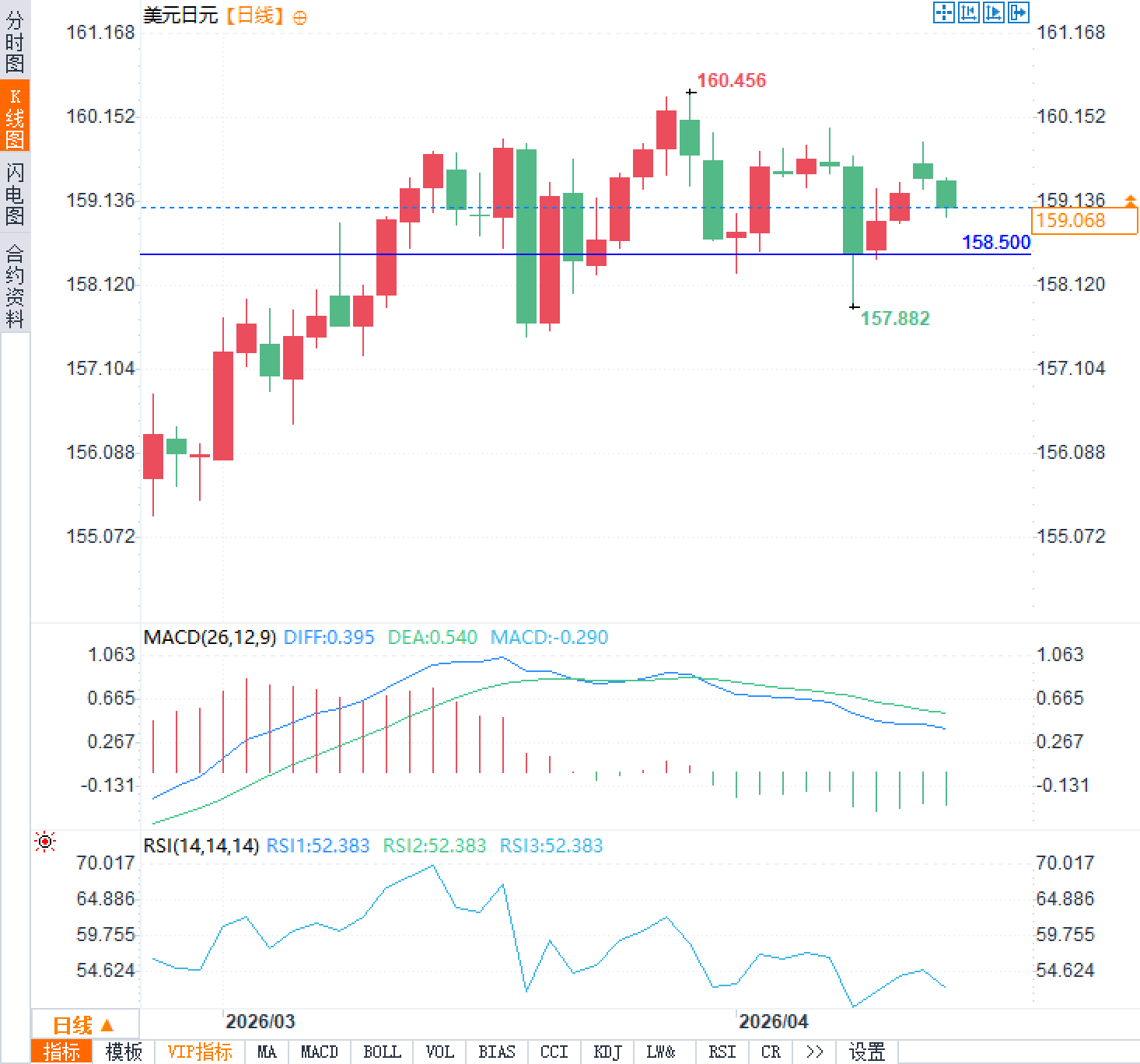
The USD/JPY exchange rate fluctuated at high levels before declining over the past week. In early April, the exchange rate approached the 160 mark, but buying interest waned as optimistic news from the negotiations gradually emerged. Data shows that the exchange rate had fallen back to around 159 in early trading on April 14, a decline of approximately 0.9% from the high of 159.96 on April 7.
In terms of volatility, daily volatility has recently remained within the range of 0.5% to 0.8%, a significant narrowing compared to periods of heightened geopolitical tensions. Traders are watching the effectiveness of the 159.00 psychological support level; if it holds, the 160.00 resistance level may be tested, while a failure to hold could lead to a further decline towards the 158.50 area.
Negotiation developments became the core driver of the dollar's performance this week. While the first round of talks concluded last weekend, subsequent reports indicated that both sides continued to exchange information through diplomatic channels. Iranian officials are considering abandoning uranium enrichment as a condition for ending the conflict, directly boosting market risk appetite. As a traditional safe-haven asset, the dollar's demand quickly declined, putting pressure on all major currencies. Although early pressure measures such as port blockades initially heightened tensions, positive headlines quickly reversed the situation, leading to significant selling pressure on the dollar index during the US trading session. Traders observed that this shift in sentiment was not only reflected in exchange rates but also in expectations of falling oil prices, further weakening the dollar's inflation-hedging properties. Overall, if the second round of negotiations achieves substantial progress by the end of this week, the dollar's safe-haven premium will face greater compression, thus exerting continued downward pressure on the dollar against the yen.
In Japan, macroeconomic data continues to point to a neutral policy stance. The Consumer Price Index (CPI) rose 1.3% year-on-year in February, a further slowdown from the previous 1.5%; core inflation, excluding food and energy, was 2.5%, still above the 2% target, but the overall trend indicates a gradual easing of price pressures. This aligns with the Bank of Japan's assessment of the inflation path, namely that short-term fluctuations in energy prices will be affected, but underlying growth momentum still needs to be observed. A de-escalation of geopolitical conflicts would alleviate energy cost pressures, boost business confidence and economic growth expectations, creating a more favorable environment for subsequent policy adjustments. The Bank of Japan is highly likely to maintain its current policy interest rate level at its April meeting, but the market anticipates it may pave the way for a potential rate hike in June through forward guidance. Governor Kazuo Ueda recently emphasized that the Bank of Japan will closely monitor the impact of the Middle East situation on economic activity, prices, and financial conditions, and gradually adjust the degree of monetary easing based on data developments. This cautious yet open approach makes the yen more likely to receive additional support when risk sentiment improves, rather than relying on expectations of aggressive rate hikes.
The core drivers of the USD/JPY exchange rate remain interest rate differentials and risk sentiment. While the Federal Reserve's policy path remains relatively conservative, the easing of tensions between the US and Iran has weakened the dollar's defensive attributes, while the Bank of Japan's neutral stance has limited the yen's potential for unilateral appreciation. In the short term, traders will focus on the transmission effect of the second round of negotiations on global risk appetite. If optimism persists, a further decline in the dollar's safe-haven demand could push the exchange rate to test the 158.50-158.00 range; conversely, if negotiations encounter further setbacks, the dollar may quickly recover some of its losses.
A review of recent USD/JPY exchange rate movements.
The USD/JPY exchange rate fluctuated at high levels before declining over the past week. In early April, the exchange rate approached the 160 mark, but buying interest waned as optimistic news from the negotiations gradually emerged. Data shows that the exchange rate had fallen back to around 159 in early trading on April 14, a decline of approximately 0.9% from the high of 159.96 on April 7.
In terms of volatility, daily volatility has recently remained within the range of 0.5% to 0.8%, a significant narrowing compared to periods of heightened geopolitical tensions. Traders are watching the effectiveness of the 159.00 psychological support level; if it holds, the 160.00 resistance level may be tested, while a failure to hold could lead to a further decline towards the 158.50 area.
The direct impact of optimism surrounding US-Iran negotiations on the US dollar
Negotiation developments became the core driver of the dollar's performance this week. While the first round of talks concluded last weekend, subsequent reports indicated that both sides continued to exchange information through diplomatic channels. Iranian officials are considering abandoning uranium enrichment as a condition for ending the conflict, directly boosting market risk appetite. As a traditional safe-haven asset, the dollar's demand quickly declined, putting pressure on all major currencies. Although early pressure measures such as port blockades initially heightened tensions, positive headlines quickly reversed the situation, leading to significant selling pressure on the dollar index during the US trading session. Traders observed that this shift in sentiment was not only reflected in exchange rates but also in expectations of falling oil prices, further weakening the dollar's inflation-hedging properties. Overall, if the second round of negotiations achieves substantial progress by the end of this week, the dollar's safe-haven premium will face greater compression, thus exerting continued downward pressure on the dollar against the yen.
Japanese economic data and the central bank's policy stance are neutral.
In Japan, macroeconomic data continues to point to a neutral policy stance. The Consumer Price Index (CPI) rose 1.3% year-on-year in February, a further slowdown from the previous 1.5%; core inflation, excluding food and energy, was 2.5%, still above the 2% target, but the overall trend indicates a gradual easing of price pressures. This aligns with the Bank of Japan's assessment of the inflation path, namely that short-term fluctuations in energy prices will be affected, but underlying growth momentum still needs to be observed. A de-escalation of geopolitical conflicts would alleviate energy cost pressures, boost business confidence and economic growth expectations, creating a more favorable environment for subsequent policy adjustments. The Bank of Japan is highly likely to maintain its current policy interest rate level at its April meeting, but the market anticipates it may pave the way for a potential rate hike in June through forward guidance. Governor Kazuo Ueda recently emphasized that the Bank of Japan will closely monitor the impact of the Middle East situation on economic activity, prices, and financial conditions, and gradually adjust the degree of monetary easing based on data developments. This cautious yet open approach makes the yen more likely to receive additional support when risk sentiment improves, rather than relying on expectations of aggressive rate hikes.
A complex interplay between interest rate differentials and risk sentiment
The core drivers of the USD/JPY exchange rate remain interest rate differentials and risk sentiment. While the Federal Reserve's policy path remains relatively conservative, the easing of tensions between the US and Iran has weakened the dollar's defensive attributes, while the Bank of Japan's neutral stance has limited the yen's potential for unilateral appreciation. In the short term, traders will focus on the transmission effect of the second round of negotiations on global risk appetite. If optimism persists, a further decline in the dollar's safe-haven demand could push the exchange rate to test the 158.50-158.00 range; conversely, if negotiations encounter further setbacks, the dollar may quickly recover some of its losses.
Frequently Asked Questions
Question 1: Why did the optimism surrounding the US-Iran negotiations directly lead to a pullback in the USD/JPY exchange rate?
A: Positive signals from the negotiations quickly eased market concerns about escalating conflict, reducing the attractiveness of the US dollar as a safe-haven asset and leading to widespread selling pressure. Meanwhile, the Japanese yen benefited relatively from the improved risk sentiment, causing its exchange rate to quickly fill the gap and continue its decline.
Question 2: Will the slowdown in Japan's February inflation data change the central bank's expectations for an interest rate hike at its April meeting?
A: The Consumer Price Index (CPI) rose only 1.3% year-on-year in February, and core indicators also showed a slowing trend, suggesting that inflationary pressures have not yet firmly risen above the 2% target. Therefore, the Bank of Japan is more inclined to maintain the current interest rate level while laying the groundwork for future meetings through communication. Easing tensions, if it leads to lower energy costs, would further benefit economic growth and business confidence, creating conditions for a potential adjustment in June. However, the April meeting will likely remain largely observation-based.
- Risk Warning and Disclaimer
- The market involves risk, and trading may not be suitable for all investors. This article is for reference only and does not constitute personal investment advice, nor does it take into account certain users’ specific investment objectives, financial situation, or other needs. Any investment decisions made based on this information are at your own risk.