Gold prices have rebounded from a low of 4645, and bullish momentum is poised to take off.
2026-04-14 20:24:36
On Tuesday, April 14th, spot gold experienced a slight pullback before gradually stabilizing and rebounding. Currently, it is trading around $4780 per ounce, recovering some of its previous lows. This movement stems from the fact that geopolitical risks have not yet been fully resolved, while the diversification needs of global central banks continue to provide structural support. Traders are closely monitoring ceasefire developments and broader changes in risk sentiment, leading to increased short-term volatility, but overall bullish momentum has not weakened significantly.
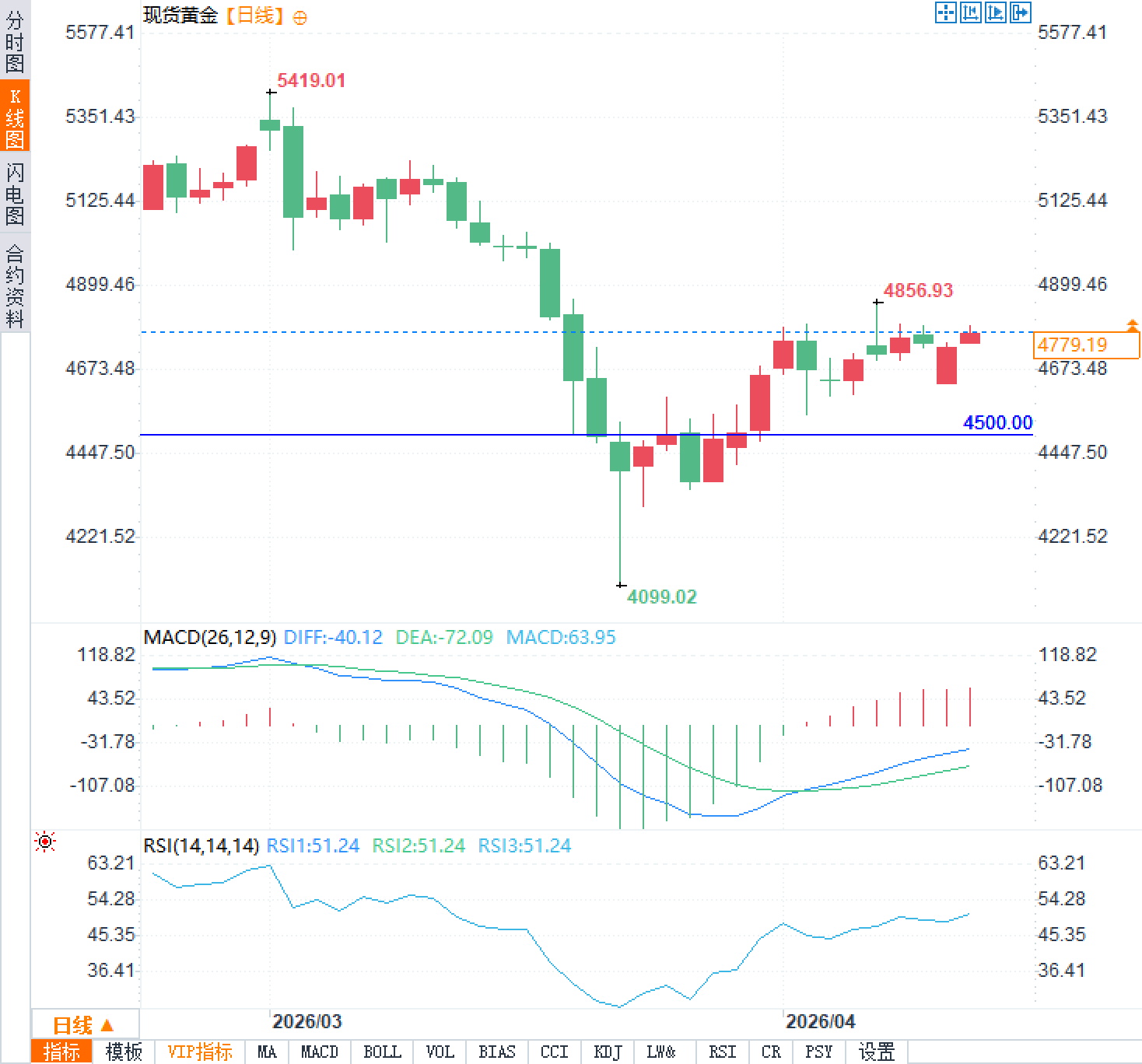
Spot gold prices have shown resilience in recent trading, having touched a low of around $4,645 per ounce, and are currently trading steadily between $4,770 and $4,780 per ounce, with a daily gain of approximately 0.8%. This pattern reflects the market's rapid adjustment after digesting the impact of the no-deal Brexit between the US and Iran over the weekend, while geopolitical factors and macroeconomic data are jointly shaping the short-term direction. However, price fluctuations are closely linked to the dollar's performance and the oil market, and any recovery in risk appetite could amplify both sides of the risk.
Geopolitical uncertainty remains a significant supporting factor for spot gold prices. Despite some progress in ceasefire negotiations, the outcome remains uncertain, making it difficult for risk premiums to fully dissipate. Traders observe that gold's appeal as a traditional safe-haven asset quickly materializes should the ceasefire outlook fluctuate. In the current environment, even minor changes in ceasefire details can trigger rapid price reactions, and traders remain highly vigilant.
OCBC strategists noted that gold stabilized after an early morning pullback, with unresolved geopolitical risks providing a significant buffer for prices. They emphasized that ceasefire headlines and overall risk sentiment are jointly guiding near-term direction, but structural support remains intact. This view aligns with current market observations that while geopolitical factors have not been completely eliminated, they have instilled a lasting defensive character in gold.
Global central bank gold purchases provide long-term structural support for spot gold. Despite fluctuations in monthly data, overall diversification efforts continue, and gold's role as a reserve asset is becoming increasingly prominent. Global central bank net gold purchases reached 863 tons in 2025, and although net purchases in January 2026 were only 5 tons, the trend remained unchanged, clearly demonstrating major economies' intention to diversify risk and address policy uncertainty by increasing their gold holdings. Traders note that central bank gold purchases and investor portfolio rebalancing work together, and even if geopolitical risks temporarily ease, structural buying can still provide effective support.
Compared to previous cycles, the breadth and depth of central bank gold purchases have increased. Some emerging market central banks are increasing the proportion of gold in their reserve management to reduce reliance on a single currency. This trend aligns well with the current environment of policy uncertainty, further strengthening gold's long-term appeal. Market analysis shows that structural demand remains resilient at current price levels, providing significant support for bullish sentiment.
From a technical perspective, the bullish momentum on the daily chart for spot gold remains intact, and while the Relative Strength Index (RSI) has seen a slight slowdown in its upward trend, it remains within a neutral-to-bullish range. The price quickly recovered some lost ground after the pullback, demonstrating the effectiveness of the support level. In the short term, the market will focus on the progress of ceasefire discussions and the evolution of risk sentiment; two-way risks remain. OCBC strategists believe that in the current environment, structural drivers dominate, and prices are easily guided by geopolitical headlines and risk appetite. They recommend focusing on pullbacks rather than chasing rallies.
Latest developments in the spot gold market
Spot gold prices have shown resilience in recent trading, having touched a low of around $4,645 per ounce, and are currently trading steadily between $4,770 and $4,780 per ounce, with a daily gain of approximately 0.8%. This pattern reflects the market's rapid adjustment after digesting the impact of the no-deal Brexit between the US and Iran over the weekend, while geopolitical factors and macroeconomic data are jointly shaping the short-term direction. However, price fluctuations are closely linked to the dollar's performance and the oil market, and any recovery in risk appetite could amplify both sides of the risk.
The continued supporting role of geopolitical risks
Geopolitical uncertainty remains a significant supporting factor for spot gold prices. Despite some progress in ceasefire negotiations, the outcome remains uncertain, making it difficult for risk premiums to fully dissipate. Traders observe that gold's appeal as a traditional safe-haven asset quickly materializes should the ceasefire outlook fluctuate. In the current environment, even minor changes in ceasefire details can trigger rapid price reactions, and traders remain highly vigilant.
OCBC strategists noted that gold stabilized after an early morning pullback, with unresolved geopolitical risks providing a significant buffer for prices. They emphasized that ceasefire headlines and overall risk sentiment are jointly guiding near-term direction, but structural support remains intact. This view aligns with current market observations that while geopolitical factors have not been completely eliminated, they have instilled a lasting defensive character in gold.
Central Bank's Diversified Demands and Structural Drivers
Global central bank gold purchases provide long-term structural support for spot gold. Despite fluctuations in monthly data, overall diversification efforts continue, and gold's role as a reserve asset is becoming increasingly prominent. Global central bank net gold purchases reached 863 tons in 2025, and although net purchases in January 2026 were only 5 tons, the trend remained unchanged, clearly demonstrating major economies' intention to diversify risk and address policy uncertainty by increasing their gold holdings. Traders note that central bank gold purchases and investor portfolio rebalancing work together, and even if geopolitical risks temporarily ease, structural buying can still provide effective support.
Compared to previous cycles, the breadth and depth of central bank gold purchases have increased. Some emerging market central banks are increasing the proportion of gold in their reserve management to reduce reliance on a single currency. This trend aligns well with the current environment of policy uncertainty, further strengthening gold's long-term appeal. Market analysis shows that structural demand remains resilient at current price levels, providing significant support for bullish sentiment.
Technical Analysis and Market Outlook
From a technical perspective, the bullish momentum on the daily chart for spot gold remains intact, and while the Relative Strength Index (RSI) has seen a slight slowdown in its upward trend, it remains within a neutral-to-bullish range. The price quickly recovered some lost ground after the pullback, demonstrating the effectiveness of the support level. In the short term, the market will focus on the progress of ceasefire discussions and the evolution of risk sentiment; two-way risks remain. OCBC strategists believe that in the current environment, structural drivers dominate, and prices are easily guided by geopolitical headlines and risk appetite. They recommend focusing on pullbacks rather than chasing rallies.
Frequently Asked Questions
Question 1: Why did spot gold stabilize quickly after its recent pullback?
A: This is mainly due to the fact that geopolitical risks have not been fully resolved, while the diversified gold purchases by central banks provide structural support. Prices briefly dipped to around $4645 per ounce, but the market quickly rebounded to the $4780 per ounce range, indicating that the support level was effective. OCBC strategists pointed out that the daily bullish momentum remains intact, and prices are influenced by both ceasefire headlines and risk sentiment, with structural demand buffering short-term pressure.
Question 2: What is the long-term impact of central bank gold purchases on gold prices?
A: The central bank's continued diversified asset allocation is a significant long-term driver of gold prices. Despite monthly fluctuations, the net purchase of 863 tons of gold in 2025 indicates a trend of buying. Gold's role as a safe haven and diversification tool in reserves is becoming increasingly prominent. Even if short-term geopolitical risks ease, structural demand can still provide a floor for prices, working in conjunction with investor portfolio rebalancing.
Question 3: How do geopolitical factors affect the short-term direction of spot gold?
A: Geopolitical uncertainty is directly driving up safe-haven demand, with the outcome of ceasefire discussions being a key catalyst. Any progress or setbacks could trigger price volatility, with the market using this as a guide, coupled with changes in risk sentiment. OCBC Bank analysts believe that in the current environment, the combined effect of geopolitical support and policy uncertainty is maintaining a two-way risk but slightly bullish pattern for gold, with traders closely monitoring headlines.
- Risk Warning and Disclaimer
- The market involves risk, and trading may not be suitable for all investors. This article is for reference only and does not constitute personal investment advice, nor does it take into account certain users’ specific investment objectives, financial situation, or other needs. Any investment decisions made based on this information are at your own risk.