Euro Analysis: What Mysteries Lie in the 50 Basis Point Path?
2026-04-16 20:40:27
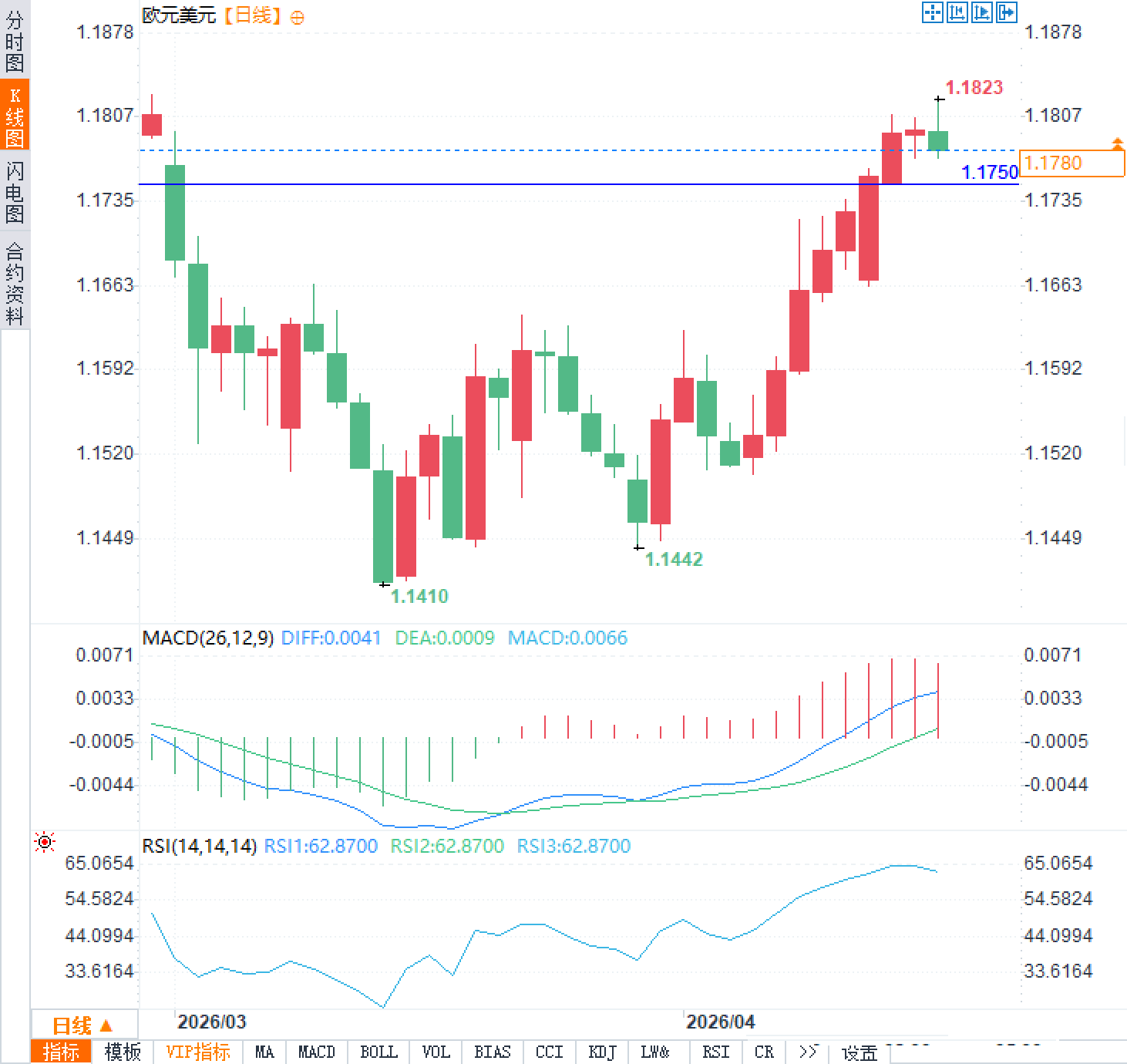
On Thursday, April 16, the euro was trading around 1.1780 against the US dollar. The previous week, the exchange rate rose significantly due to evolving geopolitical tensions in the Middle East and fluctuations in energy prices. Preliminary estimates for Eurozone inflation in March rose to 2.5%, a significant increase from 1.9% in February, mainly driven by upward pressure on energy costs. The minutes of the European Central Bank's March meeting and the latest statements from Governing Council members indicate that the central bank will maintain its three key interest rates unchanged, while emphasizing data-dependent strategies and policy flexibility. The risk of short-term upward pressure on inflation is prominent, and economic growth faces downward pressure. Market expectations for a rate hike at the April meeting have fallen to approximately 21%, with the path of two rate hikes this year essentially priced in by about 50 basis points.
The European Central Bank's Governing Council unanimously assessed that the Middle East conflict posed a significant negative supply shock, which would push up inflation and dampen economic activity in the short term. The minutes noted that despite a sharp rise in oil and gas spot prices, the market's spot premium structure remained significant, suggesting that global supply could normalize within months. However, even if the conflict were to subside quickly, the restoration of supplies through the Strait of Hormuz would still take several months. Members believed that the risks to the economic growth outlook were skewed to the downside, particularly in the short term, while the risks to the inflation outlook were clearly skewed to the upside. The meeting decided to maintain the deposit facility rate at 2.00%, the main refinancing rate at 2.15%, and the marginal lending facility rate at 2.40%, a move considered the best option to preserve the value of future options. The Governing Council emphasized that in a highly uncertain environment, every meeting involves on-site decision-making, and the meeting format, without pre-committed specific paths, helps to respond promptly to unforeseen changes.
The revisions reflect the direct impact of energy prices on near-term inflation, as well as their indirect drag on consumer confidence and the real economy. The minutes also noted that inflation is expected to remain stable around the 2% target in the medium to long term, and the central bank's positioning is sound in addressing uncertainties.
Governing Council member Martines Cazzaks recently stated that the market's pricing in two rate hikes this year is reasonable. He pointed out that a large amount of data could change the situation before April 30th, and each meeting is an in-person meeting. While energy prices are close to the baseline scenario, they are highly volatile and uncertain. A large-scale second-round inflation effect has not yet materialized, but businesses, influenced by their recent inflation experience, may adjust prices faster than historically normal, potentially making inflation more sticky. Cazzaks emphasized that the central bank is on high alert, and the risk of a second-round effect is state-dependent. Overall, the Governing Council prefers to maintain flexibility and avoid a fixed-rate path commitment, a strategy particularly prudent in the current environment. Consequently, the market has lowered the probability of a rate hike in April to 21% and in June to 67%, essentially reflecting a total of about 50 basis points for the year.
The Middle East conflict is creating a supply-side shock to the Eurozone through the energy sector, pushing up the consumer price index in the short term; inflation exceeded the 2% target in March. The medium- to long-term impact depends on the duration of the conflict and the speed at which energy prices are transmitted to other sectors. Downside risks to economic growth are significant; despite support from low unemployment, robust private sector balance sheets, and defense infrastructure spending, the 2026 GDP forecast has been revised down to 0.9%. In terms of exchange rates, the euro's exchange rate against the US dollar will depend on the pace of policy tightening, changes in risk appetite, and the direction of capital flows. Central bank data dependence and option-value strategies can help buffer external shocks. Traders need to closely monitor subsequent energy futures curves, wage negotiations, and corporate pricing behavior, as these factors will directly determine the magnitude and timing of monetary policy adjustments.
Key takeaways from the ECB's March meeting minutes
The European Central Bank's Governing Council unanimously assessed that the Middle East conflict posed a significant negative supply shock, which would push up inflation and dampen economic activity in the short term. The minutes noted that despite a sharp rise in oil and gas spot prices, the market's spot premium structure remained significant, suggesting that global supply could normalize within months. However, even if the conflict were to subside quickly, the restoration of supplies through the Strait of Hormuz would still take several months. Members believed that the risks to the economic growth outlook were skewed to the downside, particularly in the short term, while the risks to the inflation outlook were clearly skewed to the upside. The meeting decided to maintain the deposit facility rate at 2.00%, the main refinancing rate at 2.15%, and the marginal lending facility rate at 2.40%, a move considered the best option to preserve the value of future options. The Governing Council emphasized that in a highly uncertain environment, every meeting involves on-site decision-making, and the meeting format, without pre-committed specific paths, helps to respond promptly to unforeseen changes.
| Key Indicators | March 2026 Updated Forecast | Compared with the previous December forecast |
|---|---|---|
| Overall inflation rate | 2.6% | The increase was mainly due to energy prices. |
| Core inflation rate | 2.3% | Upward |
| Real GDP growth | 0.9% | Lowered by 0.3 percentage points |
Interpretation of the latest statements by members of the management committee
Governing Council member Martines Cazzaks recently stated that the market's pricing in two rate hikes this year is reasonable. He pointed out that a large amount of data could change the situation before April 30th, and each meeting is an in-person meeting. While energy prices are close to the baseline scenario, they are highly volatile and uncertain. A large-scale second-round inflation effect has not yet materialized, but businesses, influenced by their recent inflation experience, may adjust prices faster than historically normal, potentially making inflation more sticky. Cazzaks emphasized that the central bank is on high alert, and the risk of a second-round effect is state-dependent. Overall, the Governing Council prefers to maintain flexibility and avoid a fixed-rate path commitment, a strategy particularly prudent in the current environment. Consequently, the market has lowered the probability of a rate hike in April to 21% and in June to 67%, essentially reflecting a total of about 50 basis points for the year.
Geopolitical risks and their transmission to the Eurozone outlook and exchange rates
The Middle East conflict is creating a supply-side shock to the Eurozone through the energy sector, pushing up the consumer price index in the short term; inflation exceeded the 2% target in March. The medium- to long-term impact depends on the duration of the conflict and the speed at which energy prices are transmitted to other sectors. Downside risks to economic growth are significant; despite support from low unemployment, robust private sector balance sheets, and defense infrastructure spending, the 2026 GDP forecast has been revised down to 0.9%. In terms of exchange rates, the euro's exchange rate against the US dollar will depend on the pace of policy tightening, changes in risk appetite, and the direction of capital flows. Central bank data dependence and option-value strategies can help buffer external shocks. Traders need to closely monitor subsequent energy futures curves, wage negotiations, and corporate pricing behavior, as these factors will directly determine the magnitude and timing of monetary policy adjustments.
Frequently Asked Questions
Question 1: Why did the European Central Bank keep interest rates unchanged at its March meeting but highlight the upside risks to inflation?
A: The minutes show that all members believe the risks to the inflation outlook are tilted upward, particularly in the short term, as the energy shock has substantially increased near-term compensation. However, medium- to long-term inflation is still expected to remain stable near the 2% target. The wait-and-see option is considered more valuable, therefore the decision was made to maintain flexibility, avoid locking in the path prematurely, and allow room for adjustments based on new data at subsequent meetings.
Question 2: What does it mean that Kazax said the market priced in two interest rate hikes reasonably?
A: This indicates that the Governing Council acknowledges the current expectation of approximately 50 basis points of interest rate hikes throughout the year, emphasizing that decisions are made on-site at each meeting, and that data may still fluctuate significantly before April. While energy price volatility has not deviated from the benchmark, accelerated corporate pricing behavior may exacerbate stickiness, and the central bank needs to remain vigilant to prevent a second round of effects.
Question 3: What are the key implications of the above signals for EUR/USD exchange rate traders?
A: Policy flexibility and a data-dependent strategy mean that short-term exchange rate volatility will increase. Attention should be paid to energy prices, wage data, and indicators ahead of the April 30th meeting. If upward inflation risks persist, they may support a relatively strong euro, but downward pressure on economic growth and external uncertainties will create a two-way tug-of-war.
- Risk Warning and Disclaimer
- The market involves risk, and trading may not be suitable for all investors. This article is for reference only and does not constitute personal investment advice, nor does it take into account certain users’ specific investment objectives, financial situation, or other needs. Any investment decisions made based on this information are at your own risk.