Brent crude spot prices surged, while futures prices quietly retreated.
2026-04-16 21:59:16
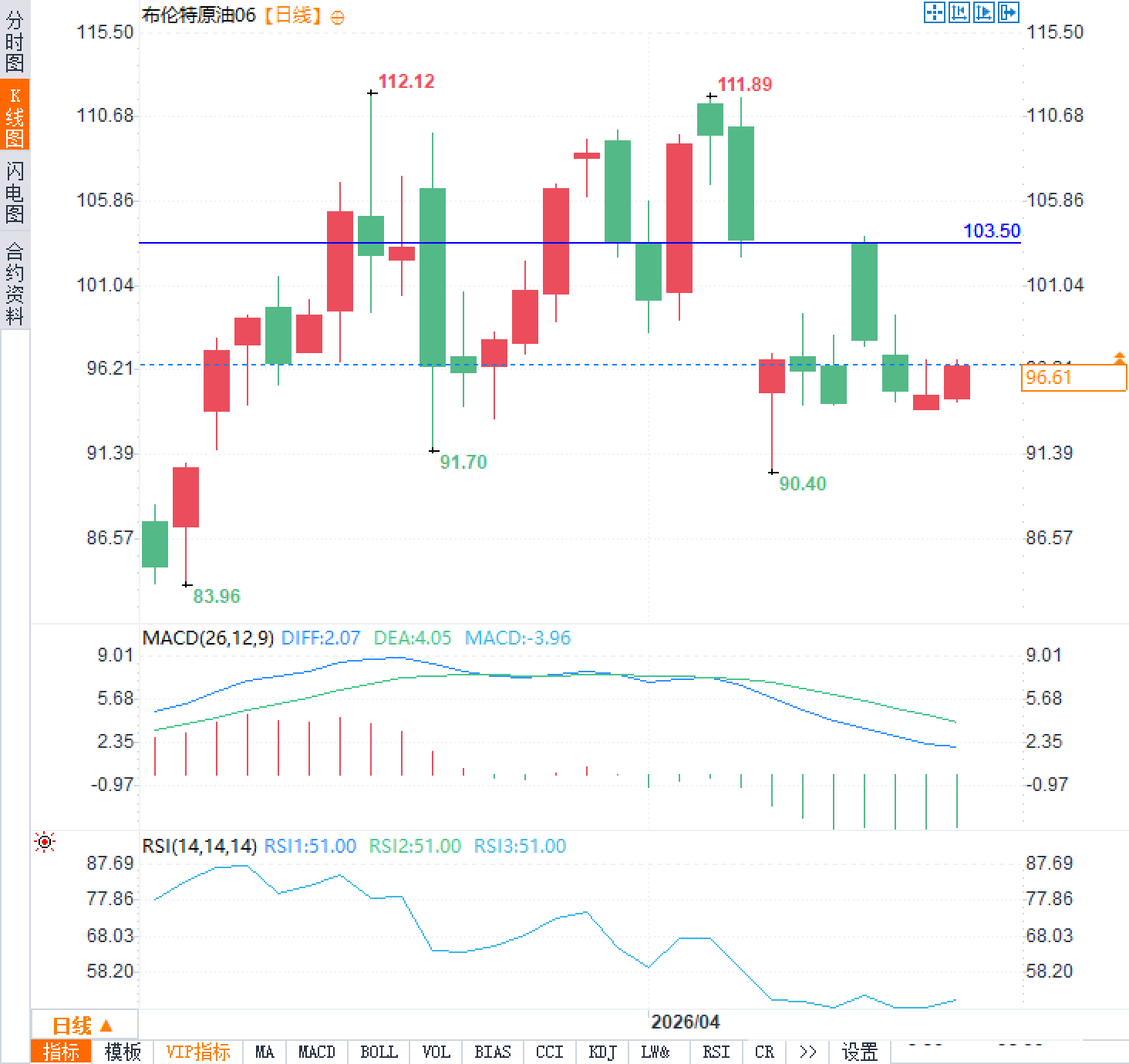
On Thursday, April 16th, the Brent crude oil market presented a stark contrast between declining futures prices and continued tightening of physical supply. Brent futures for June delivery hovered around $96 per barrel, primarily driven by expectations of a possible two-week extension of the US-Iran ceasefire agreement and the resumption of peace talks. However, the physical market was increasingly tense due to the prolonged disruption of oil flow through the Strait of Hormuz, with spot prices such as Dated Brent significantly higher than futures levels. This divergence highlights the tension between market pricing expectations of geopolitical easing and actual supply chain disruptions, providing global energy traders with a complex market structure signal.
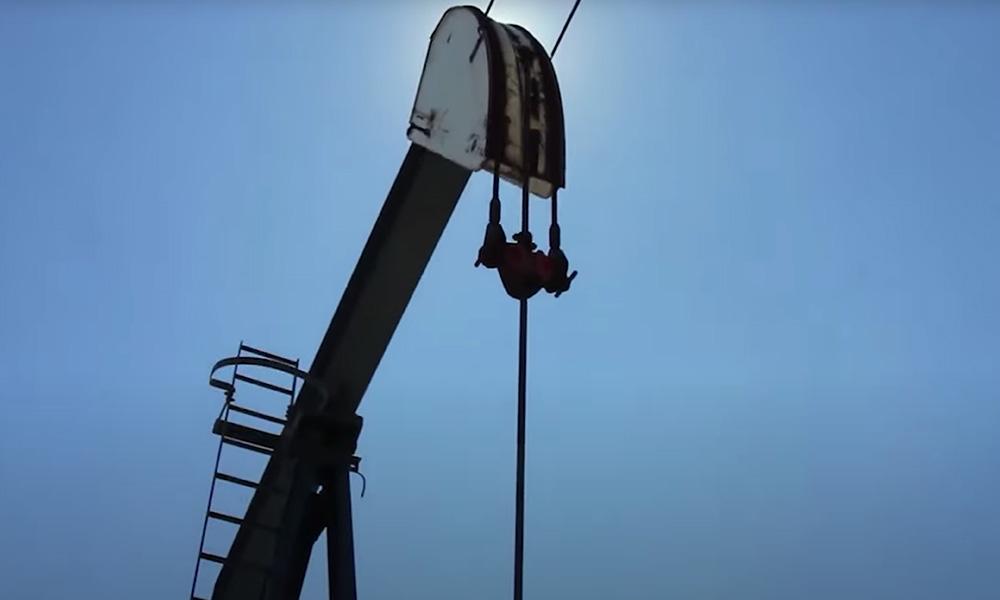
ING analysis emphasizes that the oil market is currently in a phase of weakening futures prices but gradually tightening physical supply. The futures market primarily reflects the prospect of supply recovery from potential peace negotiations, while the physical market directly faces the real pressure of the Strait of Hormuz disruption. Based on pipeline diversions and limited tanker passage, approximately 13 million barrels per day of crude oil flow has been blocked, and related US blockade measures could further escalate this disruption. Dated Brent spot prices briefly touched $117 per barrel, while the Brent futures June contract settled slightly below $95 per barrel yesterday, widening the basis to over $20 per barrel. This divergence is not short-term noise but a typical manifestation of a tight supply chain balance; traders need to closely monitor basis dynamics to assess inventory management and risk exposure.
Behind this divergence lies a structural adjustment by buyers shifting from disrupted regions to other sources, directly driving up spot premiums while the futures curve continues to price at a discount to future supply recovery. At the refinery level, this widening price spread may affect crack spread calculations and feedstock procurement strategies, putting the immediate responsiveness of the global supply chain to the test.
The Strait of Hormuz, a crucial chokepoint for global crude oil transportation, has been disrupted for weeks, directly leading to a significant reduction in Middle Eastern crude oil exports. Pipeline diversions and limited tanker passage have only alleviated some of the pressure, with the actual effective supply loss approaching 13 million barrels per day. A US blockade could further compress remaining channels, amplifying the scarcity of available global crude oil. While the market anticipates an extension of the ceasefire, substantial progress in negotiations is still needed for the restoration of physical flow. Global buyers are therefore accelerating their shift to alternative sources, which has not only pushed up spot premiums but also exacerbated regional price spread volatility. For trading participants reliant on long-distance maritime transport, the extended disruption will continue to test transportation costs and delivery feasibility. In the short term, rising costs from inventory removal and alternative routes have become a market consensus, but long-term supply recovery still depends on the outcome of geopolitical negotiations. This impact has already transmitted to the downstream refined product market, with crack spreads facing structural pressure. Traders need to pay attention to discrepancies between inventory reports and actual shipment data.
In the US market, the trend of buyers shifting towards domestic crude oil is tightening domestic supply. US crude oil and refined product exports have reached recent highs, totaling nearly 12.7 million barrels per day, effectively filling some of the global gap. However, US drilling activity has seen little recovery since the outbreak of the conflict, with the number of active rigs remaining stable. The latest forecast from the Energy Information Administration shows that US crude oil production will remain largely unchanged in 2026, averaging around 13.5 million barrels per day, only slightly lower than 200,000 barrels per day in 2025. Significant production increases are not expected until 2027, reflecting producers' cautious response to current price signals. The domestic market is gradually tightening due to surging exports and a shift in external demand, but the lag in drilling means limited short-term supply elasticity. While surging exports have supported global balance, they have also limited the scope for domestic inventory replenishment. Traders need to pay attention to the cross-validation between US inventory data and export flows to assess the strength of the medium- to long-term supply response.
The current oil price trend hinges on the progress of geopolitical negotiations. If the US-Iran peace talks break down, upside risks will significantly amplify, potentially widening the spot premium and transmitting it to the futures curve. Conversely, a substantial extension of the ceasefire and the reopening of the Straits will quickly alleviate physical shortages, pushing prices back to a more balanced level. The market as a whole remains in a phase of balancing supply disruptions and demand expectations, and volatility is likely to remain high. Traders should closely monitor the negotiation timeline, actual shipment data, and changes in US drilling indicators, as these factors will determine the speed and direction of spread convergence. Demand resilience within the global macroeconomic environment will also play a role, but the dominant short-term factor remains the pace of physical supply recovery.
Significant divergence between futures and physical markets
ING analysis emphasizes that the oil market is currently in a phase of weakening futures prices but gradually tightening physical supply. The futures market primarily reflects the prospect of supply recovery from potential peace negotiations, while the physical market directly faces the real pressure of the Strait of Hormuz disruption. Based on pipeline diversions and limited tanker passage, approximately 13 million barrels per day of crude oil flow has been blocked, and related US blockade measures could further escalate this disruption. Dated Brent spot prices briefly touched $117 per barrel, while the Brent futures June contract settled slightly below $95 per barrel yesterday, widening the basis to over $20 per barrel. This divergence is not short-term noise but a typical manifestation of a tight supply chain balance; traders need to closely monitor basis dynamics to assess inventory management and risk exposure.
| Price type | Level (USD/barrel) | Remark |
|---|---|---|
| Dated Brent stock available. | 117 | Physical market in high demand |
| Brent futures June contract | Approximately 96 | Latest price |
The impact of a disruption in the Strait of Hormuz on global supply chains
The Strait of Hormuz, a crucial chokepoint for global crude oil transportation, has been disrupted for weeks, directly leading to a significant reduction in Middle Eastern crude oil exports. Pipeline diversions and limited tanker passage have only alleviated some of the pressure, with the actual effective supply loss approaching 13 million barrels per day. A US blockade could further compress remaining channels, amplifying the scarcity of available global crude oil. While the market anticipates an extension of the ceasefire, substantial progress in negotiations is still needed for the restoration of physical flow. Global buyers are therefore accelerating their shift to alternative sources, which has not only pushed up spot premiums but also exacerbated regional price spread volatility. For trading participants reliant on long-distance maritime transport, the extended disruption will continue to test transportation costs and delivery feasibility. In the short term, rising costs from inventory removal and alternative routes have become a market consensus, but long-term supply recovery still depends on the outcome of geopolitical negotiations. This impact has already transmitted to the downstream refined product market, with crack spreads facing structural pressure. Traders need to pay attention to discrepancies between inventory reports and actual shipment data.
Dynamic Adjustment of US Crude Oil Production and Exports
In the US market, the trend of buyers shifting towards domestic crude oil is tightening domestic supply. US crude oil and refined product exports have reached recent highs, totaling nearly 12.7 million barrels per day, effectively filling some of the global gap. However, US drilling activity has seen little recovery since the outbreak of the conflict, with the number of active rigs remaining stable. The latest forecast from the Energy Information Administration shows that US crude oil production will remain largely unchanged in 2026, averaging around 13.5 million barrels per day, only slightly lower than 200,000 barrels per day in 2025. Significant production increases are not expected until 2027, reflecting producers' cautious response to current price signals. The domestic market is gradually tightening due to surging exports and a shift in external demand, but the lag in drilling means limited short-term supply elasticity. While surging exports have supported global balance, they have also limited the scope for domestic inventory replenishment. Traders need to pay attention to the cross-validation between US inventory data and export flows to assess the strength of the medium- to long-term supply response.
Potential risks to oil prices and market outlook
The current oil price trend hinges on the progress of geopolitical negotiations. If the US-Iran peace talks break down, upside risks will significantly amplify, potentially widening the spot premium and transmitting it to the futures curve. Conversely, a substantial extension of the ceasefire and the reopening of the Straits will quickly alleviate physical shortages, pushing prices back to a more balanced level. The market as a whole remains in a phase of balancing supply disruptions and demand expectations, and volatility is likely to remain high. Traders should closely monitor the negotiation timeline, actual shipment data, and changes in US drilling indicators, as these factors will determine the speed and direction of spread convergence. Demand resilience within the global macroeconomic environment will also play a role, but the dominant short-term factor remains the pace of physical supply recovery.
- Risk Warning and Disclaimer
- The market involves risk, and trading may not be suitable for all investors. This article is for reference only and does not constitute personal investment advice, nor does it take into account certain users’ specific investment objectives, financial situation, or other needs. Any investment decisions made based on this information are at your own risk.