Oil price movements face significant two-way risks.
2026-04-17 13:20:34
Despite the U.S. imposing a naval blockade on Monday (April 13) to prevent ships linked to Iran from passing through the Strait of Hormuz, oil prices have remained stable below $100 per barrel since then.
The oil futures market was relatively calm for the first three days of the week, but given the tense geopolitical situation along the world’s most important oil shipping route, this calm is unlikely to last.
Oil prices may experience two extreme scenarios in the future: either soaring to new highs or falling back to pre-war levels. This will largely depend on the progress of US-Iran negotiations, but the most critical factor remains the navigation status of the Strait of Hormuz and how quickly normal shipping traffic can resume.
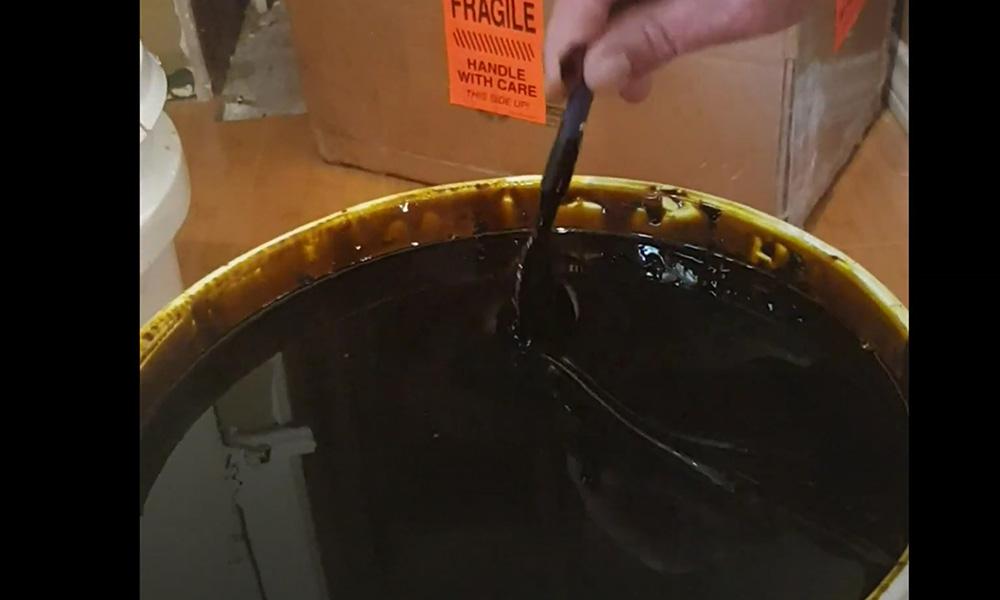
Currently, despite the US blockade and the Central Command's claim of a major success, passage for non-Iranian vessels has not yet resumed, while ship tracking agencies have observed that some vessels flying the Iranian flag have successfully broken through the blockade.
Global physical oil supply remains severely constrained, as evidenced by refiners' willingness to pay $150 per barrel for certain non-Middle Eastern crudes. The price of physical crude for immediate delivery has surged due to tight supply, exceeding futures prices by approximately $40 per barrel.
However, the futures market is mainly driven by news headlines and market sentiment, and the market is still pinning its hopes on the resumption of US-Iran negotiations.
For analysts, predicting oil price movements has become more difficult than ever, as uncertainty and contradictory statements from the Trump administration have reduced price forecast visibility to almost zero.
For example, Goldman Sachs maintained its average price forecasts for Brent and WTI crude oil in 2026 at $83 and $78 per barrel, respectively. However, the investment bank also pointed out the upside and downside risks to the forecasts.
According to a widely cited report by Goldman Sachs, the low flow rate in the Strait of Hormuz is the biggest upside risk at present. The bank's analysts estimate that current oil flow through the Strait of Hormuz is only 10% of pre-war levels, approximately 2.1 million barrels per day, and no liquefied natural gas (LNG) has passed through the strait since the outbreak of war on February 28.
"The ceasefire agreement reduces risk premiums and the likelihood of a long-term, large-scale supply loss, but at the same time, it will take time for traffic through the Strait to recover, so overall, this still poses an upside risk to oil price forecasts," said Daan Struyven, co-head of global commodities research at Goldman Sachs, on Wednesday.
Struven points out that Goldman Sachs currently estimates supply losses at around 10 to 11 million barrels per day, while demand losses could offset about 3 million barrels per day. Demand losses in Asia are already significant, particularly in the aviation and petrochemical sectors. He warns that the longer the demand disruption in Asia lasts, the more likely its impact will spread to other continents and other product markets.
Goldman Sachs assumes that traffic in the Strait of Hormuz will begin to recover and approach normal levels by mid-May, while upstream production in the Gulf countries will not recover until mid-June, and therefore maintains its previous price forecast.
Last week, Goldman Sachs warned that if the Strait of Hormuz remains largely closed to tankers for the next month, the average price of Brent crude oil this year could exceed $100 per barrel. If traffic restrictions persist for more than a month, upstream production in the Middle East will suffer further losses, potentially pushing the average price of Brent crude oil to $120 per barrel in the third quarter and $115 per barrel in the fourth quarter of the year.
Regarding downside risks, Goldman Sachs believes the actual scale of production shutdowns in the Persian Gulf region is smaller than previously feared. Furthermore, significant demand disruption (caused by soaring prices and supply shortages) will allow the market to rebalance at prices "slightly lower than previously expected."
In a report on Thursday, ING commodity strategists Warren Patterson and Ewa Manthey noted that the oil futures market is currently stable or slightly down, mainly due to market hopes that the US and Iran will extend the ceasefire agreement for another two weeks and restart negotiations to end the war.
They said, "However, the physical market is tightening as oil flows through the Strait of Hormuz have failed to recover." They stated that, taking into account pipeline diversions and a small number of tankers passing through the strait, ING estimates that approximately 13 million barrels per day of supply is currently disrupted, "and this figure could rise further as the U.S. blockade continues."
In its baseline scenario, Nordea Bank (SEB) assumes that the Strait of Hormuz will operate at only 20% of its normal capacity until mid-May, before fully recovering, and that there will be no further major damage to oil or gas infrastructure in the Persian Gulf region.
However, the SEB reiterated in its report on Wednesday that "the Strait of Hormuz is not something that Trump can reopen unilaterally," and that even if an agreement is reached, Iran may still retain some control.
SEB commodities analyst Ole Hvalbye wrote, " Our outlook for risks is clearly two-way: faster diplomatic progress could cause oil prices to fall sharply from current levels; while a breakdown in negotiations, or even worse, infrastructure damage, could drive a violent surge in Brent contracts and push spot Brent crude prices above $150 per barrel. "
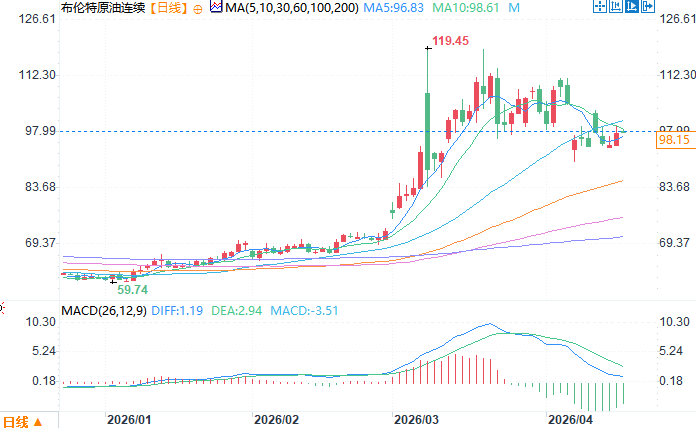
Brent crude oil daily chart source: EasyForex
At 13:20 Beijing time on April 17, Brent crude oil futures were trading at $98.07 per barrel.
The oil futures market was relatively calm for the first three days of the week, but given the tense geopolitical situation along the world’s most important oil shipping route, this calm is unlikely to last.
Oil prices may experience two extreme scenarios in the future: either soaring to new highs or falling back to pre-war levels. This will largely depend on the progress of US-Iran negotiations, but the most critical factor remains the navigation status of the Strait of Hormuz and how quickly normal shipping traffic can resume.
Currently, despite the US blockade and the Central Command's claim of a major success, passage for non-Iranian vessels has not yet resumed, while ship tracking agencies have observed that some vessels flying the Iranian flag have successfully broken through the blockade.
Global physical oil supply remains severely constrained, as evidenced by refiners' willingness to pay $150 per barrel for certain non-Middle Eastern crudes. The price of physical crude for immediate delivery has surged due to tight supply, exceeding futures prices by approximately $40 per barrel.
However, the futures market is mainly driven by news headlines and market sentiment, and the market is still pinning its hopes on the resumption of US-Iran negotiations.
For analysts, predicting oil price movements has become more difficult than ever, as uncertainty and contradictory statements from the Trump administration have reduced price forecast visibility to almost zero.
For example, Goldman Sachs maintained its average price forecasts for Brent and WTI crude oil in 2026 at $83 and $78 per barrel, respectively. However, the investment bank also pointed out the upside and downside risks to the forecasts.
Both upside and downside risks exist.
According to a widely cited report by Goldman Sachs, the low flow rate in the Strait of Hormuz is the biggest upside risk at present. The bank's analysts estimate that current oil flow through the Strait of Hormuz is only 10% of pre-war levels, approximately 2.1 million barrels per day, and no liquefied natural gas (LNG) has passed through the strait since the outbreak of war on February 28.
"The ceasefire agreement reduces risk premiums and the likelihood of a long-term, large-scale supply loss, but at the same time, it will take time for traffic through the Strait to recover, so overall, this still poses an upside risk to oil price forecasts," said Daan Struyven, co-head of global commodities research at Goldman Sachs, on Wednesday.
Struven points out that Goldman Sachs currently estimates supply losses at around 10 to 11 million barrels per day, while demand losses could offset about 3 million barrels per day. Demand losses in Asia are already significant, particularly in the aviation and petrochemical sectors. He warns that the longer the demand disruption in Asia lasts, the more likely its impact will spread to other continents and other product markets.
Goldman Sachs assumes that traffic in the Strait of Hormuz will begin to recover and approach normal levels by mid-May, while upstream production in the Gulf countries will not recover until mid-June, and therefore maintains its previous price forecast.
Last week, Goldman Sachs warned that if the Strait of Hormuz remains largely closed to tankers for the next month, the average price of Brent crude oil this year could exceed $100 per barrel. If traffic restrictions persist for more than a month, upstream production in the Middle East will suffer further losses, potentially pushing the average price of Brent crude oil to $120 per barrel in the third quarter and $115 per barrel in the fourth quarter of the year.
Regarding downside risks, Goldman Sachs believes the actual scale of production shutdowns in the Persian Gulf region is smaller than previously feared. Furthermore, significant demand disruption (caused by soaring prices and supply shortages) will allow the market to rebalance at prices "slightly lower than previously expected."
Other institutions' views: Risks are also two-way.
In a report on Thursday, ING commodity strategists Warren Patterson and Ewa Manthey noted that the oil futures market is currently stable or slightly down, mainly due to market hopes that the US and Iran will extend the ceasefire agreement for another two weeks and restart negotiations to end the war.
They said, "However, the physical market is tightening as oil flows through the Strait of Hormuz have failed to recover." They stated that, taking into account pipeline diversions and a small number of tankers passing through the strait, ING estimates that approximately 13 million barrels per day of supply is currently disrupted, "and this figure could rise further as the U.S. blockade continues."
In its baseline scenario, Nordea Bank (SEB) assumes that the Strait of Hormuz will operate at only 20% of its normal capacity until mid-May, before fully recovering, and that there will be no further major damage to oil or gas infrastructure in the Persian Gulf region.
However, the SEB reiterated in its report on Wednesday that "the Strait of Hormuz is not something that Trump can reopen unilaterally," and that even if an agreement is reached, Iran may still retain some control.
SEB commodities analyst Ole Hvalbye wrote, " Our outlook for risks is clearly two-way: faster diplomatic progress could cause oil prices to fall sharply from current levels; while a breakdown in negotiations, or even worse, infrastructure damage, could drive a violent surge in Brent contracts and push spot Brent crude prices above $150 per barrel. "
Brent crude oil daily chart source: EasyForex
At 13:20 Beijing time on April 17, Brent crude oil futures were trading at $98.07 per barrel.
- Risk Warning and Disclaimer
- The market involves risk, and trading may not be suitable for all investors. This article is for reference only and does not constitute personal investment advice, nor does it take into account certain users’ specific investment objectives, financial situation, or other needs. Any investment decisions made based on this information are at your own risk.