Gold surges to $4900! Crude oil plunges.
2026-04-17 21:35:44
On Friday, April 17, the international commodity market experienced significant volatility in early US trading. Iranian Foreign Minister Abbas Araqchi announced via social media that, in accordance with the ceasefire agreement with Lebanon, the Strait of Hormuz would be fully open to all commercial vessels, and the shipping lanes would follow the coordinated routes previously announced by the Iranian Ports Maritime Organization. This statement directly alleviated market concerns about energy supply disruptions, causing crude oil prices to plummet.
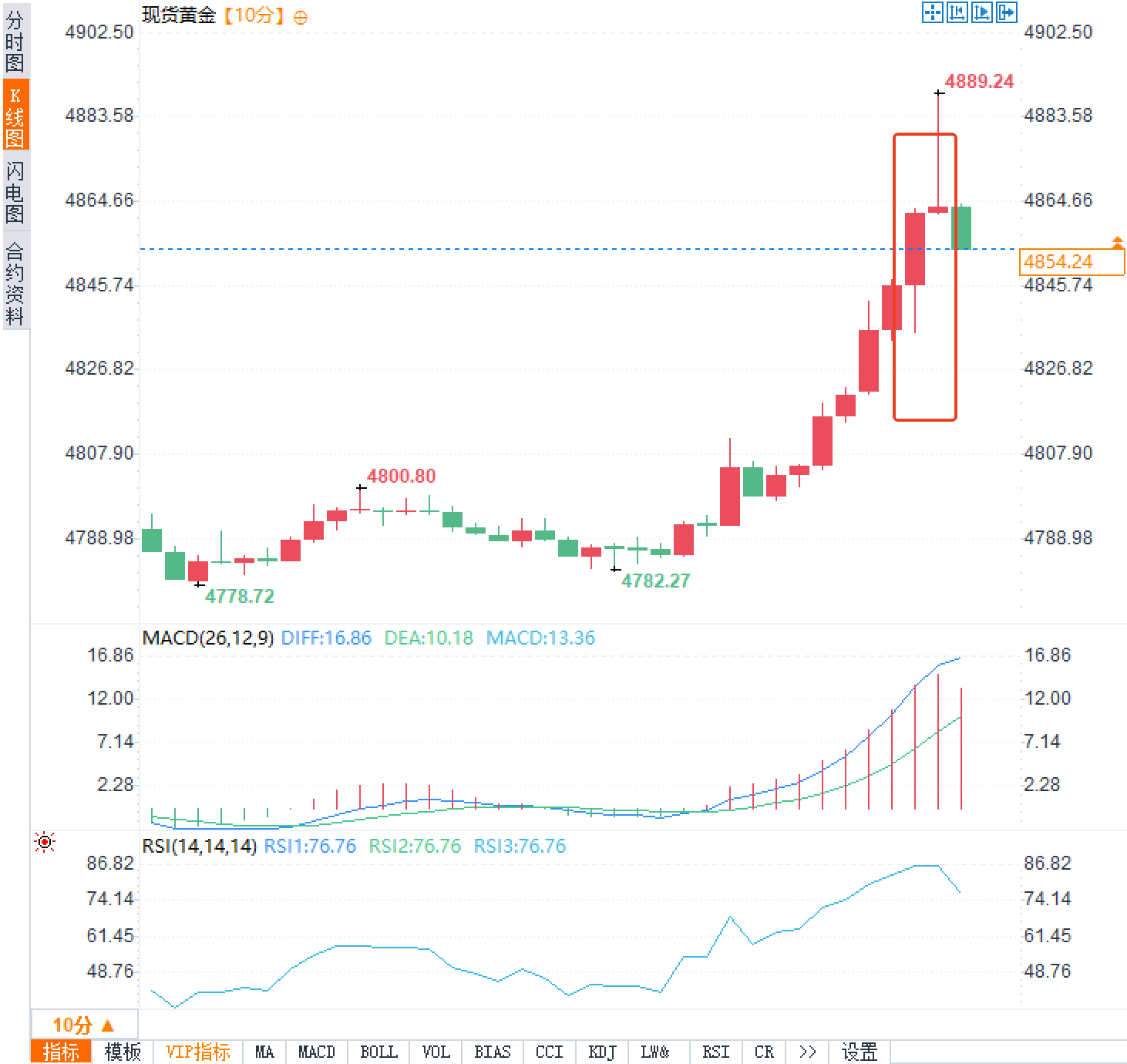
WTI crude oil futures once fell by more than $10 per barrel, to around $82 per barrel, a drop of more than 11%. Against this backdrop, spot gold prices fluctuated around $4,850 per ounce, briefly rising to $4,890 before retreating slightly, but overall showing strong resilience, mainly due to the decline in inflation expectations triggered by the drop in oil prices, and the resulting adjustment in expectations for the interest rate path.
Iranian Foreign Minister Araqchi's statement marked a substantial easing of tensions in the Middle East. Previously, the market had worried about the potential disruption to shipping through the Strait of Hormuz, a vital waterway carrying approximately 20% of global oil shipments; any uncertainty in this area would have driven up risk premiums for crude oil. Araqchi explicitly stated that the strait was "fully open," emphasizing that this was a move coordinated with the ceasefire agreement. Meanwhile, US and Iranian negotiators were scheduled to meet in Pakistan on Sunday to discuss a compromise package including $2 billion in cash for uranium, with some of the highly enriched uranium to be shipped to a third country and the remainder diluted in Iran under international supervision. The package also involved a voluntary suspension of nuclear enrichment activities. These developments were interpreted by the market as a signal that a peace agreement was nearing completion, prompting speculative long positions to be liquidated, resulting in a precipitous drop in crude oil prices.
The direct impact of this event on the energy market is reflected in the normalization of supply expectations. Traders had already priced in geopolitical risk premiums into oil prices, with WTI crude oil briefly approaching a high of $95 per barrel. However, after the news was released, the market quickly reassessed the supply outlook, and the decline in oil prices not only reflected the immediate relief of risks but also indicated that global crude oil inventory pressures might ease in the coming months. In contrast, Brent crude oil fell by about $9 per barrel in tandem, a similarly significant drop. The rapid correction in energy prices is spreading throughout the entire commodity chain, with related commodities such as natural gas and coal also experiencing coordinated adjustments.
The core impact of the sharp drop in oil prices lies in the rapid correction of inflation expectations. Energy costs have a significant weight in the global consumer price index; every $10 drop in crude oil prices typically leads to a 0.3 to 0.5 percentage point decrease in the overall inflation rate. The supply signals released by this event are particularly strong, and market expectations for future energy price levels have rapidly shifted downward from their high levels. Latest data shows that US consumer one-year inflation expectations have fallen to around 3.4%, and business surveys also indicate that upward price pressures in 2026 will be less pronounced than in 2025.
The decline in inflation expectations is not an isolated phenomenon. It affects the producer price index through the cost-push channel and further transmits to core inflation indicators. Stable energy prices will alleviate supply chain pressures and reduce corporate pricing power, while consumer real purchasing power may recover moderately. This dynamic is positive for gold because real yield is a key variable in gold pricing: while declining inflation expectations may suppress nominal inflation, if accompanied by loose monetary policy, lower real interest rates will reduce the opportunity cost of holding gold.
Major central banks around the world are closely monitoring this change. The Federal Reserve's current target range for the federal funds rate remains at 3.5% to 3.75%, and market pricing in 2026 indicates an increased probability of one to two rate cuts throughout the year. The European Central Bank, the Bank of England, and others are also facing similar pressure to adjust their inflationary paths. The decline in oil prices has eased the predicament of central banks being forced to maintain tightening in a high-inflation environment, creating room for policy shifts.
As a non-yielding asset, spot gold's price is highly sensitive to real interest rate levels. The current decline in inflation expectations driven by oil prices is providing support through the interest rate channel. The market's pricing in a Fed rate cut has shifted from a more hawkish approach to a more moderate one, putting pressure on the real yield of 10-year US Treasury bonds, which directly benefits gold valuation models.
From a pricing framework perspective, gold can be viewed as a function of inflation hedging and real yields. While declining inflation expectations may pose short-term pressure, the combined effect of a simultaneous reduction in interest rate expectations is more significant. Traders have observed that implied volatility in gold remains low, and the options market has not significantly reduced its bullish positions, indicating market acceptance of this macroeconomic logic. The latest gold price is around $4850/ounce, showing only a limited pullback from the historical high reached in January, reflecting the resilience of fundamentals.
Furthermore, while global central bank gold purchases were not directly affected by this event, the low-interest-rate environment will continue to encourage diversified asset allocation, further solidifying the gold price level. Traders are focusing on the progress of subsequent negotiations. If a US-Iran agreement is ultimately reached, the downward shift in energy prices will further solidify the current inflation path, and gold will continue to benefit from adjustments in interest rate expectations.
From a technical perspective, the daily chart for spot gold shows prices fluctuating between $4750 and $4900 per ounce, with the 200-day moving average providing strong support. The MACD indicator shows moderate momentum, and the RSI is in the neutral zone, showing no overbought signal. On the fundamental front, the indirect support for gold from the pullback in oil prices has outweighed short-term noise, and traders are recalibrating their positions, focusing on statements from Federal Reserve officials next week and upcoming macroeconomic data.
In summary, this event has accelerated the market's shift from a narrative of high inflation and high interest rates to one of moderate growth and low inflation. Gold plays a key role in this transition, rather than simply being a safe-haven asset.
WTI crude oil futures once fell by more than $10 per barrel, to around $82 per barrel, a drop of more than 11%. Against this backdrop, spot gold prices fluctuated around $4,850 per ounce, briefly rising to $4,890 before retreating slightly, but overall showing strong resilience, mainly due to the decline in inflation expectations triggered by the drop in oil prices, and the resulting adjustment in expectations for the interest rate path.
Energy supply risk premium recedes rapidly
Iranian Foreign Minister Araqchi's statement marked a substantial easing of tensions in the Middle East. Previously, the market had worried about the potential disruption to shipping through the Strait of Hormuz, a vital waterway carrying approximately 20% of global oil shipments; any uncertainty in this area would have driven up risk premiums for crude oil. Araqchi explicitly stated that the strait was "fully open," emphasizing that this was a move coordinated with the ceasefire agreement. Meanwhile, US and Iranian negotiators were scheduled to meet in Pakistan on Sunday to discuss a compromise package including $2 billion in cash for uranium, with some of the highly enriched uranium to be shipped to a third country and the remainder diluted in Iran under international supervision. The package also involved a voluntary suspension of nuclear enrichment activities. These developments were interpreted by the market as a signal that a peace agreement was nearing completion, prompting speculative long positions to be liquidated, resulting in a precipitous drop in crude oil prices.
The direct impact of this event on the energy market is reflected in the normalization of supply expectations. Traders had already priced in geopolitical risk premiums into oil prices, with WTI crude oil briefly approaching a high of $95 per barrel. However, after the news was released, the market quickly reassessed the supply outlook, and the decline in oil prices not only reflected the immediate relief of risks but also indicated that global crude oil inventory pressures might ease in the coming months. In contrast, Brent crude oil fell by about $9 per barrel in tandem, a similarly significant drop. The rapid correction in energy prices is spreading throughout the entire commodity chain, with related commodities such as natural gas and coal also experiencing coordinated adjustments.
Declining inflation expectations are reshaping global price dynamics.
The core impact of the sharp drop in oil prices lies in the rapid correction of inflation expectations. Energy costs have a significant weight in the global consumer price index; every $10 drop in crude oil prices typically leads to a 0.3 to 0.5 percentage point decrease in the overall inflation rate. The supply signals released by this event are particularly strong, and market expectations for future energy price levels have rapidly shifted downward from their high levels. Latest data shows that US consumer one-year inflation expectations have fallen to around 3.4%, and business surveys also indicate that upward price pressures in 2026 will be less pronounced than in 2025.
The decline in inflation expectations is not an isolated phenomenon. It affects the producer price index through the cost-push channel and further transmits to core inflation indicators. Stable energy prices will alleviate supply chain pressures and reduce corporate pricing power, while consumer real purchasing power may recover moderately. This dynamic is positive for gold because real yield is a key variable in gold pricing: while declining inflation expectations may suppress nominal inflation, if accompanied by loose monetary policy, lower real interest rates will reduce the opportunity cost of holding gold.
Major central banks around the world are closely monitoring this change. The Federal Reserve's current target range for the federal funds rate remains at 3.5% to 3.75%, and market pricing in 2026 indicates an increased probability of one to two rate cuts throughout the year. The European Central Bank, the Bank of England, and others are also facing similar pressure to adjust their inflationary paths. The decline in oil prices has eased the predicament of central banks being forced to maintain tightening in a high-inflation environment, creating room for policy shifts.
Interest rate expectations adjustment supports the logic of gold pricing.
As a non-yielding asset, spot gold's price is highly sensitive to real interest rate levels. The current decline in inflation expectations driven by oil prices is providing support through the interest rate channel. The market's pricing in a Fed rate cut has shifted from a more hawkish approach to a more moderate one, putting pressure on the real yield of 10-year US Treasury bonds, which directly benefits gold valuation models.
From a pricing framework perspective, gold can be viewed as a function of inflation hedging and real yields. While declining inflation expectations may pose short-term pressure, the combined effect of a simultaneous reduction in interest rate expectations is more significant. Traders have observed that implied volatility in gold remains low, and the options market has not significantly reduced its bullish positions, indicating market acceptance of this macroeconomic logic. The latest gold price is around $4850/ounce, showing only a limited pullback from the historical high reached in January, reflecting the resilience of fundamentals.
Furthermore, while global central bank gold purchases were not directly affected by this event, the low-interest-rate environment will continue to encourage diversified asset allocation, further solidifying the gold price level. Traders are focusing on the progress of subsequent negotiations. If a US-Iran agreement is ultimately reached, the downward shift in energy prices will further solidify the current inflation path, and gold will continue to benefit from adjustments in interest rate expectations.
Comprehensive Analysis of Technical and Fundamental Factors in the Spot Gold Market
From a technical perspective, the daily chart for spot gold shows prices fluctuating between $4750 and $4900 per ounce, with the 200-day moving average providing strong support. The MACD indicator shows moderate momentum, and the RSI is in the neutral zone, showing no overbought signal. On the fundamental front, the indirect support for gold from the pullback in oil prices has outweighed short-term noise, and traders are recalibrating their positions, focusing on statements from Federal Reserve officials next week and upcoming macroeconomic data.
In summary, this event has accelerated the market's shift from a narrative of high inflation and high interest rates to one of moderate growth and low inflation. Gold plays a key role in this transition, rather than simply being a safe-haven asset.
- Risk Warning and Disclaimer
- The market involves risk, and trading may not be suitable for all investors. This article is for reference only and does not constitute personal investment advice, nor does it take into account certain users’ specific investment objectives, financial situation, or other needs. Any investment decisions made based on this information are at your own risk.